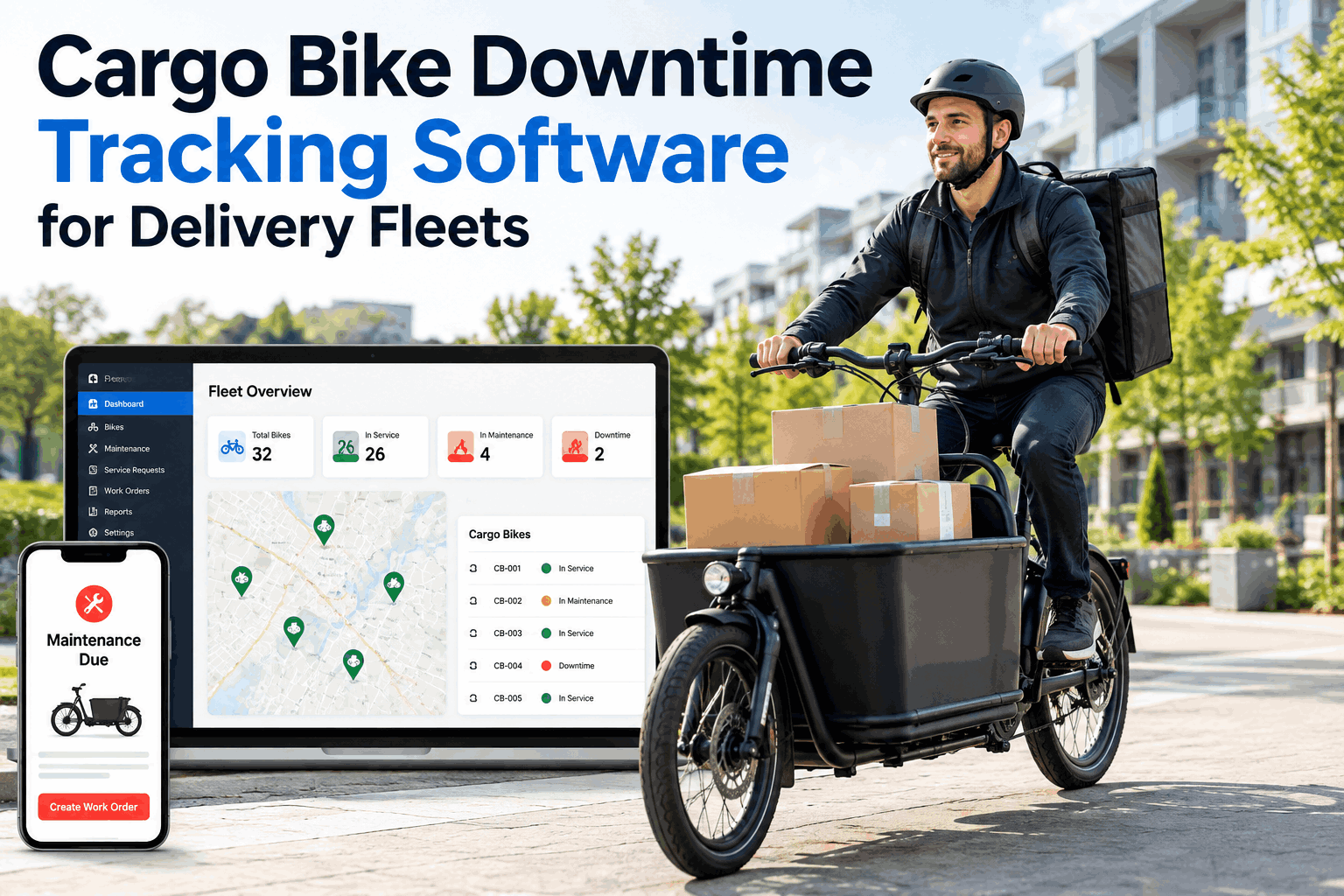
When an electric cargo bike breaks down during a peak delivery window, the loss extends far beyond a broken chain or a flat tire. In urban last-mile logistics, every hour an e-cargo bike sits immobilized at the curbside triggers missed delivery time slots, expensive courier wait times, and emergency roadside recovery dispatches that wipe out unit economics. Most delivery operators track vehicle availability on fragmented spreadsheets or informal driver group chats, completely missing the true culprits behind fleet downtime—such as chronic lithium cell degradation, uneven brake caliper wear, or recurring hub motor overheating. FleetRabbit's cargo bike downtime tracking software turns scattered failure points into actionable operational insights. By correlating real-time GPS telemetry, mobile eDVIR walkarounds, and workshop bay turnaround times, our platform helps e-commerce delivery fleets identify service bottlenecks faster, keep couriers rolling, and maximize active route hours. Book a 30-minute demonstration or activate your free platform trial today.
HERO COMPONENT: Light Diagnostic Hub & Real-Time Availability PaneThe Real Cost of Last-Mile Cargo Bike Downtime
In high-density e-commerce parcel logistics, cargo bike reliability directly dictates cost-per-drop. When an electric cargo bike experiences mechanical failure on route, the financial fallout goes well beyond a simple part replacement:
VISUAL INFOGRAPHIC: DOWNTIME COST CASCADECurbside Route Paralysis
A sheared rear hub axle or dead battery halts deliveries. The courier stands idle while parcels sit exposed in an unsecured cargo box on public streets.
Emergency Van Dispatch
Dispatch must deploy a support van or reserve bike to cross-load freight, driving up fuel burn, double-handling labor, and urban congestion emissions.
E-Commerce SLA Breach
Same-day and timed delivery windows fail. Retail clients issue vendor chargebacks while repeated service failures jeopardize client logistics contracts.
The 4 Primary Failure Modes Stalling Delivery Fleets
Commercial cargo bikes carry payloads up to 350 kg through potholes, rain, and aggressive stop-start urban cycles. FleetRabbit categorizes every minute of mechanical downtime into four core mechanical subsystems to pinpoint recurring fleet vulnerabilities:
4 SUB-ASSEMBLY CARDSBattery Sag & Swapping Glitches
Unmonitored cell imbalance causes batteries to drop voltage rapidly under load. Couriers find themselves stranded miles from the micro-hub with 0% assist.
High-Torque Drivetrain Snaps
Mid-drive electric motors outputting 85-120 Nm of torque accelerate chain and sprocket wear. Snapped links or stripped cassette cogs cause sudden mechanical immobilization.
Hydraulic Brake Boils & Pad Wear
Repeated emergency stops under 300 kg cargo loads cause severe brake fluid thermal boil, pad glazing, and rotor warping, forcing bikes out of service for safety reasons.
Wheel Spoke Detensioning & Flats
Heavy lateral cornering forces loosen heavy-gauge spokes and pinch inner tubes. Uncorrected wheel runout causes rotor drag, frame contact, and broken axles.
How FleetRabbit Closes the Downtime Loop
FleetRabbit replaces slow manual reporting with a unified resolution pipeline that captures defects instantly, routes parts, and tracks workshop bay dwell times:
Defect Capture
Couriers log issues in seconds via mobile eDVIR, or IoT telematics flag an active motor fault code or battery temperature spike.
Triage & Parts Allocation
FleetRabbit opens an automated digital work order, matching the fault to internal spare parts inventory and assigning the repair to an available hub bay.
Fast Bay Execution
Technicians follow structured repair checklists on mobile, log labor minutes, and sign off digitally to return the cargo bike to service.
Root Cause Analytics
Fleet managers review Mean Time Between Failures (MTBF) and cost-per-kilometer trends across brands to guide future procurement decisions.
FleetRabbit vs. Generic Spreadsheets & Vehicle CMMS
Traditional vehicle management tools are designed for diesel vans and highway semi-trucks. FleetRabbit delivers micro-mobility intelligence tailored specifically for light electric commercial vehicles:
| Operational Feature | Generic Fleet Software | Manual Logs & Chat Apps | FleetRabbit Cargo Platform |
|---|---|---|---|
| Downtime Metrics Tracked | Total bay hours only | Uncalculated rough estimates | ✓ Curbside vs. Shop vs. Waiting-for-Parts |
| Driver Defect Submissions | Complex automotive checklists | Lost paper slips and chats | ✓ 60-Second visual eDVIR mobile workflow |
| Battery & Drivetrain Telemetry | ✕ Not supported | ✕ Untracked | ✓ Battery cycle history and motor run hours |
| Micro-Mobility Parts Catalog | Heavy diesel components | Manual shelf counts | ✓ Dedicated SKUs (Brake pads, chains, hubs) |
| Root Cause MTBF Breakdown | Chassis mileage only | ✕ Not available | ✓ Failure analysis by bike model and component |
| Software Cost per Asset | $15 - $35 / mo | Heavy downtime revenue loss | From $3 / bike / mo (Free Starter Tier) |
Hub Dispatch Triage: Common Downtime Bottlenecks Solved
Frequently Asked Questions
What counts as "downtime" in cargo bike fleet operations?
FleetRabbit tracks both physical downtime (when a vehicle is immobilized in a repair bay or awaiting roadside pickup) and operational downtime (when an asset sits idle due to an uncharged battery pack or missing courier pre-trip clearance).
Can FleetRabbit integrate with IoT hardware already installed on our bikes?
Yes. FleetRabbit features flexible open APIs and webhooks that ingest GPS location coordinates, odometer kilometers, motor fault codes, and battery state-of-charge feeds directly from major micro-mobility IoT providers.
Does this software support multi-hub delivery setups?
Yes. You can manage multiple urban micro-hubs from a single dashboard, monitoring bay turnaround times, technician productivity, and spare parts inventory across different city hubs seamlessly.
How does FleetRabbit help reduce our Mean Time to Repair (MTTR)?
By connecting mobile courier defect reporting with instant parts matching and technician mobile task lists, repair bays eliminate diagnostic delays and return assets to active delivery service significantly faster.