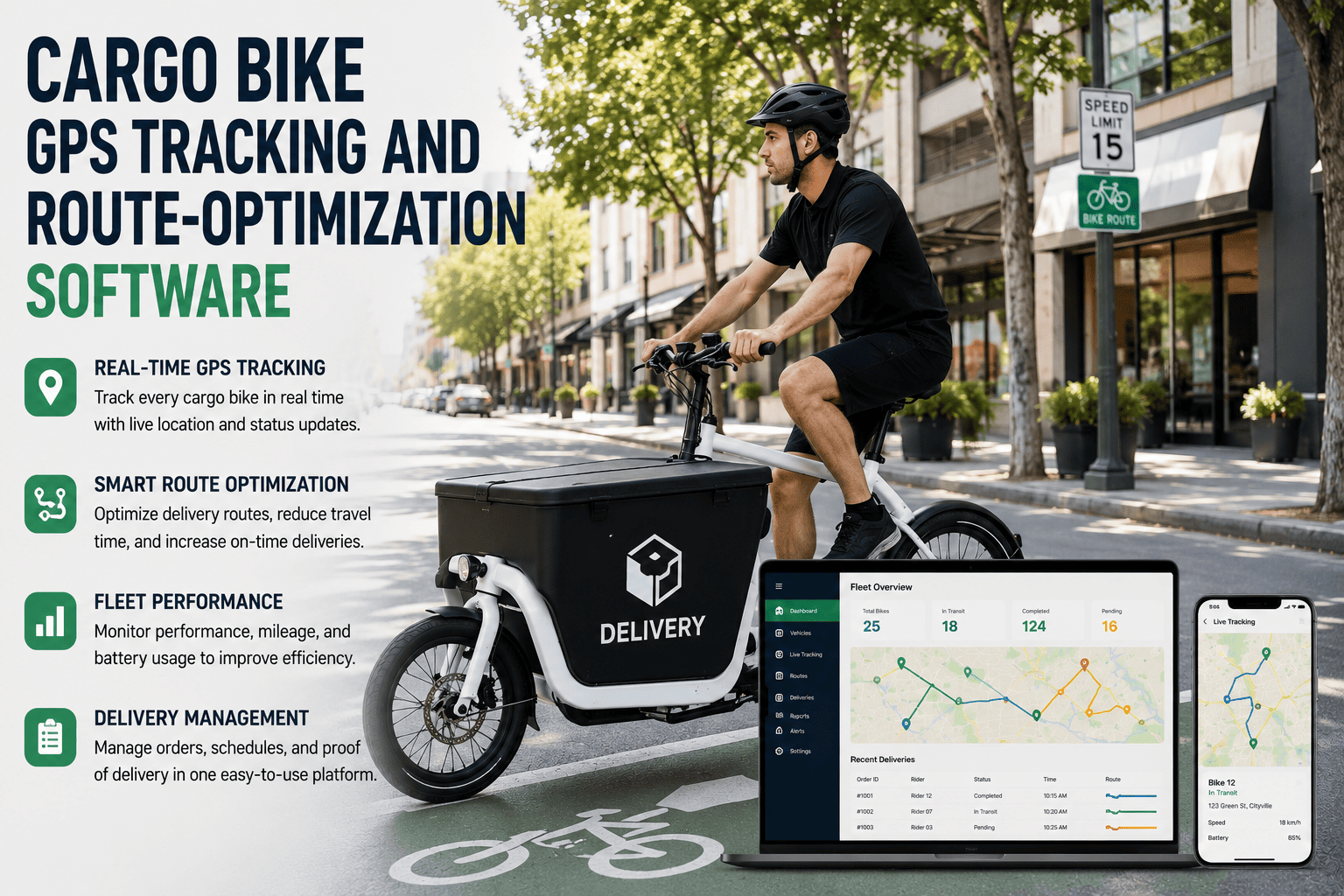
Routing a cargo bike fleet is not a smaller version of routing delivery vans, it is a genuinely different problem. A bike can cut through a bike lane, skip a fifteen minute parking search, and reach a dense downtown block faster than a van ever could, but only if the routing software actually understands those differences instead of treating every vehicle the same way. FleetRabbit builds GPS tracking and route optimization specifically around how cargo bikes move through a city, so last-mile teams get accurate ETAs and tighter delivery windows instead of a routing engine built for four wheels and applied to two. Fleets ready to see the difference can sign up and get live in days, not months.
A route optimized for a van and a route optimized for a cargo bike can look completely different even for the exact same set of delivery addresses.
Delivery van routing
Bound by traffic lanes, parking availability, and turn restrictions, often losing time hunting for a legal spot near dense stops.
Cargo bike routing
Can use bike lanes, pedestrian paths, and direct curb access, letting the optimization engine plan tighter, more direct sequences through dense areas.
Feeding both vehicle types into the same generic routing logic wastes the exact advantage a cargo bike is supposed to bring to a last-mile operation. FleetRabbit routes bikes on their own logic, factoring in bike lane access and stop density rather than forcing them onto van-friendly paths. Teams running or considering a bike fleet can book a demo and see how the routing engine handles their own delivery zone.
Customers waiting on a delivery care about one thing above almost everything else, a reliable arrival window, and that window should get tighter the closer the rider actually gets.
Live GPS position feeding directly into the ETA engine is what makes this narrowing possible instead of showing the same rough estimate from dispatch to doorstep. Operations teams that want this kind of live accuracy can sign up and connect their fleet in a single afternoon.
Route cargo bikes like cargo bikes, not small vans
Bike-lane-aware routing, tightening ETA windows, and live tracking built for last-mile teams.
A tighter ETA window only matters if the delivery itself is documented well enough to close out any dispute before it starts.
Geotagged drop location
Exact coordinates captured the moment the delivery is marked complete.
Photo confirmation
A timestamped photo of the package at the delivery point.
Digital signature
Captured directly on the rider's device when a signature is required.
Audit trail
Every delivery event logged and tied back to the route and rider.
Building proof of delivery directly into the same system as tracking and routing means a customer service question can be answered in seconds instead of a search through separate tools. Teams ready to unify the whole workflow can book a demo and see the full delivery record in one view.
| Task | Manual or generic process | FleetRabbit |
|---|---|---|
| Route planning | Van-style routing forced onto bike stops | Bike-lane and stop-density aware optimization |
| ETA accuracy | Static estimate from dispatch to arrival | Live GPS-driven window that narrows automatically |
| Proof of delivery | Handled in a separate app or paper log | Built into the same platform as tracking and routing |
| Fleet onboarding | Weeks or months of setup | Live in days for a new cargo bike fleet |
Teams that want to see this comparison run against their own delivery zone can sign up and test it with real stops.
Give last-mile customers an ETA they can actually trust
Route optimization, live tracking, and proof of delivery built for cargo bike fleets.
Frequently asked questions
Why does cargo bike routing need its own optimization logic
Bikes can access bike lanes, pedestrian paths, and direct curb space that vans cannot use, so a routing engine built for cars tends to produce longer, less efficient paths than one designed specifically around bike movement.
How does the ETA window get tighter as a delivery approaches
Live GPS position feeds continuously into the ETA calculation, so the estimate narrows in stages from a broad initial window down to a precise arrival time as the rider gets closer.
What counts as proof of delivery for a cargo bike fleet
A geotagged drop location, a timestamped photo, a digital signature when required, and an audit trail connecting the delivery back to the specific route and rider.
How long does it take to get a cargo bike fleet set up
Most fleets can be tracking, routing, and capturing proof of delivery within a matter of days rather than the months a larger enterprise fleet system might require.
Can this work alongside a mixed fleet of bikes and delivery vans
Yes, each vehicle type can run its own routing logic within the same system, so bikes and vans are optimized separately while still reporting into one dashboard.