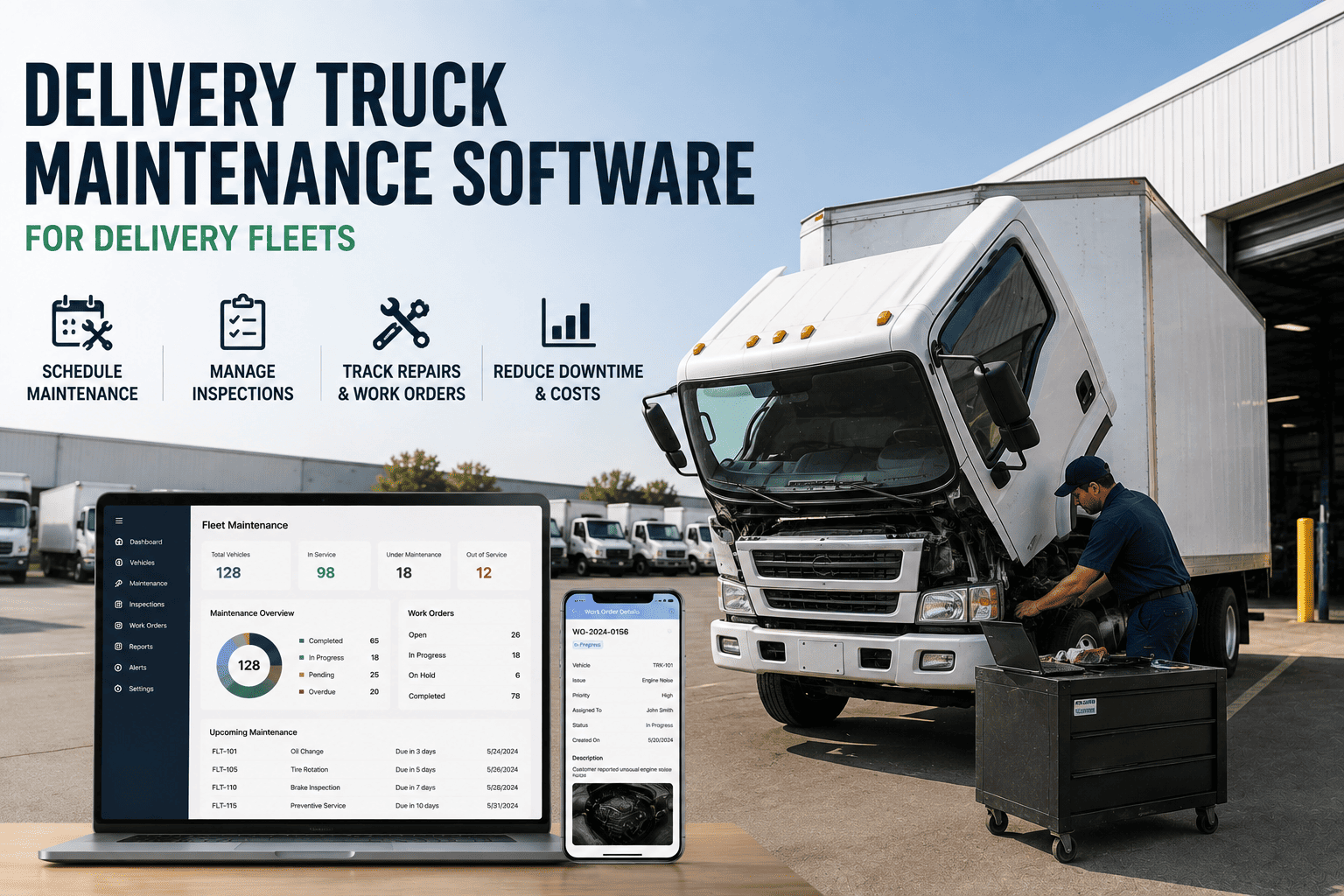
A delivery truck goes quiet on the shoulder of a highway at 2pm, three stops into its route. The driver is stranded, the afternoon's deliveries are stuck behind it, and the fleet manager is now making three calls at once — a tow truck, a rental replacement, and an apology to the customer waiting on stop four. The direct repair bill might land between $450 and $760, but once towing, lost productivity, and a missed delivery window get added in, the real cost of that one breakdown climbs past $1,900. Delivery truck maintenance software exists to stop that call from ever happening.
The cost of doing nothing
Reactive maintenance feels cheaper right up until it isn't. A truck that only gets serviced when something breaks looks fine on this month's budget, but the bill shows up later as a missed delivery window, a rental truck invoice, and a driver sitting idle waiting for a tow. Fleets that shift from reactive repairs to a managed maintenance schedule typically see maintenance costs drop 15 to 20 percent within six months, simply by catching small issues before they become roadside emergencies.
Reactive repair
$1,900+ per incident
Preventive service
Scheduled, budgeted cost
Predictive maintenance
Repair before failure, lowest total cost
Preventive scheduling vs. predictive detection
These two terms get used interchangeably, but they solve different problems. Preventive maintenance services a truck at fixed intervals — every 5,000 miles or every quarter — regardless of how the vehicle is actually running. Predictive maintenance software goes further, reading sensor data, engine patterns, and historical repair records to flag a specific component that's likely to fail, often two to four weeks before it does. A delivery fleet running on interval-only scheduling is still driving trucks blind between service dates. A fleet manager comparing the two approaches for the first time can sign up to see both running side by side on the same dashboard.
Preventive maintenance
Fixed schedule based on mileage or time, regardless of the vehicle's actual condition. Simple to run, but it can miss a failure developing between service dates — or service a part that didn't need it yet.
Predictive maintenance
Continuous sensor monitoring flags abnormal vibration, temperature, or voltage patterns as they emerge, giving a fleet manager two to four weeks of lead time to schedule a repair before it becomes a breakdown.
What the software actually tracks
Service schedules
Automated reminders for oil changes, tire rotations, and inspections, generated from mileage and engine hours instead of a spreadsheet someone has to remember to check.
Digital work orders
A repair request created, assigned, and closed out in the same system, with parts and labor logged against the vehicle's full history.
Fault pattern detection
Sensor and OBD data compared against historical failure patterns to flag a component drifting toward failure, before a dashboard warning light ever comes on.
Digital inspection reports
Pre- and post-trip inspection records captured on a driver's phone, replacing paper forms and keeping every truck's compliance history in one searchable place.
Parts and cost tracking
Every repair tied to a cost record, so a fleet manager can see which trucks are becoming expensive to keep on the road, not just guess.
Uptime reporting
A running view of fleet-wide availability, so a manager can spot a pattern of downtime by vehicle, route, or driver before it becomes a habit.
Stop finding out about breakdowns from the driver
Get predictive alerts, automated service schedules, and route-optimized dispatch on one platform built for delivery fleets.
Signs a delivery fleet has outgrown spreadsheets
Most fleets don't switch to dedicated maintenance software because of one bad month — they switch because the same problems keep repeating. A driver reports the same noise three times before anyone schedules a shop visit. Two trucks break down in the same week and nobody notices they share a maintenance pattern. An auditor asks for inspection records and the office spends a full day pulling paper forms together. Any one of those is a sign that the current system, whatever it is, has stopped scaling with the fleet. Teams recognizing that pattern can book a demo to see how the same signals get caught automatically instead of after the fact.
Route optimization and delivery confirmation matter here too, even though they sound like a separate problem. A truck that's down for an unplanned repair doesn't just cost a repair bill — it forces a dispatcher to manually reshuffle every stop that vehicle was assigned, which is exactly the kind of reactive scramble that route-optimized scheduling is built to prevent. When maintenance data and route planning live on the same platform, a predicted failure can trigger a route reassignment automatically, before a single delivery window is missed. Fleets running maintenance and dispatch as two disconnected systems can sign up to see what a connected version looks like against their own routes.
2-4 weeks
typical early-warning window predictive maintenance gives before a component fails
15-20%
reduction in overall maintenance costs within six months of switching from reactive repairs
45 days
typical time to prevent the first breakdown after onboarding — often paying for the system in one avoided repair
Getting a fleet live without disrupting deliveries
The biggest reason fleet managers put off switching maintenance software isn't cost — it's the fear of a disruptive rollout. In practice, a mid-size delivery fleet can be fully connected in days, not months, because the platform integrates with the ELD and vehicle sensors already installed rather than requiring new hardware across every truck. Trucks keep running their normal routes throughout setup, and service history migrates in rather than starting from a blank slate.
Frequently asked questions
What's the real difference between preventive and predictive maintenance software
Preventive maintenance services a truck on a fixed mileage or time schedule regardless of condition. Predictive maintenance software reads live sensor and engine data to flag a specific part likely to fail, typically giving a fleet manager two to four weeks of warning before a breakdown happens.
Does delivery truck maintenance software work with our existing ELD
Yes. The leading platforms integrate with most major ELD providers rather than requiring proprietary hardware, so a fleet can add maintenance tracking without replacing compliance devices already installed.
Are digital inspection reports actually compliant, or do we still need paper backups
Digital Driver Vehicle Inspection Reports are fully compliant for federal requirements, and paper forms are no longer required, which removes the need to keep a parallel paper trail for audits.
How quickly does a fleet see a return on maintenance software
Many fleets prevent their first breakdown within about 45 days of onboarding, which alone can cover the cost of the software, with measurable reductions in overall maintenance spend typically visible within six months.
Does maintenance software connect to route planning, or is it a separate system
On an integrated platform, maintenance data and route optimization share the same dashboard, so a predicted vehicle issue can trigger a route reassignment automatically instead of a dispatcher manually rebuilding the day's schedule.
How long does it take to get a delivery fleet fully onboarded
Most mid-size delivery fleets are fully connected within days rather than months, since the software integrates with existing ELD and sensor hardware and trucks continue running normal routes throughout setup.