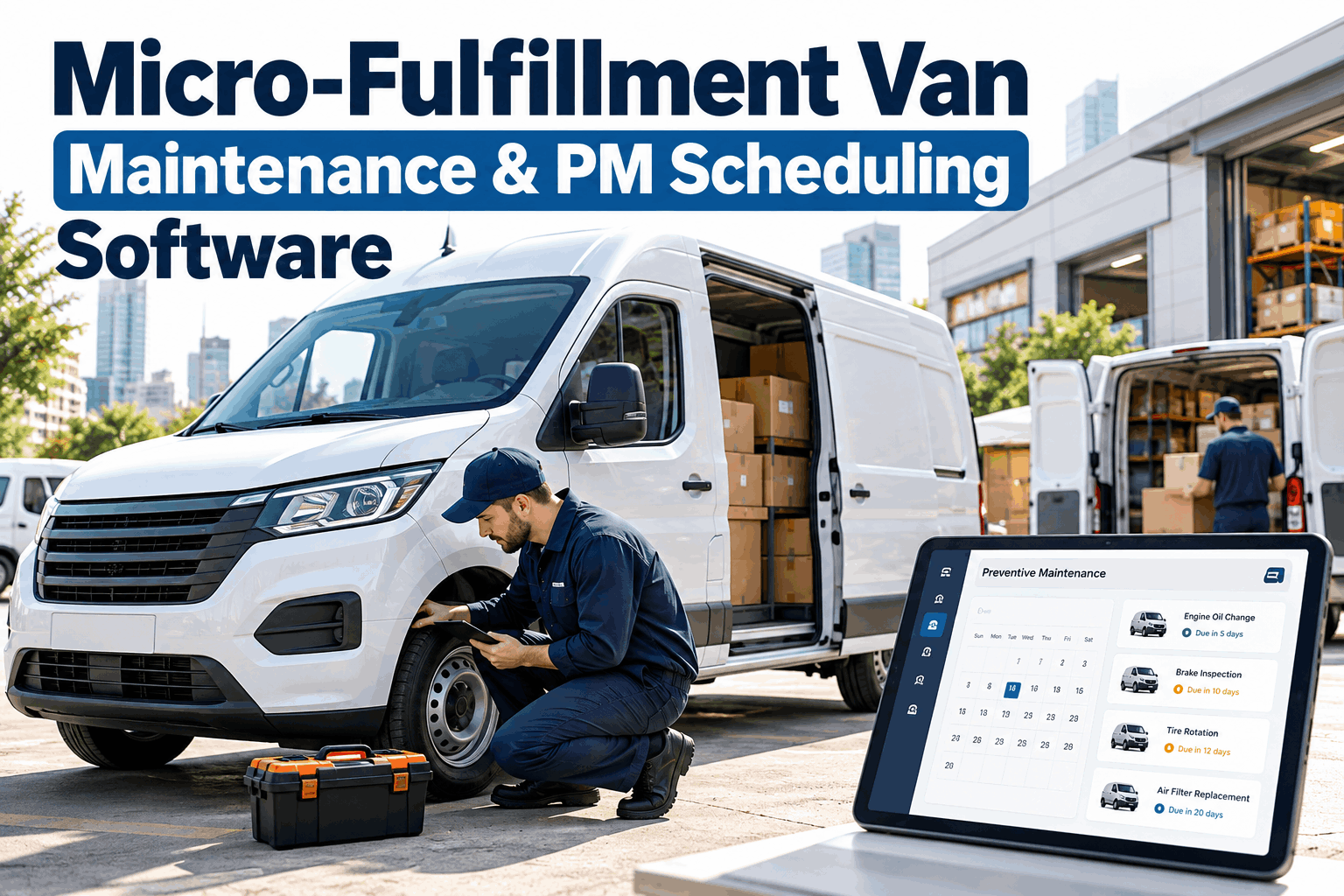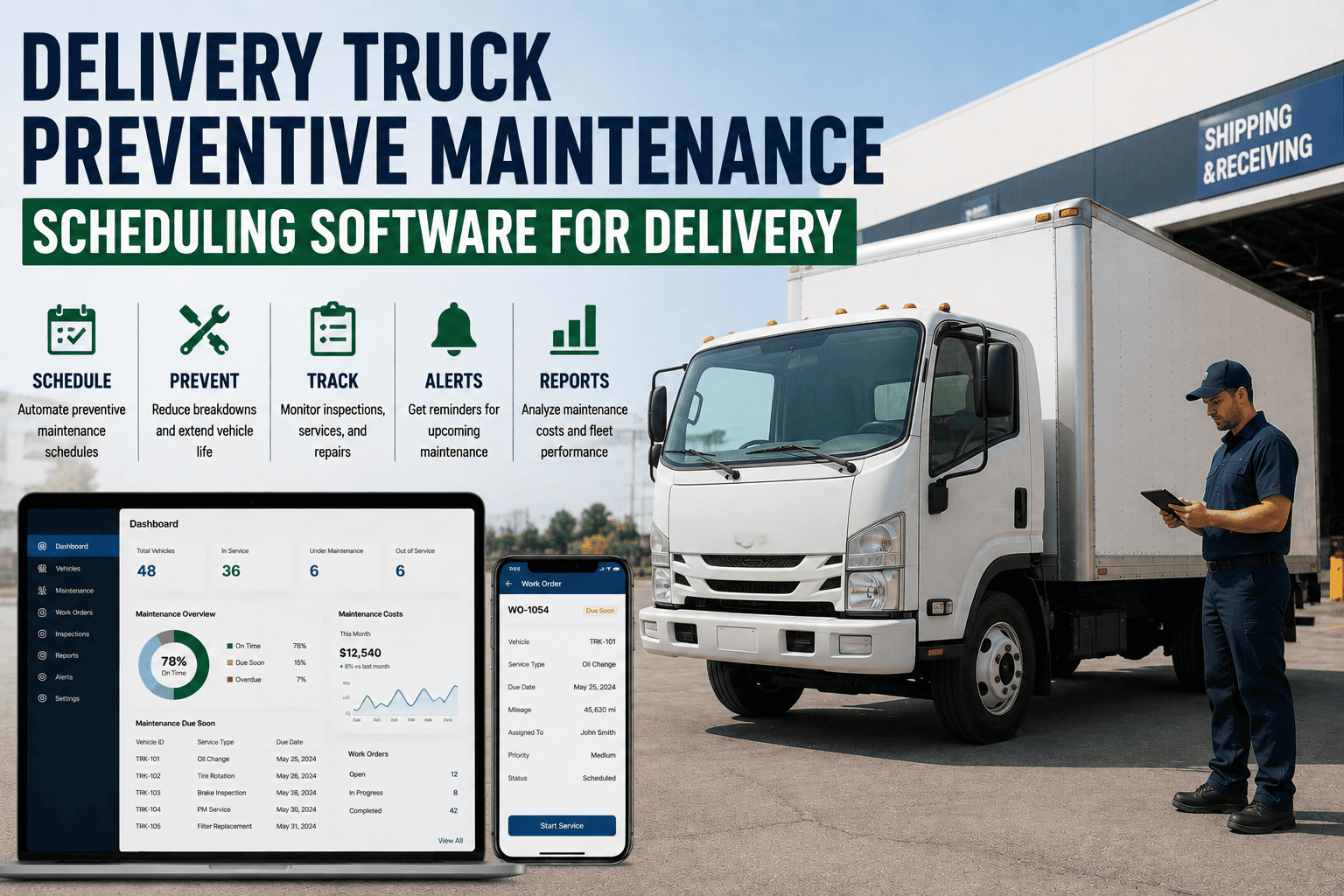
A delivery truck that goes quiet on stop twelve of nineteen doesn't just cost a repair bill. It costs the rest of the afternoon's stops, a customer who was promised a two-hour window, and a dispatcher scrambling to reroute the fleet around one missing vehicle. Preventive maintenance built specifically for delivery operations closes that gap before it opens, turning service intervals into something that runs alongside your routes instead of blowing them up. That's the entire premise behind route-optimized scheduling, and it's worth understanding in plain terms before you sign up and see it against your own fleet data.
Two ways to run a delivery fleet
Every fleet manager is already running one of two systems, whether they've named it or not. Reactive maintenance waits for a dashboard light or a roadside call, then absorbs whatever it costs to fix the truck and reroute the day around it. Preventive maintenance schedules service against mileage, engine hours, and inspection history, so the truck goes into the bay on a slow Tuesday morning instead of a busy Thursday afternoon. Fleets that book a demo to compare the two usually find the second option costs less within the first year, not the fifth.
- Breakdowns happen mid-route, mid-delivery-window
- Emergency labor and towing at premium rates
- Missed stops reshuffle the whole day's dispatch
- Service booked into gaps in the route, not against them
- Parts and labor planned ahead of need
- Drivers stay on schedule, deliveries stay on time
How route-optimized scheduling actually works
Route-optimized scheduling for delivery software isn't a fancier calendar. It's a system that treats the truck's service needs and the truck's delivery route as one problem to solve together, which is the piece most general fleet tools skip entirely.
Mileage, engine hours, prior work orders, and inspection entries feed into a single record per vehicle, so nothing is tracked on a clipboard or lost between shifts.
The scheduler looks at each vehicle's actual delivery calendar and slots maintenance into the gaps, instead of pulling a truck off a route that's already loaded.
Wear patterns and inspection flags surface early, so a technician is booked before a brake or belt issue turns into a roadside call.
Completed work is timestamped and documented the same way a delivery is, so a fleet manager, an auditor, or a customer can see exactly what was done and when.
See it against your own routes
The fastest way to know whether route-optimized scheduling would change your numbers is to look at it with your own trucks and your own delivery windows. It takes a live account and a short walkthrough, not a months-long rollout.
What delivery fleets need that generic maintenance tools don't have
Most fleet maintenance software was built for a mixed bag of vehicles doing loosely defined jobs. Delivery fleets run tighter windows, tighter margins, and far more stop-and-go wear, so the tool needs to be built around that reality rather than adapted to it after the fact. Fleets that sign up tend to start with the four items below.
Maintenance windows are placed where they don't cost a delivery stop, using the same route data your dispatch team already relies on.
Every completed service job is timestamped and documented the same way a completed delivery is, so nothing is a verbal promise.
Defects flagged on a driver's inspection report route straight into the maintenance schedule, before they turn into a roadside violation.
Fleets get their vehicles onto the schedule and their drivers using the system within days of onboarding, with no long IT rollout in between.
City delivery wears trucks down differently than long-haul
A truck making forty stops a day in city traffic doesn't fail the same way, or on the same schedule, as one running interstate miles for a week straight. Constant braking and idling put more strain on brakes, suspension, and starter systems, which is why fleets that stay on a generic mileage-only schedule often see repair costs climb 60 to 80 percent within eighteen months of skipping service intervals built for their duty cycle. A schedule tuned to delivery driving catches that wear on its own terms, not on a schedule copied from a long-haul operation. It's worth seeing how that plays out on your own vehicles before deciding — book a demo and bring your current maintenance log.
Put a number on what downtime is costing you
Every fleet has a version of the twelve-stop breakdown story. The question is whether it happens once a quarter or once a week, and what that's worth in missed windows and idle drivers.
Common questions about delivery truck maintenance scheduling
What is delivery truck preventive maintenance scheduling software
It's a system that plans service work for delivery vehicles ahead of time, based on mileage, engine hours, and inspection history, and fits those service windows into the routes the trucks are already running instead of pulling them off the road unplanned.
How is this different from a general fleet maintenance tool
General tools track service history across any kind of vehicle. Delivery-focused scheduling factors in route timing, stop density, and delivery windows, so maintenance is placed where it won't cost a stop, and it connects to proof-of-delivery style records for every completed job.
How long does it take to get a delivery fleet running on FleetRabbit
Most fleets have vehicles loaded and drivers using the system within days of onboarding, since setup follows the routes and vehicles already in operation rather than requiring a lengthy technical rollout.
Does it work with route planning and proof of delivery already in place
Yes. Scheduling is built to sit alongside existing route and delivery workflows, using the same trip and stop data, so service windows are placed with the delivery day in mind rather than against it.
What size delivery fleet is this built for
It scales from a handful of last-mile vans to fleets running hundreds of trucks across multiple depots, since scheduling logic is applied per vehicle and per route rather than as one blended average.
Can drivers report issues directly through the inspection process
Yes. Defects noted on a driver's vehicle inspection report feed directly into the maintenance schedule, so a flagged issue turns into a booked service appointment instead of sitting in a paper file.