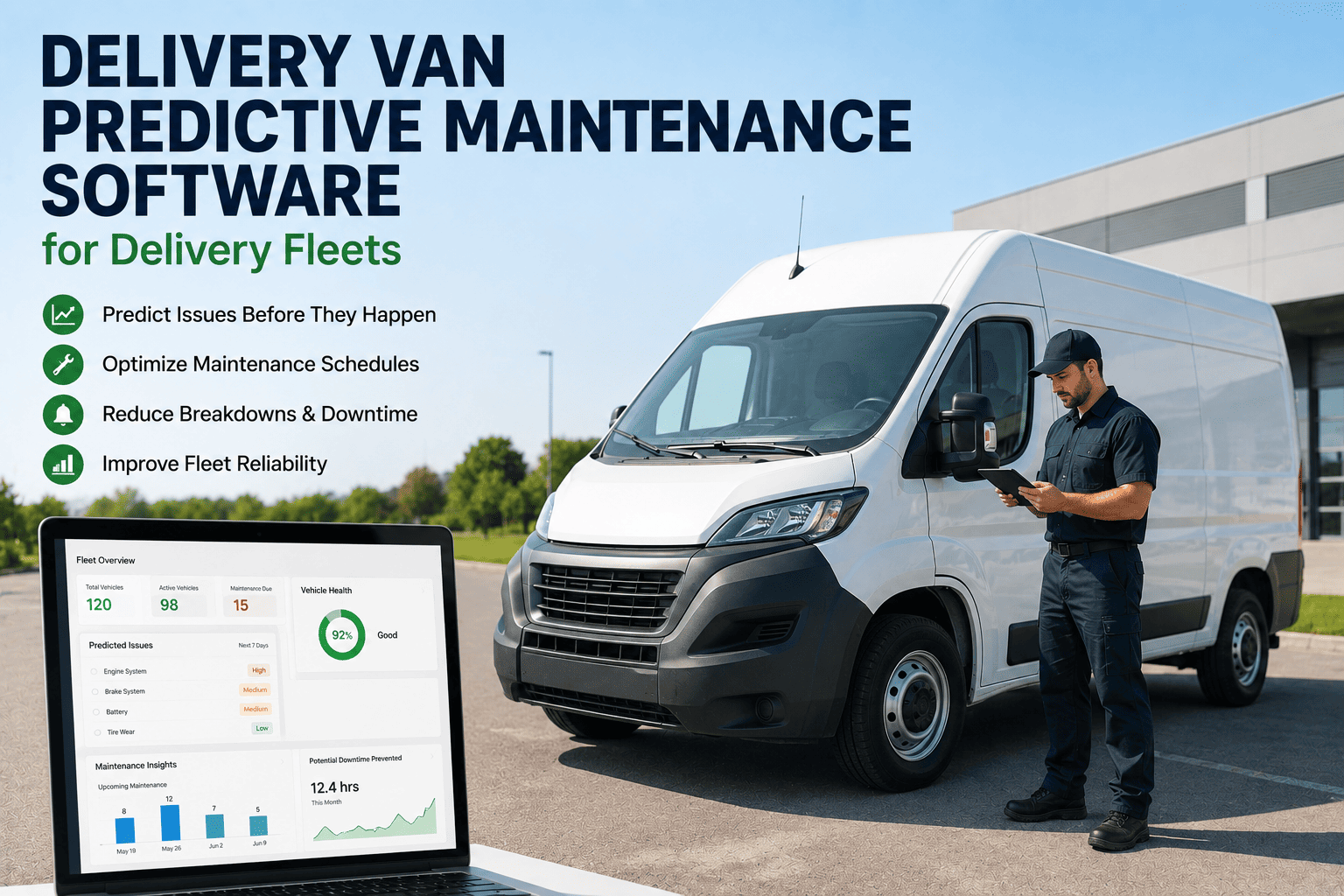
Delivery vans live a different life than long-haul trucks. They start and stop hundreds of times a day, idle at curbs, carry uneven loads between stops, and run on tight delivery windows where a single breakdown can cascade into missed time slots across an entire route. Delivery van predictive maintenance software is built for exactly this pattern, reading real-time vehicle data to flag wear before it becomes a roadside failure, and giving dispatchers a way to plan repairs around the route instead of around a breakdown. For e-commerce and last-mile fleets running dozens or hundreds of vans a day, that shift from reactive fixing to predictive planning changes the entire cost structure of the fleet.
Why delivery vans wear differently, and why that matters for maintenance
A delivery van rarely gets a long, steady highway stretch to cool its brakes and settle its systems. It brakes at every stop, idles while a driver carries packages to the door, and repeats this dozens of times before lunch. That duty cycle wears brakes, suspension components, and starter batteries far faster than mileage alone would suggest, which is exactly why odometer-based maintenance schedules fall short for last-mile fleets. If you manage a fleet like this, it is worth taking the time to book a demo and see how duty-cycle-aware scheduling compares with the calendar-based plan you may be running today.
Predictive maintenance delivery software solves this by watching the signals that actually reflect wear, engine hours, brake actuation counts, battery voltage trends, and idle time, rather than relying on a fixed mileage number that treats every van the same regardless of how it is actually driven.
How the prediction actually works
Onboard sensors
Telematics hardware reads engine hours, brake cycles, battery voltage, and diagnostic codes continuously.
Data streaming
Readings sync to the fleet dashboard in near real time, van by van, route by route.
Pattern analysis
The system compares live wear signals against known failure patterns for each component and duty type.
Scheduled alert
Dispatchers get a service window recommendation before the part fails, timed around open route slots.
The result is a maintenance calendar that reflects the van's actual working life instead of a generic interval. Fleets that want to see this pipeline running on their own vehicle data can sign up and connect a van in minutes.
Give your delivery fleet a maintenance plan that reads the road, not just the odometer
Connect your vans and see the first set of predictive alerts within days.
Delivery van duty cycle snapshot
Frequent stops and short trips concentrate wear on a specific set of components. Here is roughly how much faster those parts degrade on a typical last-mile route compared with a long-haul truck covering similar total mileage.
Scheduling maintenance around the route, not against it
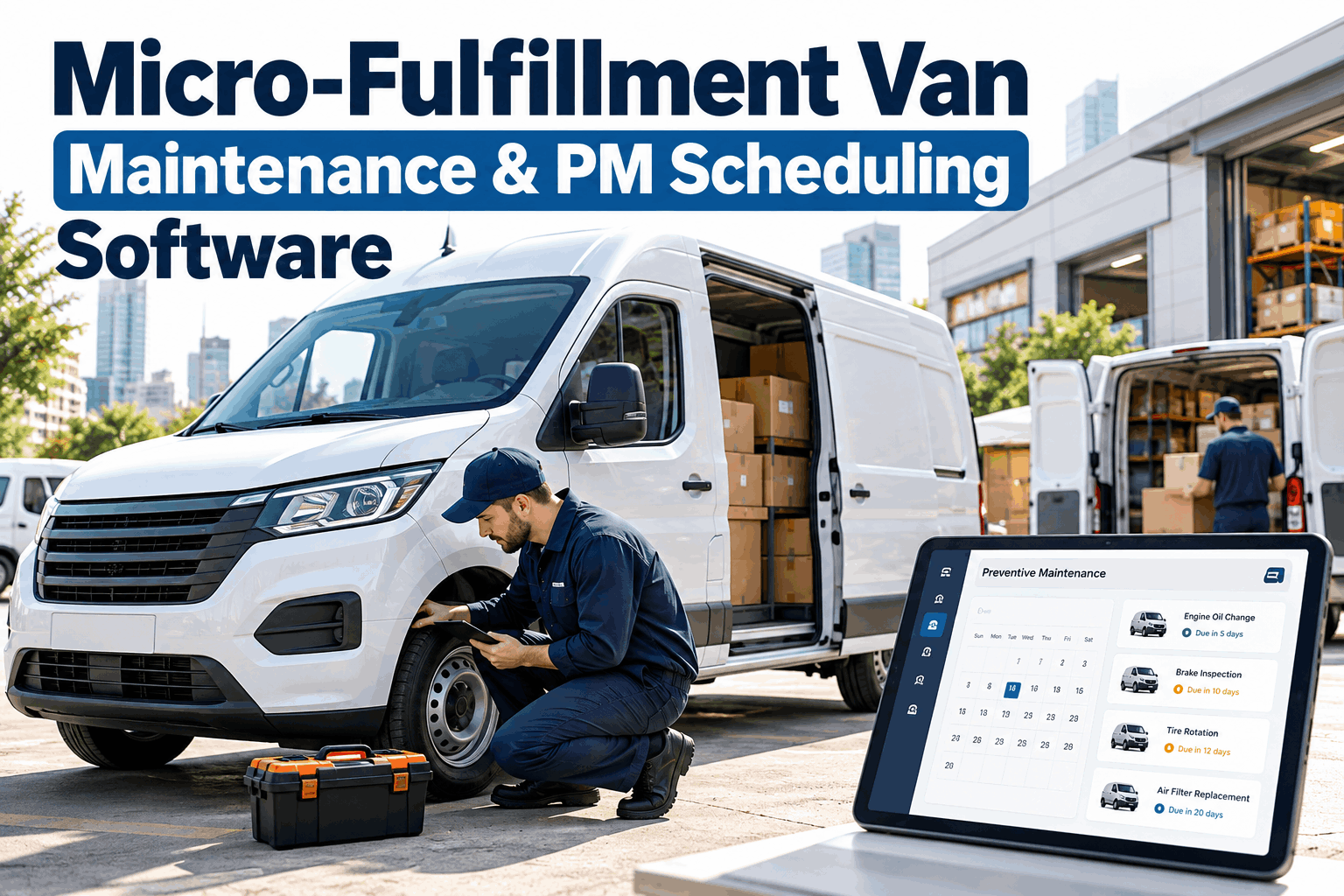
The hardest part of fleet maintenance for a dispatcher is timing. Pull a van in too early and you are wasting a working vehicle's day. Wait too long and you risk a breakdown mid-route with packages still on board. Route-optimized scheduling closes that gap by matching predicted service needs against the day's actual route plan, slotting a van into the shop on a lighter delivery day or after its last drop instead of forcing an unplanned stop. Fleets already running predictive maintenance delivery software often sign up specifically to get this route-aware scheduling layer, since it is the piece that protects delivery windows.
Proof-of-delivery data adds another layer of accuracy here. Because the same platform that captures delivery confirmations also tracks stop counts and drive time per van, maintenance predictions can factor in exactly how hard each vehicle worked that week, not just how many miles it covered. A van running twice the stops of another on the same route will show up differently in the wear model, and the schedule adjusts accordingly.
For dispatchers managing dozens of vans across overlapping routes, this turns maintenance from a background worry into a visible, plannable part of the daily schedule. If your team is still juggling paper logs or spreadsheet reminders, it is worth taking a short look, you can book a demo and walk through how a route-optimized service calendar would look for your fleet specifically.
Manual scheduling versus predictive scheduling
| Approach | Manual or calendar-based | FleetRabbit predictive |
|---|---|---|
| Trigger for service | Fixed mileage or fixed date | Live wear signal per component |
| Timing around routes | Set independently of delivery load | Matched to open route windows |
| Breakdown visibility | Discovered after the fact | Flagged days ahead of failure |
| Data source | Odometer and paper logs | Telematics, engine hours, brake cycles |
| Dispatcher effort | Manual tracking across vans | Automated alerts on one dashboard |
See your delivery fleet's wear patterns before they turn into missed stops
FleetRabbit's predictive maintenance dashboard is built for last-mile duty cycles.
Frequently asked questions
How is predictive maintenance different from preventive maintenance for delivery vans.
Preventive maintenance follows a fixed schedule based on time or mileage regardless of how the van was actually used. Predictive maintenance reads live wear signals from the vehicle, such as brake cycles and engine hours, and recommends service based on actual condition, which fits the uneven stop-and-go pattern of delivery routes much more closely.
What data does delivery van predictive maintenance software actually need.
Most systems pull from a telematics device or the van's onboard diagnostics port, tracking engine hours, battery voltage, brake actuation counts, fault codes, and idle time. Combined with route and stop data, this builds a much more accurate picture of wear than mileage alone.
Can predictive scheduling work around delivery windows.
Yes. Route-optimized scheduling matches predicted service needs against the day's route plan, so a van can be pulled in during a lighter delivery day or right after its last stop instead of interrupting an active route.
Does this replace a driver's daily vehicle inspection.
No. Daily inspections remain important for catching visible issues and staying compliant. Predictive maintenance software adds a data layer on top of those inspections, catching wear that is not visible during a walkaround, such as internal battery degradation or early brake wear.
Is predictive maintenance software worth it for a small delivery fleet.
Even a fleet of a handful of vans benefits from earlier fault detection, since a single unplanned breakdown on a delivery day can affect every stop scheduled after it. Smaller fleets often see the fastest return because there is less redundancy to absorb one van going down unexpectedly.