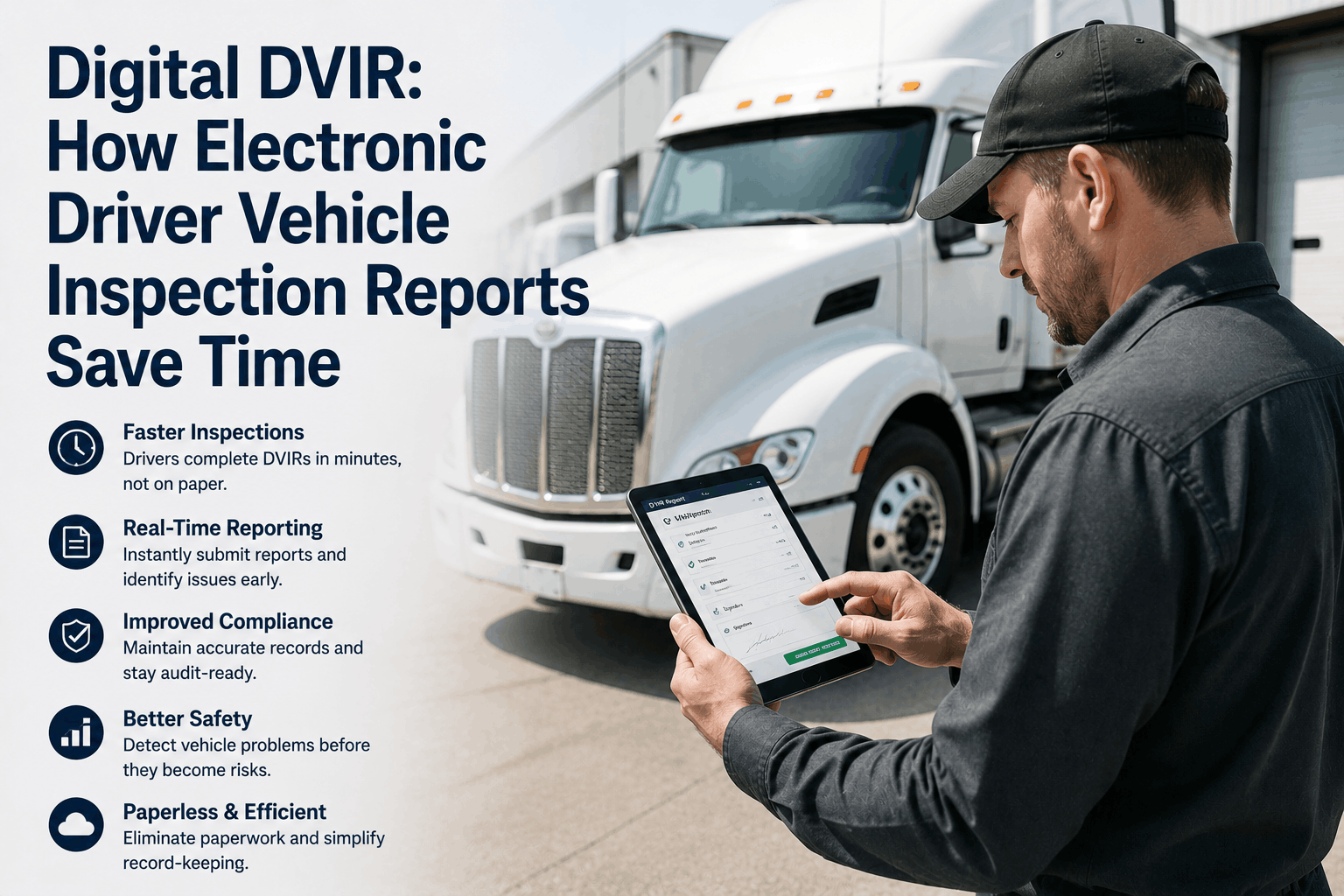
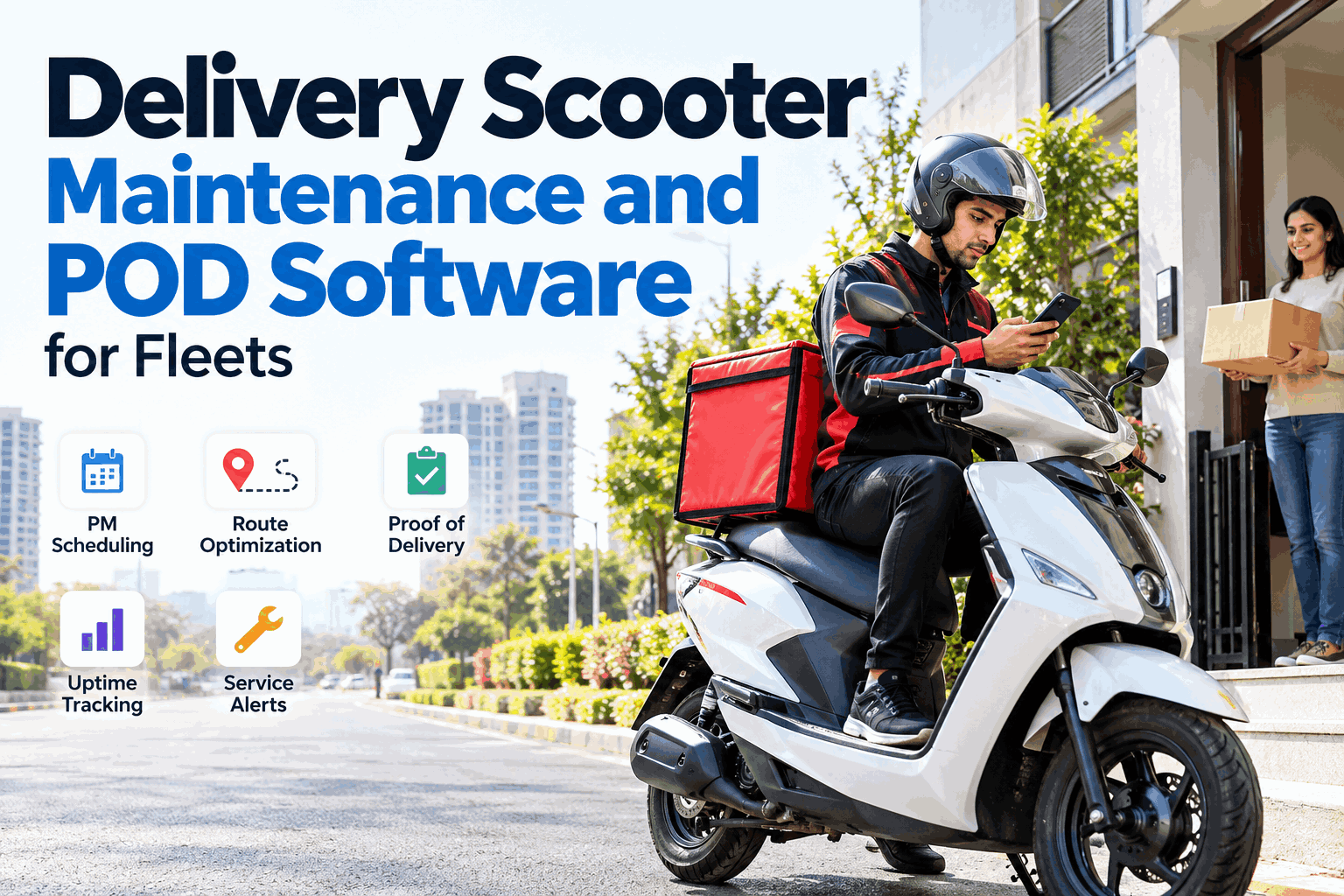
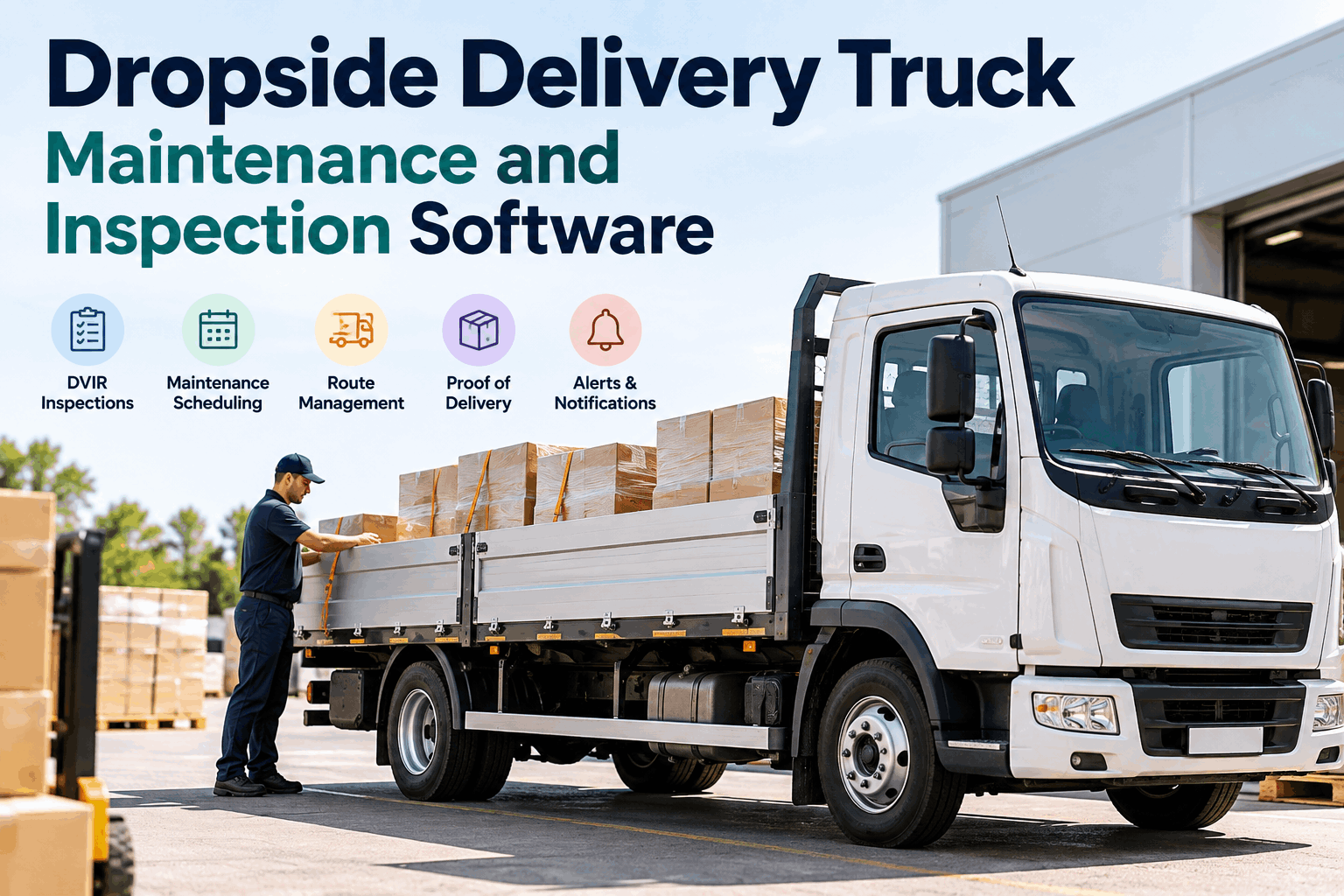
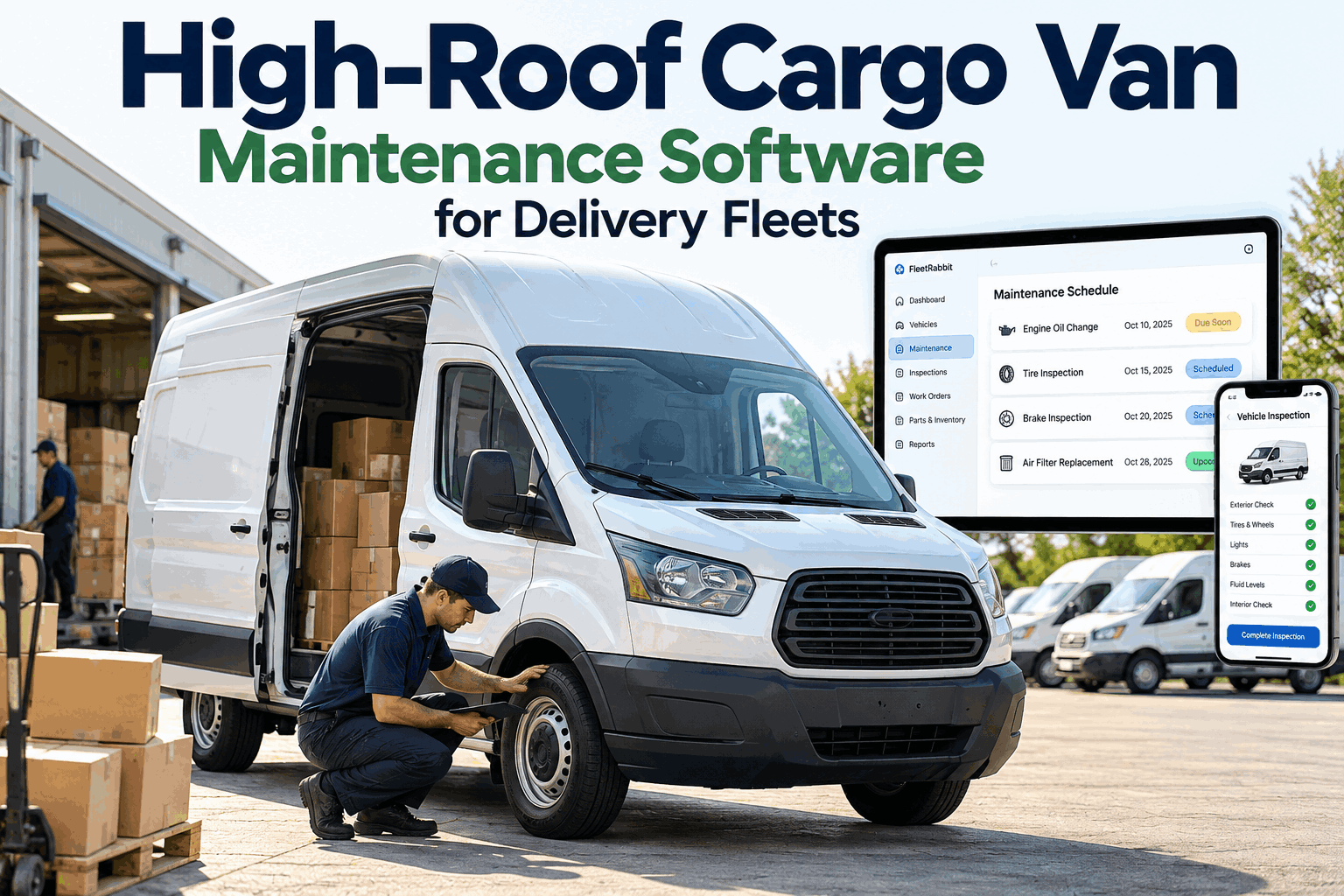
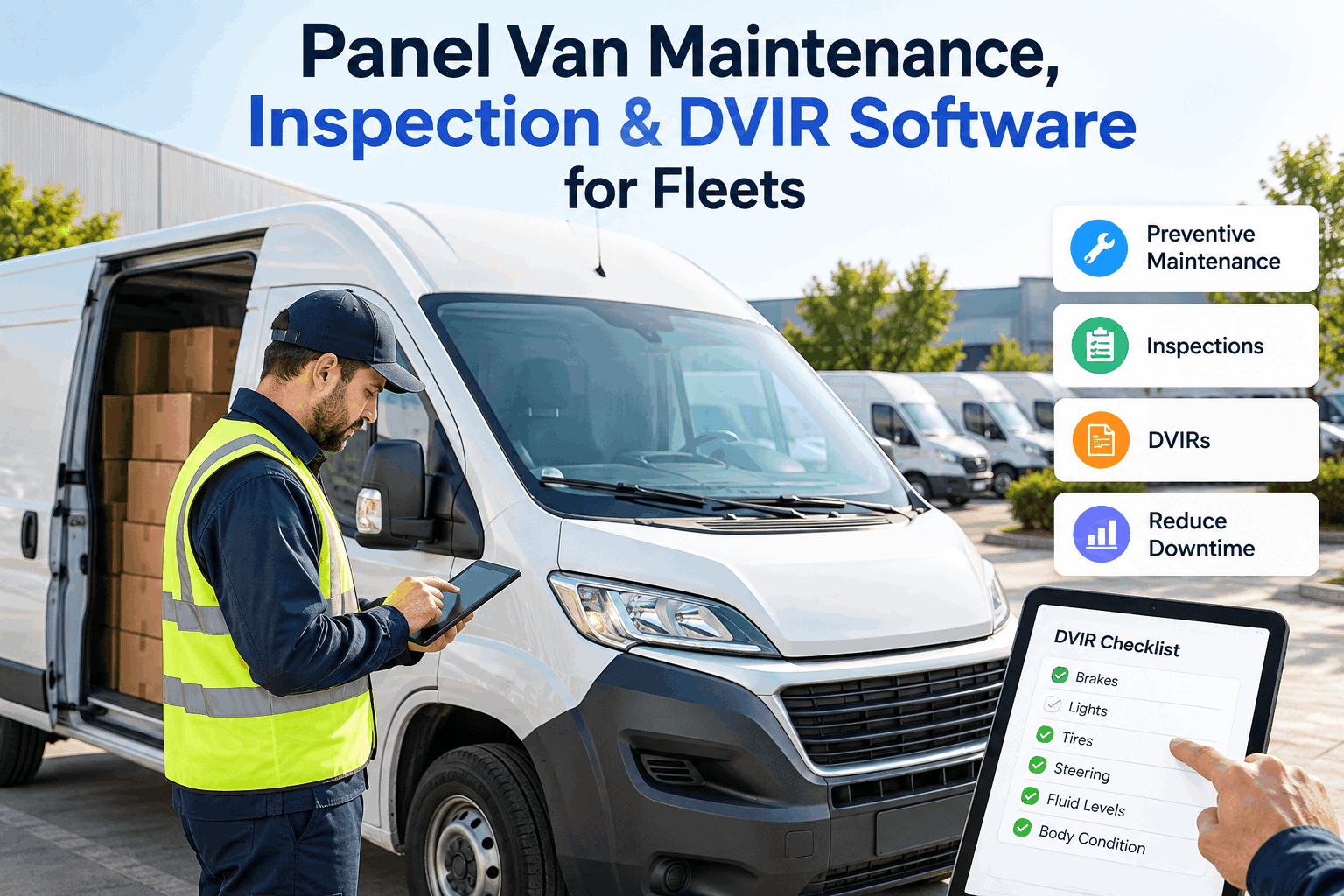
Digital DVIR — Electronic Driver Vehicle Inspection Reports — is the fastest-growing compliance upgrade in US last-mile delivery, replacing paper pre-trip and post-trip inspection logs with mobile-completed, GPS-timestamped, cloud-stored records drivers finish in under 3 minutes. For e-commerce operators across California, Texas, Washington, and Arizona, paper DVIR is a daily drain: drivers spend 8–15 minutes on manual forms, defects go underreported, and DOT audit prep takes days. Fleet Rabbit's digital DVIR gives US fleets mobile inspection workflows, real-time defect escalation, maintenance integration, and audit-ready storage — purpose-built to eliminate compliance risk in last-mile delivery. Book a demo to see Fleet Rabbit's digital DVIR applied to your fleet.
Quick Answer
Digital DVIR replaces paper logs with mobile-completed, cloud-stored reports delivering five core advantages: faster driver completion (under 3 minutes vs. 8–15 for paper), real-time defect escalation to dispatchers, GPS-timestamped audit trails satisfying DOT requirements instantly, automatic maintenance work-order generation, and photo-documented driver accountability. US e-commerce fleets using Fleet Rabbit reduce inspection time 70%, cut compliance violations 85%, and achieve full DOT audit readiness in under 60 seconds.
Why Paper DVIRs Are Failing US Fleets
FMCSA regulations require commercial vehicle drivers to complete pre-trip and post-trip Driver Vehicle Inspection Reports covering brakes, tires, lights, steering, and 10+ additional components before and after every shift. For most US e-commerce fleets this means paper forms — filled in parking lots, often incomplete, filed in binders, and invisible until a DOT audit forces a frantic multi-day records search.
The Paper DVIR Compliance Gap
A 2024 FMCSA study found 34% of paper DVIR violations involved missing or incomplete records — not actual vehicle defects. Drivers skip fields under time pressure, forms get lost or illegible, and fleets have zero visibility that inspections were completed before wheels rolled.
Driver Time Cost Across the Fleet
At 8–15 minutes per paper inspection and two inspections daily, a 40-vehicle fleet loses 160–200 driver-minutes every morning. Digital DVIR cuts this to 2–3 minutes — recovering 80–120 minutes daily, worth $4,200–$7,800 annually in recaptured productive time at $18/hr.
DOT Audit Risk Without Digital Records
FMCSA requires DVIR records retained for 3 months and available on demand. Paper-based fleets in California and Texas face 2–4 days of manual audit preparation. Digital records are searchable and exportable in under 60 seconds — turning a compliance liability into a competitive advantage.
Benefit #1: Faster Inspections — From 12 Minutes to Under 3
Mobile inspection apps present drivers with a structured checklist — tap Pass, Fail, or N/A per component, photograph any defect, add a voice note, submit. GPS, timestamp, and driver ID are captured automatically. No pen, no clipboard, no illegible handwriting.
1
Guided Mobile Checklists — No Training Required
Fleet Rabbit's app presents inspection items in FMCSA-required sequence with plain-language prompts. Photo capture is built into every defect flag. New drivers complete compliant inspections from day one with no paper form training needed.
Phoenix operator, 28 vehicles: Pre-digital avg 11 min → Post-Fleet Rabbit 2.5 min. Daily time recovered: 238 min across fleet. Annual value at $18/hr: $19,100 in recaptured productive time.
2
Offline Capability for Yard Dead Zones
Delivery yards in Los Angeles, Seattle, and Houston often have poor cellular coverage. Fleet Rabbit's app completes and stores inspections offline, syncing automatically when connectivity restores — dead zones never create compliance gaps.
Works offlineAuto-syncs on reconnectZero data loss
3
Pre-Departure Lockout — Vehicles Don't Roll Without Compliance
Fleet Rabbit's dispatch integration flags any vehicle without a completed pre-trip DVIR, preventing dispatch until the inspection is submitted. Dispatchers see real-time status across the entire fleet — eliminating vehicles departing with missing reports.
Target: 100% pre-trip completion before first departure. Fleets using Fleet Rabbit's lockout achieve 98–100% compliance within the first week of deployment.
Digital DVIR + Compliance Management
Achieve 100% DVIR Compliance — Starting Day One of Deployment
Fleet Rabbit's digital DVIR platform combines mobile inspection workflows, real-time defect escalation, and audit-ready cloud storage to eliminate compliance risk across your US delivery fleet.
70%
Inspection Time Reduction
85%
Compliance Violations Cut
Benefits #2–5: Defect Alerts, Audit Readiness, Maintenance Integration, Driver Accountability
Beyond speed, four additional digital DVIR capabilities deliver the majority of compliance, safety, and operational value for US e-commerce fleets.
Benefit #2: Real-Time Defect Alerts — Safety Issues Reach Managers in Seconds
The paper gap: A driver noting a brake issue at 6 AM may not reach a supervisor until 9 AM — after the vehicle has departed. In California and Washington, dispatching a vehicle with a known defect creates direct liability under state commercial vehicle codes.
Fleet Rabbit fix: Any flagged defect triggers an immediate push notification with photo, description, and GPS location. Safety-critical defects auto-generate a "do not dispatch" status until cleared by a mechanic.
Result: Defect-to-resolution time drops from 4–6 hours (paper) to under 45 minutes.
Benefit #3: DOT Audit Readiness — 3 Months of Records in 60 Seconds
The audit reality: FMCSA requires DVIR records retained for 3 months and produced on demand. For California fleets under CARB or Texas fleets under DPS enforcement, paper audit prep means hours of manual searching with gaps creating immediate violations.
Fleet Rabbit delivers: Every digital DVIR is stored with vehicle ID, driver ID, GPS timestamp, and outcome — searchable by date, vehicle, or defect type. A full 90-day audit package exports in PDF within 60 seconds.
CA context: California's BIT program requires quarterly records — Fleet Rabbit eliminates the 2–3 day manual prep previously required.
Benefit #4: Auto Work-Order Generation — Defects Become Repair Tickets Instantly
The handoff problem: Paper DVIR defects require manual transcription into a maintenance system — skipped under operational pressure. A Seattle operator found 23% of paper-flagged defects never generated a repair order within 30 days.
Fleet Rabbit closes the loop: Every flagged defect auto-converts into a maintenance work order pre-populated with vehicle ID, description, photo, and timestamp. The mechanic sees it instantly; dispatch sees when it's cleared.
Financial impact: Preventing one breakdown per vehicle per quarter at $2,400/incident saves a 30-vehicle fleet $72,000 annually.
Benefit #5: Photo Documentation — Accountability Paper Cannot Provide
The underreporting problem: Drivers on tight schedules skip defects on paper to avoid delays — removing maintenance visibility and creating safety risk. Without photographic evidence, disputed damage between shifts is impossible to resolve objectively.
Fleet Rabbit creates accountability: Photo capture is built into every defect flag — timestamped and GPS-located. End-of-shift post-trip DVIRs document vehicle condition at return, enabling clear damage attribution between shifts.
Insurance impact: Fleets using photo-documented digital DVIRs report 15–25% fewer disputed damage claims.
Digital DVIR ROI: Combined Impact for US E-Commerce Fleets
70%
Faster Inspection Completion
85%
Compliance Violations Reduced
60 sec
Full DOT Audit Package
23%
Fewer Defects Left Unresolved
25%
Disputed Damage Claims Cut
30–45
Days to Full Platform ROI
Frequently Asked Questions: Digital DVIR for US E-Commerce Delivery
QDoes digital DVIR satisfy FMCSA requirements for commercial vehicle inspections?
Yes. FMCSA regulations under 49 CFR 396.11 and 396.13 permit electronic DVIR submission provided records include driver ID, vehicle ID, date, inspection items, defects noted, and driver certification. Fleet Rabbit captures all required fields automatically with GPS timestamp and e-signature — providing stronger audit evidence than paper. Records are stored for the required 90-day minimum and exportable in DOT-compliant PDF on demand.
QHow does Fleet Rabbit handle drivers who rush through inspections?
Fleet Rabbit tracks completion time per driver — flagging inspections finished in under 60 seconds as potential skip-throughs. Dispatchers receive alerts for abnormally fast completions, and weekly compliance scores show completion rate, average time, and defect-reporting rate versus fleet average. Drivers with significantly lower defect-reporting rates than peers are flagged for coaching review.
QCan digital DVIR work for mixed CDL and non-CDL fleets?
Fleet Rabbit supports configurable inspection templates — full FMCSA-required checklists for CDL commercial vehicles over 10,001 lbs and simplified templates for lighter delivery vans. Mixed fleets operating sprinter vans alongside box trucks across Los Angeles, Seattle, and Phoenix manage both from one dashboard with appropriate checklists applied per vehicle type automatically.
QWhat's the fastest way to transition from paper DVIRs?
Fleet Rabbit recommends a 2-week parallel period where drivers complete both paper and digital inspections simultaneously. Driver training takes under 20 minutes, with most drivers completing their first unassisted digital DVIR in under 4 minutes. Fleet Rabbit's customer success team provides on-site launch support for deployments of 20+ vehicles across California, Texas, Washington, Arizona, and Nevada.
Related Fleet Rabbit Resources for E-Commerce Logistics
The four AI capabilities transforming e-commerce fleet operations — real-time GPS visibility, predictive vehicle health monitoring, dynamic route optimization, and delivery performance analytics — with ROI data for each.
AI-driven fault prediction and automated maintenance scheduling that prevents mid-route breakdowns — the reliability foundation that digital DVIR defect escalation depends on to function effectively.
How real-time utilization tracking, idle reduction analytics, and fleet right-sizing reduce total operating cost — complementing DVIR compliance with operational efficiency gains.
How GPS hardware, IoT vehicle data, and cloud analytics combine to deliver real-time fleet visibility, predictive maintenance, and compliance management — the technology powering Fleet Rabbit's digital DVIR platform.
Go Fully Compliant with Digital DVIR — See Fleet Rabbit in Action
Fleet Rabbit's digital DVIR platform delivers all five compliance and efficiency benefits through one integrated system — mobile inspection workflows, real-time defect escalation, DOT-ready audit storage, automatic work-order generation, and photo-documented driver accountability across your entire US delivery fleet. Most operations recover full platform investment within 30–45 days.
70% Faster Inspections
85% Fewer Violations
60-Second Audit Export
Real-Time Defect Alerts
30–45 Day ROI
May 26, 2026
By Lebron
All Posts