EV Charging Integration for Electric Delivery Fleets
Fleet electrification directors, last-mile courier executives, and urban distribution operations managers face an escalating operational challenge: scaling commercial battery electric vehicle (BEV) delivery fleets while managing fragmented, proprietary charging networks. Transitioning from internal combustion engines to electric delivery vans introduces variables that traditional dispatch systems completely ignore: dynamic state-of-charge (SoC), real-time battery health (SoH), temperature-dependent kilowatt-hour consumption rates, peak utility demand charges, and charger port availability across private depot plugs and public fast-charging corridors. When delivery routing software operates disconnected from EV supply equipment (EVSE) networks, electric vans suffer from mid-shift battery depletion, couriers waste billable hours searching for unoccupied DC fast chargers, and parcel distribution stations face crippling utility peak-load surcharges. Fleet Rabbit delivers a dedicated EV charging-network integration and delivery operations platform that unites Open Charge Point Protocol (OCPP) charger telemetry with high-density parcel route sequencing, real-time vehicle battery diagnostics, and mobile electronic proof-of-delivery (ePOD). Eliminate range anxiety, automate depot smart-charging schedules around off-peak electric tariffs, and scale zero-emission final-mile delivery profitably. Book a Demo to see our EV charging-network integration platform in action.
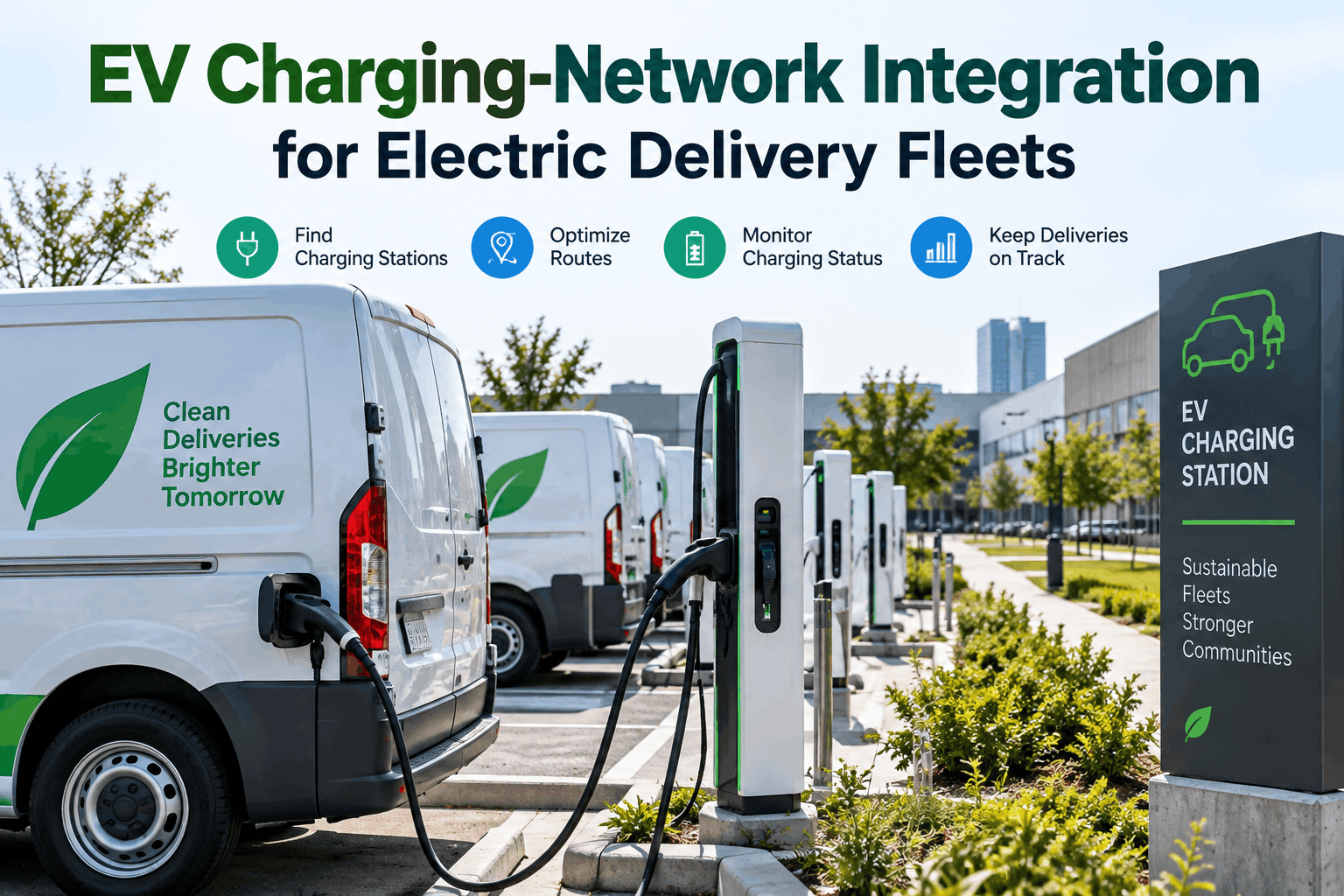
EV Charging-Network Integration for Electric Delivery Fleets
A technical operational blueprint for electric courier fleets: connect depot chargers and public EVSE networks with dynamic route sequencing, monitor real-time battery degradation, avoid peak demand utility surcharges, and protect parcel delivery SLAs.
Live battery state-of-charge tracking eliminates towing and delivery route failures.
100%
OCPP Network Interoperability
Unified control across ChargePoint, ABB, Blink, Tritium, and depot chargers.
$5
Per Asset / Month
Predictable software pricing covering EV telematics, dynamic routing, and driver ePOD.
Scale Your Electric Delivery Fleet Without Running into Charging Gridlocks
Automate depot charger load balancing, dynamically route vans based on battery state-of-charge, and eliminate driver range anxiety while reducing utility demand charges.
The Operational Friction of Unmanaged Electric Delivery Fleets
Replacing diesel or gasoline vans with commercial electric vehicles without integrating charging infrastructure into dispatch operations creates immediate systemic bottlenecks. Traditional dispatch software treats energy as an infinite variable. Sign up to modernize your electric vehicle dispatch operations.
Cold winter weather, steep topography, high highway speeds, and maximum cabin heating can drain battery range by 30% to 45%. Routing that ignores dynamic consumption strands couriers curbside with undelivered parcels.
Bottleneck 03
Wasted Driver Time at Occupied Public Plugs
When drivers need midday opportunity charging, searching blindly for public chargers leads to out-of-order equipment, incompatible plug types, or long queues, breaking tight parcel delivery SLAs. Sign up to integrate live public EVSE charger availability feeds.
Consistently rapid-charging hot battery packs to 100% state-of-charge during high summer temperatures accelerates battery capacity loss, degrading vehicle asset residual value and forcing early battery replacements.
Integrate directly with depot Level 2 and DC fast chargers via OCPP protocols. Stagger vehicle charging profiles to take advantage of low overnight utility rates, ensuring all vans reach target departure charge without tripping main transformer breaker thresholds. Sign up to automate depot smart-charging schedules.
Pillar 02
Battery-Aware Dynamic Route Sequencing
Our routing algorithms calculate kWh consumption per stop by analyzing parcel cargo payload weight, route elevation changes, ambient weather, and cabin climate control loads, ensuring dispatched routes never exceed 80% of usable battery range.
Pillar 03
Automated En-Route Opportunity Charging
If an extended suburban route requires midday top-up charging, the platform identifies available, operational public high-speed DC chargers along the delivery path and inserts a 20-minute charging window during the courier's mandatory lunch break. Book a demo to test our automated charging stop insertion.
Pillar 04
Battery Health & Regenerative Brake Maintenance
Track battery pack health (SoH), internal cell temperature imbalances, and regenerative brake efficiency via live OBD-II diagnostic streaming, auto-generating workshop maintenance work orders before minor electrical faults ground delivery assets.
Electric Fleet Range Consumption Model: kWh/Mile Calculations
Usable Range (Miles) = [ Total Battery kWh × Current SoC% × SoH% - Reserve Buffer ] ÷ [ Base Consumption (kWh/mi) × Payload Factor × Temp Factor × Elevation Gradient ]
Notice the temperature and elevation factors: operating an electric cargo van in 25°F winter weather with 1,200 lbs of parcel payload increases energy consumption by up to 40% compared to mild spring driving, requiring dynamic dispatch buffers to prevent mid-route battery failure.
Platform Comparison: Unmanaged Fleets vs. Fleet Rabbit Integration
4-Phase EV Network Deployment Roadmap: Live in 14 Days
Deploy Fleet Rabbit smoothly across your charging stations, electric cargo vans, and dispatch hubs without disrupting ongoing parcel delivery runs. Sign up to begin your electric fleet onboarding.
Phase 01
Charger & BMS Ingestion (Days 1–3)
Connect depot Level 2/DC chargers via OCPP endpoints, map utility tariff schedules, and upload electric van battery specifications.
Phase 02
Energy Threshold Calibration (Days 4–7)
Configure target departure battery percentages (typically 85% to preserve battery pack life) and establish minimum safety buffers for en-route charging.
Urban Parcel Carrier Eliminates Mid-Route Battery Failures Across 26 Electric Vans
Operating 26 electric step-vans handling over 3,000 daily residential deliveries in a hilly metropolitan region, GreenMile Urban Logistics struggled with unexpected range loss. In cold winter months, heaters drained vehicle batteries faster than dispatchers expected, resulting in four vans being towed in a single week. Furthermore, plugging all vans in simultaneously upon return caused thousands of dollars in monthly utility demand penalties.
By deploying Fleet Rabbit, the carrier integrated their depot charging stations with active vehicle telematics and dynamic route dispatch. Smart-charging algorithms staggered charging schedules between 11:00 PM and 5:00 AM, slashing utility demand charges by 38%. Dynamic state-of-charge route sequencing accounted for elevation and winter cabin heating, completely eliminating mid-route towing incidents and keeping on-time parcel delivery compliance above 99.6%.
Frequently Asked Questions
What is OCPP and why is it essential for commercial EV fleet management?
Open Charge Point Protocol (OCPP) is the universal open standard for communication between EV chargers and central management software. It allows fleets to connect chargers from various manufacturers (such as ChargePoint, ABB, Blink, and Tritium) to a single management platform, preventing expensive vendor hardware lock-in and enabling automated smart-charging, power metering, and remote station restarts.
How does dynamic route sequencing prevent electric vans from running out of battery?
Unlike static routing tools that only measure map distance, Fleet Rabbit continuously pulls live battery state-of-charge (SoC) percentages from vehicle telematics. Our algorithm factors in parcel payload weight, route elevation profiles, traffic congestion, and ambient weather temperatures, ensuring dispatches never exceed a safe 80% battery discharge threshold.
How does smart charging reduce commercial electricity utility bills?
Electric utilities charge commercial customers expensive peak demand fees based on the highest kilowatt spike recorded during the month. Fleet Rabbit's smart-charging module staggers power distribution across depot charging plugs, charging vehicles overnight during the lowest off-peak tariff hours and capping aggregate power draw to stay below utility threshold tiers.
Can drivers collect electronic proof-of-delivery without cellular connectivity?
Yes. Fleet Rabbit features an offline-first mobile architecture. Couriers can scan parcel barcodes, capture high-resolution doorstep photos, and record customer signatures inside concrete underground parking garages or rural dead zones. The app records exact timestamps and satellite coordinates, automatically syncing to dispatch once cellular connectivity returns.
What are the pricing details and contract terms for Fleet Rabbit's EV platform?
Fleet Rabbit is priced at a flat rate of $5 per active delivery asset per month billed annually. This includes complete access to EV charging network integration, battery-aware route sequencing, dynamic ETA engines, mobile driver ePOD tools, and telematics-based vehicle maintenance. We provide a 14-day free trial on up to 3 vehicles with zero setup fees or locked contracts.
Ready to Integrate Your EV Charging Network with Delivery Operations?
Eliminate battery range anxiety, automate depot smart charging, and streamline parcel delivery for just $5/asset/month.