Fleet operations leaders across California, Nevada, Arizona, and Oregon face a persistent gap: "fleet maintenance" and "fleet management" get used interchangeably — but they fund different tools, justify different hires, and solve different problems. A Los Angeles civil contractor optimizing equipment uptime needs different software than a Phoenix logistics director tracking 80 delivery vehicles. Book a demo to see how Fleet Rabbit covers both fleet maintenance and fleet management in a single platform.
Quick Answer
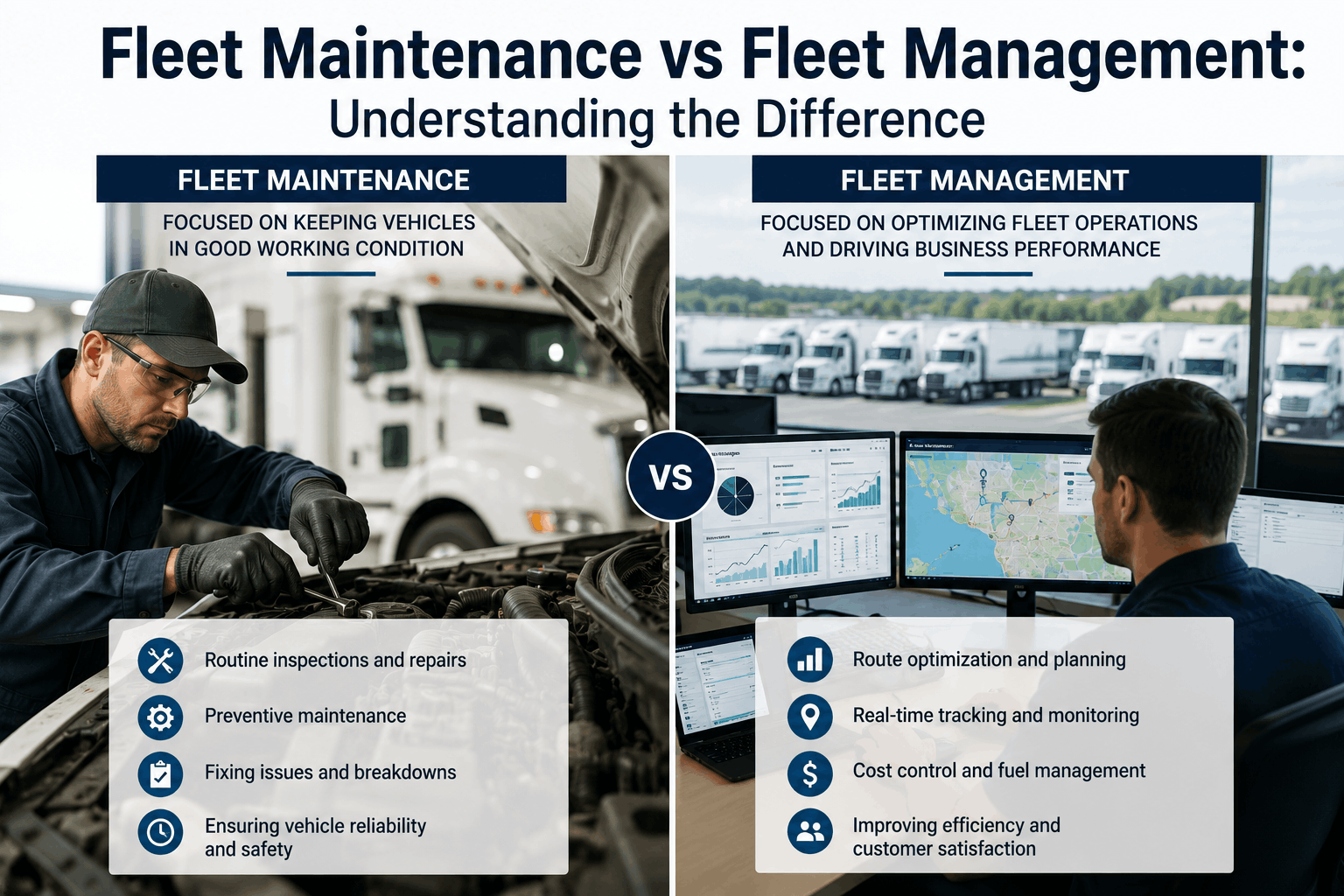
Fleet maintenance focuses on keeping vehicles and machines mechanically sound — scheduling PMs, tracking repairs, managing parts, and reducing unplanned downtime. Fleet management is broader: asset utilization, fuel accountability, operator performance, compliance, and total cost of ownership. Western US contractors typically need both, and the right platform delivers them in one system.
The Core Distinction: Maintenance vs. Management
Think of fleet maintenance as the mechanical layer and fleet management as the operational layer. A Sacramento paving contractor running 30 machines needs maintenance systems to prevent a Cat 320 from failing mid-project — and management systems to know whether that machine is being used efficiently, fueled accurately, and deployed to the right site. Neither layer replaces the other.
Fleet Maintenance
Mechanical
PMs, repairs, parts, downtime prevention
Fleet Management
Operational
Utilization, fuel, compliance, TCO
Overlap Zone
IoT Data
Sensor data powering both functions
Western US Risk
Gap Cost
$4K–$14K/mo when layers are siloed
Fleet Maintenance: What It Covers and Why It Fails Without IoT
Preventive Maintenance Scheduling
Hour-based PM schedules for oil changes, filter replacements, and hydraulic services. On Western US construction sites running 10–14 hour shifts, equipment blows past calendar-based schedules in weeks — requiring engine-hour tracking from CAN bus or telematics sensors.
Work Order and Repair Tracking
Documenting every repair event — labor hours, parts consumed, technician, root cause — creates the history that drives future PM intervals and warranty claims. Without this, a Nevada contractor with 25 dozers has no way to identify a recurring hydraulic failure before it becomes a fleet-wide issue.
Parts and Inventory Control
Tracking parts on hand and reorder thresholds prevents a grader sitting idle in an Arizona desert site because the right filter wasn't stocked. Integrated platforms connect parts consumption to work orders automatically — eliminating the manual parts search cycle.
Average Unplanned Downtime Cost — Western US Construction Equipment (per incident)
Western US fleet operator survey data 2024–2025. Costs include idle labor, project delay penalties, and emergency repair premiums.
Fleet Management: What It Covers Beyond Maintenance
1
Asset Utilization and Deployment
Fleet management tracks how many hours each machine works versus sits idle — and matches equipment to active job sites to eliminate excess inventory. A California contractor running 6 simultaneous sites can identify under-utilized excavators and redeploy them rather than renting additional units at $2,800/week.
Oregon infrastructure firm, 40-machine fleet: Fleet management data revealed a 22% idle rate across loaders. Redeployment eliminated 4 rental units and saved $134K annually.
2
Fuel Accountability and Theft Prevention
Fleet management owns the fuel layer — tracking consumption per machine, per operator, and per site. Without IoT-linked fuel data, a 20-machine Nevada fleet loses $2,000–$8,000 monthly to siphoning, ghost refuels, and slow leaks that appear as normal variance on paper receipts.
Flow sensor monitoringOperator-linked refuelingAnomaly alerts
3
Compliance and Total Cost of Ownership
California CARB regulations, Nevada DMV requirements, OSHA inspection records, and CalTrans fuel documentation all live in the management layer. TCO reporting connects maintenance costs, fuel spend, utilization, and depreciation into per-machine data — driving buy vs. rent vs. retire decisions for Arizona and Oregon contractors.
Arizona highway contractor: TCO reporting identified 3 machines where annual maintenance cost exceeded 40% of replacement value — triggering a disposal cycle that freed $380K in capital.
Fleet Maintenance + Management Platform
Fleet Rabbit Covers Both Layers — Maintenance and Management in One IoT Platform
OEM-agnostic sensors. Predictive maintenance alerts, fuel accountability, utilization tracking, and compliance documentation — all from a single dashboard across your Western US fleet.
Where Maintenance and Management Overlap — The IoT Bridge
Fleet Maintenance Functions
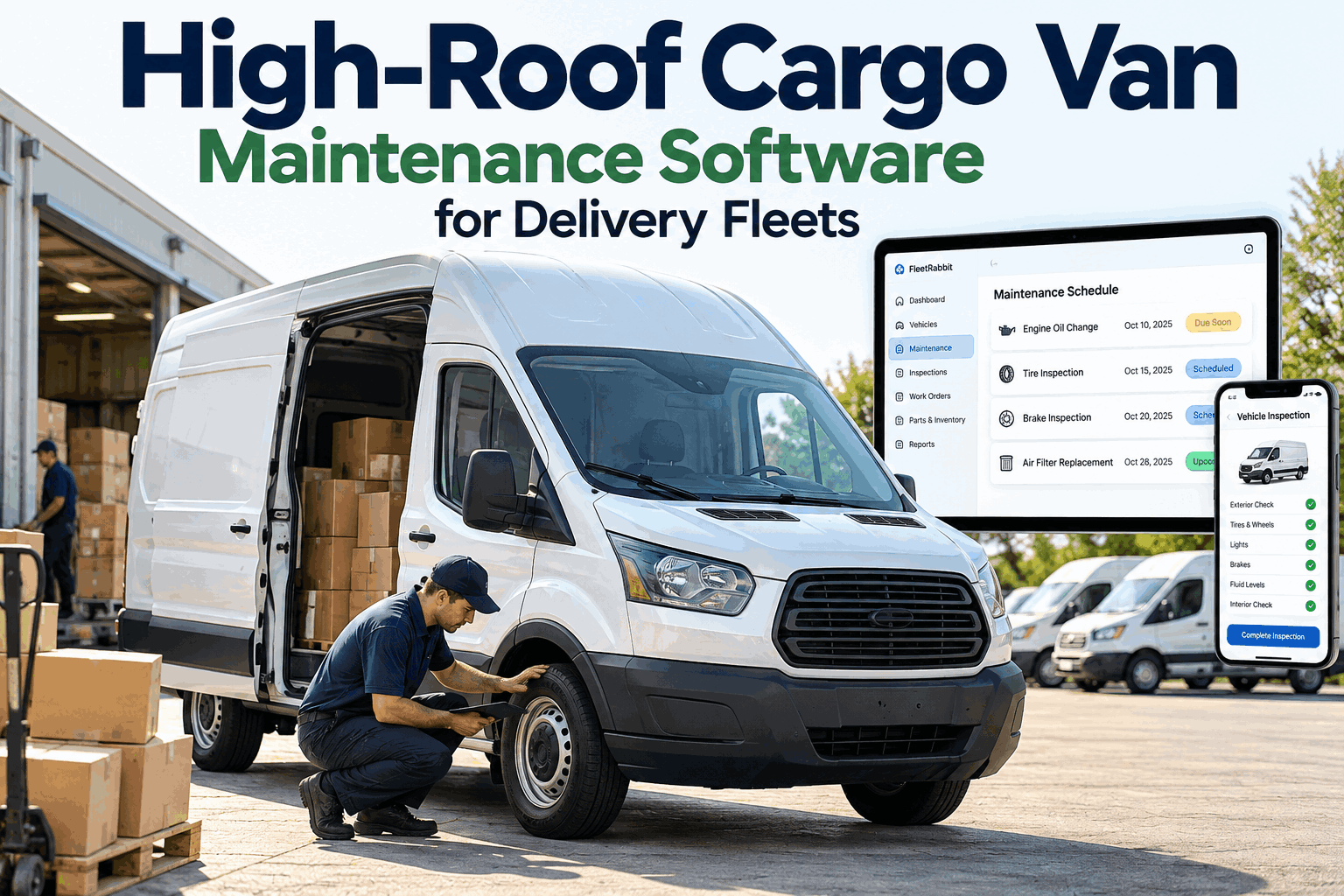
PM scheduling by engine hours
Work order creation and tracking
Parts inventory and reorder
Repair history and warranty claims
Technician labor allocation
Fault code response and diagnostics
Fleet Management Functions
Asset utilization and idle tracking
Fuel accountability and theft detection
Operator performance scoring
Compliance and regulatory documentation
Site-level deployment optimization
Total cost of ownership reporting
The overlap zone is where IoT sensor data feeds both functions simultaneously. A CAN bus fault code triggers a maintenance work order — and also appears in a fleet management utilization report as unplanned downtime. Platforms that silo maintenance and management data force manual re-entry and lose the cross-functional insight that drives real cost reduction.
Choosing the Right Tools: 4 Buyer Scenarios for Western US Fleets
California General Contractor — Mixed Heavy Equipment, 5+ Sites
Need: Both layers critical. Equipment downtime on a prevailing-wage LA job site costs $3,000–$6,000/day in idle labor plus delay penalties. Fuel theft across multiple active sites compounds daily.
Right tool: Unified IoT platform with maintenance scheduling (CAN bus fault alerts, PM triggers) AND management functions (fuel sensors, utilization, CalTrans documentation).
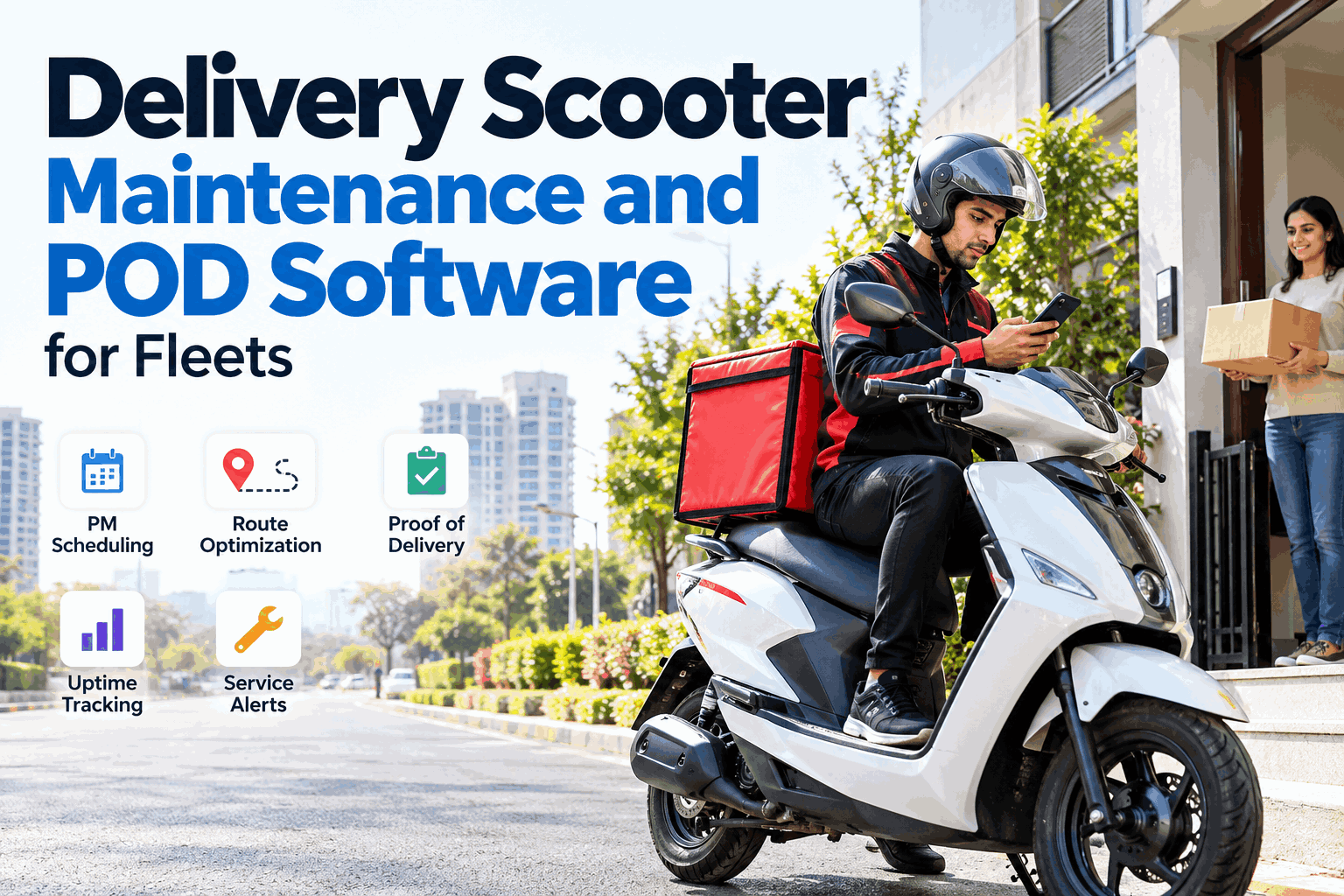
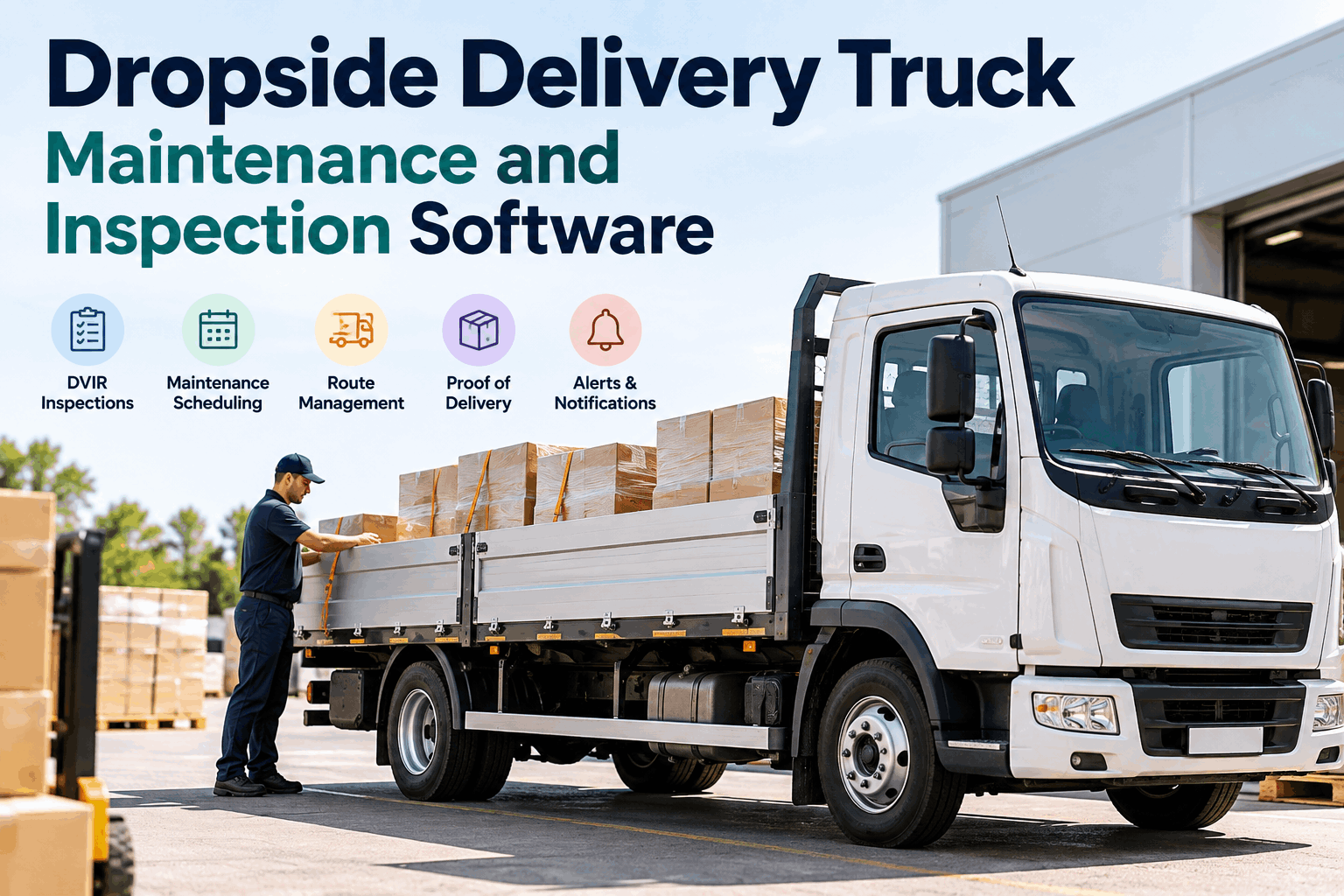
Nevada Last-Mile Delivery Fleet — 40–80 Vehicles
Need: Fleet management emphasis — route optimization, driver performance, fuel spend, and DOT compliance dominate. Maintenance scheduling is important but secondary to operational efficiency at scale.
Caution: Pure maintenance CMMS tools lack the utilization and fuel accountability features a logistics operator needs at this scale.
Arizona or Nevada Mining — Remote, Off-Grid Equipment
Need: Maintenance scheduling is mission-critical — equipment failure in a remote Sonoran Desert site means a 4-hour parts run and $8,000+ in downtime. Fuel theft at unmanned overnight sites is a parallel threat requiring offline-capable IoT with edge AI.
Fleet Rabbit fit: Edge AI operates without cellular; satellite modem integration available for permanently off-grid Arizona and Nevada sites.
Oregon or Washington Municipal Fleet — Mixed Vehicles
Need: Compliance documentation dominates — public fleet audits, OSHA records, emissions compliance, and public records requirements. Both maintenance scheduling and utilization tracking are required, but compliance drives the platform decision.
Caution: Municipal fleets buying maintenance-only CMMS miss compliance documentation and utilization reporting required for budget justification.
Fleet Rabbit: Maintenance and Management Unified — Western US Performance Data
40%
Unplanned Downtime Reduction
$6.2K
Avg Monthly Fuel Recovery
94%
Fault Detection Before Failure
22%
Avg Idle Rate Reduction
6–12%
Insurance Premium Reduction
Frequently Asked Questions
QCan a single platform handle both fleet maintenance and fleet management?
Yes — and it should. Unified platforms eliminate data re-entry and surface cross-functional insights that siloed tools miss. A CAN bus fault code should simultaneously trigger a maintenance work order and appear in a utilization report. Fleet Rabbit's IoT telematics platform delivers both functions from a single sensor installation across excavators, loaders, trucks, and mixed fleets.
QWhich function matters more for a California construction contractor?
Both are critical, but the weighting depends on fleet size and site count. Below 10 machines on 1–2 sites, maintenance scheduling often delivers the highest immediate ROI. Above 15 machines across 3+ sites, fuel accountability and utilization tracking (fleet management functions) frequently recover more cost per month.
QDoes Fleet Rabbit work on older equipment without factory telematics?
Yes. Fleet Rabbit's inline sensors and external CAN bus adapters mount on any equipment regardless of manufacturer or model year. A 1998 Cat D8 and a 2024 Komatsu PC490 run side-by-side in the same dashboard. Full sensor installation on a 20-unit fleet completes in 4–5 days with no equipment downtime.
Related Fleet Rabbit Resources
AI-driven fault prediction and automated maintenance scheduling that prevents mid-project breakdowns across excavators, loaders, and cranes.
Real-time GPS, predictive health monitoring, dynamic route optimization, and delivery performance analytics — with ROI data for each capability.
Real-time utilization tracking, idle reduction analytics, and fleet right-sizing data for Western US contractors.
How GPS hardware, IoT sensors, and cloud analytics combine to deliver real-time heavy equipment visibility and operational intelligence.
One Platform for Fleet Maintenance and Fleet Management — See Fleet Rabbit in Action
Fleet Rabbit's OEM-agnostic telematics platform unifies predictive maintenance scheduling, fuel accountability, utilization tracking, compliance documentation, and TCO reporting across your Western US fleet. On-premise or cloud. Any brand. Any age. Full ROI in 45 days.
OEM-AgnosticMaintenance + ManagementTamper-Proof LogsOn-Premise Option45-Day ROI
June 3, 2026
By Michael Finn
All Posts