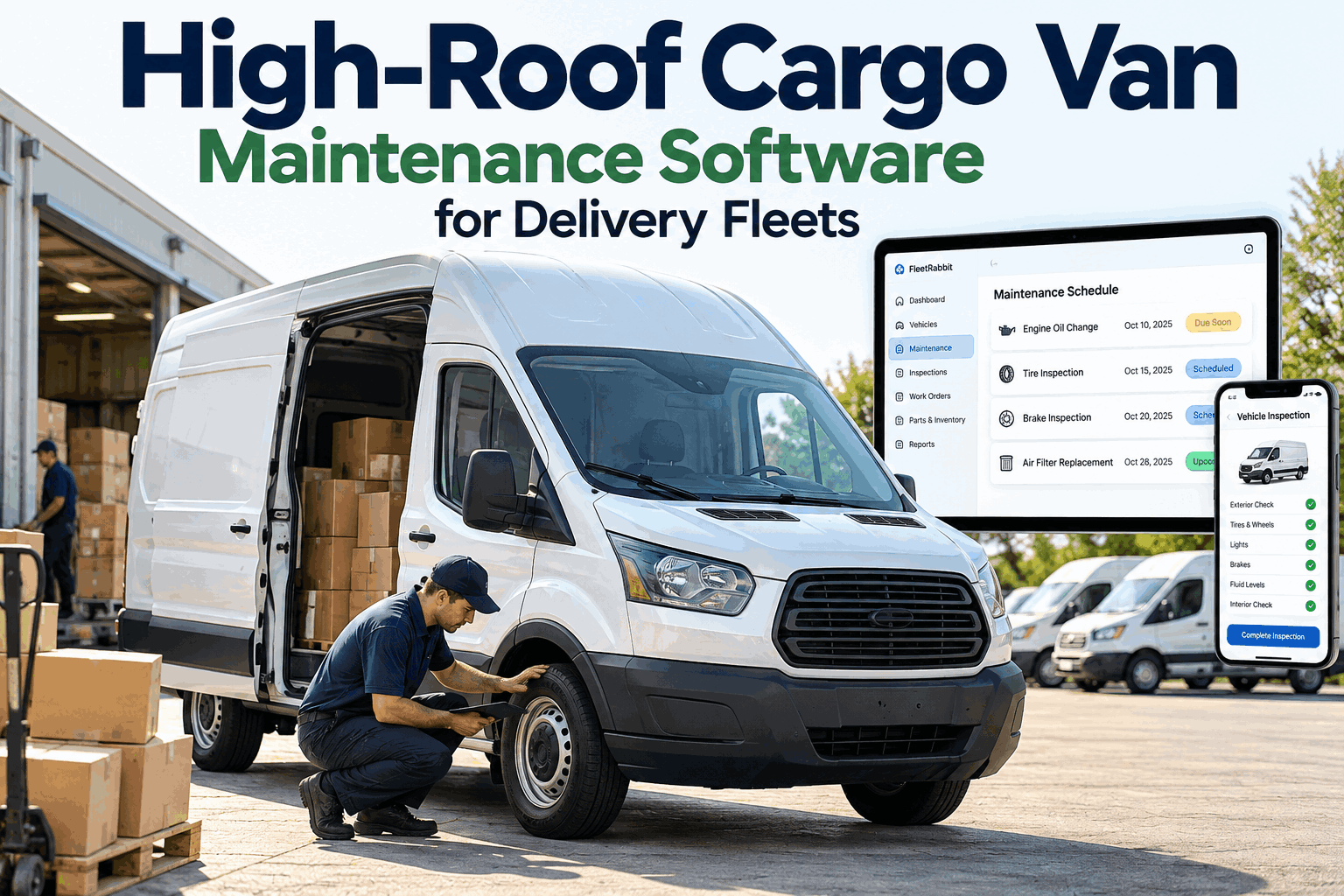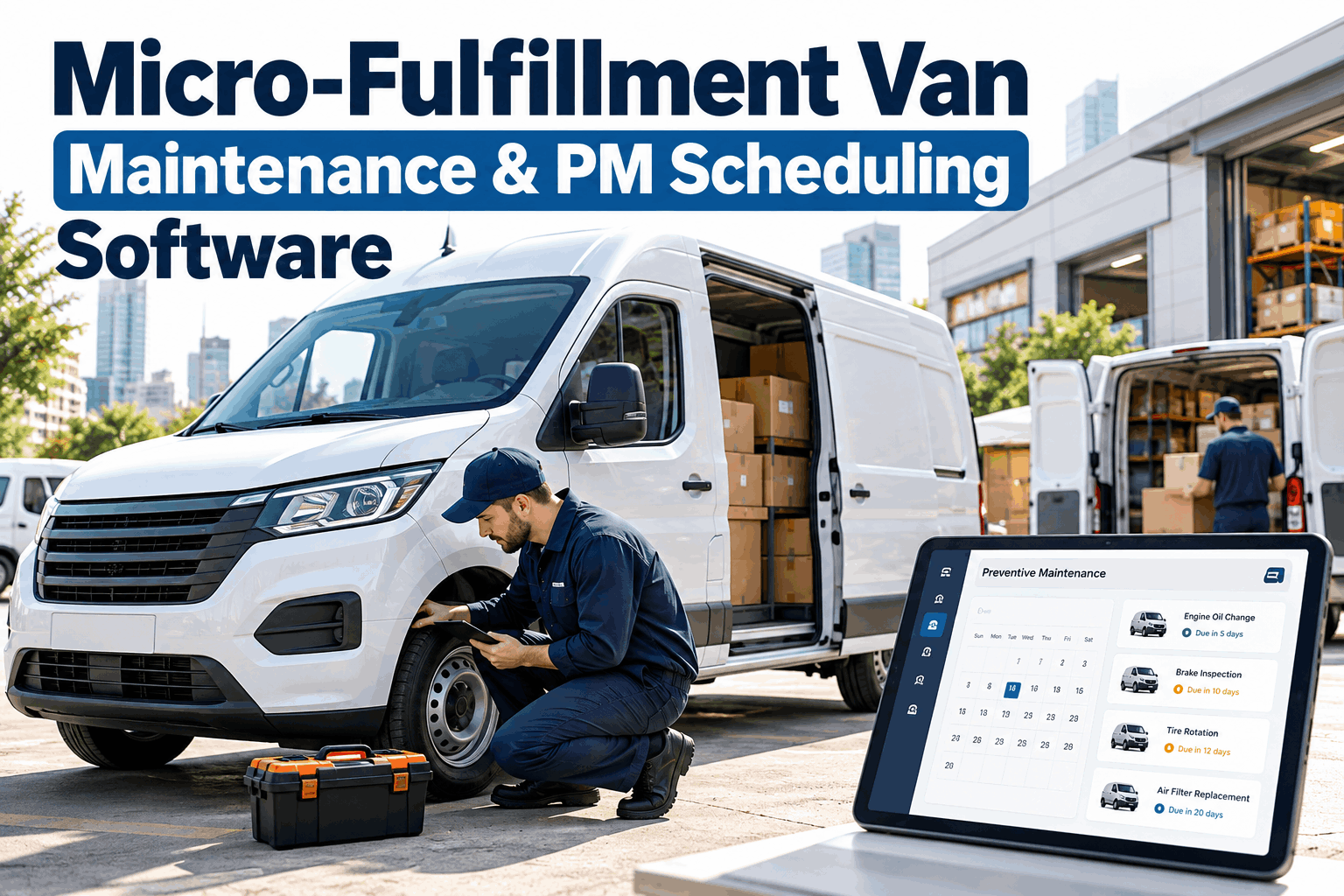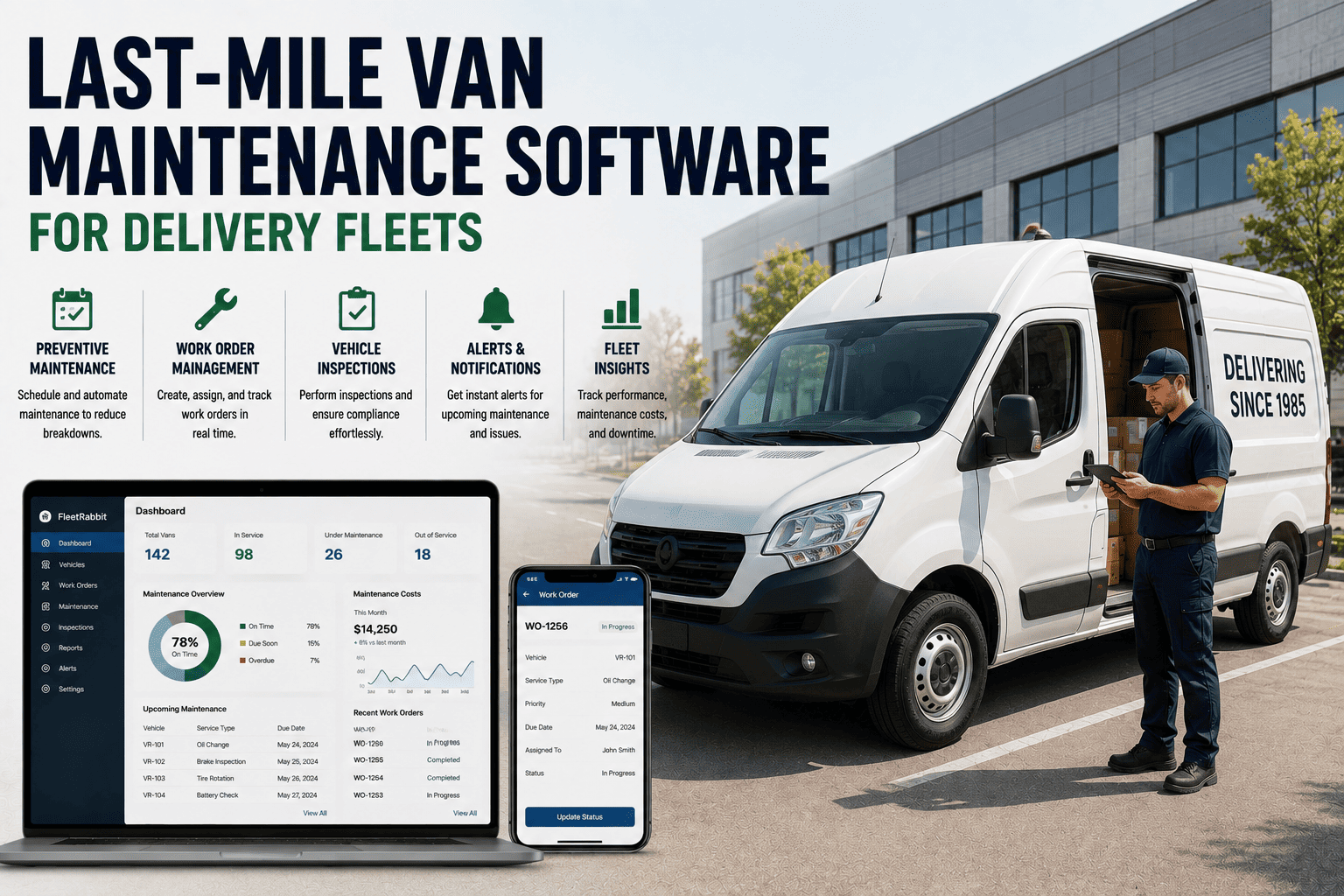
A last-mile van doesn't get the easy life of a long-haul truck. It brakes 300 to 600 times a route, opens its cargo doors 50 to 120 times a day, and idles through stop-and-go traffic that ages its oil three times faster than highway driving would. One van going down mid-route doesn't delay a single shipment the way a truck breakdown does — it cancels 80 to 150 individual deliveries in a single afternoon, each one carrying its own missed promise. Maintenance software built for that reality looks nothing like a generic fleet spreadsheet, and it's worth seeing what that looks like before you decide whether to sign up or just read on first.
Where last-mile vans actually wear out first
A maintenance schedule copied from a long-haul truck manual will miss almost everything that actually fails on a delivery van, because the driving pattern is completely different. These are the parts that take the daily punishment, and why they need their own service intervals.
300 to 600 stops a route wear brake pads 40 to 60 percent faster than the manufacturer's spec assumes, since that spec is built for mixed driving, not constant urban stop-and-go.
Constant low-speed, high-load operation stresses the drivetrain harder than steady highway miles, and transmission failure is the single largest cause of multi-day van downtime.
Every open-and-close cycle adds wear to hinges, seals, and lift mechanisms that a mileage-only schedule never accounts for.
Frequent hard stops and curb work shorten tire life and stress suspension components well ahead of the mileage where a highway vehicle would show the same wear.
Seeing this mapped against your own van fleet is faster than reading about it — book a demo and bring last quarter's repair log.
The cost math behind one van sitting still
Planned downtime costs almost nothing, because it's scheduled around the route. Unplanned downtime is a different animal entirely, and the numbers behind it are what make preventive scheduling worth the switch for most e-commerce fleets.
Find out what your own vans are costing you
Most fleets have never measured the gap between planned and unplanned downtime on their own vans. A short walkthrough with your own repair history usually answers it in one sitting.
What last-mile van maintenance software needs to actually do
Delivery vans run 40,000 to 60,000 miles a year, which is two to three times a typical passenger vehicle. Generic maintenance tools built around calendar reminders fall behind that pace fast, which is why fleets that sign up usually replace a spreadsheet or a paper log on day one.
Service intervals are tied to actual mileage and engine hours, not a calendar date, so a high-mileage van never quietly drifts past its service window.
Every van gets a quick digital check before it leaves the depot, catching a fault before it becomes a mid-route breakdown rather than after.
Every completed repair is timestamped and documented with the same rigor as a delivery, so nothing depends on a mechanic's memory.
Maintenance is scheduled into the gaps in a van's route calendar instead of pulling it off a loaded day, protecting delivery capacity.
Scheduled versus completed service is tracked automatically, closing the gap between the 90 percent compliance software makes possible and the 5 percent a paper log usually delivers.
Sensors and setup are handled per vehicle in a couple of hours, so a fleet of thirty vans can be fully live within three to four days of starting.
A van that gets ahead of its own wear pattern almost always outlasts one running on a generic schedule, and the difference shows up first in fewer surprise repairs and second in a lower cost per mile. If your fleet is still tracking service on a spreadsheet, this is usually the point where it stops paying off — book a demo and compare it against what you're running today.
Give your dispatch team fewer surprises
A van that never makes it out of the depot is a problem you can plan for. One that dies at stop forty is not.
Common questions about last-mile van maintenance software
What is last-mile van maintenance software
It's a system built specifically for high-mileage delivery vans, scheduling service around actual mileage and engine hours, running pre-dispatch health checks, and keeping every completed repair documented the same way a completed delivery is.
How is van maintenance different from truck maintenance
Vans brake and stop far more often per route, run more delivery stops per day, and log two to three times the annual mileage of a passenger vehicle, so their brakes, doors, and drivetrain wear on a different curve than a long-haul truck's.
How quickly can a van fleet get set up
Installation typically takes two to three hours per vehicle with no downtime, and a fleet of around thirty mixed vans is usually fully live within three to four days.
Does this replace a paper maintenance log or spreadsheet
Yes. Scheduled and completed service are tracked automatically against actual mileage, closing the gap between the high compliance software makes possible and the low compliance a manual log usually produces.
What size delivery fleet is this built for
It works for fleets from a handful of vans up to several hundred, since scheduling is calculated per vehicle based on its own mileage and route history rather than one blended fleet average.
Does it connect to proof of delivery and route data already in use
Yes. Service windows are placed using the same route and trip data your dispatch team already relies on, so maintenance is scheduled with the delivery day in mind rather than against it.