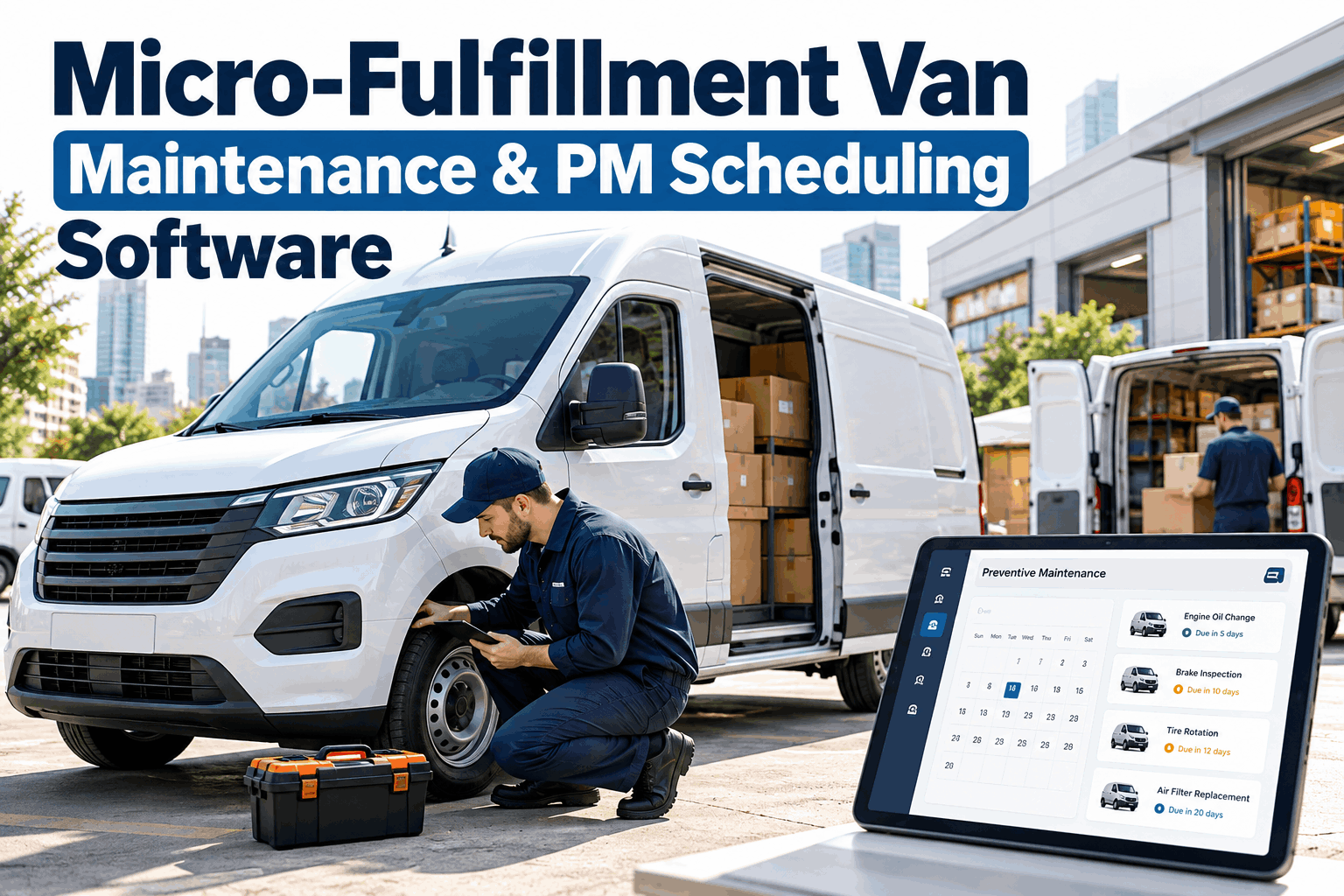
A micro-fulfillment van doesn't run one big loop and park for the night. It leaves a hub inside the city, drops a small batch of orders within a three to five mile radius, and comes straight back for the next batch, sometimes within the hour. That pattern is what makes sub-two-hour delivery possible, and it's also what wears a van down in a completely different way than a traditional delivery route does. Maintenance software built for one long daily route misses most of what actually happens to a van running a dozen short hub-and-spoke trips a day, which is exactly the gap worth understanding before you sign up and check it against your own dispatch data.
The hub-and-spoke pattern behind every micro-fulfillment van
Each trip out is short. Each trip back is short. A single van can complete far more round trips in a shift than a van running one long delivery route, because it never has to travel far from the node stocking its next batch of orders.
Why short, repeated trips wear a van differently than long routes
A van doing a dozen short hub-and-spoke loops a day rarely runs long enough for its engine to reach a full operating temperature more than once or twice. That single difference changes what a maintenance schedule needs to watch for.
- One long route, engine stays at operating temperature most of the day
- Moisture and condensation burn off naturally during longer runs
- Wear is driven mainly by total stops and total mileage
- Many short round trips, engine rarely stays warm long enough
- Moisture buildup in oil accelerates wear on internal components
- Wear is driven by trip count and start-stop frequency, not just mileage
A schedule built around total daily mileage alone will miss this pattern entirely, which is why fleets running micro-fulfillment routes tend to book a demo once they see how many round trips their vans are actually logging.
Micro-fulfillment is scaling faster than most maintenance programs
The number of vans running this pattern is growing quickly, and the maintenance approach built for a handful of pilot vehicles rarely holds up once a network expands.
See your own vans' trip pattern mapped out
Most fleet managers have never counted how many short round trips their micro-fulfillment vans actually run in a shift. It changes the maintenance math once you see it.
Turning hub turnaround time into a maintenance window
There's an upside to the hub-and-spoke pattern that a generic maintenance tool never uses: a micro-fulfillment van is back at a fixed location every hour or two anyway, loading its next batch. That natural pause is a maintenance window most fleets never plan around, and route-optimized scheduling software can sign up a fleet to start using automatically.
Tire pressure, fluid levels, and visual inspections are scheduled into the minutes a van is already parked at the hub, instead of pulling it off the schedule separately.
Service intervals factor in start-stop cycles and short-trip frequency, not just total distance, catching wear a mileage-only schedule would miss.
Trip counts and turnaround times build a record of how each van is actually being used, without a driver filling out a separate form.
Completed maintenance checks are timestamped the same way a completed delivery is, so nothing depends on memory at shift change.
Micro-fulfillment vans are some of the hardest-working vehicles in a delivery fleet, and they rarely get a maintenance schedule that reflects that. Fleets that switch to trip-aware scheduling typically catch wear earlier and lose fewer hub turnaround windows to unplanned repairs. It's worth seeing what your own fleet's trip pattern actually looks like — book a demo and bring a week of your dispatch logs.
Build a schedule around how your vans actually run
Live in days, not months, with scheduling built around trip counts, not just mileage.
Common questions about micro-fulfillment van maintenance software
What is micro-fulfillment van maintenance software
It's maintenance scheduling software built around the short, repeated hub-and-spoke trips that micro-fulfillment vans run, using trip counts and start-stop frequency alongside mileage to plan service.
How is a micro-fulfillment van's wear different from a regular delivery van
A micro-fulfillment van rarely runs long enough for its engine to reach full operating temperature, since each round trip is short. That leads to wear patterns driven by trip frequency rather than total mileage alone.
Can maintenance checks really fit into hub turnaround time
Yes. Because a micro-fulfillment van returns to its hub every hour or two to reload, short checks like tire pressure and fluid levels can be scheduled into that existing pause instead of requiring a separate maintenance stop.
Does this replace mileage-based scheduling entirely
No. Mileage still matters, but it's combined with trip counts and start-stop frequency so the schedule reflects how a micro-fulfillment van is actually driven, not just how far it travels.
How fast can a growing micro-fulfillment network get set up
Most networks are live within days of onboarding, since scheduling is applied per vehicle and per hub, which makes it straightforward to add new vans as a network expands.
Does it work with proof-of-delivery systems already in place
Yes. Maintenance records are logged with the same timestamped, documented approach as a completed delivery, so it fits alongside existing proof-of-delivery workflows rather than replacing them.