Logistics directors, last-mile operations vice presidents, and independent delivery contractors frequently confront an architectural dilemma: adopting generic fleet management tracking tools retrofitted with basic navigation or investing in a purpose-built last-mile delivery software platform. Standard commercial vehicle telematics packages excel at simple GPS dots-on-maps, driver speeding alerts, and odometer logging for over-the-road freight. However, dry-van tracking platforms leave urban couriers and delivery teams completely unequipped to manage multi-stop dynamic street routing, package barcode shelf sorting, geofence-locked electronic proof-of-delivery (e-POD), and real-time customer SMS delivery bridges. When delivery enterprises attempt to stretch generic telematics software to execute high-density residential and commercial drop-offs, operations bleed margin through delivery window misses, customer missing-package chargebacks, protracted curbside dwell times, and unmonitored van wear. Modern delivery networks require software built around parcel delivery physics rather than passive truck tracking. To evaluate how purpose-built last-mile intelligence elevates fulfillment unit economics, book a technical walkthrough demo with our final-mile engineering team or launch your dispatch territory immediately via our free platform sign up.
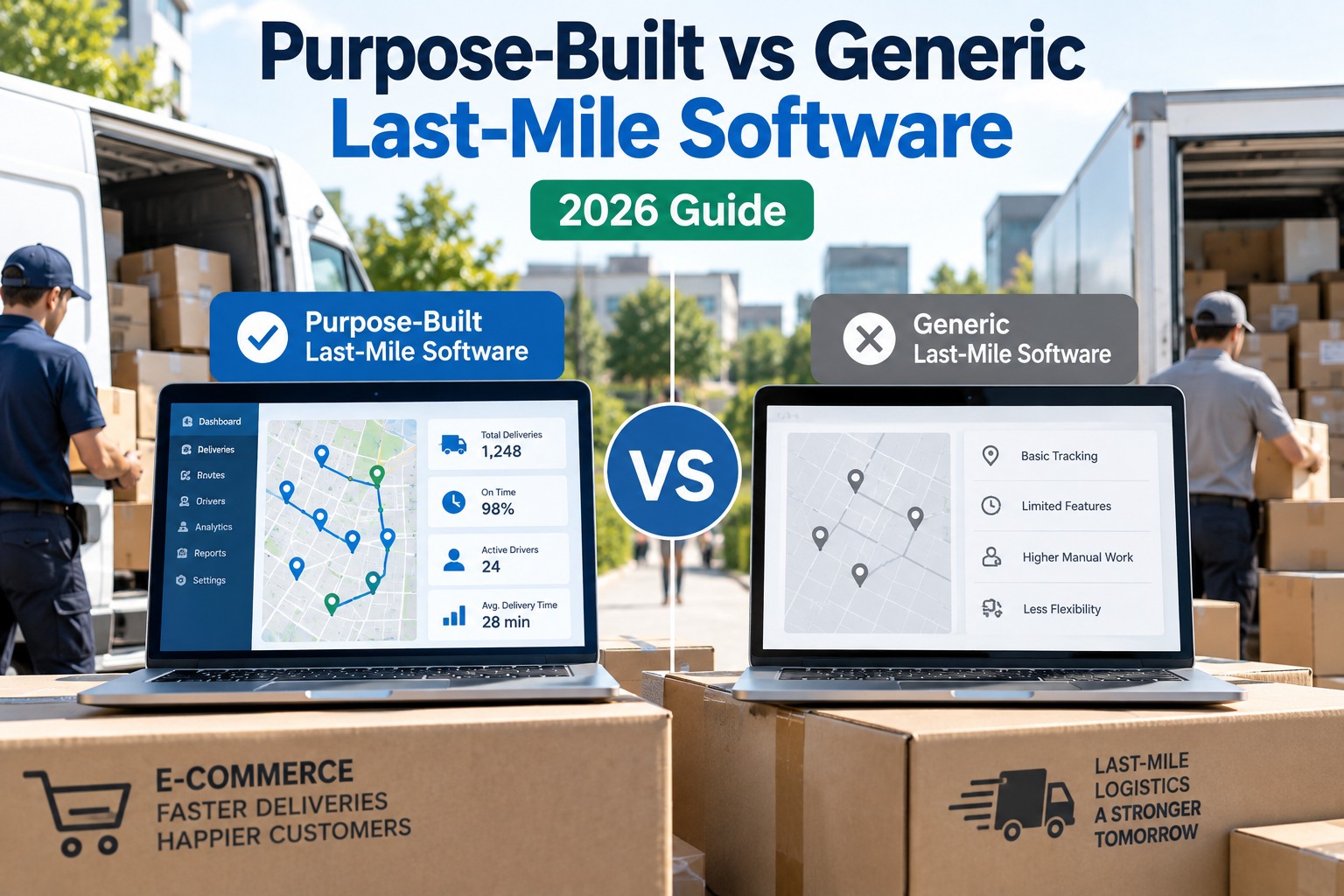
Purpose-Built vs Generic Last-Mile Software: 2026 Guide
An unvarnished operational comparison for logistics leaders. Discover why generic telematics platforms fail last-mile couriers, and how dedicated delivery software drives down cost-per-stop while eliminating disputed customer claims.
Retrofitted Dry-Freight Telematics
Designed for highway long-haul, service contractors, and field trade technicians. Built to track trucks, not packages.
Treats delivery stops as linear waypoints without considering parcel shelf placement, time windows, or gate access codes.
Drivers capture basic signatures without geofence-locked GPS boundary confirmation or high-resolution delivery photos.
Provides static daily tracking links without interactive real-time approach maps or automated recipient arrival texts.
Vehicle fault codes and driver inspection checklists sit in separate databases, delaying overnight shop repairs.
FleetRabbit Delivery Intelligence
Engineered specifically for parcel carriers, e-commerce fulfillment, and multi-stop urban couriers.
Sequences 150+ daily parcel stops using live traffic, shelf zones, and customer delivery windows with midday re-routing.
Restricts delivery completion to within 20 meters of the delivery address with cryptographic timestamped photo proof.
Sends real-time SMS arrival alerts with live vehicle countdown maps, enabling gate access code sharing.
Links driver smartphone pre-trip walkarounds and OBD-II trouble codes directly to garage mechanics for overnight fixes.
Stop Trying to Bend Generic Telematics to High-Density Delivery
Empower your operations team with street-level route sequencing, geofenced proof-of-delivery, automated customer text updates, and preventative fleet maintenance starting from $3/vehicle/month with no hardware lock-in.
The Functional Blind Spots of Generic Fleet Telematics in Last-Mile Logistics
Generic fleet tracking systems evaluate vehicle operations through the lens of long-distance transport: vehicle location, average speed, idling duration, and fuel level. While these data points are sufficient for long-haul trucks, they fail in high-stop urban environments. Delivering 180 packages across 120 residential stops per van forces couriers to battle dense neighborhood streets, locked security gates, missing apartment numbers, and tight time windows. Generic tools lack the parcel-level data layer required to organize packages by van shelf location, communicate with recipients prior to drop-off, or capture proof that refutes false non-delivery claims. Attempting to manage modern e-commerce delivery with generic vehicle trackers results in driver overtime, high customer service call volume, and lost delivery contracts. Logistics directors can evaluate the technical advantages of dedicated delivery management by booking a tailored software comparison demo or configure test delivery routes directly via our quick platform sign up.
Lack of Parcel-Level Data Hierarchy
Generic fleet management systems track vehicles, not packages. They cannot associate individual barcodes with specific van shelf zones, package dimensions, or special handling notes. Purpose-built platforms ingest order manifests via API, grouping parcels by shelf sections to cut driver search time at the curb.
Inability to Prevent Customer Delivery Disputes
When customers claim an item was never delivered, generic fleet software can only show that the vehicle stopped near the street corner. Purpose-built software enforces geofenced photo proof and barcode validation within 20 meters of the front door, providing immutable evidence that eliminates missing-package chargebacks.
No Recipient Communication Infrastructure
Generic GPS trackers cannot notify end consumers. When couriers encounter locked community gates or require customer signatures, they must call manually or leave with the package. Purpose-built platforms trigger automated SMS arrival notifications with live tracking maps, giving recipients countdown alerts to open gates.
Disconnected Delivery Van Preventative Maintenance
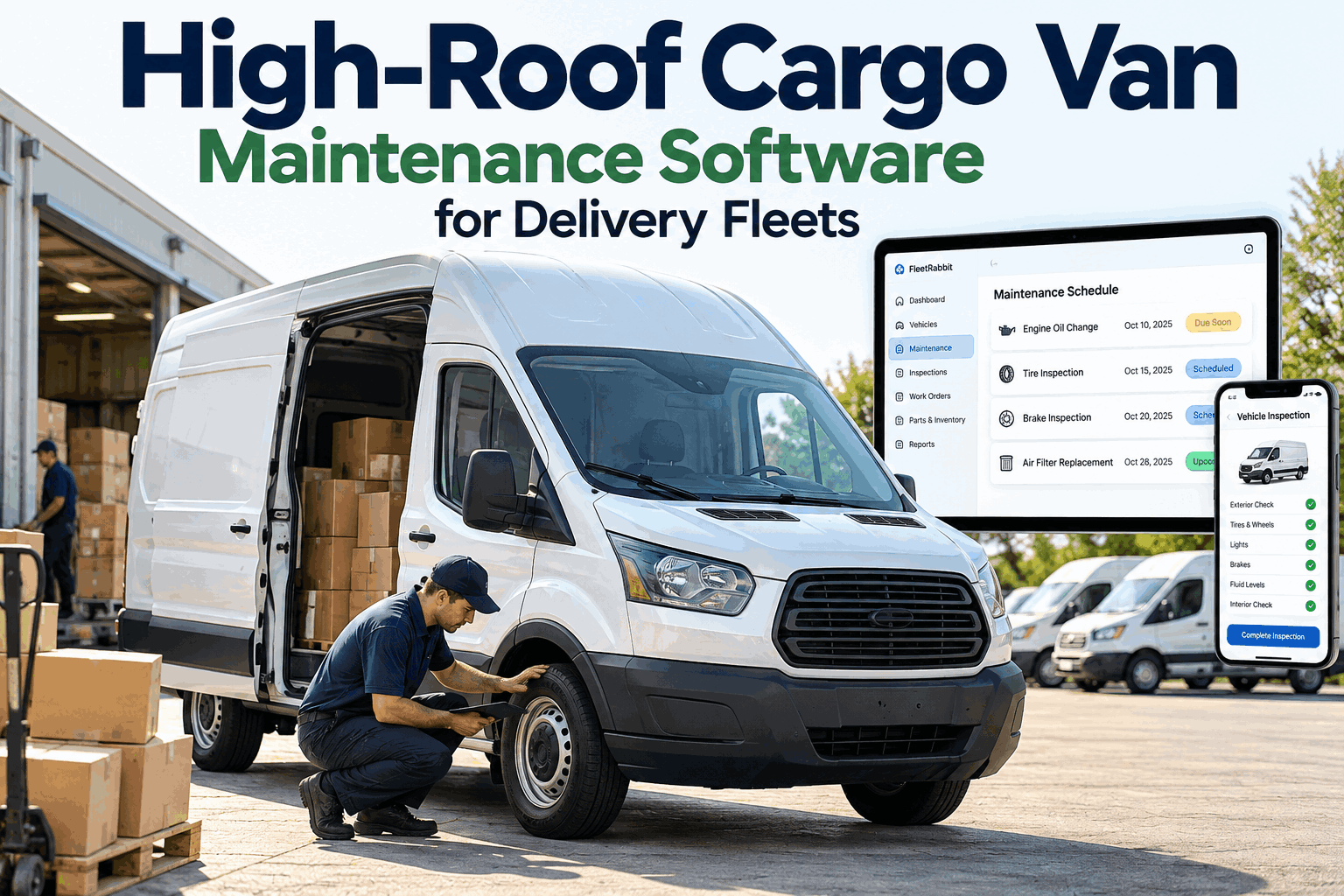
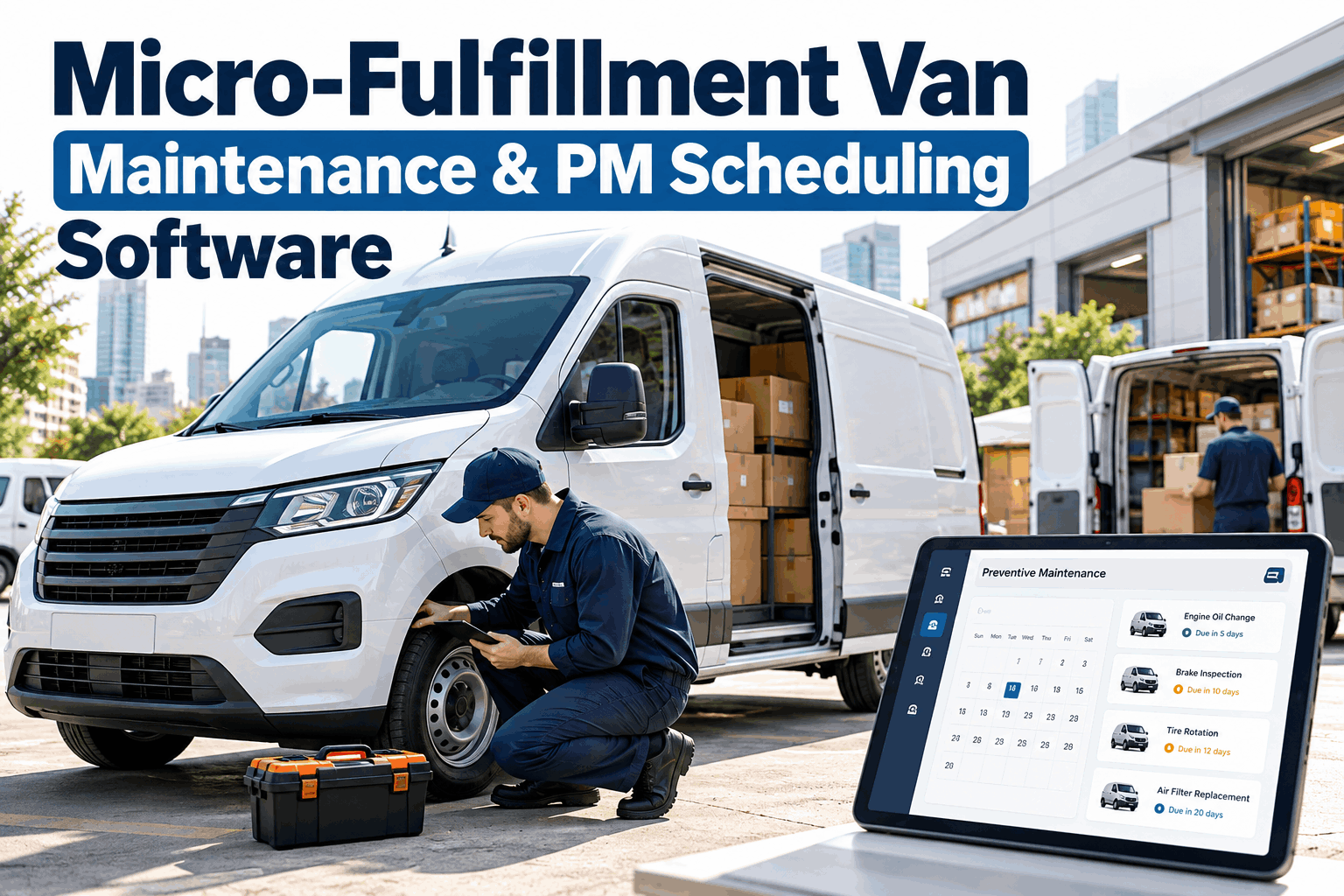
High-stop delivery cycles accelerate wear on brake pads, starter motors, sliding doors, and tires. Generic software tracks oil changes based solely on highway mileage. Purpose-built delivery software tracks daily pre-trip walkarounds (eDVIR) and engine hours, alerting garage mechanics to worn brakes before roadside failures occur.
Direct Technical Matrix: Purpose-Built vs. Generic Delivery Software
When selecting software for a delivery fleet, executive leadership must weigh technical capabilities that directly impact driver speed, customer satisfaction, and operating expenses. Review how generic dry-freight tracking tools compare directly against purpose-built last-mile delivery software across primary commercial benchmarks. Delivery contractors and 3PL executives can review custom cost-reduction models by scheduling an executive software evaluation demo or explore driver mobile workflows through our self-service sign up.
| Evaluation & Architecture Category | Generic Commercial Fleet Telematics | FleetRabbit Purpose-Built Delivery Engine | Carrier & Merchant Advantage |
|---|---|---|---|
| Route Optimization Engine | Point-to-point shortest highway distance | Dynamic street-level sequence with time windows | Reduces total route mileage by up to 18% |
| Field Scanning & Proof-of-Delivery | Expensive dedicated handheld scanners ($800+) | Smartphone camera barcode scanning + photo e-POD | Zero hardware capex; instant driver onboarding |
| Customer Delivery Visibility | Static tracking number with estimated day | Live interactive countdown map + automated SMS | Reduces "Where Is My Order" calls by 68% |
| Contractual Commitment | Rigid 36 to 60-month mandatory lock-in | Month-to-month flexibility • Cancel anytime | Eliminates long-term software vendor lock-in |
| Maintenance Integration | Odometer-only maintenance schedule | Integrated eDVIR & CMMS shop work orders | Resolves vehicle defects overnight before wave launch |
| Delivery Exception Interception | Driver writes on paper manifest; returns to hub | Real-time dispatcher alert + automated customer SMS | Saves $45+ in avoided return delivery handling |
4-Stage Purpose-Built Last-Mile Operational Flow
FleetRabbit standardizes final-mile delivery across every phase of the operating shift, establishing complete digital accountability from morning hub wave staging to evening vehicle check-in.
Manifest Ingestion & 3D Staging
Orders ingest via TMS and e-commerce APIs. Dynamic routing algorithms sequence stops based on traffic conditions and delivery windows, grouping parcels into specific vehicle shelf zones.
Driver Smartphone eDVIR Walkaround
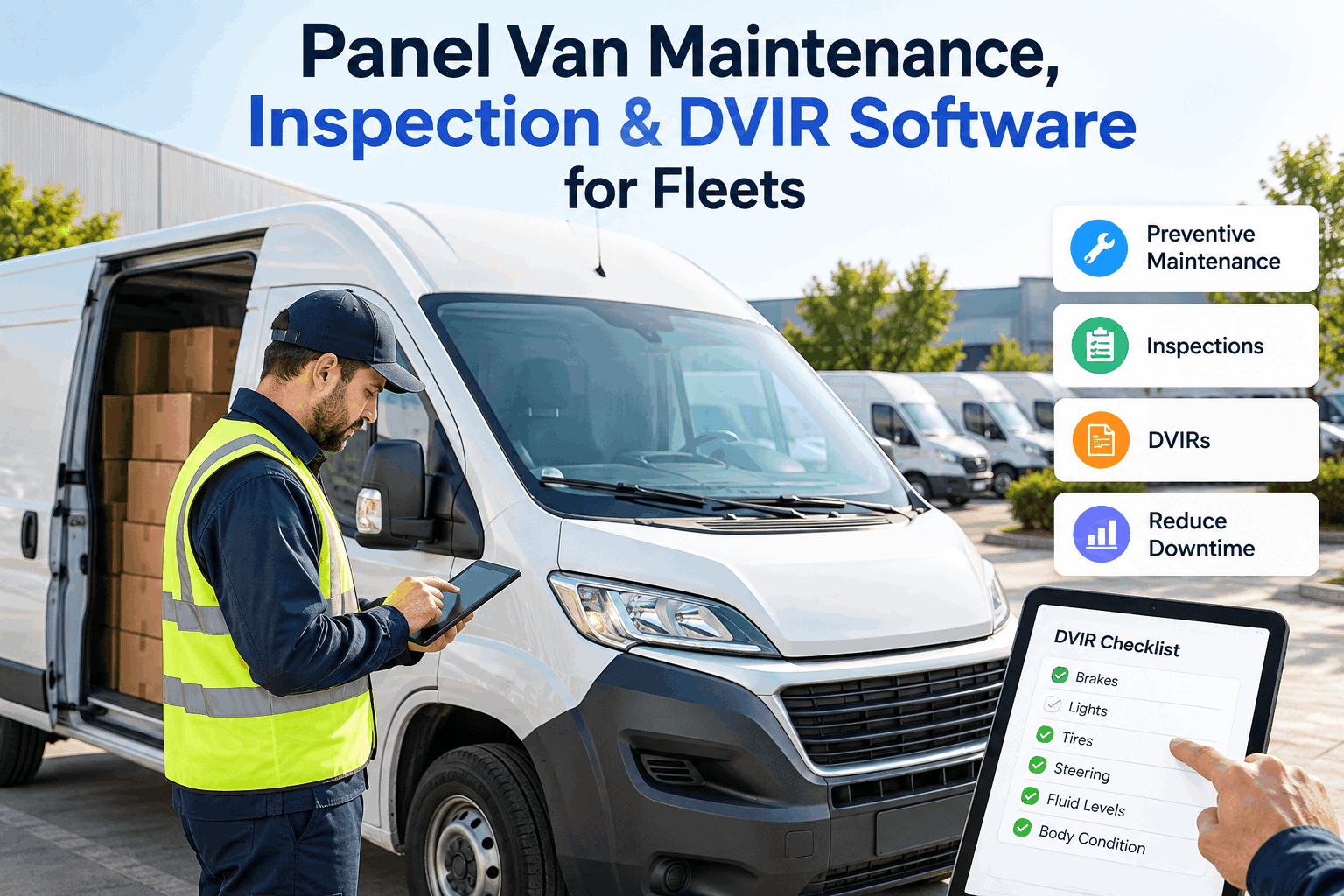
Drivers complete mobile pre-trip inspections, photographing tire tread depths, mirrors, backup cameras, and cargo door latches before pulling out of terminal loading pads.
Dynamic Execution & Doorstep e-POD
Drivers navigate multi-stop corridors with live turn-by-turn guidance. Deliveries conclude with geofenced barcode scans and doorstep photos, sending instant delivery confirmations to recipients.
Terminal Return & Fleet Shop Sync
Upon return, undelivered parcels clear with verified exception tags. Vehicle diagnostic trouble codes and driver defect reports flow directly into maintenance work orders for overnight repair.
Total Cost of Ownership: Where Generic Fleet Software Bleeds Profit
Attempting to manage high-stop delivery routes with generic GPS trackers leads to compounding operational drains that quickly outstrip the cost of purpose-built delivery software. Analyzing these hidden expense drivers helps operations directors build a clear business case for dedicated delivery technology. Calculate your fleet's exact cost recovery by booking a one-on-one consultation demo or start testing your fleet immediately via our rapid platform sign up.
Top Causes of Last-Mile Fleet Operating Budget Drain
Purpose-Built Architecture Highlights
Operates on standard driver iOS and Android smartphones, eliminating expensive rugged handheld barcode scanners.
Interactive delivery countdown maps and live SMS alerts minimize customer inquiries and prevent failed delivery drops.
Connects daily driver inspection walkarounds and engine trouble codes directly to garage mechanics for overnight service.
ROI & Investment Payback Framework for Delivery Operators
When selecting last-mile software, executive leadership must evaluate both immediate cost reductions and long-term operating scalability. FleetRabbit delivers quantifiable financial return across fuel, labor, vehicle maintenance, and customer retention metrics.
Fuel & Mileage Savings
Dynamic street-level route optimization reduces circuitous driving by up to 18%, while curbside idle alerts coach drivers toward fuel conservation, saving an average of $640 in fuel per delivery van annually.
Failed Drop Prevention
Automated SMS pre-arrival notifications alert customers when their driver is two stops away, boosting first-attempt delivery success to 98.8% and preventing costly return-to-hub re-delivery handling.
Predictive Van Care
Automated engine-hour tracking and diagnostic trouble code monitoring generate proactive work orders for brake pads, tires, and sliding doors, extending delivery vehicle service life by 2+ years.
Frequently Asked Questions: Purpose-Built vs. Generic Last-Mile Software
Why can't generic commercial fleet tracking tools handle high-density delivery routes?
Generic fleet tracking systems are designed for long-haul trucking, field service trades, or passenger transport. They track vehicle location and speed but lack parcel-level data management. They cannot sequence stops based on package shelf zones, cannot enforce geofenced photo proof-of-delivery, do not provide recipient SMS notifications, and fail to track vehicle wear caused by high-frequency stops.
How does purpose-built delivery software eliminate customer missing-package chargebacks?
Purpose-built delivery software enforces geofence-locked proof-of-delivery. The mobile application requires drivers to scan the package barcode and photograph the package at the doorstep within a verified 20-meter radius of the delivery address. The system records an unalterable timestamp and GPS coordinates, providing indisputable evidence that defeats non-delivery claims.
Does purpose-built last-mile software require buying expensive handheld barcode scanners?
No. Modern purpose-built software like FleetRabbit leverages standard smartphone cameras on iOS and Android devices for high-speed 1D and 2D barcode scanning. Couriers can scan packages, capture photo proof-of-delivery, collect signatures, and navigate routes using their smartphones, eliminating upfront hardware costs.
How does integrated maintenance management benefit last-mile delivery fleets?
Delivery vans undergo extreme mechanical stress from frequent braking, curb mounting, and engine restarts. Purpose-built delivery software connects daily driver mobile inspection walkarounds (eDVIR) and vehicle OBD-II diagnostic fault codes directly to the garage maintenance shop. Mechanics receive digital defect alerts in real time, allowing them to repair brakes, tires, and door latches overnight.
Upgrade to Purpose-Built Last-Mile Delivery Intelligence Today
Eliminate missed delivery windows, optimize delivery routes, and equip your couriers with intuitive mobile tools. Experience FleetRabbit today with zero proprietary hardware lock-in.