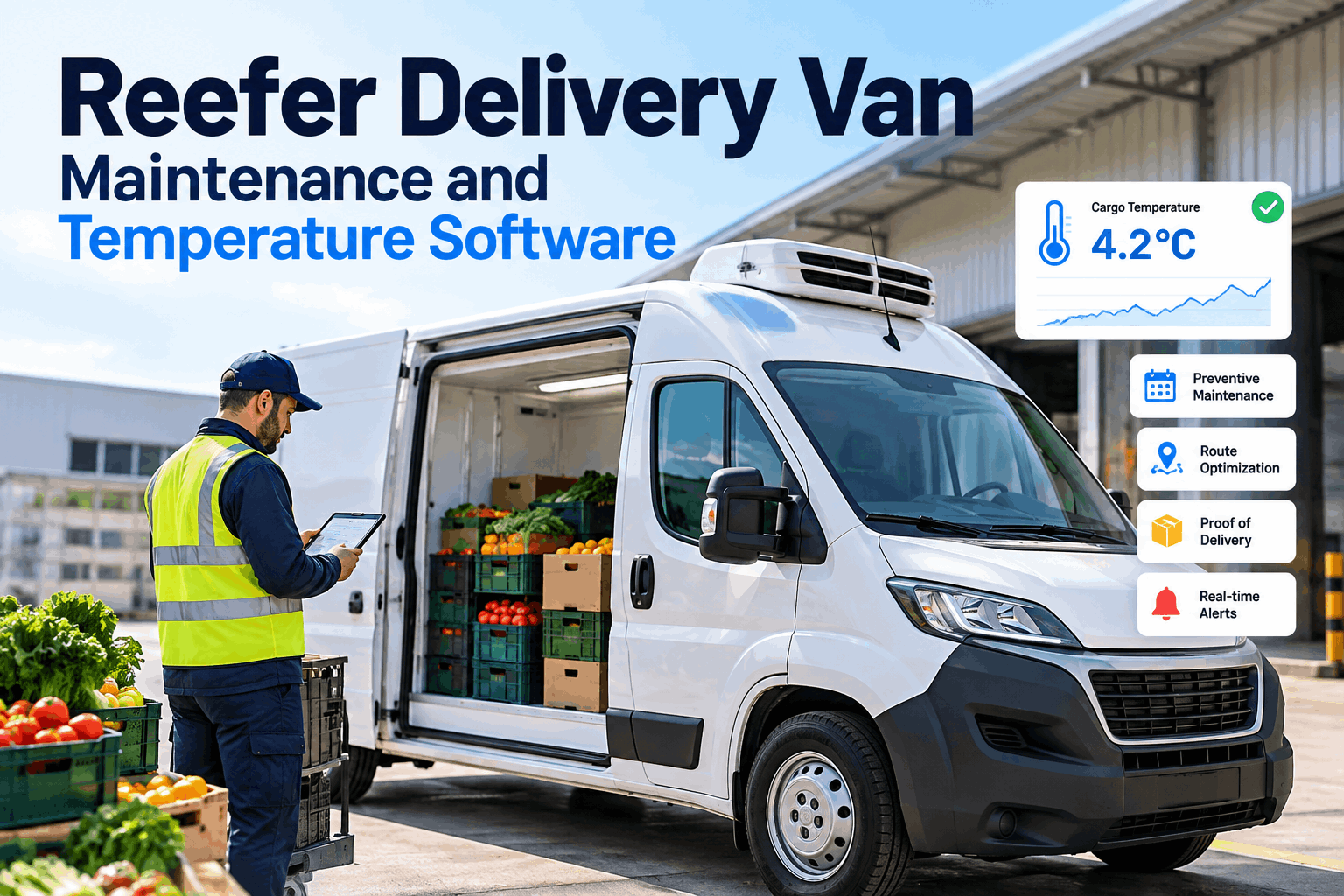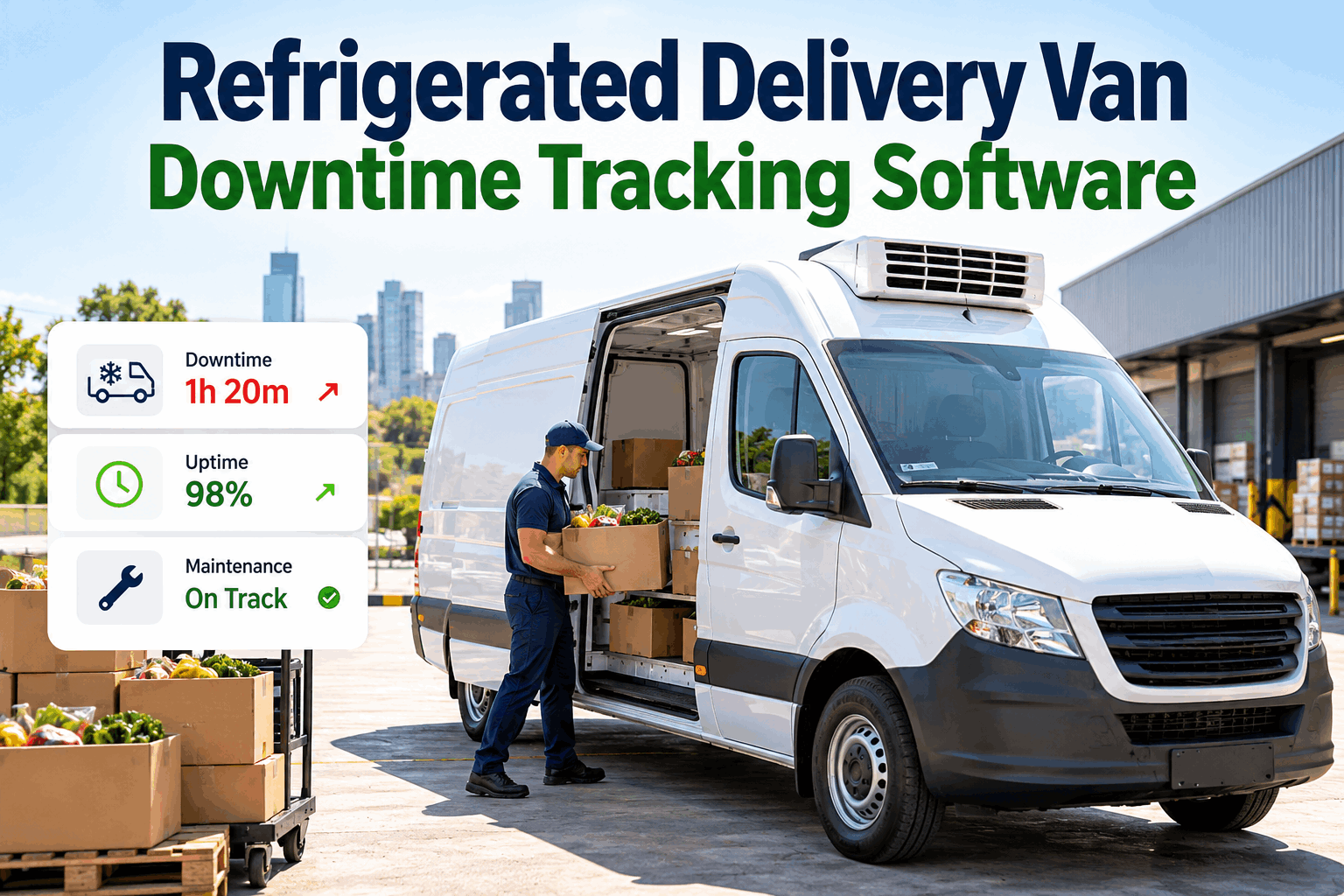
When a refrigerated delivery van breaks down mid-route, the cost is immediately doubled: while an ordinary parcel delivery van only risks late delivery windows, an immobilized reefer van faces rapid thermal runaway that destroys high-value grocery loads, prepared meal kits, and temperature-sensitive biologics within 45 minutes. Class 2 through 4 refrigerated delivery vans endure grueling multi-drop schedules—logging 70 to 120 curbside door openings per shift in blistering ambient summer temperatures. Tracking breakdown events on reactive spreadsheets or chaotic dispatch phone calls obscures the critical difference between mechanical chassis downtime and transport refrigeration unit (TRU) thermal failure. FleetRabbit's refrigerated delivery van downtime tracking software captures real-time telematics alarms, synchronizes dual-engine failure diagnostics, automates bay repair dispatch, and prevents expensive roadside product losses. Take total control of your cold-chain fleet availability, safeguard perishable shipments, and lower cost-per-drop. Schedule a 30-minute operational tour or get started on our free platform trial today.
HERO COMPONENT: Dual-Vector Cold-Chain Incident & Uptime StreamThe True Anatomy of Reefer Delivery Van Downtime
Unlike dry parcel vans, refrigerated delivery vans operate under continuous thermodynamic pressure. A breakdown is rarely limited to simple engine mechanicals. FleetRabbit separates van downtime into two distinct operational vectors—chassis downtime and thermal refrigeration downtime—ensuring fleet supervisors never misclassify cold-chain asset availability:
VISUAL SPLIT: TWO FACES OF DOWNTIMEChassis Mechanical Downtime
Triggered by heavy start-stop urban delivery driving, payload suspension fatigue, and continuous low-speed engine idling.
- High-Cycle Starter Failure: 80+ restarts per shift burn through heavy-duty starter relays and auxiliary batteries.
- DPF Exhaust Choking: Low exhaust gas velocity prevents passive soot regeneration during urban parcel runs.
- Brake Caliper Seizure: Extra insulated bulkhead tare weight accelerates pad glazing and rotor grooving.
Reefer Thermal Excursion Downtime
Occurs when the automotive chassis operates normally, but the refrigeration system loses thermal setpoint recovery.
- Compressor Drive Belt Snap: Road debris and high thermal vibration break direct-drive compressor belts.
- Evaporator Ice Damming: Malfunctioning defrost pressure switches turn cooling coils into solid blocks of ice.
- Standby Plug Phase Burn: Faulty overnight 230V depot outlets fail to maintain pre-trip box temperatures.
The 4-Stage Thermal Excursion Interception Pipeline
When a reefer van loses temperature mid-shift, every minute of latency increases product spoilage risk. FleetRabbit replaces chaotic phone calls with an automated detection and remediation pipeline:
Predictive Thermal Drift Alarm
Telematics sensors flag a 2.0°F temperature rise sustained over 6 minutes, identifying refrigeration loss long before product reaches critical thresholds.
Cross-Dock vs. Rescue Triage
FleetRabbit cross-references distance to the nearest cold-storage depot against remaining thermal safety margins, routing a rescue van or staging a dock transfer.
Express Bay Work Order
Mechanics receive an auto-generated work order specifying exact DTC failure codes (e.g. low refrigerant pressure, clutch slip) with pre-staged replacement belts.
Automated FSMA Audit Dossier
The incident timeline, corrective wrench hours, and post-repair pull-down data are locked into an immutable compliance packet for FDA and customer verification.
FleetRabbit vs. Generic Spreadsheets & Dry Fleet CMMS
Standard fleet software is built for dry freight parcel trucks and ignores thermal degradation. FleetRabbit delivers specialized cold-chain fleet intelligence tailored for multi-stop reefer operations:
| Operational Feature | Generic Fleet CMMS | Spreadsheets & WhatsApp | FleetRabbit Reefer Suite |
|---|---|---|---|
| Downtime Type Separation | Total vehicle bay hours only | Uncalculated rough estimates | ✓ Split Chassis vs. Reefer Thermal Downtime |
| Live Excursion Alert Trigger | ✕ Not supported | Discovered at receiver dock | ✓ Predictive drift warnings in < 3 minutes |
| Reefer Auxiliary Hour Tracking | Chassis mileage only | Manual logbook recall | ✓ True compressor hours & electric standby sync |
| Driver Pre-Trip Thermal eDVIR | Generic paper inspection | Unreliable paper slips | ✓ Timed pull-down test with automated pass/fail |
| FSMA 204 Regulatory Defense | 3 to 7 business days | Incomplete paper records | ✓ Instant one-click digital compliance audit packet |
| Platform Cost per Van | $15 - $35 / mo | Heavy spoiled freight losses | From $3 / vehicle / mo (Free Starter Tier) |
Reefer Van Dispatch Triage: Common Downtime Bottlenecks Solved
Frequently Asked Questions
What is the difference between mechanical downtime and thermal downtime?
Mechanical downtime means the vehicle chassis is unable to drive (e.g. flat tire, dead starter). Thermal downtime occurs when the van can drive, but the refrigeration circuit fails to hold setpoint temperatures, preventing safe food or pharma transport.
Does FleetRabbit integrate with Thermo King TracKing and Carrier eSolutions?
Yes. FleetRabbit features open REST APIs and webhooks that ingest live temperatures, auxiliary compressor run-hours, defrost cycle statuses, and active fault codes directly from major TRU telematics dataloggers.
Can our dispatch team set customized temperature thresholds per cargo zone?
Yes. You can configure individual temperature envelopes (e.g. Deep Frozen -10°F, Fresh Meat 32°F-36°F, Produce 45°F-50°F). If sensor telemetry strays beyond limits for more than preset tolerance windows, automated alerts dispatch instantly.
How does tracking Mean Time to Repair (MTTR) reduce reefer fleet operating costs?
Tracking MTTR pinpoints whether delays are caused by slow wrench labor, missing reefer replacement parts, or diagnostic confusion. Eliminating these bottlenecks returns vans to active revenue routes hours faster.