A produce distributor in Fresno loses a $4,200 pallet of berries because a reefer van's door was left ajar for eleven minutes at a single stop. Nobody knew until the receiving dock rejected the load. Multiply that across a fleet of twenty vans making thirty stops a day, and it stops being a bad-luck story and starts being a budget line. Refrigerated delivery van GPS tracking software exists to close that exact gap — pairing live location with continuous temperature evidence and route intelligence, so spoilage becomes a preventable event instead of a monthly surprise.
30%
of perishable goods are lost in transit or storage due to cold chain failures
5.4M
refrigerated vehicles expected on the road globally by 2032, up from 4.2M in 2023
$17.78
average cost of a single failed last-mile delivery attempt
Why a plain GPS dot on a map isn't enough anymore
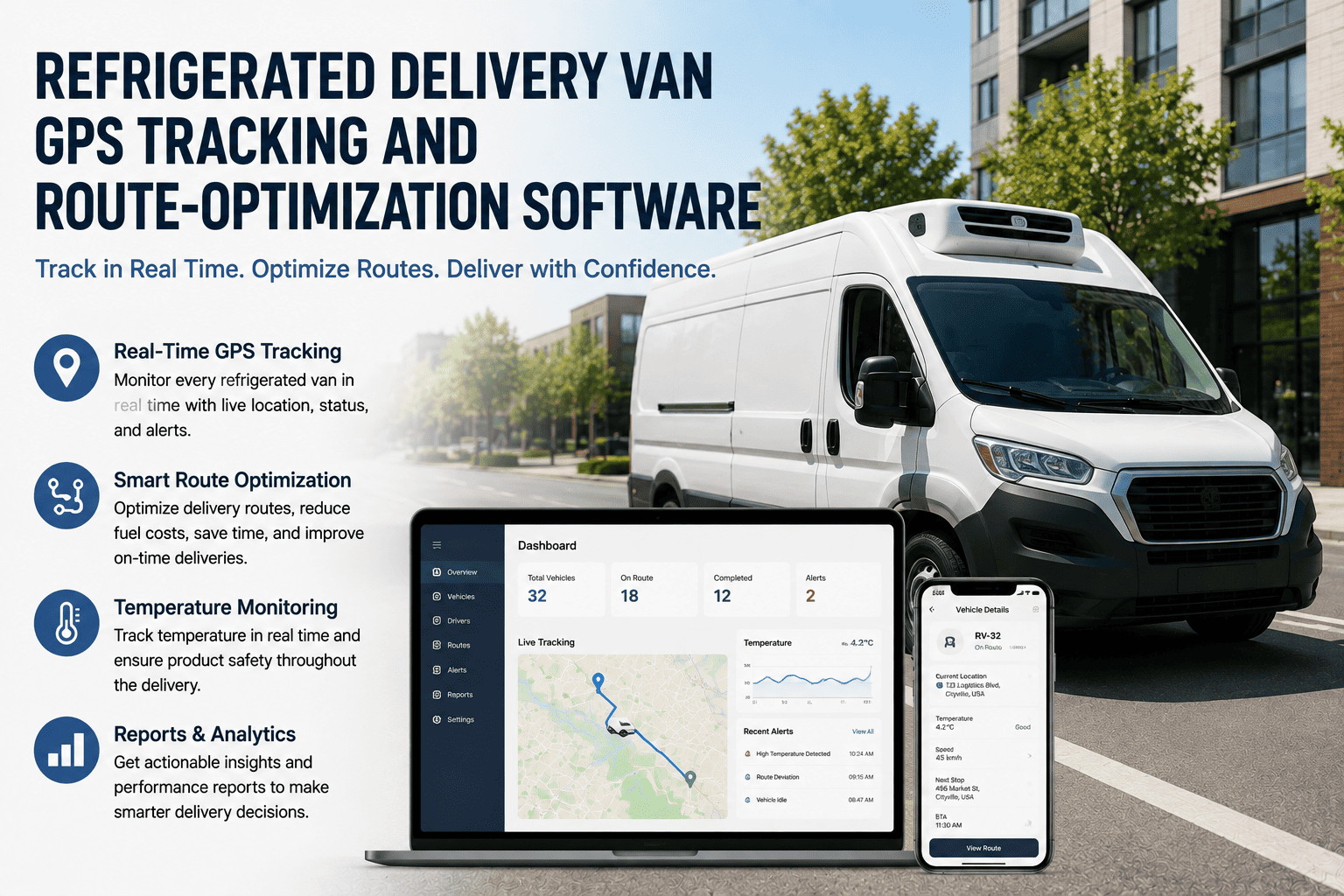
Standard fleet trackers tell a dispatcher where a van is. They say nothing about whether the cargo inside it is still safe to sell. Reefer units drift, compressors fail mid-route, and doors get left open at a loading dock — and by the time any of that shows up as spoiled inventory, the van is already three stops further down its route. That's the problem refrigerated delivery van GPS tracking software is built to solve: it puts location, temperature, humidity, and door-event data on one timeline, so a dispatcher sees a problem the moment it starts rather than reading about it in a customer complaint. If your team is still cross-checking a separate temperature log against a separate route sheet, it's worth taking a look at how signing up for a unified dashboard changes that workflow.
What the software actually does, stop by stop
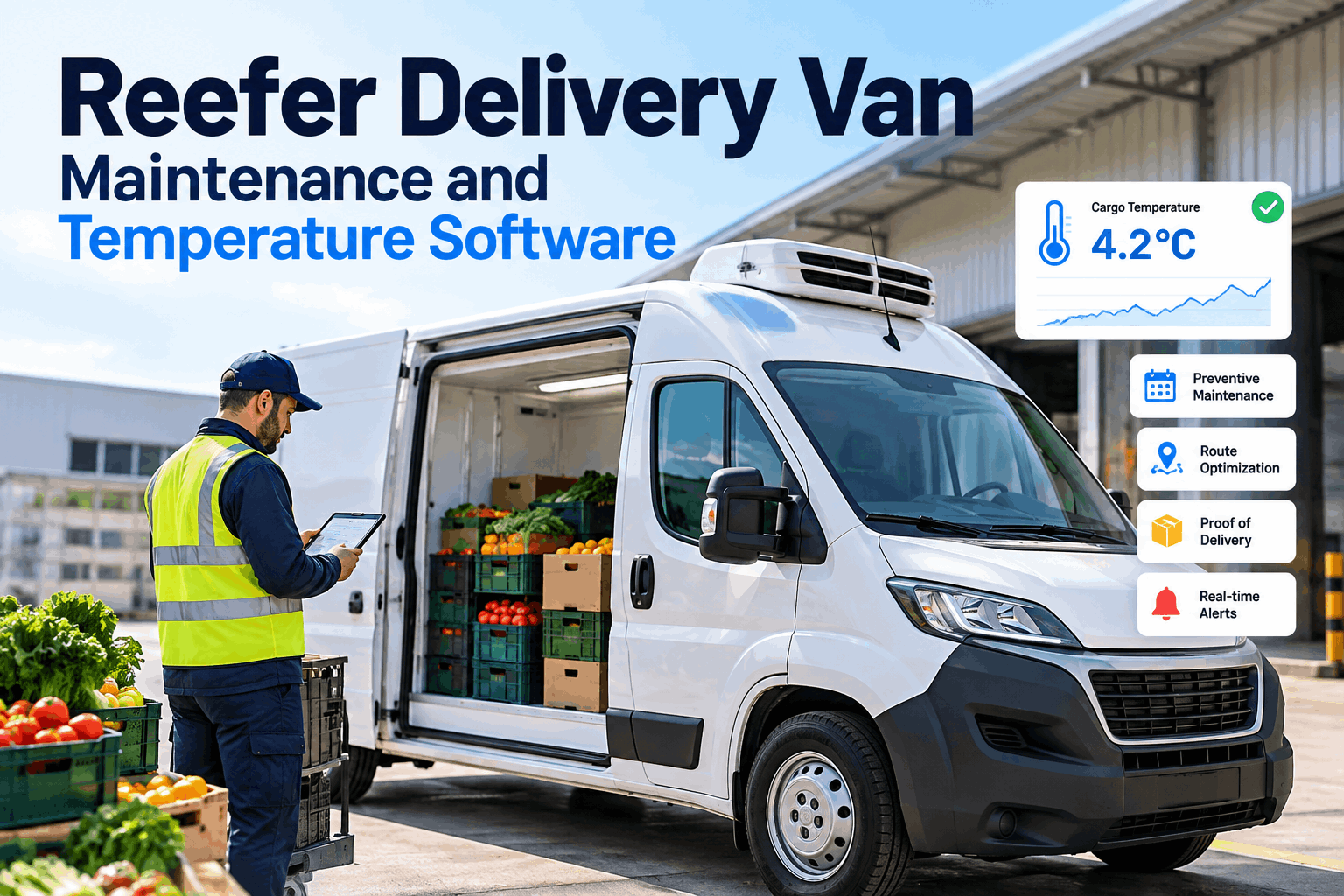
At its core, refrigerated delivery van GPS tracking software combines four data streams that used to live in separate systems: vehicle location, reefer unit temperature, cargo door activity, and delivery status. Instead of a driver radioing in a delay or a warehouse manager calling to ask where a van is, the platform answers those questions automatically and flags the ones that need a human decision.
1
Sensors collect continuously
GPS, calibrated temperature probes, and door sensors report at short, fixed intervals — not just when something goes wrong.
2
The platform correlates the timeline
Location, temperature, and door events line up on a single view, so a dispatcher can see exactly where and when a deviation began.
3
Routes adjust around real conditions
Traffic, delivery windows, and stop density feed into route optimization, keeping cold cargo moving instead of idling.
4
ETAs update as the day unfolds
Predictive ETAs recalculate stop by stop, giving warehouses and customers a delivery window they can actually plan around.
5
Proof of delivery closes the loop
The temperature record attaches directly to the delivery signature, so disputes at the receiving dock get resolved with data, not guesswork.
Route optimization and ETA accuracy: the half of the story that isn't about temperature
Cold chain visibility solves the spoilage side of the problem. Route optimization solves the cost and reliability side. Last-mile delivery now accounts for roughly a third to over half of total shipping cost, and AI-driven routing has been shown to cut delivery times by around 25% and fuel consumption by roughly 20% by continuously adjusting for traffic, delivery windows, and stop density instead of running a fixed morning plan all day. For a refrigerated fleet, that matters twice over: shorter routes mean less time cargo spends at risk, and fewer idle miles mean less strain on a reefer compressor that's already working hard to hold temperature. Fleets that want to see this in action before committing can book a demo and watch a real route get re-optimized live.
Predictive ETAs are the customer-facing payoff of the same engine. Machine-learning-based ETA models are improving delivery time accuracy by 30-40% over static estimates, and some AI-native platforms are reporting ETA accuracy above 95%. That accuracy compounds: better ETAs mean fewer "not home" failures, fewer support calls asking where an order is, and a first-attempt success rate that the best-performing fleets are pushing toward 95-98%. If your dispatchers are still manually reshuffling stops when a driver falls behind, it's worth watching what automated re-optimization looks like — you can book a demo to see it against your own route map.
What to look for in a refrigerated delivery van platform
Continuous temperature and humidity logging
Readings on a short, fixed interval — not spot checks — with instant alerts the moment a van drifts outside a safe range.
Two-way reefer control
Remote setpoint changes, run-mode switching, and alarm clearing without a driver having to pull over and check the unit manually.
Dynamic route optimization
Multi-stop sequencing that recalculates in real time as traffic, new orders, and delivery windows shift through the day.
Predictive, stop-by-stop ETAs
Estimates that update as a driver progresses, so warehouses and customers get a window they can trust instead of a rough guess.
Digital proof of delivery
Temperature history embedded directly into the delivery record, giving dispatchers the evidence to resolve spoilage disputes fast.
Predictive maintenance alerts
Early warning on reefer and vehicle faults, so a breakdown gets scheduled instead of happening mid-route with a full load onboard.
See what your fleet is losing to blind spots
Connect your vans, get one dashboard for location, temperature, and delivery status, and start catching problems before they reach the receiving dock.
What this looks like in an actual fleet
Numbers are more convincing than promises. Cold chain operators running a unified GPS and temperature platform across a mixed fleet of reefer vans and refrigerated trucks have reported spoilage losses dropping by 38-52%, refrigeration downtime cut by 44%, and fuel costs down 20-28%, with full return on investment typically inside 75 days. None of that required replacing existing vehicles — the sensors and telematics install onto vans that are already on the road.
38-52%
reduction in spoilage losses reported by fleets after connecting refrigerated vans to a live tracking platform
44%
cut in refrigeration unit downtime through earlier fault detection and predictive maintenance
75 days
typical time to recover the full cost of onboarding a mixed refrigerated fleet
Getting a fleet connected without stopping deliveries
The biggest hesitation fleet managers raise isn't whether tracking software works — it's whether installing it means parking vans for a week. A typical mid-size mixed fleet of reefer vans and refrigerated trucks can be fully connected in four to seven days, with vehicles running their normal routes throughout. There's no rip-and-replace of existing refrigeration units, and no separate system to maintain alongside the one dispatchers already use for standard delivery vehicles. Fleet managers who want the specifics for their own vehicle mix can sign up for a walkthrough tailored to their routes, or go straight to a live look with the team.
Frequently asked questions
Does refrigerated delivery van GPS tracking software work with the reefer unit brand we already have
Most platforms are built to be OEM-agnostic, connecting to Thermo King, Carrier, and other common reefer units through existing telematics ports rather than requiring a specific brand or a hardware swap.
How is this different from the fleet GPS tracker we already use
A standard tracker only reports location. Refrigerated delivery van GPS tracking software adds continuous temperature and humidity logging, door event tracking, and route optimization on top of that location data, so a dispatcher sees the full picture rather than just a moving dot on a map.
Can dispatchers get alerted before cargo actually spoils
Yes. Alerts trigger as soon as a reading drifts outside a set safe range, not after the fact, giving dispatchers time to reroute, contact the driver, or adjust the reefer setpoint remotely before product quality is affected.
Does route optimization slow down delivery windows customers already expect
It does the opposite. Dynamic route optimization recalculates stop sequencing throughout the day as traffic and new orders come in, which is what keeps predictive ETAs accurate and helps first-attempt delivery rates stay high.
Is the temperature data useful for compliance and food safety audits
Yes. Continuous temperature and humidity records tied to GPS location and timestamps create an audit-ready log that supports food safety and pharmaceutical cold chain compliance requirements, and the same record can be attached to proof-of-delivery documentation.
How long does it take to get a fleet fully set up
A mixed fleet of twenty refrigerated vans and trucks is typically fully connected within four to seven days, with vehicles continuing normal delivery operations throughout the process.