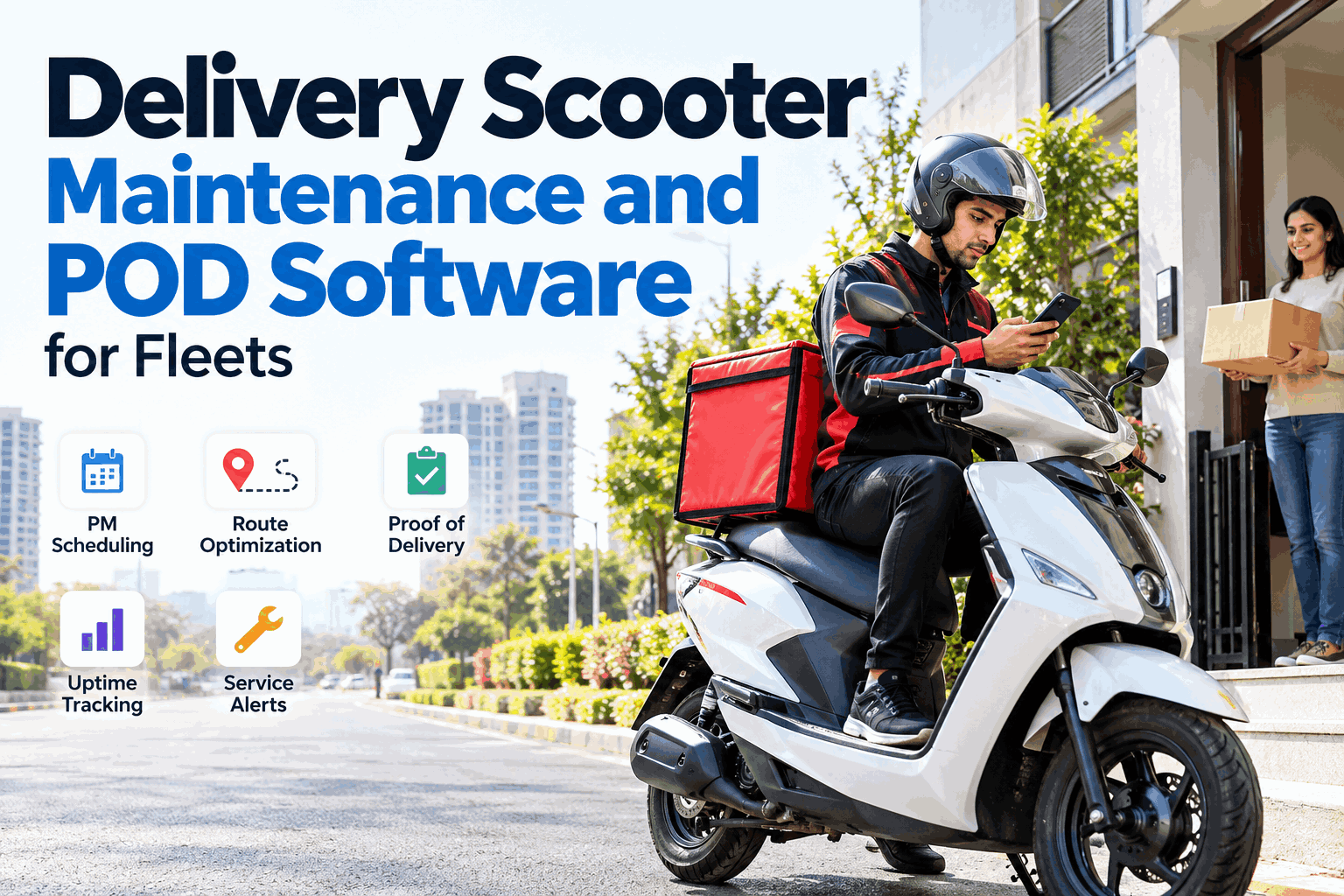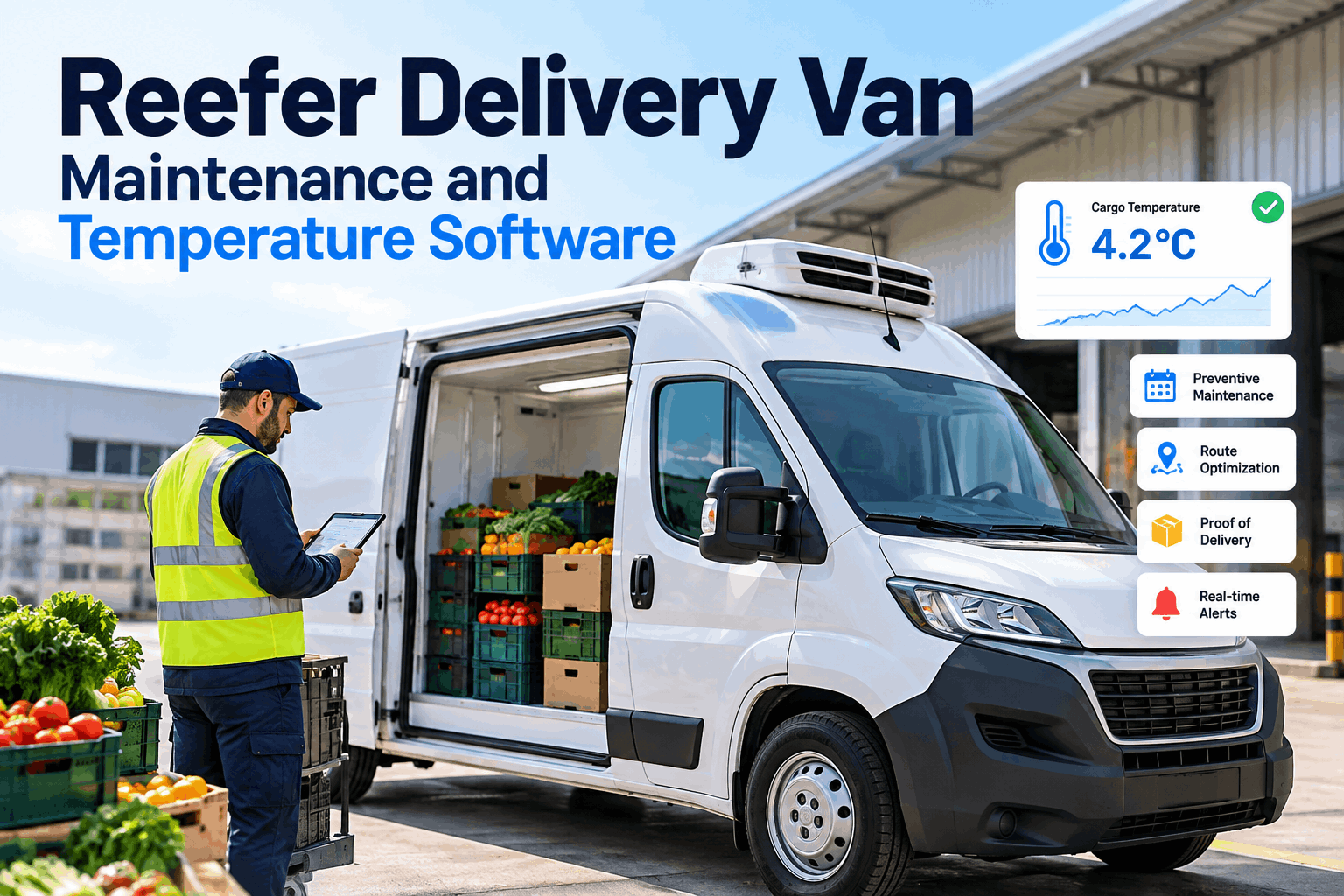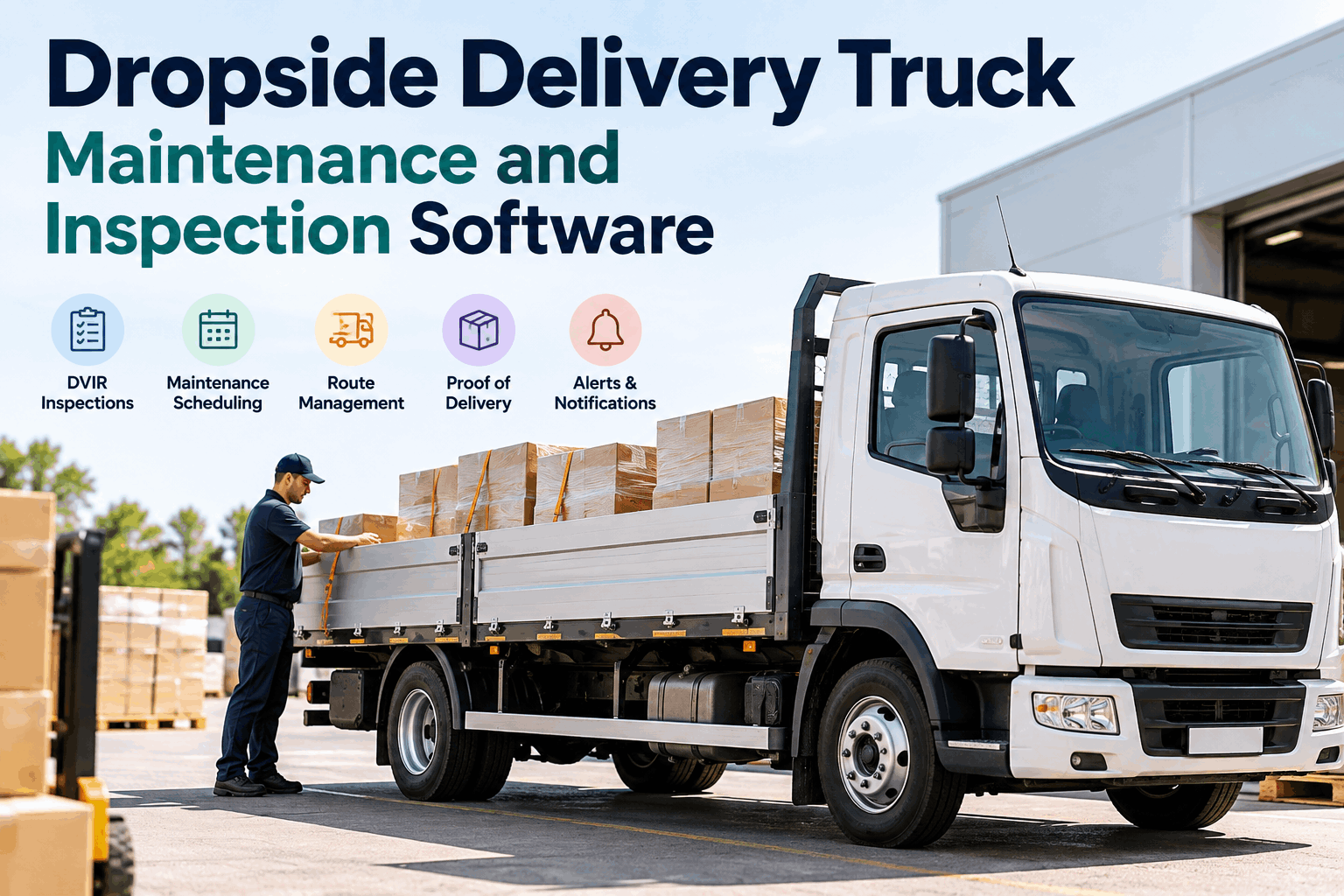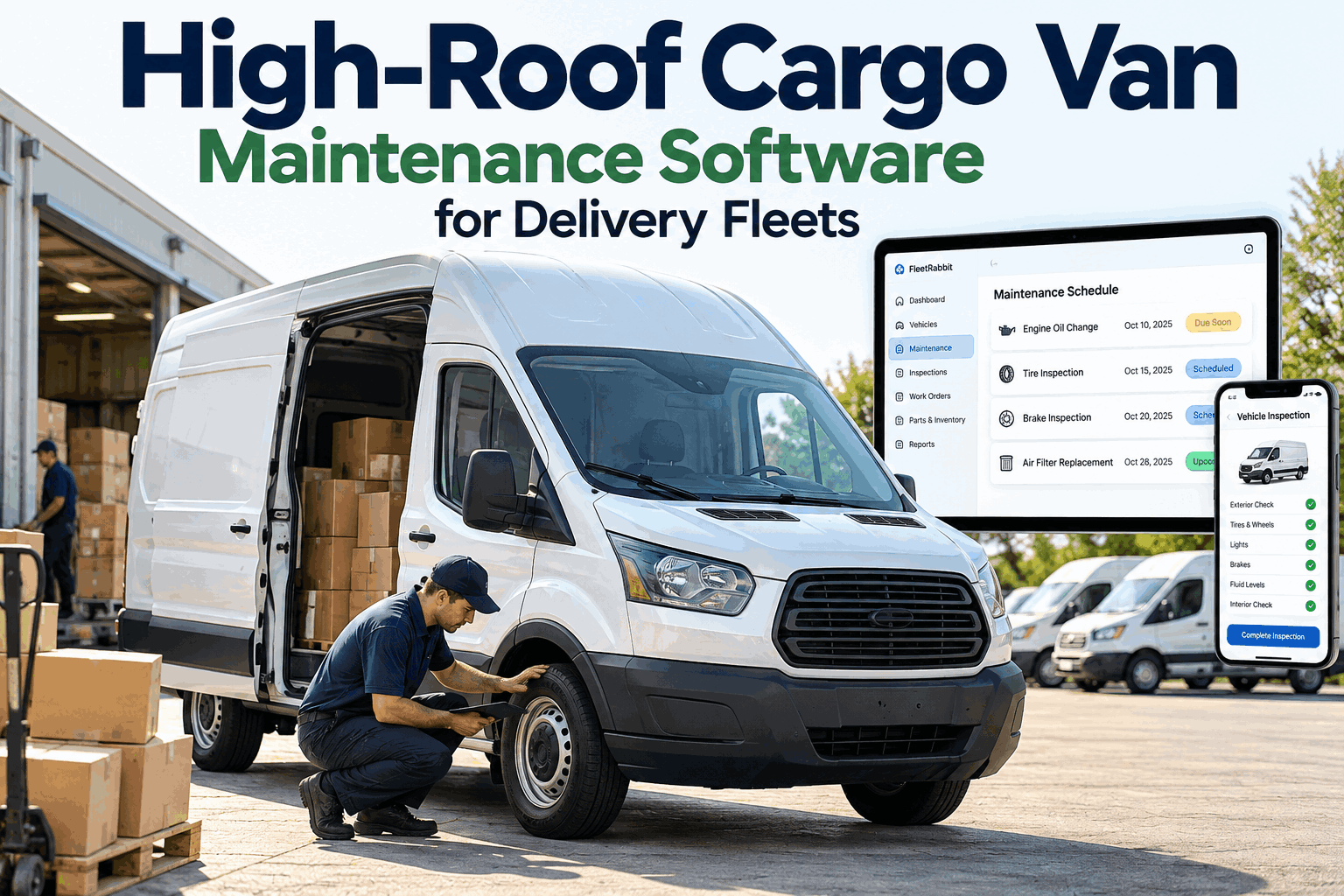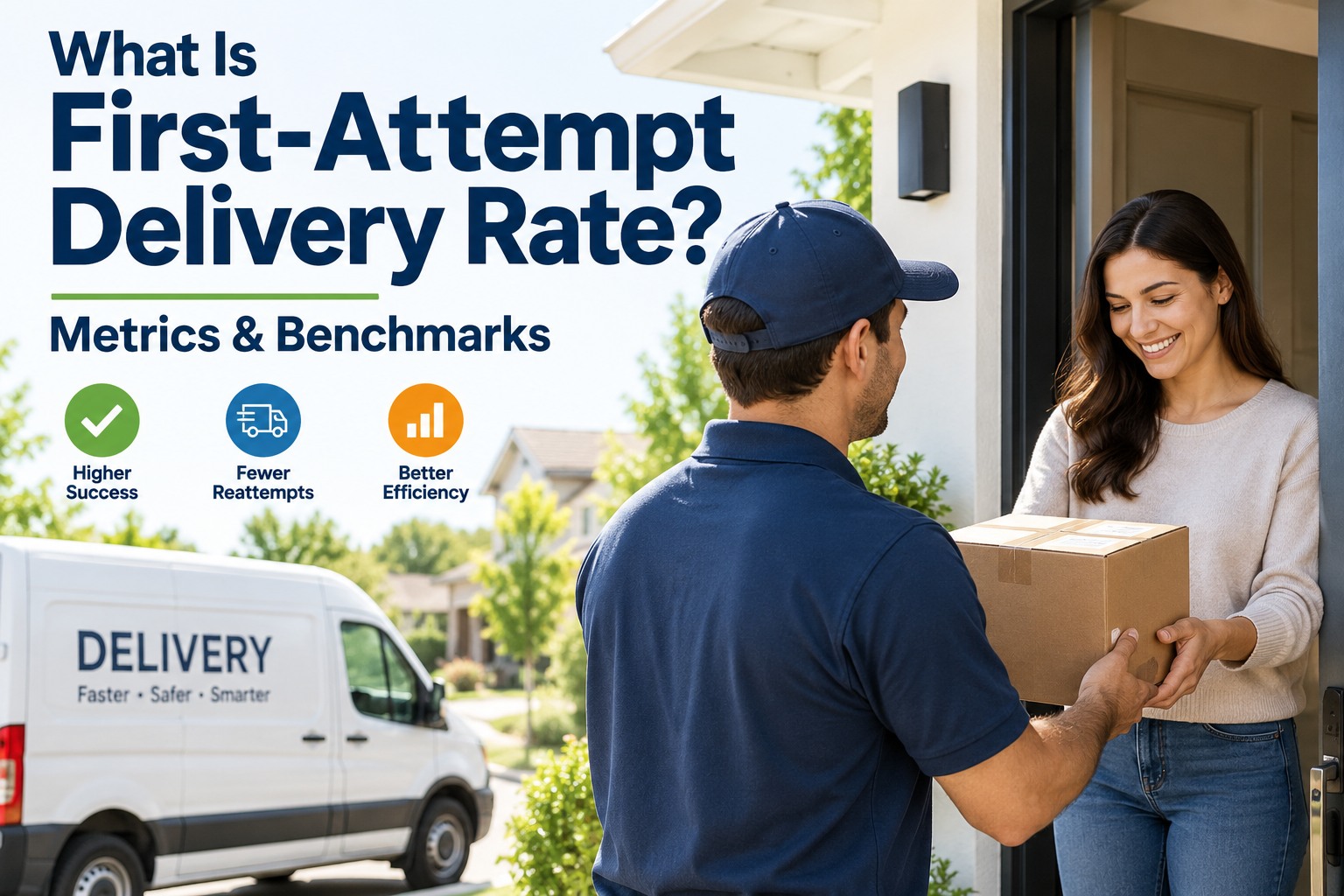
High-volume e-commerce parcel carriers, urban courier services, and contract delivery service partners (DSPs) in 2026 operate under narrow unit margins: balancing cost per stop against escalating driver payroll, managing customer service inquiries, and complying with commercial safety mandates under DOT 49 CFR Part 396. Within last-mile operations, the First-Attempt Delivery Rate (FADR)—also termed First-Time Delivery Success (FTDS)—serves as the primary operational metric determining delivery profitability. First-Attempt Delivery Rate measures the exact percentage of dispatched parcels successfully handed off or secured at the recipient's premises on the very first delivery run without requiring a secondary attempt, return-to-depot cycle, or manual customer service intervention. Across North American logistics networks, an initial failed delivery triggers severe downstream friction: re-handling packages through cross-dock sorting, burning secondary transit mileage, risking customer churn, and inflating redelivery costs to an industry average of $14 to $18 per failed parcel. When carriers manage dispatch pacing, recipient notifications, gate codes, and proof-of-delivery across fragmented phone calls and static paper manifests, first-attempt rates collapse. FleetRabbit delivers dedicated delivery performance and fleet management software engineered specifically to maximize first-attempt completion. By uniting predictive arrival windows, automated recipient geofence alerts, digital delivery instructions, mobile barcode scans, and dispatch safety lockouts into a unified platform priced at $5 per asset per month, FleetRabbit keeps last-mile routes profitable and on schedule. Capture digital proof-of-delivery, verify doorstep drop photos, and maintain continuous delivery workflows completely offline inside concrete parking structures, high-rise service basements, and rural dead zones with zero cellular connectivity. Learn how our software protects your delivery margins when you book a demo or start testing our cloud platform immediately when you sign up for our platform.
Stop absorbing the compounding expense of package re-deliveries and customer complaints. Learn the mathematical formula for First-Attempt Delivery Rate, evaluate 2026 industry benchmarks across B2B and B2C parcel networks, and deploy automated recipient workflows that elevate completion rates above 98%.
How to Calculate First-Attempt Delivery Rate: The Core Formula
Understanding the exact mathematical equation behind First-Attempt Delivery Rate allows logistics operations to isolate carrier performance and eliminate misleading reporting artifacts.
Example: A carrier dispatches 1,200 packages in a day. If 1,164 are successfully delivered on the initial attempt and 36 return to the depot for redelivery, the calculation is $(1,164 / 1,200) \times 100 = 97.0\%$ FADR.
2026 Commercial Industry Benchmarks
The 4 Primary Causes of Failed First Delivery Attempts
When a package fails on its initial run, the failure stems from predictable operational friction points across driver dispatching, customer communication, or mechanical reliability. Review our operational improvement models when you book a demo or start testing our cloud tools directly when you sign up for immediate platform access.
Absent Recipient for Signature Deliveries
High-value e-commerce orders, alcohol shipments, and sensitive pharmaceuticals require in-person adult signatures. Without real-time estimated arrival alerts, recipients are away from home, forcing the driver to leave a door tag and return the parcel to the depot.
Restricted Gate Access & Incomplete Entry Codes
Gated residential communities, commercial office towers, and urban apartment complexes require security keypad codes or front-desk check-in. When drivers lack access codes on their mobile manifests, dwell times escalate, forcing skipped deliveries.
Midday Mechanical Breakdowns & Route Collapses
A delivery step-van suffering a roadside breakdown due to an unmonitored dead starter battery or alternator failure halts 120 scheduled drops. Transferring freight mid-afternoon creates delays that push subsequent deliveries past residential hours.
Subterranean Garages & Urban Concrete Dead Zones
Delivery drops inside concrete basement garages, underground commercial docks, and high-rise elevator lobbies lose cellular signal. Disconnected cloud-only apps freeze, preventing drivers from verifying apartment numbers or logging delivery confirmations.
Built Specifically to Maximize First-Attempt Delivery Success
FleetRabbit combines dynamic route pacing, automated customer geofencing, driver mobile inspection tools, and verified proof-of-delivery into an integrated platform. Discover how our software streamlines your dispatch operations when you book a demo with our delivery specialists.
Automated Recipient Arrival Pings
Transmits automated SMS alerts with live tracking links when delivery vehicles enter a 1-mile geofence perimeter, giving recipients a 10-minute warning to clear gates and sign for packages.
Geo-Stamped Photo & Barcode e-POD
Drivers capture barcode scans, high-resolution delivery photos, and digital signatures directly on standard mobile devices, creating tamper-proof records that substantiate initial delivery completion.
eDVIR Defect Dispatch Lockouts
Vehicles with safety-critical defects—such as low brake build-up pressure or worn tires—are automatically blocked on the dispatch board, preventing midday mechanical stalls that disrupt routes.
Basement Dock Offline Mobile Sync
Couriers navigate stop manifests, scan barcodes, and capture signatures inside concrete parking structures with zero cellular connectivity; all records auto-sync securely once connectivity returns.
Property-Level Curbside Dwell Modeling
Calculates realistic dwell buffers based on property type: distinguishing quick residential porch drops from complex multi-story commercial buildings to prevent afternoon schedule collapses.
1-Click Delivery Performance Dossiers
Compile search-indexed compliance dossiers containing exact delivery timestamps, geo-coordinates, and driver walkarounds formatted for merchant reviews in under 60 seconds.
Direct Mapping to Federal Commercial Carrier Regulations
Maintaining high-velocity first-attempt delivery operations operates in strict alignment with commercial motor carrier safety standards, labor guidelines, and vehicle maintenance directives.
Standardizes daily pre-trip/post-trip eDVIR walkarounds (§ 396.11), qualified mechanic corrective action signatures (§ 396.13), and statutory 90-day electronic maintenance record retention.
Monitors driver shift durations, statutory 30-minute rest breaks, and on-duty driving windows, ensuring delivery pacing targets do not push couriers into unsafe or non-compliant operations.
Maintains verified electronic shift records, actual driving timestamps, and automated route pacing logs to substantiate payroll records and defend against unverified wage claims.
Enforces driver walkaround verification of load lock bars, cargo straps, roll-up rear door latches, and shelving tie-downs to prevent in-transit parcel damage and vehicle instability.
Delivery Performance Software Benchmark Comparison
A feature-level comparison evaluating first-attempt completion tracking, dispatch safety gating, and offline resilience as of 2026. Schedule a personalized walkthrough when you book a demo with our team.
| Performance Dimension | FleetRabbit | Legacy Enterprise Fleet CAD | Basic Telematics Portals | Manual Paper Manifests |
|---|---|---|---|---|
| Pricing (per asset/month) | $5/month flat | $35–$70/month | $15–$30/month | High redelivery overhead |
| Automated Geofenced Recipient Pings | Native perimeter triggers | Requires expensive add-ons | Not supported | Driver phone calls |
| eDVIR Safety Dispatch Lockout | Instant block on critical defect | Manual supervisor note | Not supported | None (Compromised vans roll) |
| Basement Dock Offline Mobile Sync | Full store-and-forward | Network dependent | Data dropped offline | Paper receipts only |
| Dispute Defense Dossier Generation | < 60 seconds 1-click export | Manual custom report build | Not supported | Multi-day filing cabinet search |
| Free Trial Access | 14 days, up to 3 assets | Sales demonstration only | Limited sandbox demo | None |
| Contract Commitment | Monthly or annual (No lock-in) | 36 to 60-month mandatory lock-in | 24 to 36-month contract | None |
5-Step First-Attempt Delivery Optimization Pathway
FleetRabbit embeds cleanly into your delivery operations, dispatch desks, and driver mobile devices in under two weeks without freight disruption. Begin testing immediately when you sign up for a free trial.
Fleet Roster & Delivery Zone Ingestion
Import delivery vans, step-vans, box trucks, driver wage scales, and target zone geofences via one-click CSV mapping or direct API integration.
Recipient Notification & Dwell Setup
Configure automated SMS geofence triggers, expected curbside dwell allowances by property type, customer delivery instructions, and early-warning delay alerts.
Inspection Checklist & Lockout Setup
Configure digital eDVIR walkaround checklists tailored to delivery operations, establishing automated dispatch blocks for safety-critical brake, tire, or steering defects.
Drivers Mobile BYOD Rollout
Equip couriers with the offline-first mobile app on standard iOS or Android smartphones for turn-by-turn navigation, barcode scanning, and e-POD captures.
Performance Command Go-Live
Activate live dispatch monitoring, dynamic curbside dwell heatmaps, real-time cost-per-stop dashboards, and 1-click first-attempt completion tracking.
2-Week Deployment Plan & Milestones
A structured timeline designed to transition delivery operations to automated first-attempt success tracking with zero disruption to scheduled package manifests. Review our full onboarding plan when you book a demo today.
Week 1: System Integration & Dispatch Rules
- Import vehicle rosters, driver profiles, and route manifest schemas via automated CSV tools
- Set up dynamic route constraints: vehicle volume limits, time windows, and dwell buffers
- Configure mobile pre-trip inspection walkarounds and proof-of-delivery barcode workflows
- Assign user access permissions for Fleet Directors, Shop Foremen, and Route Drivers
Week 2: Field Rollout & Live Verification
- Distribute mobile app to drivers and conduct 15-minute training on digital routing and e-POD
- Validate store-and-forward offline syncing inside concrete basement loading docks
- Simulate a delivery delay to verify dynamic mid-route recalculation and automated ETA alerts
- Launch live fleet analytics dashboard, cost-per-stop tracking, and client SLA compliance archives
Elevate Your First-Attempt Delivery Rate Above 98% in Less Than 2 Weeks
Eliminate costly re-deliveries, automate proof-of-delivery, and prevent roadside vehicle breakdowns at $5/asset/month with a 14-day free trial.
Real-World First-Attempt Delivery Results
Operational improvements documented by commercial delivery fleets who deployed digital first-attempt completion software. Review the complete delivery case study when you book a demo with our team.
$52,000 in Redelivery Expenses Saved Across 55 Vans
A regional parcel carrier delivering for e-commerce retailers struggled with an 89% initial completion rate caused by unannounced residential drops. FleetRabbit deployed automated geofenced recipient alerts and property-level dwell tracking, pushing First-Attempt Delivery Rates to 98.4% and saving $52,000 in avoided second-attempt fuel and re-sorting labor in year one.
Zero Missing-Package Disputes & 100% Contract Retention
An urban contractor managing 40 step-vans faced customer service chargebacks over disputed doorstep drops. FleetRabbit introduced photo-verified e-POD and offline barcode scanning, resolving customer claims within 60 seconds and eliminating delivery deductions entirely.
When you run a parcel delivery network making thousands of stops a day, every package that comes back to your warehouse at the end of a shift represents wasted money. You've already paid the driver to drive to the house, you've already burned the fuel, and now you have to unload that package, store it overnight, scan it back onto a truck tomorrow morning, and pay another driver to attempt the delivery a second time. Before FleetRabbit, our first-attempt completion rate was hovering around eighty-nine percent, and we were bleeding money on redelivery labor. FleetRabbit completely transformed our operation. Its automated geofence pings alert our customers ten minutes before our vans arrive, our drivers have exact gate access instructions on their phones, and our first-attempt delivery rate immediately climbed past ninety-eight percent. It cut our re-delivery costs by thousands of dollars every week and made our entire delivery operation significantly more profitable.
Frequently Asked Questions
Take Control of Your Fleet's First-Attempt Delivery Rates in Less Than 2 Weeks
Eliminate costly re-deliveries, maintain 98%+ completion rates, and ensure 100% DOT compliance at $5/asset/month with a 14-day free trial.