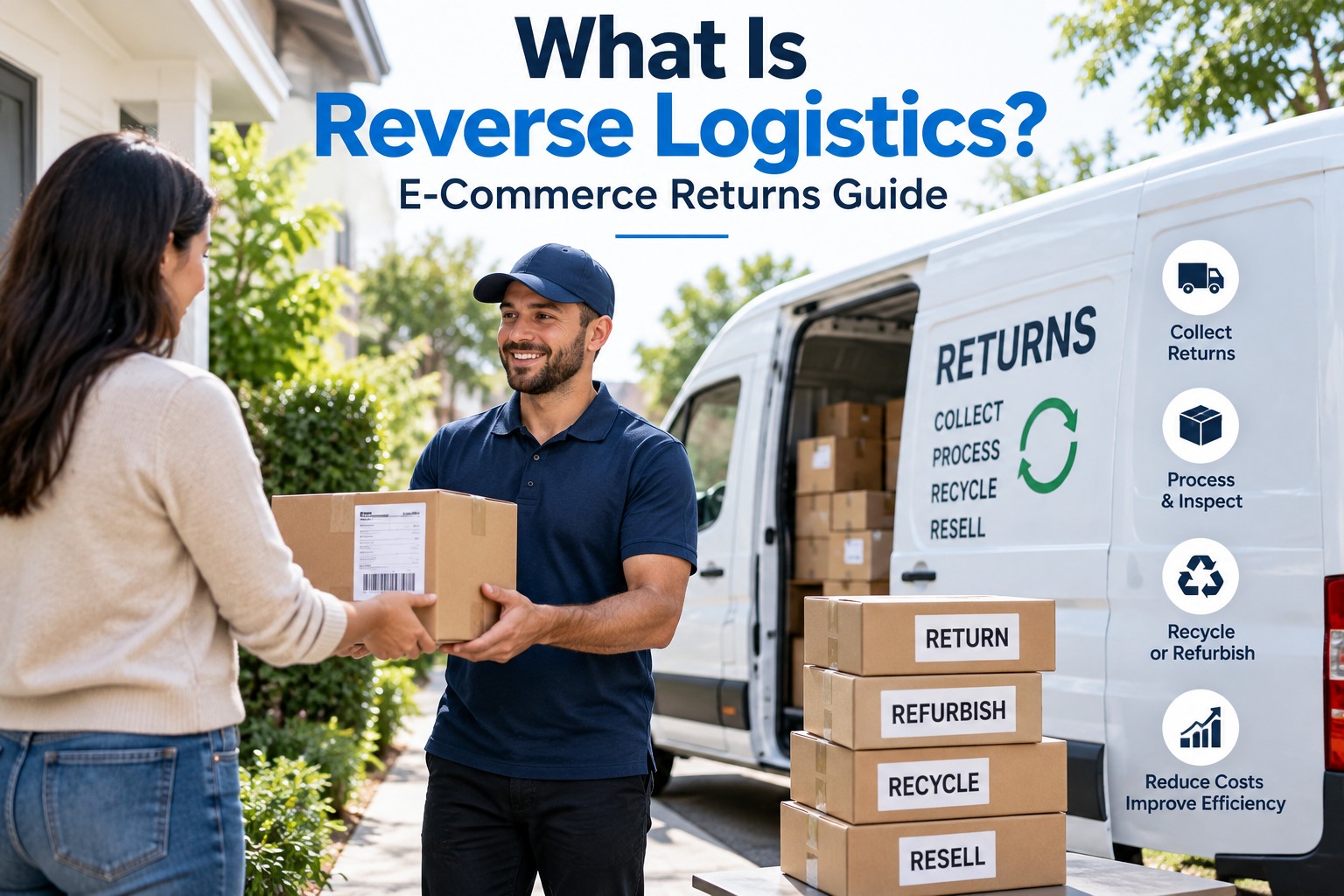
Reverse logistics in modern e-commerce represents the complex operational chain governing how returned merchandise, exchange items, warranty repairs, recalled products, and packaging materials move backward from customer doorsteps to central fulfillment depots, refurbishing centers, or liquidation hubs. In an era where online retail return rates routinely reach 20% to 30% across apparel, electronics, and footwear, return processing is no longer an afterthought—it directly dictates customer retention, warehouse velocity, and bottom-line gross margins. When carriers and retail logistics teams manage reverse logistics using disjointed manual workflows, unverified driver collections, and paper inspection forms, parcel networks bleed margin through empty-vehicle deadhead miles, prolonged warehouse dock processing dwell times, and untracked inventory shrinkage. Purpose-built fleet management and returns optimization software unifies doorstep pickup routing, driver QR-code label verification, mobile condition auditing, and automated return-to-depot (RTD) staging in a single connected platform. To see how our platform transforms costly returns into synchronized operations, book an executive returns optimization demo with our logistics engineering team or launch your reverse fleet management portal right away through our free platform sign up.
What Is Reverse Logistics? E-Commerce Returns Guide
An end-to-end operational guide to modern returns logistics. Discover core return triggers, doorstep collection protocols, inventory recovery benchmarks, and route optimization strategies to turn reverse logistics from a cost drain into an efficiency asset.
Return Authorization (RMA)
Customer generates digital return label, selects drop-off or doorstep pickup, and assigns return reason code.
rma.approvedDoorstep Courier Collection
Driver scans package QR code at the door, captures condition photos, and issues instant customer credit receipt.
epod.pickup_verifiedConsolidated Hub Staging
Reverse cargo clusters on outbound routes, combining forward drops with backward retrievals in same-van sweeps.
van.dual_sweep_activeRestock, Refurbish, or Liquidate
Depot triage grades item condition in under 3 minutes, routing A-grade items directly back to forward inventory shelves.
inventory.restockedReclaim Profit Margins Across Every E-Commerce Product Return
Empower your delivery couriers with combined forward-drop and reverse-pickup routing, mobile item condition verification, and automated customer credit issuance starting from $3/vehicle/month with no hardware lock-in.
The Multi-Stage Lifecycle of E-Commerce Reverse Logistics
Reverse logistics is fundamentally more complex than forward outbound distribution. Forward fulfillment follows a predictable, highly standardized pipeline: packed cartons exit a single central depot and disperse outward along defined delivery routes. Reverse logistics, however, involves thousands of variable origin points (individual customer residences) funneled backward into a single recovery hub. Every returned item arrives in unpredictable packaging condition, requiring manual inspection, SKU re-tagging, grading, and disposition routing. When couriers dispatch dedicated empty vehicles exclusively to fetch returns, transportation costs double. Modern delivery software eliminates this waste by integrating reverse pickups into outbound delivery manifests, enabling drivers to drop off a new order and collect a returned item on the exact same residential street block. Fleet managers can evaluate combined delivery and returns workflows by scheduling a tailored reverse logistics software demo or configure test pickup rules directly via our quick platform sign up.
Doorstep Pickup Verification & Instant Refund Triggers
Waiting for a parcel to travel days back to a warehouse before issuing customer refunds creates extreme buyer friction and surges customer service call volume. FleetRabbit's mobile app allows couriers to scan the customer's RMA barcode, photograph the item condition, and instantly trigger a return-confirmation webhook that initiates customer refunds on the spot.
Combined Forward-Reverse Dynamic Route Clustering
Sending one van to deliver an order and a second van to retrieve a returned product on the same street block cuts delivery density in half. The platform's dynamic route sequencing algorithms weave scheduled return pickups directly into outbound delivery corridors, using empty van cubic capacity as forward deliveries are cleared.
Triage, Grading & Circular Disposition Pathways
Not every returned product should return to the primary distribution center. FleetRabbit categorizes items at the point of driver pickup. Items designated as damaged or unrepairable are routed directly to regional liquidation centers or recycling facilities, bypassing central warehouse cross-dock congestion.
High-Value Asset Protection & Anti-Fraud Auditing
Return fraud—such as returning empty boxes, counterfeit goods, or brick-loaded cartons—costs retailers billions annually. Drivers execute standardized inspection checklists inside the mobile app, verifying product serial tags, tamper-evident seals, and hardware condition before accepting custody.
Operational Comparison: Traditional Returns Handling vs. FleetRabbit Connected Returns
Operating an e-commerce returns pipeline using paper return slips, uncoordinated courier pickups, and manual warehouse sorting docks destroys gross retail margins and ties up millions in static inventory. Discover how transitioning to an automated, data-driven reverse logistics engine elevates operational efficiency across critical retail and courier benchmarks. Operations executives can review custom return cost calculators by booking an executive software evaluation demo or explore driver mobile returns tools via our self-service sign up.
| Returns Management Dimension | Unintegrated Manual Returns & Paper Receipts | FleetRabbit Connected Reverse Logistics | Retailer & Carrier Advantage |
|---|---|---|---|
| Courier Routing Architecture | Dedicated empty return trips; zero coordination | Dynamic combined forward-and-return sequencing | Cuts deadhead miles by up to 34% |
| Customer Refund Release Speed | 7 to 14 days after item reaches warehouse dock | Instant refund webhook triggered at doorstep scan | Improves Net Promoter Score (NPS) by 24 points |
| Doorstep Condition Verification | Uninspected; driver tosses box into back of van | Mandatory photo audit & serial scan on mobile app | Eliminates 88% of fraudulent return chargebacks |
| Warehouse Re-Restock Window | 8 to 15 days in holding bays awaiting sorting | Pre-sorted in van; restocked in under 24 hours | Recovers full retail resale value before obsolescence |
| Disposition Routing Logic | All items shipped to central distribution depot | Intelligent routing to restock, refurb, or scrap | Saves $3.20+ per unit in avoided freight re-routing |
4-Stage Reverse Logistics Execution Workflow
FleetRabbit standardizes product return execution from initial consumer RMA submission to final warehouse inventory reconciliation, establishing total digital visibility across every returned SKU.
Digital RMA Generation & Manifest Ingestion
The consumer initiates a return in your e-commerce portal. The system generates a digital RMA token, ingests package dimensions, and assigns the pickup to the nearest local courier route.
Doorstep Scan & Condition Verification
The driver arrives at the customer residence, scans the return barcode, captures multi-angle photos of item packaging, and verifies tamper seals before accepting physical custody.
In-Van Segregation & Return Routing
Returned items are placed into designated return bins inside the delivery vehicle, separating backward freight from forward outbound stock while the courier completes the route.
Depot Check-In, Grading & WMS Sync
Upon return to the depot, returned parcels clear through high-speed barcode check-in. Pre-verified data uploads to WMS ledgers, moving goods to restock or refurbishment immediately.
Financial Capital Stewardship: Eliminating the Hidden Costs of Product Returns
Operating an e-commerce returns pipeline without integrated fleet software creates compounding financial drains across double handling labor, unnecessary freight miles, and inventory value depreciation. Analyzing these common cost drivers helps logistics directors and e-commerce brands build a clear business case for reverse software adoption. Measure your delivery network's exact cost recovery by booking a personalized cost assessment demo or get started directly via our rapid platform sign up.
Top Causes of E-Commerce Returns Budget Drain
Reverse Logistics Engine Capabilities
Dynamically combines forward parcel drop-offs and reverse customer pickups on the exact same street corridor.
Drivers capture barcode scans and tamper-evident photos on standard smartphones within 20 meters of the customer door.
Real-time API triggers release customer refunds instantly upon doorstep pickup while syncing inventory status with your WMS.
ROI & Scalability Framework for Circular Logistics
When engineering reverse logistics workflows, operations executives must measure financial returns across fuel savings, labor efficiency, asset preservation, and customer lifetime value. FleetRabbit delivers quantifiable financial return across all primary circular fulfillment categories.
Dual-Sweep Mileage Savings
Combining forward drops and reverse pickups eliminates dedicated return routes, cutting total vehicle transit miles by up to 34% and saving an average of $740 in fuel per delivery van annually.
Rapid Resale Recovery
Compressing warehouse return dwell time from 12 days to under 24 hours allows retailers to restock and resell seasonal merchandise at full market price before markdowns occur.
Instant Refund Loyalty
Triggering customer refunds at the exact second the courier scans the package at the doorstep creates exceptional buyer trust, driving repeat purchases and increasing customer lifetime value.
Frequently Asked Questions: E-Commerce Reverse Logistics
What is the primary difference between forward logistics and reverse logistics?
Forward logistics moves finished products in a single direction from manufacturer or warehouse fulfillment centers outward to the end consumer. Reverse logistics manages the backward flow of products from the consumer back through the supply chain for returns, exchanges, repairs, refurbishing, recycling, or liquidation.
How does combining forward deliveries and reverse pickups work in practice?
FleetRabbit's routing engine clusters scheduled customer return pickups into active outbound delivery manifests. As a delivery van unloads packages throughout the morning, empty cargo space opens up. The algorithm sequences nearby return pickups along the driver's active path, allowing the courier to pick up returns without driving out of their primary delivery zone.
How does doorstep verification prevent return fraud?
When a driver collects a return, the mobile application requires a barcode scan of the RMA label and prompts the driver to capture high-resolution photos of the package, item tags, and tamper seals. This timestamped, geofenced proof prevents customers from returning empty boxes or incorrect items, providing immediate evidence if fraud occurs.
Can FleetRabbit integrate with existing e-commerce platforms and warehouse management systems?
Yes. FleetRabbit features open REST APIs and automated webhooks that integrate directly with major e-commerce platforms (such as Shopify Plus, WooCommerce, and Magento), enterprise ERPs (NetSuite, SAP), and warehouse management systems (Manhattan, Blue Yonder, HighJump), enabling seamless inventory and refund synchronization.
Modernize Your Reverse Logistics and Returns Management Today
Turn costly customer returns into a synchronized operational asset with automated dual-sweep routing, doorstep photo verification, and real-time WMS inventory syncing. Deploy FleetRabbit today with zero proprietary hardware lock-in.