WMS & TMS Integration for Last-Mile Delivery Fleets
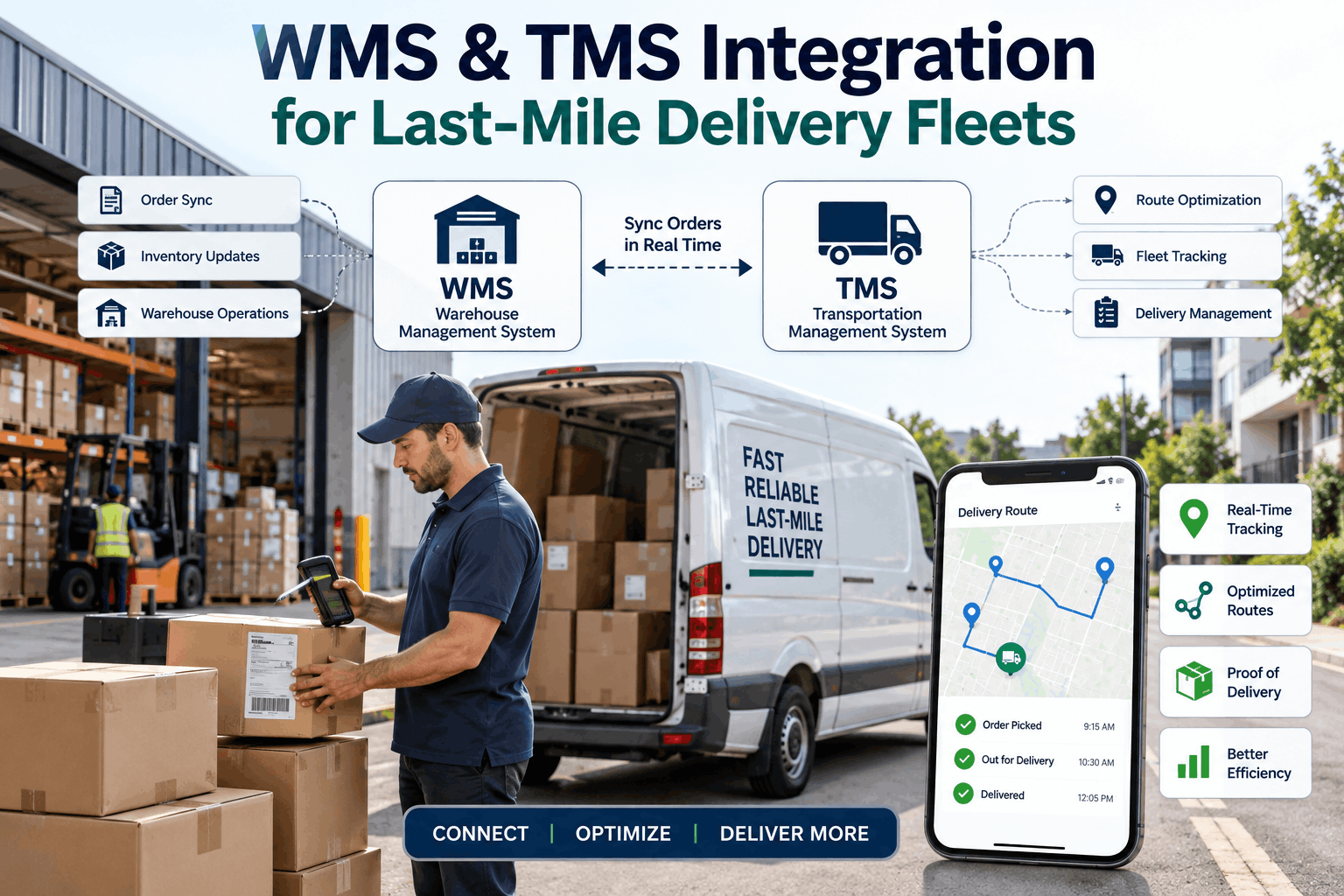
Supply chain vice presidents, final-mile fulfillment directors, and e-commerce distribution managers know that the ultimate operational bottleneck in modern logistics lies in the digital disconnect between warehouse management systems (WMS), transportation management systems (TMS), and actual on-the-ground delivery vans. While a warehouse management system excels at staging, bin picking, sorting, and wave planning, and a transportation management system manages freight procurement, carrier linehauls, and contract rating, both platforms stop short of driver-level final-mile execution. When warehouse bin outputs and linehaul manifests fail to link seamlessly with dynamic curb-level routing, courier mobile workflows, vehicle telematics, and real-time electronic proof-of-delivery (ePOD), parcel operations experience severe dock bottlenecks, misrouted packages, customer non-delivery disputes, and escalating cost-per-stop inflation. Fleet Rabbit provides a purpose-built WMS and TMS integration platform designed specifically for final-mile courier fleets. By linking warehouse pick-and-pack scans directly to real-time dispatch, turn-by-turn route sequencing, driver pre-trip vehicle walkarounds, and instant customer photo confirmation, carriers eliminate manual spreadsheet imports and achieve automated parcel velocity from warehouse racking to customer doorsteps. Book a Demo to see our WMS and TMS integration in action.
WMS & TMS Integration for Last-Mile Delivery Fleets
An end-to-end technical architecture and systems integration blueprint: connect warehouse inventory bin scans and linehaul freight feeds with active van routing, mobile barcode scanning, geofenced proof-of-delivery, and vehicle health telemetry.
High-resolution doorstep photos and GPS stamps eliminate non-receipt write-offs.
$5
Per Delivery Asset / Mo
Full access to dynamic routing, mobile driver ePOD, and preventative van maintenance.
Close the Costly Operational Gap Between Warehouse Sorting and Final-Mile Vans
Stop relying on disconnected paper manifests and delayed batch exports. Unify warehouse pick-and-pack data, dynamic parcel vehicle routing, and electronic proof-of-delivery on a single platform.
The Acute Financial Liabilities of Unconnected Supply Chain Systems
In high-volume e-commerce and retail distribution, operating warehouse and transport systems in disconnected silos introduces severe systemic friction that quickly erodes parcel profitability. Sign up to eliminate warehouse-to-fleet operational friction.
Bottleneck 01
Morning Staging Dock Deadlocks
When warehouse pick waves are finished, dispatchers must manually export manifests into spreadsheets, match addresses, and hand paper delivery clipboards to drivers. Vans sit idling for 45 to 90 minutes at warehouse bay doors before departing. Book a demo to inspect our automated morning staging workflows.
Bottleneck 02
Unoptimized Static Delivery Routes
Without real-time final-mile routing connected directly to TMS freight arrival times, drivers run outdated, static delivery sequences. Vans frequently backtrack across neighborhoods, burning excess fuel and adding costly evening courier overtime hours.
Bottleneck 03
Unsettled Delivery Chargebacks & Invoicing Lag
Because paper delivery receipts take 24 to 48 hours to return to accounting desks, customer billing cycles are delayed. Furthermore, customer "Item Not Received" claims cannot be disproven without photographic doorstep verification. Sign up to automate instant delivery billing settlement.
Bottleneck 04
Unmonitored Vehicle Failures Halting Routes
WMS and TMS packages have zero visibility into commercial van health. An unmonitored dead starter battery or worn brake pads result in unexpected roadside tow calls that strand 80+ customer orders and break strict delivery window SLAs.
The Bi-Directional WMS & TMS Final-Mile Data Exchange
Fleet Rabbit establishes an automated bi-directional API bridge that links warehouse racking management, freight rating systems, and road couriers into an uninterrupted digital loop. Book a demo to explore our bi-directional API endpoints.
Outbound Flow
Warehouse & Linehaul to Fleet
Pick-and-Pack Wave Sync: As warehouse staff scan cartons onto staging pallets, order payloads, package dimensions, and customer destination coordinates transmit directly into the dispatch engine via REST webhooks.
SLA Delivery Window Constraints: Strict delivery promises (e.g., 2-hour express, morning grocery, or afternoon commercial retail) pass from the TMS into final-mile routing to build compliant stop sequences. Sign up to automate SLA window routing.
Real-Time Parcel Scans & Doorstep Photos: Drivers scan 1D/2D barcodes at the doorstep, capture high-resolution photos, and collect recipient signatures on their smartphones in under 15 seconds.
Instant Order Closeout & Customer Alert: Confirmed delivery timestamps and GPS coordinates sync immediately to update customer portal tracking links and trigger automated billing in the accounting ledger. Book a demo to test our electronic proof-of-delivery tools.
Exception & Return Flow Triage: If an access gate is locked or an order is refused, the parcel is flagged as an undelivered exception, updating WMS return docks and triggering redelivery scheduling.
4 Pillars of Connected Final-Mile Logistics Software
Connecting supply chain databases with active delivery vehicles transforms disjointed warehouse operations into an agile final-mile delivery network. Sign up to explore all platform features.
Pillar 01
Dynamic Multi-Stop Delivery Sequencing
Convert hundreds of incoming warehouse sales orders into density-clustered delivery routes in seconds. Our engine calculates traffic congestion patterns, left-turn avoidance, and priority time windows, cutting driver mileage by 22% and raising completed drops per shift. Book a demo to see our route sequencing algorithms in action.
Pillar 02
Geofenced Photographic Proof-of-Delivery (ePOD)
Equip couriers with an intuitive mobile app that verifies barcode scans, captures doorstep photos, and records touchscreen signatures. Every delivery record is watermarked with immutable satellite coordinates and UTC timestamps, eliminating false non-delivery disputes.
Pillar 03
OBD-II Van Telematics & Preventative Maintenance
Connect directly to van diagnostic ports to track engine runtime hours, battery voltage, and active diagnostic fault codes. Automatically schedule brake pad inspections and oil changes before road breakdowns disrupt customer routes. Sign up to automate telematics-based fleet maintenance.
Pillar 04
Paperless Mobile Driver DVIR Inspections
Drivers complete pre-trip and post-trip vehicle safety checks on smartphones in under two minutes. Reported vehicle defects—such as low tire tread or malfunctioning rear door latches—route directly to maintenance mechanics for prioritized repair before vans depart the yard.
Platform Comparison: Siloed Systems vs. Fleet Rabbit Integration
Integrate Fleet Rabbit smoothly with your existing WMS and TMS databases without disrupting active warehouse sorting waves or customer dispatches. Sign up to begin your fleet API mapping.
Phase 01
API & Webhook Setup (Days 1–3)
Establish REST endpoints to receive warehouse wave manifests, customer addresses, package volume dimensions, and driver delivery schedules.
Phase 02
Vehicle & Hub Ingestion (Days 4–7)
Upload vehicle profiles, cargo vans, hub geofences, and preventive maintenance triggers for brake pad wear and oil change intervals.
Phase 03
Mobile Driver Rollout (Days 8–11)
Equip couriers with our mobile application for multi-stop route navigation, barcode parcel verification, and geofenced photo proof-of-delivery.
Phase 04
Live Dispatch & Settlement (Days 12–14)
Activate live multi-stop route sequencing, real-time exception notifications, and instant automated delivery settlement back to the central billing ledger.
Regional Delivery Carrier Eliminates Morning Dock Delays Across 38 Cargo Vans
Handling over 4,500 e-commerce parcel drops daily, Horizon Parcel Logistics suffered from an operational gap between their warehouse sorting system and field couriers. Drivers spent 50 minutes every morning manually cross-referencing paper load sheets with physical carton bins before loading vans. Furthermore, customer dispute claims for alleged missing packages averaged $3,200 per month.
By deploying Fleet Rabbit, the carrier established automated webhook integration between their WMS and dispatch. Picked warehouse waves now populate density-clustered driver routes automatically while couriers scan packages straight into van cargo bays. Morning dock departure delays dropped to under 10 minutes, on-time SLA delivery accuracy climbed to 99.7%, and cryptographic photographic proof-of-delivery eliminated customer dispute write-offs entirely.
Frequently Asked Questions
What is the difference between a WMS, a TMS, and last-mile fleet software?
A Warehouse Management System (WMS) manages inventory within the four walls of a distribution center—tracking receiving, bin storage, picking, and packing waves. A Transportation Management System (TMS) oversees high-level freight procurement, carrier contract rating, and inbound long-haul linehaul movements. Last-mile fleet software executes actual door-to-door delivery operations—managing curb-level turn-by-turn route sequencing, mobile driver ePOD collection, driver vehicle inspection reports (DVIR), and van diagnostic telematics.
Which WMS and TMS platforms can integrate with Fleet Rabbit?
Fleet Rabbit features an open RESTful API and bi-directional JSON webhook architecture capable of integrating with leading warehouse and freight management platforms including Manhattan Associates, Blue Yonder, Oracle NetSuite, SAP Extended Warehouse Management (EWM), Körber, Descartes, MercuryGate, and custom proprietary in-house supply chain databases.
Can drivers collect electronic proof of delivery inside areas without cellular reception?
Yes. Fleet Rabbit features an offline-first mobile architecture. Couriers can scan parcel barcodes, capture high-resolution doorstep photos, and record recipient electronic signatures inside concrete basement loading docks, underground parking garages, or rural areas without internet access. All data caches securely on the smartphone and automatically synchronizes to dispatch as soon as cellular service returns.
How does integrated fleet software prevent unexpected delivery van breakdowns?
Fleet Rabbit connects directly to vehicle OBD-II diagnostic ports to monitor engine runtime hours, battery voltage, and active diagnostic trouble codes (DTCs). Instead of relying on static calendar estimates, the software automatically triggers preventive maintenance work orders for brake pad wear and engine fluid flushes before roadside mechanical failures can halt customer routes.
What are the pricing details and contract terms for Fleet Rabbit's platform?
Fleet Rabbit is priced at a flat rate of $5 per delivery asset per month billed annually. This includes full access to open WMS/TMS integration APIs, dynamic multi-stop route sequencing, mobile driver ePOD tools, paperless DVIR walkarounds, and telematics-based preventive maintenance. We provide a 14-day free trial on up to 3 vehicles with zero setup fees or locked long-term contracts.
Ready to Connect Your WMS and TMS with Final-Mile Fleet Operations?
Eliminate dock departure bottlenecks, capture verified photographic proof of delivery, and streamline fleet maintenance for just $5/asset/month.