ADA lift inspection tracking software built around the daily cycle test
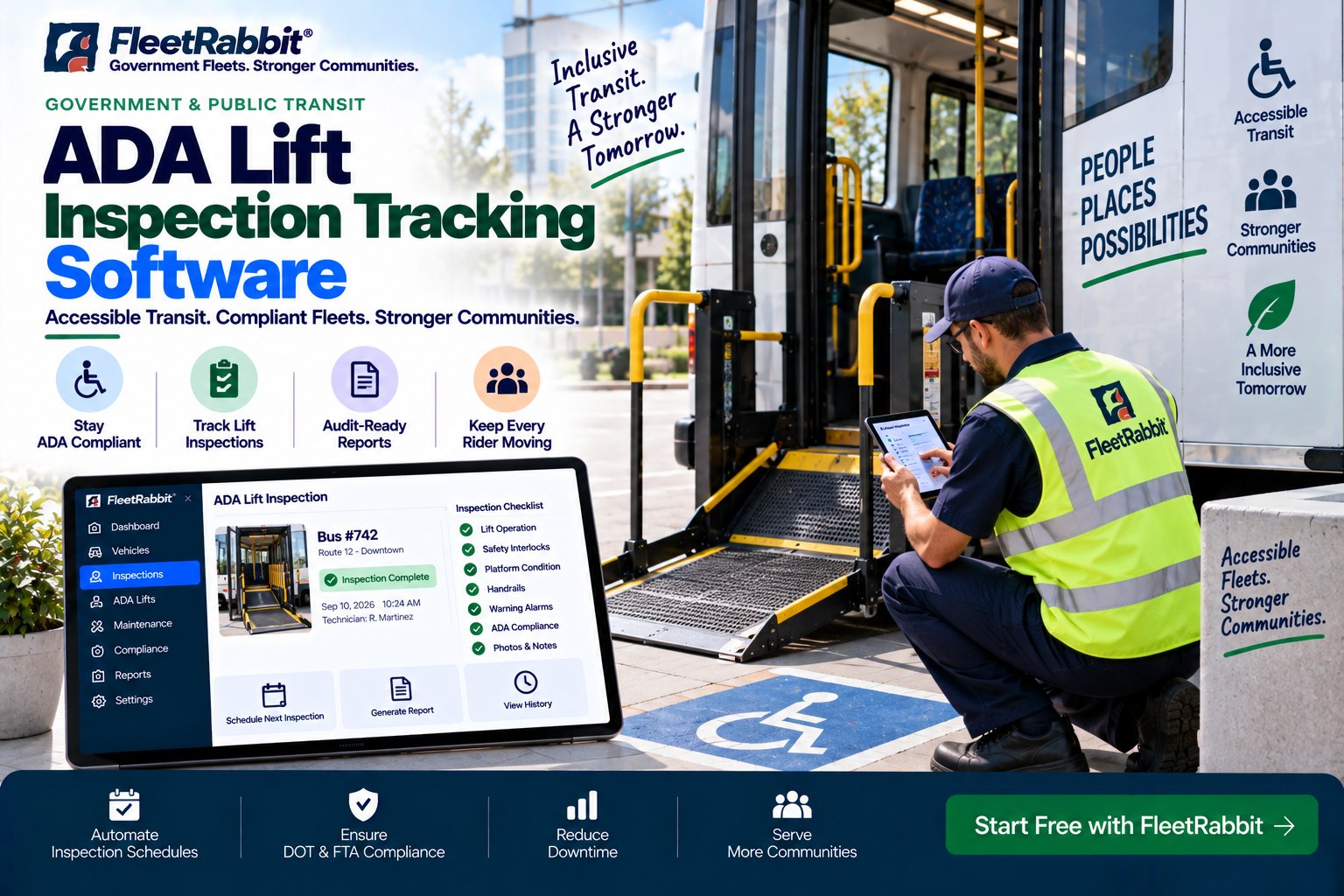
A visual check isn't enough. FTA practice calls for a full deployment cycle before each day of revenue service — actually running the lift out and back, not just looking at it. FleetRabbit turns that cycle test into a timestamped record for every accessible vehicle, every service day.
You can sign up and load your fleet's lift-equipped vehicles in minutes to see how the daily check gets captured automatically.
What 49 CFR 37.163 actually requires
The regulation itself is short, but it puts the burden squarely on the transit agency: establish a system of maintenance checks frequent enough to know, with confidence, whether every lift is actually working — not assume it based on the last repair. It's worth a book a demo look if your current process still relies on that assumption.
Regular, frequent checks
A single monthly inspection doesn't satisfy the standard. The check has to happen often enough to catch a failure before it reaches a passenger.
A real cycle, not a glance
FTA guidance points toward actually deploying and stowing the lift each service day — the failure mode that matters is mechanical, and a visual check won't catch it.
Immediate driver reporting
A failure has to be reported right away, not noted at the end of a shift, so the vehicle can be pulled before it's assigned to another accessible route.
Turn the daily cycle test into an audit-ready record
Every deploy, test, and stow logged with a timestamp — no separate paperwork for drivers to remember.
The spare-vehicle exception isn't a grace period
When no accessible spare vehicle is available, the rule allows a vehicle with an inoperative lift to keep running for a narrow window — but it's conditional, not automatic, and it requires documented justification and an active repair effort the entire time.
Once that window closes without a working lift, there's no further exception — the vehicle has to be taken off accessible service. Tracking the countdown manually across a whole fleet is exactly the kind of thing that gets missed; teams that book a demo usually ask to see this exact countdown running against their own out-of-service vehicles.
From driver check to audit trail
The daily cycle test is only useful if what happens next is automatic too — sign up to see this exact flow running against your own accessible fleet. Here's the path a failed check follows.
Driver runs the cycle test
Deploy, platform check, and stow — logged from a phone before pull-out, pass or fail.
A failed check flags the vehicle
The bus is held from accessible route assignment automatically, no separate call to dispatch required.
Repair and spare-vehicle window tracked together
If a spare isn't available, the exception countdown and repair status stay linked until the lift is verified working again.
Every record stored for review
Deploy, fail, repair, and re-test — all timestamped and ready to hand over the moment an accessibility compliance review asks for it.
Know your lift compliance status before an auditor does
Start free and connect your accessible fleet, or walk through your current lift records with our team.
A lift check is only as good as its record
The mechanical test matters, but so does proving it happened — every day, on every accessible vehicle, whether or not anything ever goes wrong. That's the part that's hardest to keep up manually across a growing fleet, and the part an accessibility compliance review actually checks first.
See your own fleet's lift compliance status — sign up to connect your accessible vehicles, or book a demo and bring your current inspection records to compare.
Common questions
Does 49 CFR 37.163 require a daily lift check by law
The regulation requires "regular and frequent" maintenance checks without naming an exact interval, but FTA guidance and common agency practice both point to a full deployment cycle before each day of revenue service.
What counts as an acceptable lift check
A genuine deploy-and-stow cycle, not a visual look at the lift. The mechanical failures that matter typically don't show up until the lift is actually run.
How long can a vehicle run with a failed lift
Only under the narrow spare-vehicle exception, and only with documented justification and active repair — generally up to 3 days in areas over 50,000 population, or 5 days in smaller service areas.
What has to happen if a lift fails mid-route
The driver reports it immediately and the vehicle is pulled from accessible service before its next service day, with the agency responsible for getting any stranded passenger where they're going another way.
What does an FTA accessibility compliance review typically ask for
Reviewers commonly want to see a rolling history of daily lift checks across the fleet, not just records for vehicles that had a known issue — which is where manual logs tend to fall short.
Does this apply to paratransit and contracted operators too
Yes — the requirement follows the vehicle and the service, so contracted operators running accessible transportation on behalf of a public entity are expected to meet the same standard.