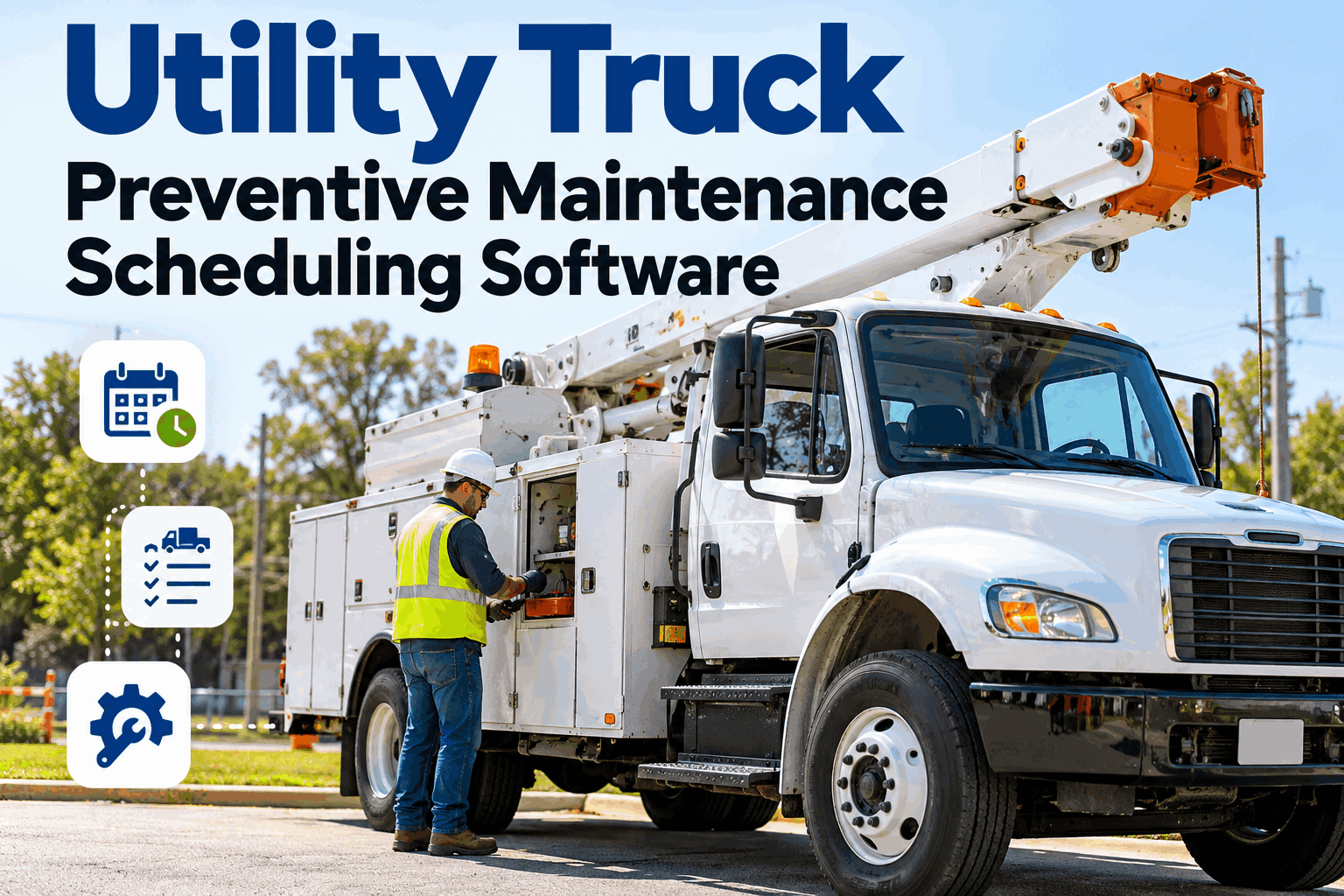
A municipal utility truck does several jobs at once. It drives to the site, runs its engine to power the hydraulics and lifts a crew in a bucket next to live equipment. Each job wears on a different clock: engine hours, road miles and a calendar of safety inspections that cannot slip. Miss the wrong one and a truck that looks fine can be out of compliance, or out of service, overnight. Fleets that schedule PM by engine hours, and track inspections beside it, keep every truck ready and every record clean. See how FleetRabbit schedules utility truck PM and inspections in one place and get alerts before anything comes due.
Utility Truck Preventive Maintenance Scheduling Software: Engine Hours, Inspections and Safety Tests
Bucket and line trucks run on three clocks at once. Learn how to schedule all of them and keep audit-ready records for every truck.
The Inspection Ladder for Aerial Devices
Bucket trucks and digger derricks carry inspection requirements on top of normal PM. ANSI A92.2 and OSHA rules set the pattern. Exact intervals depend on the edition of the standard, the manufacturer and how the device is used, so confirm yours.
The 12-Month Dielectric Runway
The dielectric test proves the insulating boom still does its job. If no test has happened within 12 months, the unit can no longer be treated as insulating, so the alert has to arrive well before the deadline.
Illustrative runway. Keep a written record of each test, including the date and who performed it.
One Truck's Year, on a Single Calendar
Here is how a hard-working bucket truck's year might look when engine-hour PM, boom inspections and safety tests are all scheduled together.
Sample year for one truck. Numbers count how many times each task occurs.
What a Utility Truck PM Program Must Cover
Keep Every Truck On Schedule, On Safe Ground and On the Job
Engine-hour PM, inspections, service alerts and repair history for every utility truck in one system. Free for your first three vehicles.
A Compliance Record You Can Hand to an Auditor
When every task lives on one record, you can see what is done and what is coming. Start free and build a record like this for every truck.
Sample record for illustration.
Frequently Asked Questions
It is a plan for servicing each truck before parts fail, by engine hours, miles and calendar dates. For bucket trucks it also includes aerial device inspections and safety tests.
ANSI A92.2 calls for testing insulating aerial devices at least every 12 months, and many agencies test more often. If a test lapses, the unit can no longer be treated as insulating.
Hours are usually better for the engine and hydraulics, since trucks run at job sites for long periods without moving. Miles still matter for brakes and tires, so many fleets track both.
A pre-start check each shift, interval inspections, a periodic inspection at least yearly, a major structural inspection at 15 years and a post-event inspection after any overload or incident.
Keep written records with the date, the results and the signature of the person who performed each test, so they are easy to show in an audit.
Yes. You can start free with three vehicles and add more as your fleet grows.
Never Miss a Service, a Test or a Sign-Off Again
Engine-hour PM, inspections, service alerts, work orders and downtime for your whole municipal fleet in one system. Free for your first three vehicles.