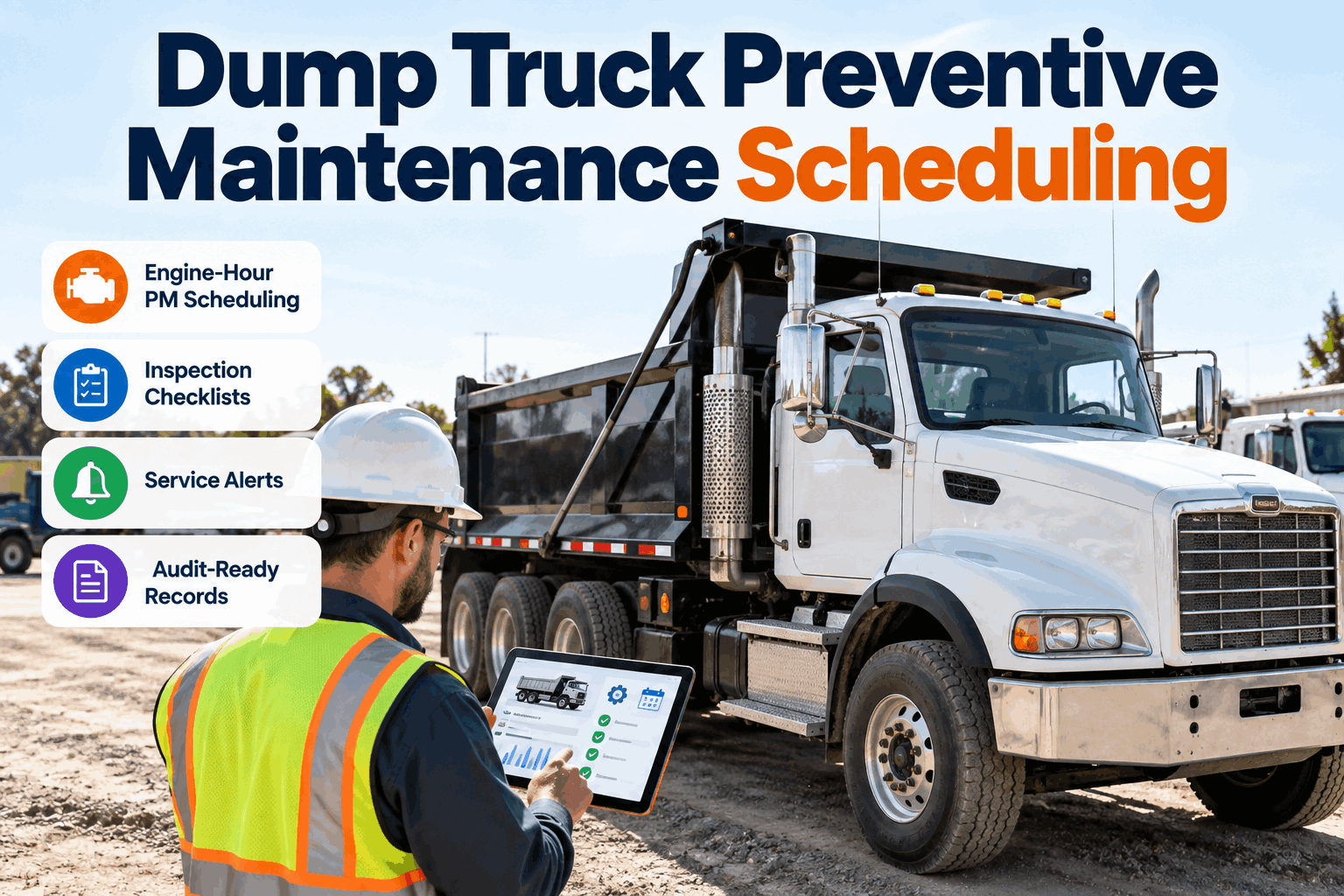
Ask a public works crew how far their dump truck went last week and the answer might be 40 miles. Ask how long the engine ran and it could be more than 40 hours, between loading, idling at job sites, running the hoist and creeping through city streets. A maintenance schedule built on the odometer sees almost none of that. Engine-hour PM sees all of it, and it is the difference between changing oil on time and finding a worn-out engine at the next breakdown. See how FleetRabbit schedules dump truck PM by engine hours and get alerts before service is due.
Dump Truck Preventive Maintenance Scheduling Software: Engine-Hour PM Done Right
Dump trucks wear on hours, not just miles. Learn how to build a PM schedule that follows real engine use, covers the hoist and hydraulics and keeps audit-ready records.
Hours, Miles or Both? Match the Trigger to the Truck
The more a truck idles, crawls or runs a PTO, the less its odometer tells you. Guidance commonly points to hours when idle time passes 30% of operating time, average speed stays under 25 mph or PTO use is regular.
Same Truck, Two Schedules
Picture a city dump truck that logs 6,000 miles and 1,800 engine hours in a year. Here is what each trigger does with it.
Example only. Intervals should come from your manufacturer's manual.
A Sample PM Ladder, Level by Level
Most fleets use tiered services where each level includes the last. Published hard-duty guidance often puts oil changes at 250 to 300 hours, and some OEM programs allow longer with oil analysis, so confirm your own intervals.
Sample schedule for illustration. Not a manufacturer specification.
The Four Systems a Dump Truck PM Must Cover
Engine and aftertreatment
Hours-based Oil and filters, fuel filters, coolant and DPF regeneration care. Low-speed work can trigger clogging before mileage schedules catch it.Hoist and hydraulics
Hours-based Grease hoist pivots often, check fluid and hoses, change the filter at each PM and sample oil at longer intervals.PTO and driveline
Hours-based PTO-driven pumps wear even when the truck is parked. Service PTO, transmission and axles by hours.Brakes, tires and body
Miles, hours and inspections Stop-and-go work is hard on brakes and tires. Check tailgate latches, tarp, lights and backup alarm each shift.Stop Letting the Odometer Decide When Your Trucks Get Serviced
Schedule PM by engine hours, miles or date for every dump truck in one system. Free for your first three vehicles.
Get the Alert Before the Service Is Missed
A schedule only works if someone hears about it in time. Start free and set up service alerts for every truck.
Illustrative alerts.
Frequently Asked Questions
It is a plan for servicing each truck before parts fail, by engine hours, miles or calendar time. It covers the engine, hoist, hydraulics, PTO, driveline, brakes and tires.
Hours are usually the better trigger for trucks that idle, crawl or run a PTO. Many fleets track hours, miles and time together and service at whichever comes first.
Follow the manufacturer's manual. Hard-duty guidance often falls around 250 to 300 hours, and some OEM programs allow longer with oil analysis and controlled idle time.
Common rules of thumb put each engine hour at roughly 20 to 35 miles of wear, depending on duty cycle. Tracking hours directly is more accurate than converting.
Grease hoist pivots regularly, check fluid condition and hoses, replace the hydraulic filter at each PM and consider oil sampling at longer hour intervals.
Yes. You can start free with three vehicles and add more as your fleet grows.
Put Every Dump Truck on the Right Clock
Engine-hour PM, inspections, service alerts, work orders and downtime for your whole municipal fleet in one system. Free for your first three vehicles.