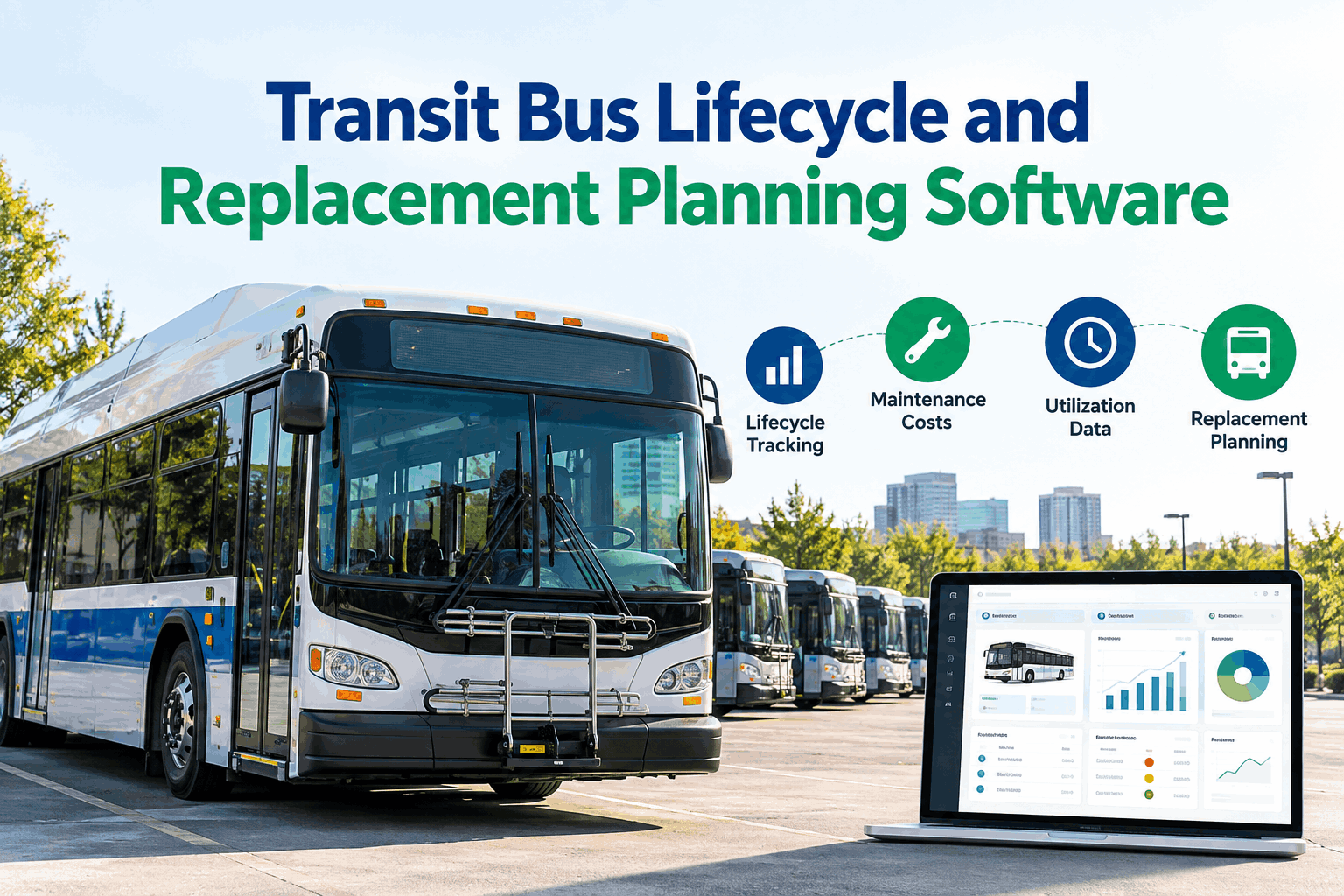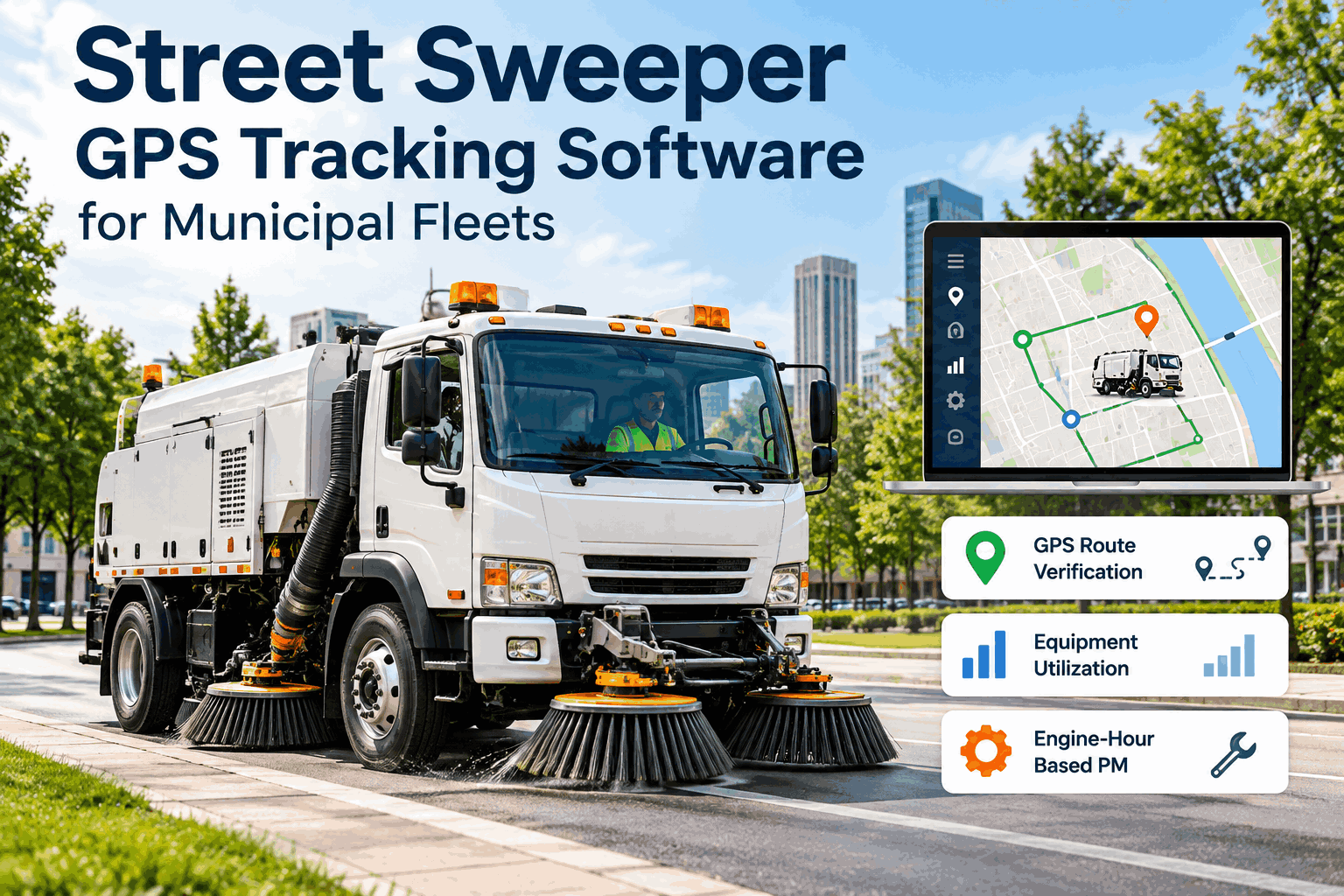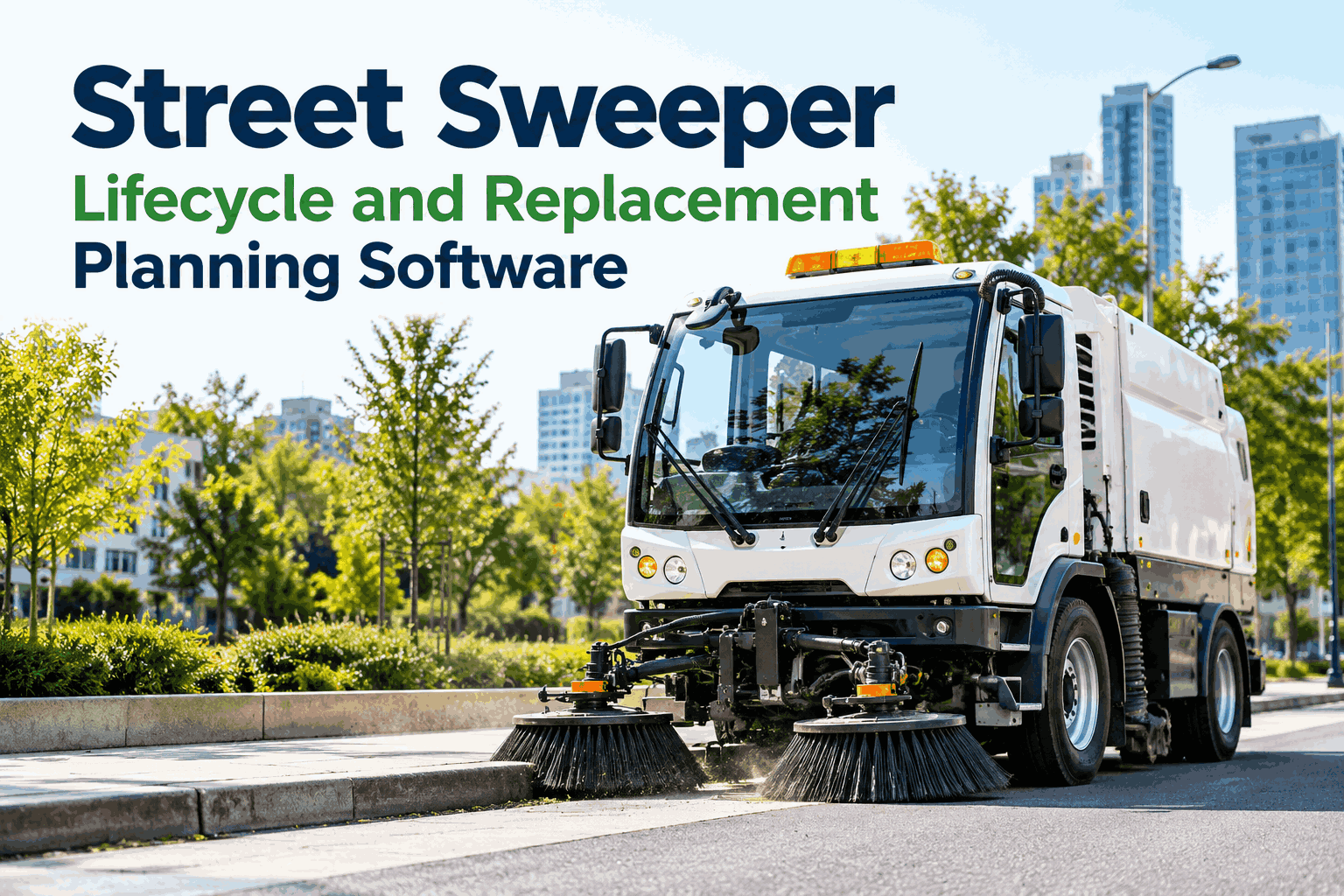
A street sweeper is one of the most expensive pieces of equipment a public works department buys, and one of the hardest to time. Replace it too early and you give up years of useful life. Wait too long and repair bills, downtime and missed routes pile up while the capital request sits unfunded. The answer is rarely a number on a calendar. It comes from age, engine hours, repair cost and downtime tracked together for every machine. See how FleetRabbit builds a replacement plan from real sweeper records and bring council numbers they can approve.
Street Sweeper Lifecycle and Replacement Planning Software
The best time to replace a sweeper is when the cost of keeping it starts to beat the cost of owning a new one. Here is how to find that point from your own data.
Score Each Sweeper on Five Signals
Age alone is a weak trigger. Score every machine on the signals below each year, then add up the points. It is a simple guide, so adjust it to your own policy.
What Replacement Cycles Do Agencies Actually Use?
There is no single answer. Published figures run from 6 to 12 years, and the spread comes mostly from how hard each sweeper works. Staff in one Oregon city noted that high-utilization equipment like sweepers needs shorter cycles than the rest of the fleet.
Years in service. Ranges come from municipal budgets, agency policies and industry guides. Maricopa Association of Governments has also moved to consider hours and miles, not just age, when funding PM-10 sweeper replacement.
Budget From a Current Quote, Not Last Cycle's Price
Sweeper prices vary by type, hopper size and emissions package, and they have climbed. Sweepers also tend to hold resale value better than many vehicles, so trade-in timing matters. One Minnesota city moved off a 10-year cycle after finding the machine was worth more as a trade-in than as a repair project.
Take the Guesswork Out of Sweeper Replacement
Track age, engine hours, repairs, downtime and PM for every sweeper in one place. Free for your first three vehicles.
Replace on a Ladder, Not All at Once
Machines bought together tend to wear out together. Staggering replacements gives you one purchase every couple of years instead of a spike that strains the budget and the supplier.
Sample four-sweeper plan with one replacement every two years.
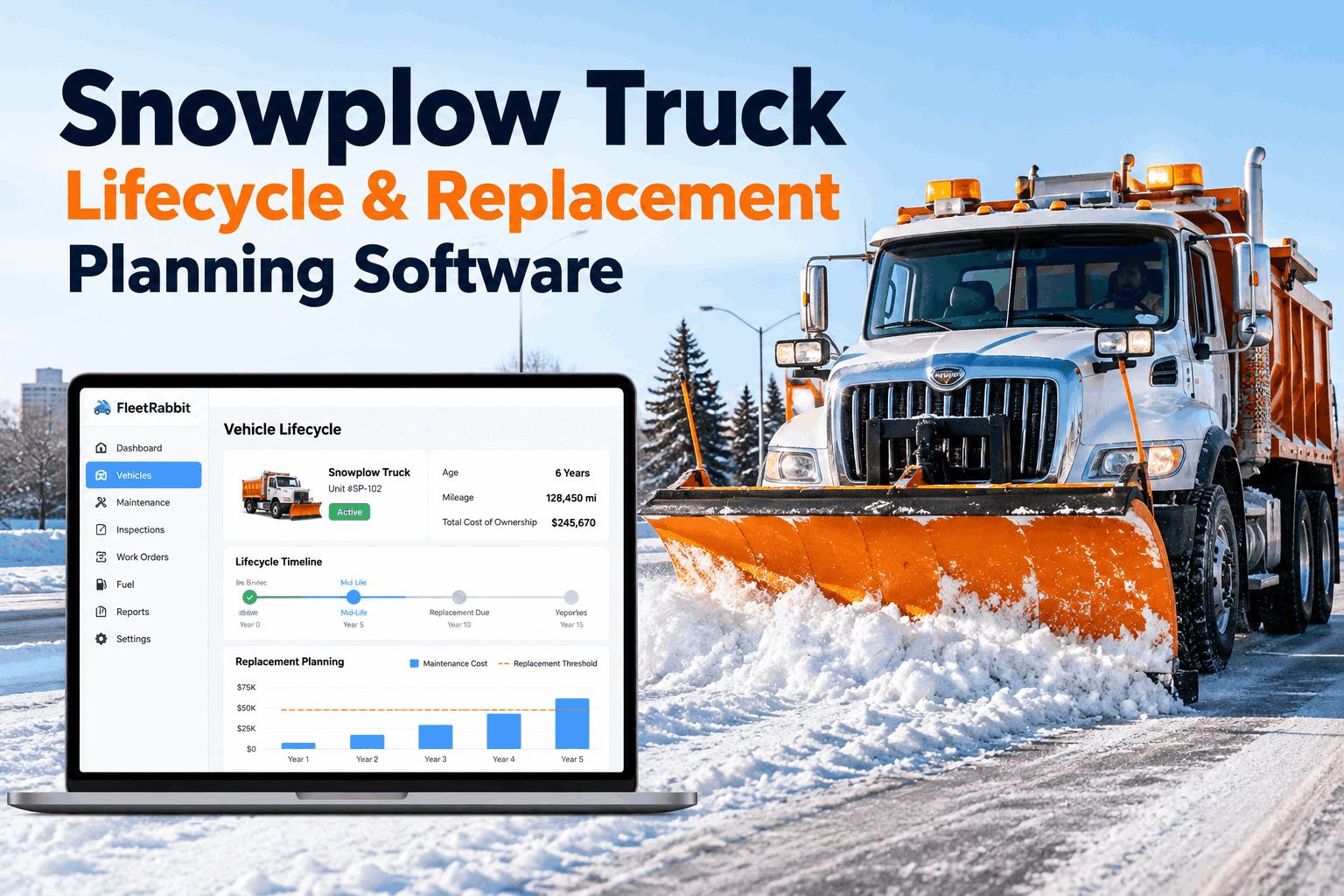
One Profile Per Sweeper, Ready for Budget Season
A replacement request is only as strong as the records behind it. Start free and build a profile like this for every machine.
Sample profile for illustration.
Frequently Asked Questions
Published figures commonly run from about 6 to 12 years, with 7 to 10 often cited. Duty cycle matters most, and heavily used machines tend to need shorter cycles.
When the cost of keeping it, including repairs, downtime and missed routes, starts to beat the cost of owning a new one. Age is only one input, so track hours, repair cost and downtime too.
Industry guides list roughly $150,000 to $350,000 and up, and some recent municipal quotes have reached $350,000 to $500,000. Get a current quote for your configuration before budgeting.
Sweepers work hard at low speeds, and many carry a second engine for the sweeping system. Hours reflect that wear far better than miles or age alone.
Sometimes. Compare the rebuild quote, expected extra years and downtime against trade-in value and the price of a new unit. Your repair history gives you the numbers.
Yes. You can start free with three vehicles and add more as your fleet grows.
Walk Into Budget Season With the Data Already Built
Lifecycle tracking, engine-hour PM, repair history, utilization and downtime for your whole municipal fleet in one system. Free for your first three vehicles.