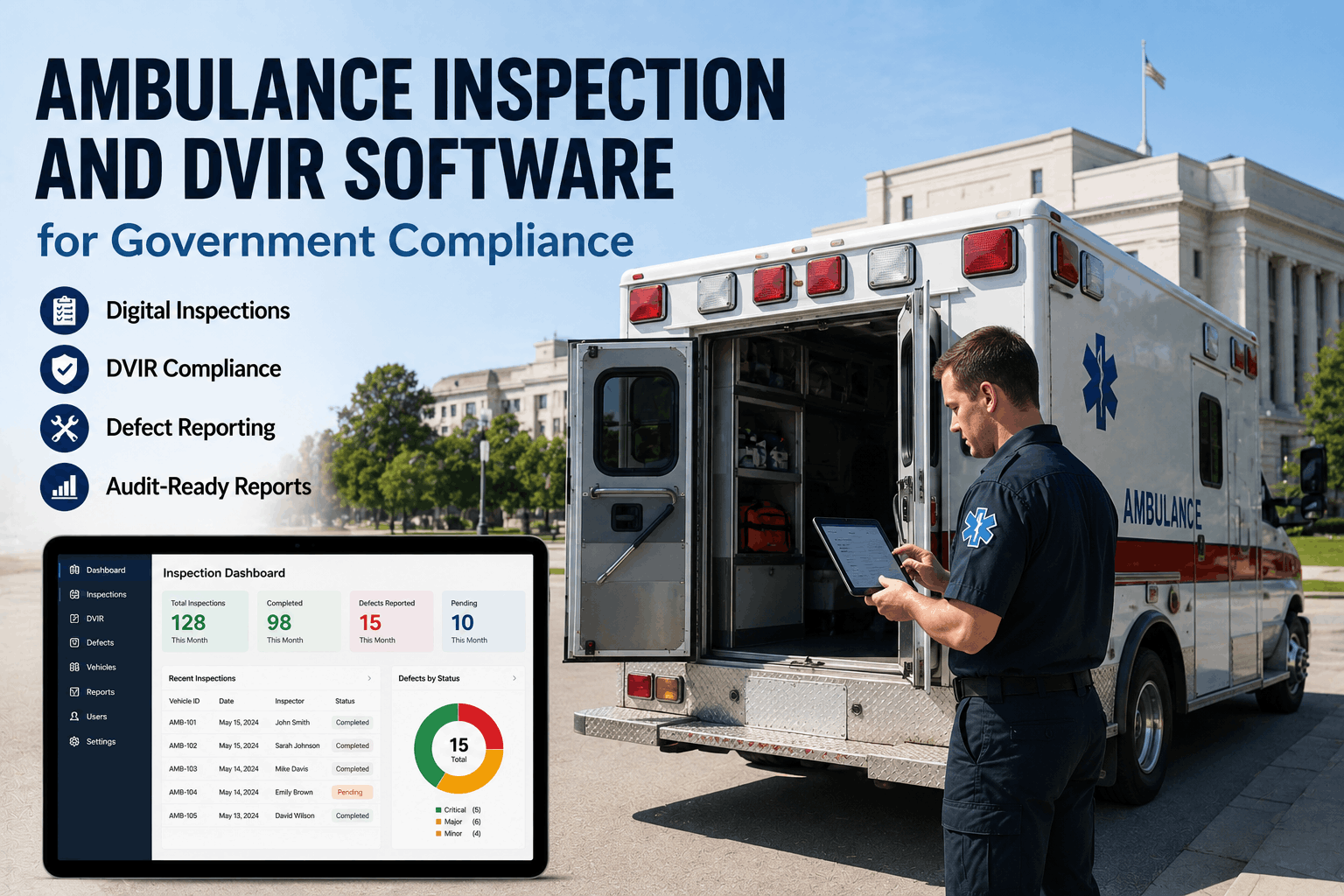
A fire engine can miss a preventive maintenance window and the department absorbs the delay. An ambulance can't. When a unit is flagged out of service mid-shift, a 911 zone loses coverage, response times climb, and the paper trail behind that failure becomes the first thing an auditor asks for. Ambulance inspection and DVIR software exists for exactly this pressure point: it keeps every unit provably roadworthy, keeps NFPA and DOT paperwork airtight, and keeps a public fleet manager out of the room where "we think it was inspected" is not an acceptable answer.
396.11
The CFR section every DVIR is graded against
11
Parts and accessories FMCSA requires on every report
12mo
Maximum gap allowed between periodic CMV inspections
A regular fleet vehicle
Runs on mileage
A pickup truck or a sedan wears out roughly in proportion to the miles it drives. One DVIR checklist, one PM schedule, one inspection cadence. Compliance is straightforward because the vehicle's job is simple: get from A to B.
An ambulance
Runs on hours, standards, and lives
An ambulance can log 40 miles and 6 idling hours running a patient compartment, a lift gate, and onboard medical power in a single shift. It answers to DOT for roadworthiness and to NFPA 1911 and NFPA 1917 for the emergency-vehicle and patient-compartment build. Agencies that try to manage that with a spreadsheet usually find the gap during an audit, not before one. Teams that sign up for a purpose-built system find the gap on a dashboard instead.
The two rulebooks your fleet answers to
DOT keeps it road-legal. NFPA keeps it emergency-ready.
DOT / FMCSA
49 CFR 396.11 and 396.13
Every driver documents a Driver Vehicle Inspection Report covering 11 required components, including service brakes, steering, lighting, and tires. Reported defects need a mechanic's certification before the unit is dispatched again, and as of the 2026 rule clarification, that whole chain is explicitly allowed to run electronically.
NFPA 1917
Build and performance standard
Sets the minimum design, performance, and testing requirements for new automotive ambulances, from chassis to patient compartment layout. It's the reference point agencies use when specifying or replacing units.
NFPA 1911
In-service inspection standard
Covers inspection, maintenance, testing, and retirement of in-service emergency vehicles, with a dedicated chapter on patient-compartment checks, from oxygen delivery to onboard heating and lighting.
DOT / FMCSA
49 CFR 396 Appendix A
Sets the periodic inspection standard every commercial vehicle must pass at least once every 12 months, covering brakes, steering, tires, and the rest of the mechanical system that keeps a unit legally on the road.
Running both standards through two disconnected systems is how agencies end up with a DVIR that says a unit is road-legal and a maintenance log that has no idea when the stretcher mounts were last checked. FleetRabbit was built to sign up once and satisfy both from the same record.
See your fleet's compliance gaps before an auditor does
Get a live walkthrough of DOT-ready DVIRs and NFPA-aligned inspection checklists, mapped to your actual apparatus list.
Preventive maintenance, recalculated
Why engine hours beat mileage for ambulances
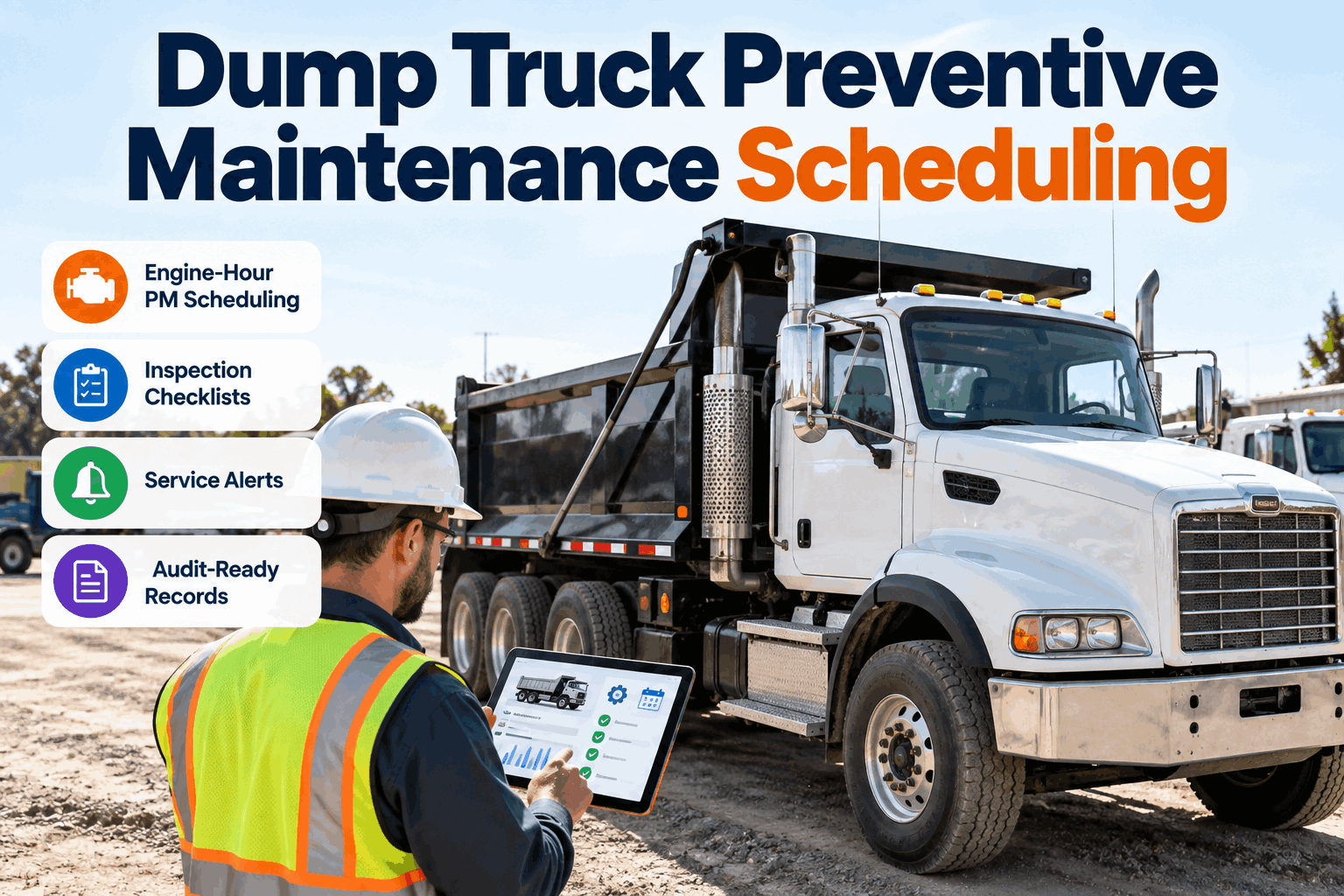
Idle time doesn't show up on an odometer, but it shows up on the engine. Ambulances park with the motor running to keep lights, climate control, and onboard medical equipment powered through an entire call, which means two units with identical mileage can have very different wear. Government fleet software that triggers PM off engine hours, not just miles, catches that difference before it becomes a breakdown mid-response.
Agencies that switch over typically book a demo first to see how the threshold logic maps onto their own duty cycles, since a rural transport unit and an urban 911 rig accumulate hours at very different rates.
Mileage-based wear estimate
Actual engine-hour load
Same shift, same odometer reading, very different engine load.
What an auditor actually pulls
Building a record that survives review, not just an inspection
A clean inspection means little if the record behind it can't be produced on request. Compliance reviews look for a specific, unbroken chain: who inspected the unit, what they found, who certified the repair, and whether the next driver reviewed and signed off before pulling out. Missing one signature in that chain is one of the most commonly cited findings in DOT reviews.
- 01Digital DVIR completed pre-trip and post-trip, with timestamp and GPS tag attached to the unit, not just the driver.
- 02Defects routed straight to a work order, so nothing waits on a paper form making its way to a shop.
- 03Mechanic certification captured before the unit re-enters rotation, closing the loop DOT looks for first.
- 04NFPA 1911 patient-compartment checks stored alongside the DVIR, not in a separate binder.
- 05Retention-ready exports, so a records request becomes a download instead of a week of searching.
Agencies rebuilding this process from scratch usually start the same way: they sign up for a trial fleet, run one shift through it, and compare the resulting record against what a paper DVIR would have produced.
Built for public-sector ambulance fleets
One system, both rulebooks, every unit
A
DOT-ready digital DVIR
Covers all 11 FMCSA-required components with electronic signatures and a defect-to-repair chain that stands up to a roadside or compliance review.
B
NFPA-aligned checklists
Patient-compartment and apparatus checks structured around NFPA 1911 and 1917, so build compliance and daily inspection live in one place.
C
Engine-hour PM scheduling
Preventive maintenance triggers off actual engine load, not just odometer miles, catching the wear that idle-heavy shifts create.
D
Audit-ready records
Every inspection, defect, and certification stored with a timestamp, exportable in the format your oversight board expects to see.
E
Multi-department dashboards
Fire, EMS, and municipal fleet teams see the same live status per unit instead of reconciling three separate logs after the fact.
F
Defect and downtime alerts
Fleet managers are notified the moment a unit is flagged, so an out-of-service ambulance is a five-minute decision, not a surprise at shift change.
A familiar Monday
The 6 a.m. call every fleet manager knows
A unit fails its pre-trip brake check twenty minutes before shift change. On paper, someone has to physically track down a supervisor, fill a form, wait for a mechanic, and hope the replacement rig is fueled and stocked. With inspection software running the same workflow digitally, the defect lands in the shop's queue the second it's logged, a backup unit status updates automatically, and the DVIR chain closes itself out with a certification stamp instead of a signature chase. Departments that have made this switch describe it less as new software and more as removing a step that never needed to be manual. If your team is still running that Monday morning on paper, it's worth a look at how a short book a demo session maps to your own shift handoffs.
Ready-for-audit fleets don't happen by accident
Set up your first unit in FleetRabbit and see a DOT-ready, NFPA-aligned inspection record generate itself from day one.
Common questions
Ambulance inspection software, answered plainly
Does electronic DVIR completion actually satisfy FMCSA requirements
Yes. Electronic DVIRs have long been permitted, and a 2026 federal rule made the language explicit so agencies moving off paper have no ambiguity about compliance.
How is an ambulance inspection different from a standard fleet vehicle inspection
It layers DOT's roadworthiness requirements under 49 CFR 396 with NFPA 1911 and 1917 checks on the patient compartment, emergency lighting, and onboard medical systems, on top of the standard mechanical inspection.
Why track engine hours instead of just mileage
Ambulances idle for long stretches while parked on calls, running lights, climate control, and medical equipment. That wear never shows up on an odometer, so engine-hour tracking gives a more accurate preventive maintenance trigger.
What does an auditor actually want to see
A complete chain per defect: the driver's report, the mechanic's certification of repair, and confirmation that the next driver reviewed the record before dispatch. Gaps in that chain are among the most common findings in DOT reviews.
Can multiple departments share one system
Yes. Fire, EMS, and general municipal fleet teams can run on shared dashboards with department-specific checklists, so oversight boards get one consistent source of truth instead of several disconnected logs.
How long does it take to get a fleet running on FleetRabbit
Most agencies start with a single unit to compare the digital record against their current paper process, then roll out fleet-wide once the workflow is confirmed. A demo is the fastest way to see the timeline for your fleet size.
August 24, 2026
By Edward
All Posts