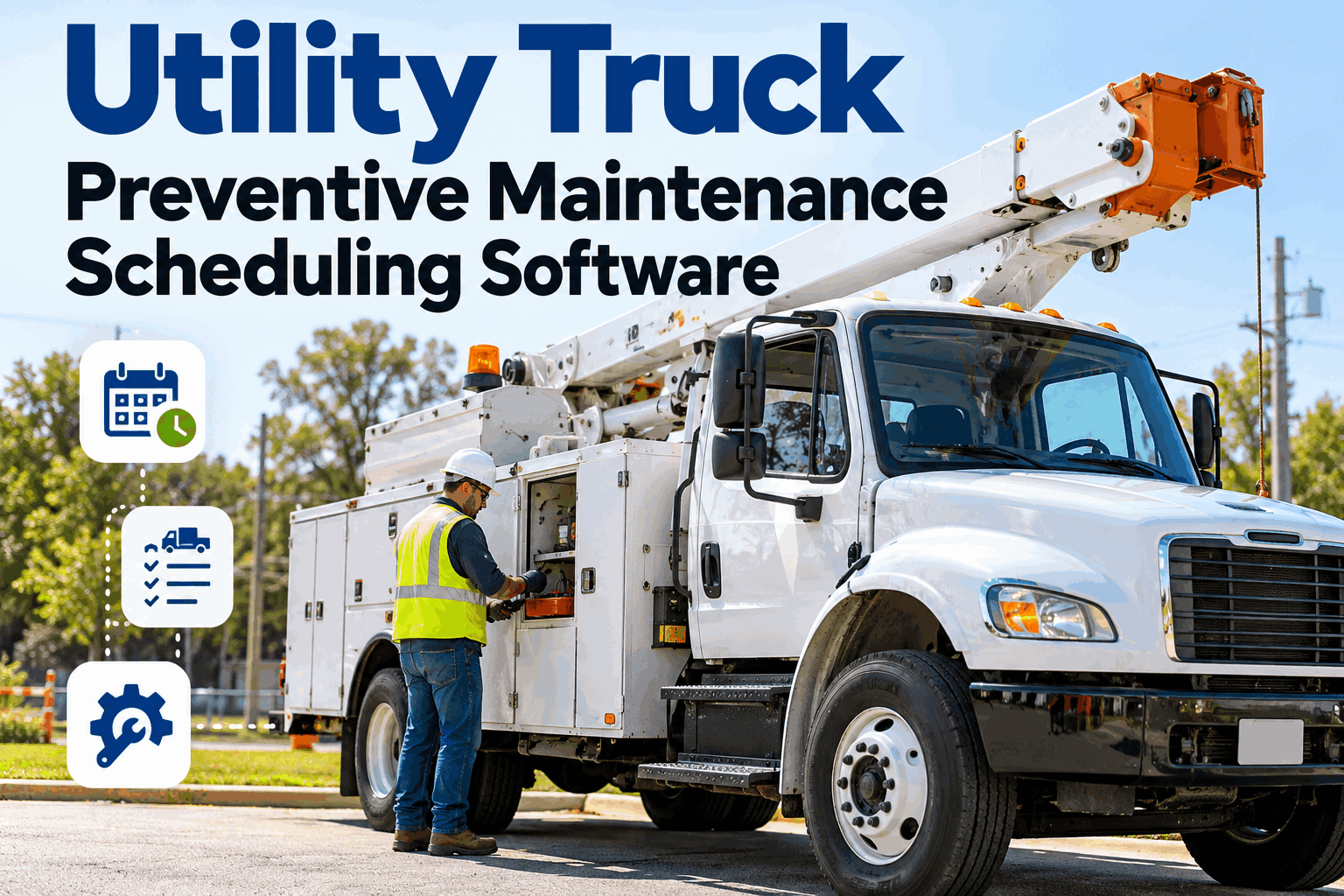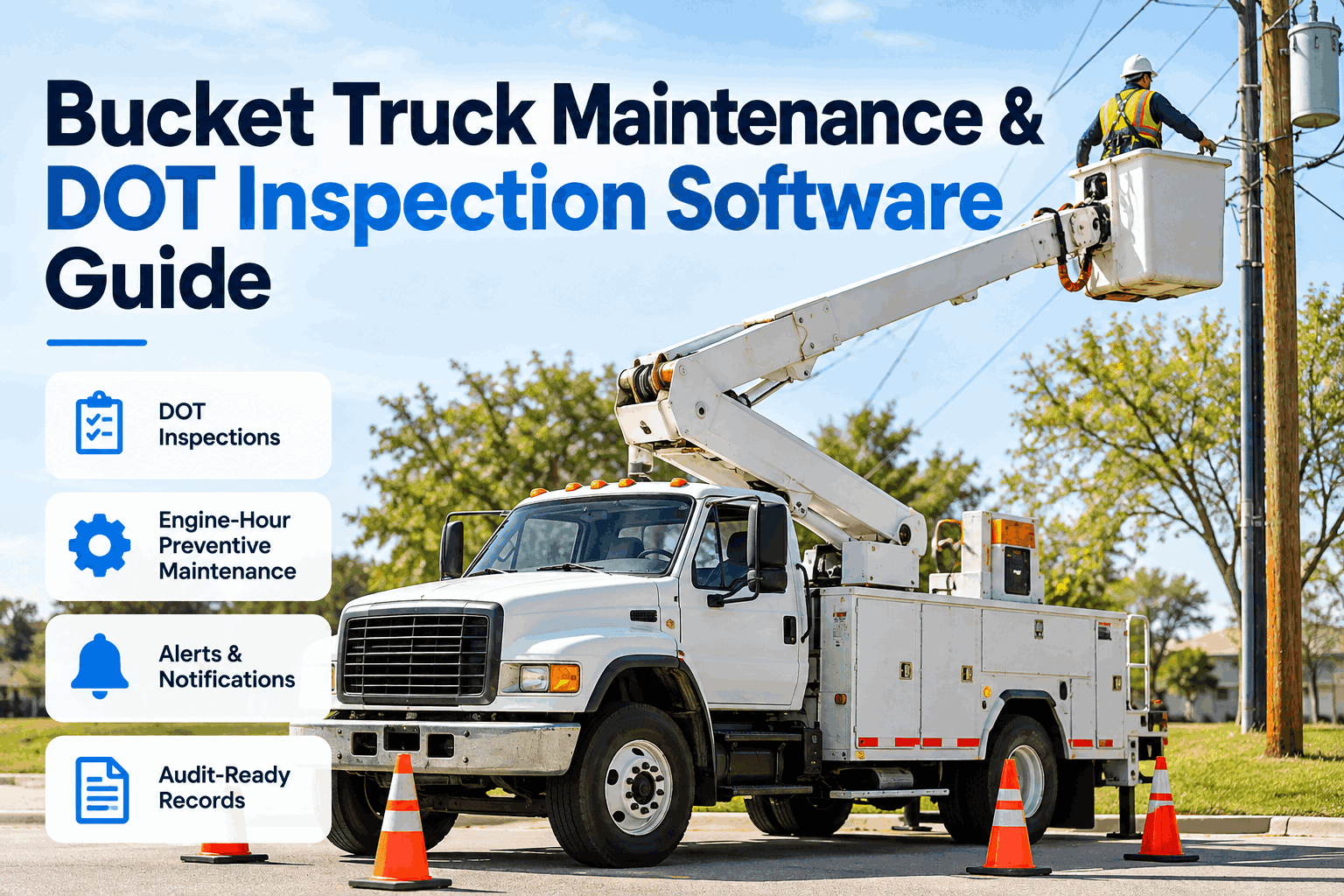
A standard PM schedule is built around miles. A bucket truck spends much of its working life parked at a pole with the engine running to power the boom. The odometer barely moves while the machine works hard, and one missed check can be a safety issue, not just a repair bill.
The Chassis
Engine, brakes, tires, lights and steering. Governed by DOT vehicle inspection rules and driver reports.
The Aerial Device
Boom, hydraulics, outriggers, controls and PTO. Follows the manufacturer's schedule and ANSI aerial device standards.
The Insulating System
Dielectric boom sections and the bucket liner. Requires periodic electrical testing and careful records.
The Inspection Ladder: Five Layers, Five Clocks
Each layer runs on a different trigger. Track them in one spreadsheet and something slips. Track them in one system and each one raises its own hand.
Start free with three vehicles, or book a 30-minute walkthrough built around a municipal fleet.
Miles Lie. Engine Hours Don't.
Take an illustrative truck: a few thousand road miles a year, but many hundreds of hours idling at job sites with the PTO engaged. A mileage-only schedule sees a lightly used truck. The engine sees a hard-working one.
FleetRabbit reads engine hours from telematics and triggers PM on hours, miles or calendar, per asset. Bucket trucks get hour-based intervals; the pickup next to them stays on miles.
The Bucket Truck Checklist, Split by System
| System | What to check | Best trigger |
|---|---|---|
| Chassis | Brakes, tires, lights, steering, fluids, exhaust | Miles, calendar and DVIR defects |
| Hydraulics and PTO | Hoses, cylinders, leaks, filters, PTO engagement | Engine and boom hours |
| Boom and outriggers | Welds, pins, cracks, controls, emergency lowering | Frequent inspection interval |
| Insulating system | Dielectric test, liner condition, surface damage | Annual, with test record attached |
From Driver Defect to Closed Work Order
Why Municipal and Utility Fleets Need Audit-Ready Records
Without a system
- Paper inspection sheets that go missing
- Dielectric test dates tracked by memory
- Hours logged by hand, if at all
- Audit prep means days of digging
With FleetRabbit
- Digital inspections with timestamps
- Automatic reminders before every due date
- Engine hours flowing in from telematics
- Full history retrievable in minutes
What FleetRabbit Does for Your Bucket Trucks
Frequently Asked Questions
Daily by the driver, at frequent intervals for the aerial device (commonly around every three months or 150 hours), and annually for the vehicle and insulating system. Always confirm against your manufacturer and applicable rules.
Because much of the wear happens while stationary with the PTO running. Hours reflect that work; the odometer does not.
Often yes, depending on weight, use and whether it operates under FMCSA or state rules. Your compliance team should confirm which apply to each unit.
Yes. Set a recurring service item with a reminder, then attach the test certificate to the record.
Yes. FleetRabbit handles mixed fleets of trucks, equipment and light vehicles with per-asset schedules.
Put your bucket trucks on hour-based PM, digital inspections and audit-ready records. Free for your first three vehicles.