Hauling truck
Loaded with asphalt, gravel, or spoil, cycling the hydraulic hoist dozens of times a day, brakes working constantly under full GVWR.
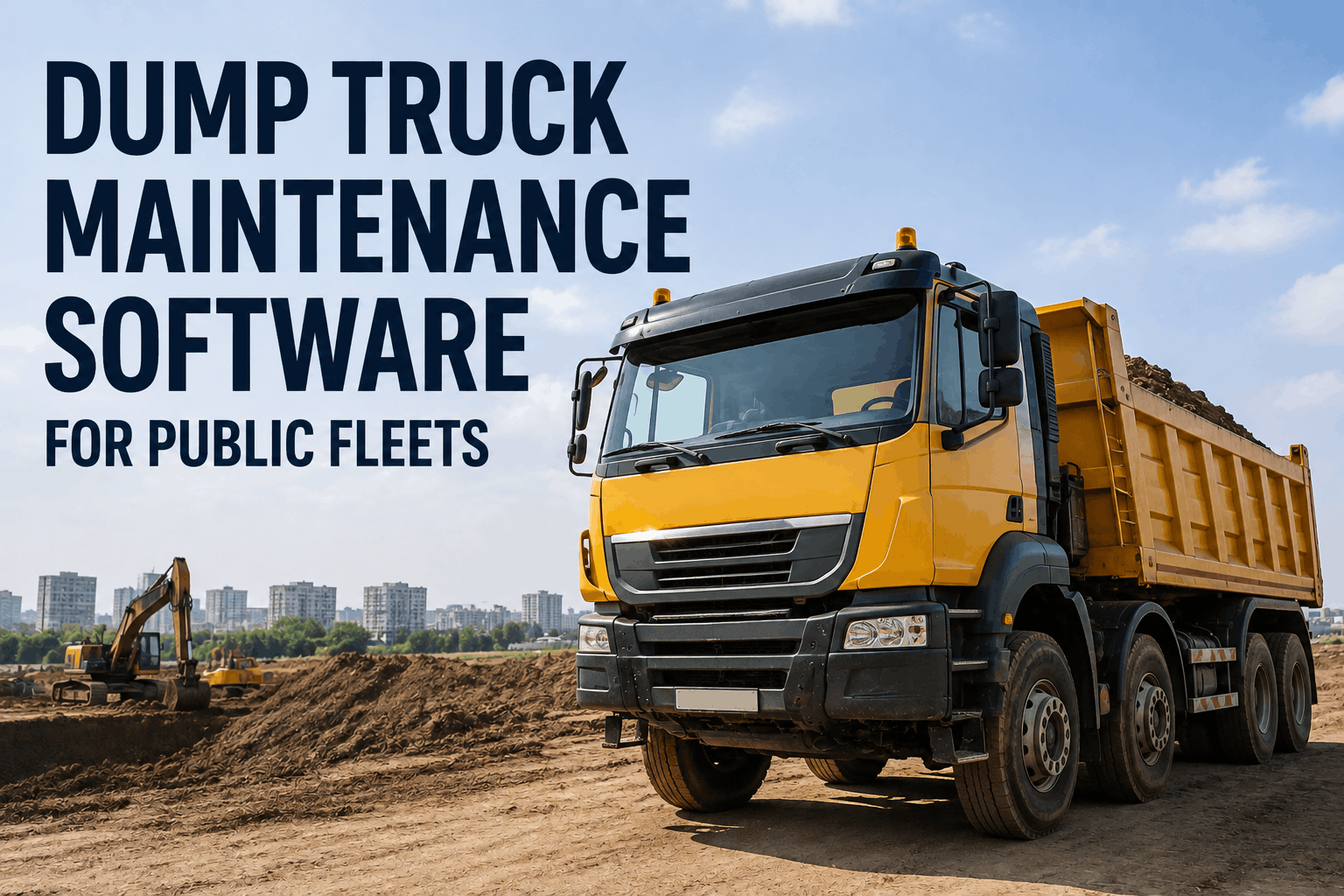
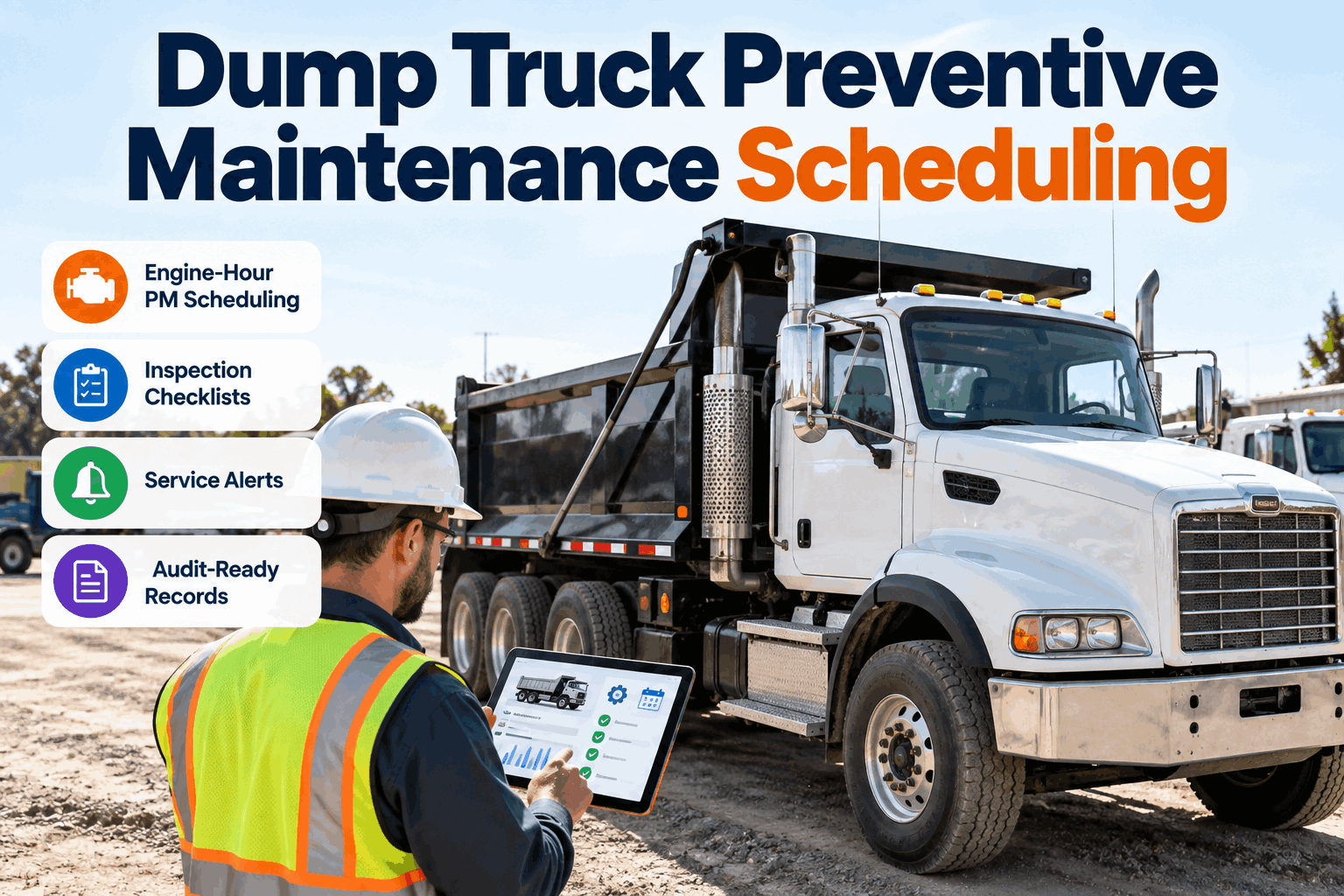
The same truck that hauls asphalt millings in July is throwing salt and pushing snow in January, and a public works fleet rarely gets to take it out of service to switch hats. Dump truck maintenance software has to track a vehicle that changes jobs by season, carries loads heavy enough to bend a frame if the axle rating is wrong, and runs a hydraulic hoist that fails silently until it doesn't. This is what a DOT-ready, engine-hour-driven, audit-ready maintenance program actually looks like for a public fleet running dump trucks year-round.
Loaded with asphalt, gravel, or spoil, cycling the hydraulic hoist dozens of times a day, brakes working constantly under full GVWR.
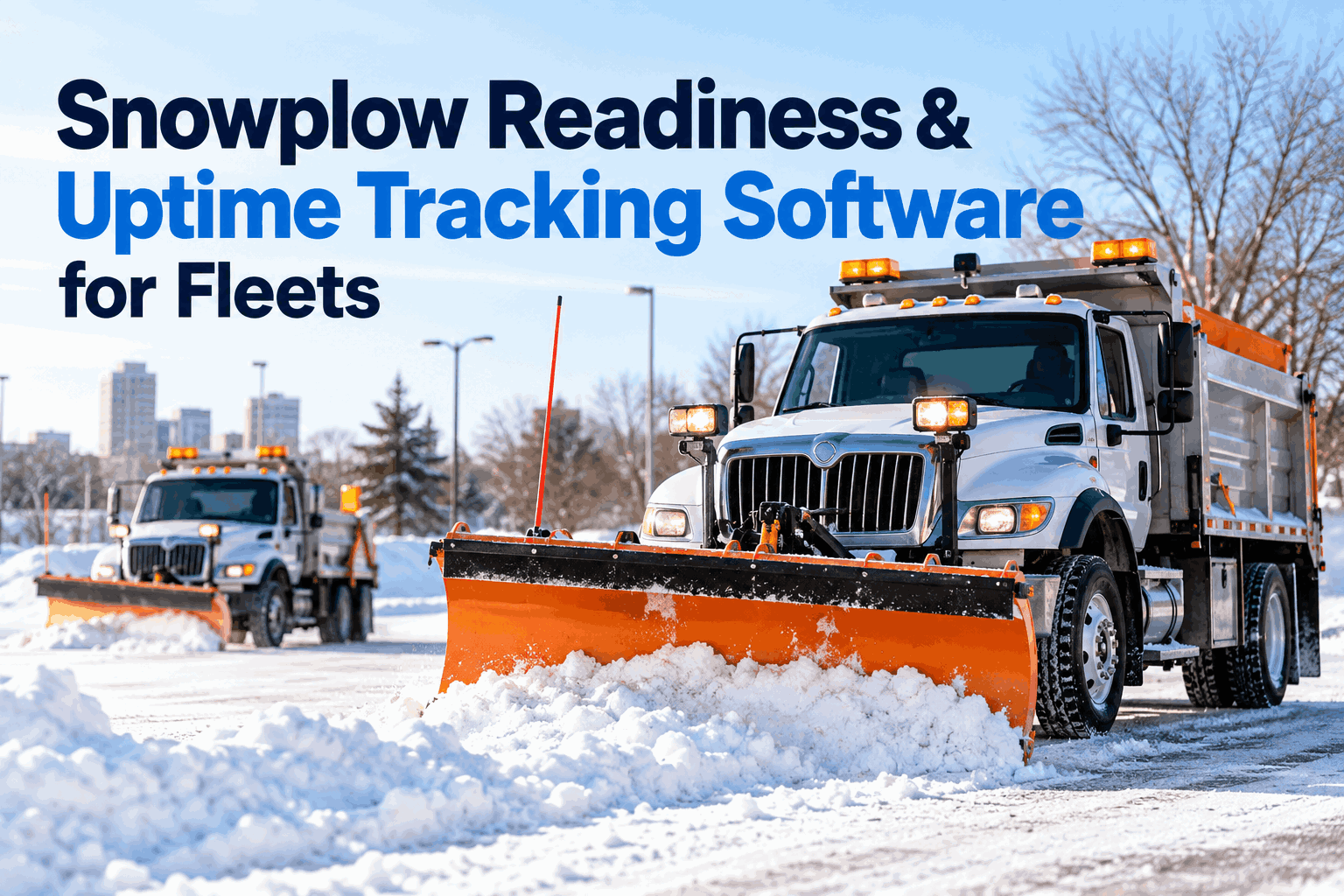
A front blade adds 3 to 4 tons to the front axle, a spreader runs off the PTO for hours, and the truck can't fail on the one night the storm hits.
A truck loaded past its rated axle weight doesn't just risk a fine, it overheats brakes and stresses a hydraulic hoist that was never designed for that tonnage. Agencies that sign up for load-aware maintenance tracking catch that pattern before it turns into a brake job every other month.
Most dump trucks fall squarely under 49 CFR 396.11 as property-carrying commercial motor vehicles, which means a Driver Vehicle Inspection Report covering brakes, steering, tires, and coupling devices is required at the end of every day a defect is found or reported. Trucks over 26,001 pounds GVWR also fall under CDL requirements for the driver and a full annual periodic inspection for the vehicle.
Pre-trip and post-trip DVIR covering the 11 FMCSA-required components
Mechanic certification of any reported defect before redispatch
Annual periodic inspection under 49 CFR 396 Appendix A
Load and axle weight logged against the truck's rated capacity
See how DOT-ready DVIRs, engine-hour PM, and hoist inspection checklists work together for public works.
The hydraulic hoist is a chain of parts that all have to work together: a reservoir feeds a pump, the pump drives a telescopic cylinder, and the cylinder lifts the bed against its rear pivot pins. Contaminated fluid anywhere in that chain shows up as slow lifting or a spongy bed long before it causes a pump failure, but only if someone is tracking fluid condition instead of waiting for a symptom.
Contamination is the leading cause of hoist failure and the easiest to catch early
Converts engine power to hydraulic pressure; wear here shows up as slow or weak lifts
Extends to raise the bed; seal wear leaks pressure and stalls the lift mid-cycle
Carries the structural load of the dump cycle thousands of times over a truck's life
Agencies that book a demo usually start by scheduling fluid and filter checks on the hoist separately from the rest of the PM plan, since it wears on its own cycle, not the engine's.
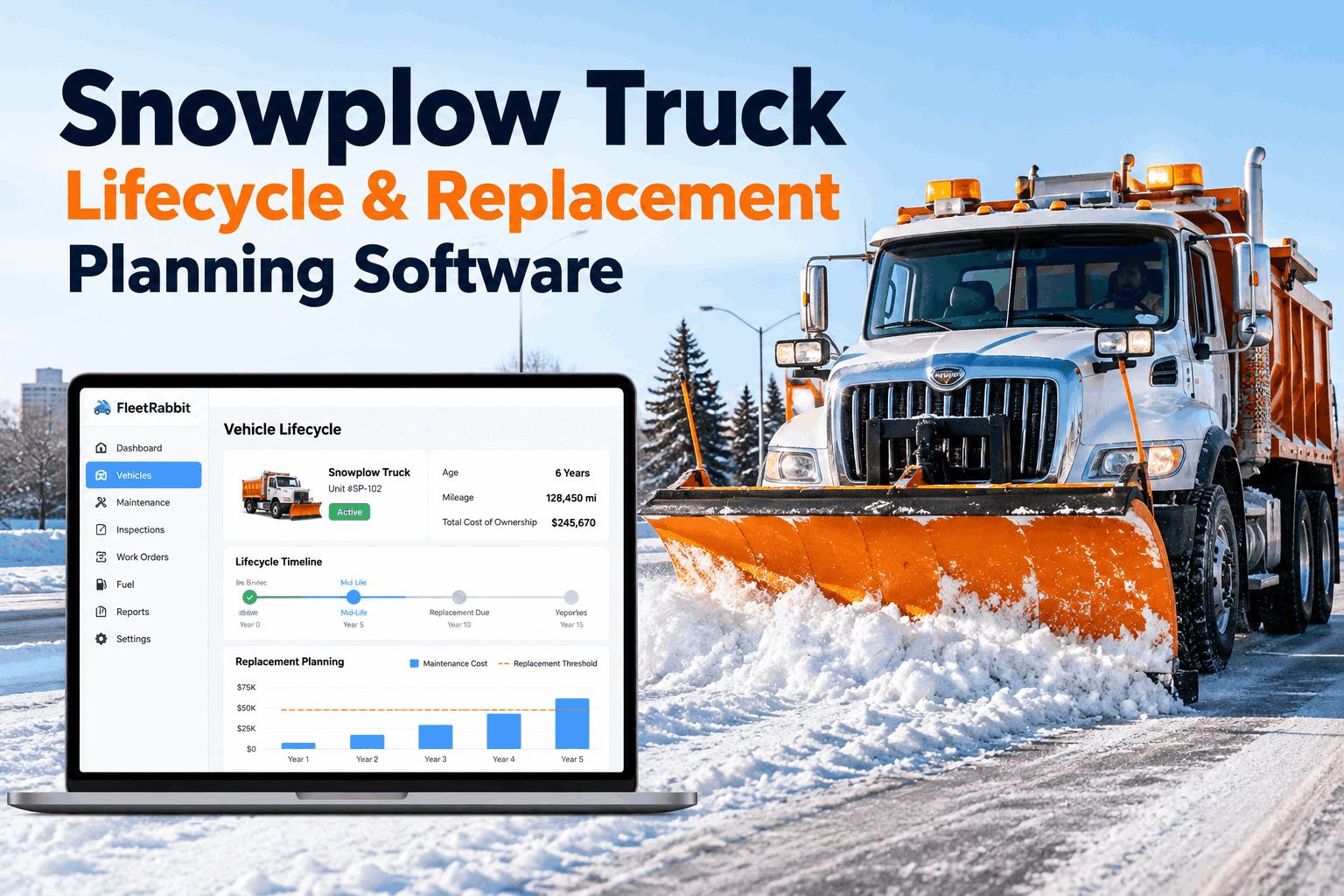
A truck plowing a two-mile loop for six hours a night barely moves the odometer, but the engine, hydraulics, and spreader all ran the entire shift. Scheduling PM off mileage alone means that truck goes into spring undermaintained. Engine-hour tracking catches the real wear a winter season puts on a fleet.
Teams that sign up before the first storm of the season typically enter spring with a hoist and plow fleet that didn't quietly fall behind on service.
Plow mount, blade edge, and hydraulic lift inspected on every truck in the winter rotation
Spreader and pre-wet system tested under load, not just visually checked
Front axle and suspension verified against the added weight of the plow mount
Every finding logged and closed out before the truck is marked winter-ready
A plow crew working through a storm is often in the one part of town with the worst cell coverage, and that's exactly when an inspection record matters most. FleetRabbit's forms complete on the device and sync once a connection is back, so a storm night never turns into a missing DVIR the next morning.
Covers the 11 FMCSA-required components with electronic signatures and a defect-to-repair chain that holds up in a review.
Fluid, filter, and cylinder checks tracked separately from the standard engine PM schedule.
Preventive maintenance triggers off runtime, catching the wear a low-mileage plow shift creates.
Plow and spreader inspections rolled into one pre-season checklist per truck, closed out before winter.
Forms complete without signal and sync automatically once the unit is back in range.
One export covers fleet condition, compliance, and readiness for budget and council review.
A hydraulic hoist that's been running low on fluid all season finally stalls halfway through a lift, on the one night the whole route depends on it. With hoist fluid and filter checks tracked on their own schedule, that same truck gets flagged in October, not during a storm in January. Departments running this way describe fewer trucks pulled from active routes and a much shorter list of surprises heading into spring. If your winter fleet is still being readied on memory, a short book a demo session will show what a pre-season checklist looks like on your own trucks.
Set up your first dump truck in FleetRabbit and see DOT-ready inspections, hoist tracking, and seasonal readiness generate themselves from day one.
Yes. Most dump trucks are property-carrying commercial motor vehicles under 49 CFR 396.11, and trucks over 26,001 pounds GVWR also require CDL drivers and a full annual periodic inspection.
Single, tandem, and tri-axle trucks are rated for very different maximum loads. Running a truck near or past its rated capacity accelerates brake and hydraulic wear well beyond a normal schedule.
The hoist wears on its own cycle of fluid contamination and seal wear, which doesn't line up with engine service intervals. Tracking it separately catches slow lifts before they become a stalled bed mid-shift.
A plow route can run an engine, hydraulics, and spreader for hours while barely moving the odometer. Engine-hour PM catches that wear where a mileage-only schedule would miss it entirely.
The form saves on the device and syncs automatically once connectivity returns, so a storm-night route never results in a missing inspection record.
Most agencies start with a few trucks in the winter rotation to build the seasonal readiness checklist, then roll it out fleet-wide. A demo is the fastest way to see a timeline that fits before your first storm.