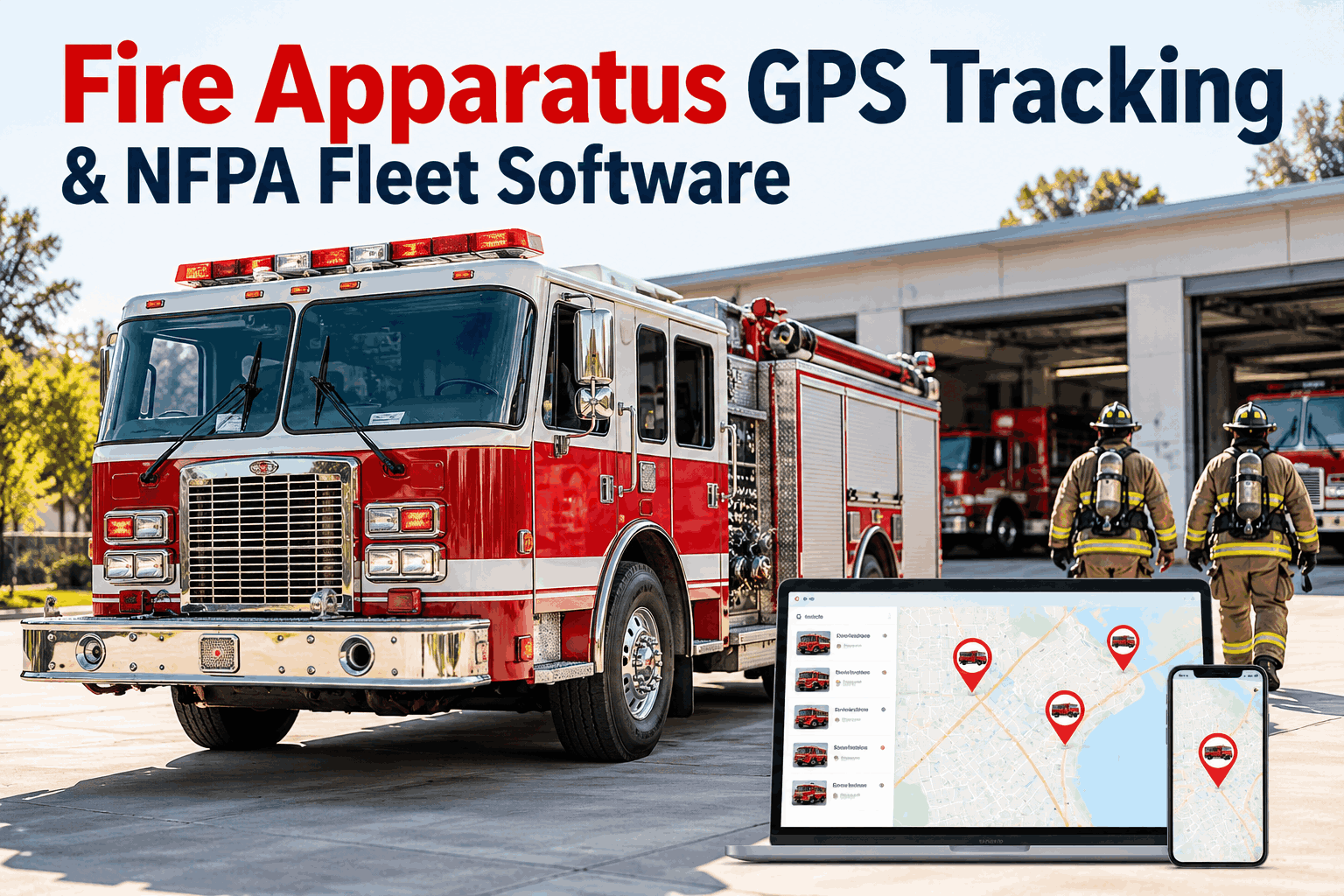
A fire engine can sit parked in the bay for days and still be doing its job perfectly. Its job isn't to drive, it's to be ready the instant a call comes in. That single difference changes almost everything about how apparatus should be tracked and maintained, because the usual fleet questions, how many miles, how often does it move, matter far less here than one question: is this apparatus in service right now. See how FleetRabbit tracks apparatus readiness, not just mileage.
Fire Apparatus GPS Tracking and NFPA Fleet Software Built Around Readiness
Track every apparatus in real time, keep NFPA 1911 testing and maintenance on schedule, and know at a glance what's in service and what isn't.
Readiness Is the Metric That Actually Matters
A delivery fleet worries about a van breaking down mid-route. A fire department worries about an apparatus that looks fine sitting in the bay but turns out to have a problem the moment it's needed for a call. Because apparatus spend so much time stationary, staying ready depends on active testing and inspection rather than on wear that shows up naturally through daily driving. That's the core idea behind NFPA 1911: apparatus condition has to be verified on a schedule, not just assumed from how little trouble it's caused lately.
What NFPA 1911 Asks Departments to Track
NFPA 1911 sets out inspection, maintenance and testing expectations for in-service fire apparatus, including annual performance testing for pumps and aerial devices. The exact requirements and intervals depend on the apparatus type and edition of the standard your department follows, so this is a starting framework, not a substitute for the standard itself.
Never let a testing date slip past unnoticed
Set reminders for pump tests, aerial tests and PM by apparatus, so nothing depends on someone remembering. Free for your first three vehicles.
Low Miles, High Engine Hours
Apparatus can go months without covering meaningful mileage and still accumulate real engine hours from idling in the bay, running the pump during testing, or sitting on scene with equipment powered. A mileage-based PM schedule will badly understate how much wear an apparatus has actually seen.
Illustrative comparison. Actual figures vary by department call volume and apparatus role.
Different Apparatus, Different Maintenance Needs
Treating every apparatus on one generic schedule misses the specialized testing each type actually requires. Tracking PM by apparatus type, not just by vehicle, keeps the specialized items from getting lost inside a general checklist.
Out of Service Should Be Visible to Everyone Who Needs It
When an apparatus goes out of service for testing or repair, that status needs to reach dispatch and command immediately, not surface as a surprise during a call. A shared, live view of every unit's status closes that gap.
What FleetRabbit Gives a Fire Department
Frequently Asked Questions
Apparatus can sit stationary for long stretches and still need to be fully functional the moment a call comes in, so verified readiness matters more than how much it has driven.
It sets inspection, maintenance and testing expectations for in-service apparatus, including annual pump and aerial testing. Exact requirements depend on apparatus type and the edition your department follows.
Apparatus accumulate real wear from idling, pump testing and scene time that never shows up as miles driven, so engine hours give a more accurate picture.
Yes. Pump testing, aerial testing and standard PM can each be scheduled on their own interval, specific to the apparatus.
Yes. Start free with three vehicles and scale up as the fleet grows.
Know What's Ready. Every Apparatus, Every Shift.
Live GPS tracking, engine-hour PM and NFPA testing reminders in one place. Free for your first three vehicles.