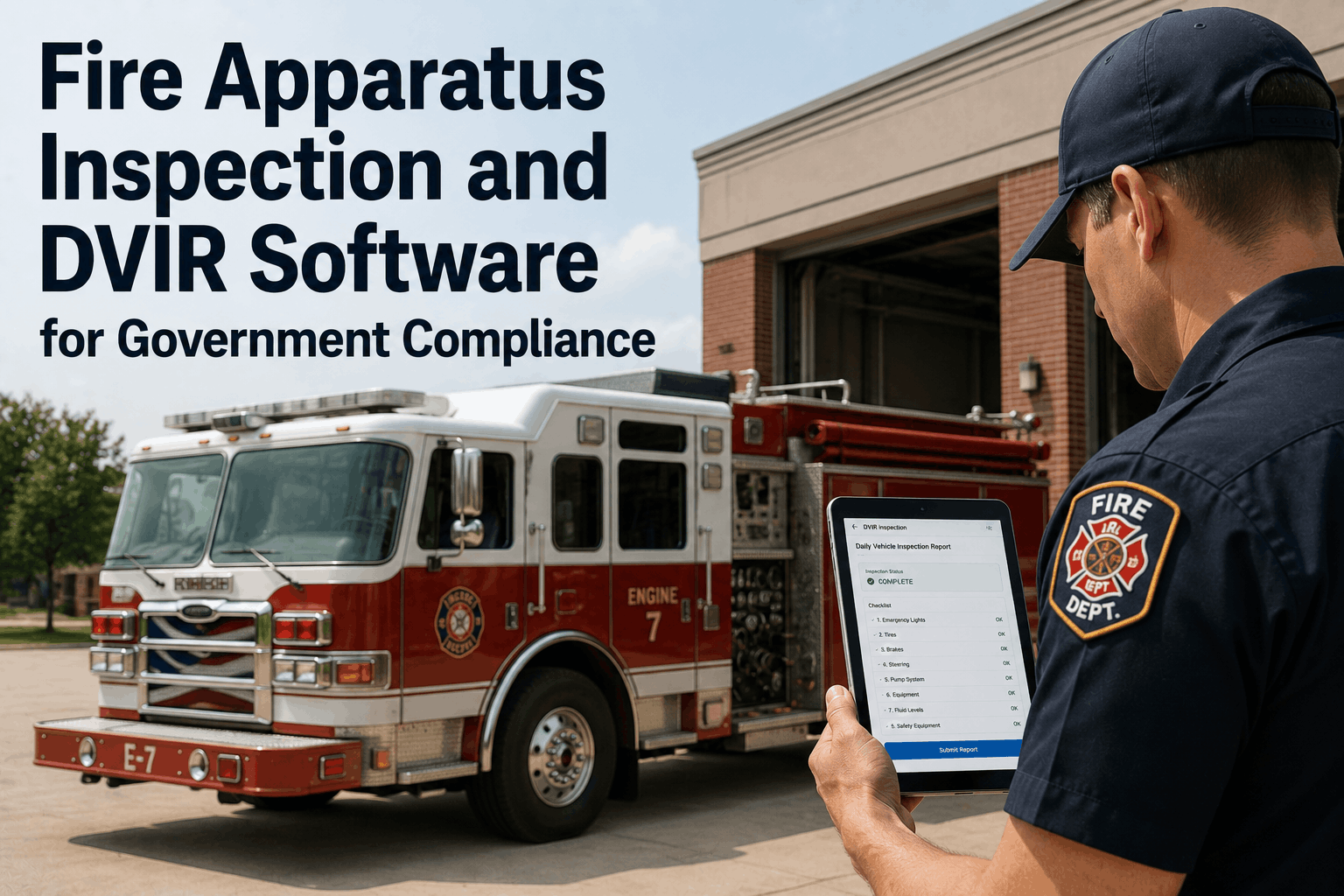
A pumper due for its annual test sits in the bay for another shift because nobody flagged that the last diagnostic check happened eleven months ago instead of twelve. Nothing looks wrong from the outside. The engine turns over, the lights work, the crew climbs in and rolls out on the next call. It is only when the pump is called on to hit rated capacity, or the aerial device needs to extend under real load, that a gap in the testing record becomes a safety problem instead of a paperwork problem. Fire apparatus inspection software exists to make sure that gap never opens in the first place, keeping every daily check, quarterly test, and annual certification visible in one place instead of scattered across binders in different station houses.
Fire Apparatus Inspection and DVIR Software for Government Fleet Compliance
Fire apparatus does not follow a single maintenance calendar the way a passenger vehicle does. NFPA 1911 lays out an entire structure of its own: daily and weekly visual and operational checks, a complete inspection and diagnostic check at least twice a year, and separate performance testing schedules for the pump, the aerial device, and the low-voltage electrical system, each with its own frequency and its own documentation requirements. A department running that structure on paper is relying on someone remembering which test is due on which apparatus, at which station, on which date. A missed interval is not a hypothetical risk. It is the kind of gap that surfaces during an active call, when there is no time left to discover it.
Fire apparatus inspection software brings that entire structure into one digital system: daily walkaround checks, annual diagnostics, pump and aerial performance testing, and DVIR-style defect tracking, all tied to engine hours and dated against the intervals NFPA 1911 actually requires.
How NFPA 1911 Structures Apparatus Readiness
The standard is built in layers, from the checks a crew runs before every shift up to the full performance tests that certify a pump or an aerial device is still doing what it is rated to do. Software that mirrors this structure means nothing falls between the layers.
Visual and operational walkaround checks confirming the apparatus is ready to respond on the next call.
Component-level inspection of fluids, belts, hose, and electrical connections between major service intervals.
Complete inspection and diagnostic check of the full apparatus, per NFPA 1911 Chapter 8 guidance.
Pump performance testing, aerial device load and extension testing, and electrical system certification.
Missing even one layer of that structure is how a department ends up finding out about a certification gap mid-response. It is worth taking a few minutes to book a demo and see how the full schedule looks laid out automatically for your own fleet.
Never Lose Track of a Certification Deadline Again
Daily checks, quarterly service, and annual NFPA 1911 testing tracked automatically across every station and every apparatus.
What Gets Inspected on a Piece of Apparatus
Fire apparatus carries systems a standard fleet vehicle simply does not have. Each one needs its own inspection points and its own documentation trail.
Pump System
Rated capacity, flow, and pressure verified through annual performance testing, with results logged against the manufacturer's rated output.
Aerial Device
Extension, rotation, and load testing performed at required intervals, with structural inspection results tied to the specific unit's service history.
Low-Voltage Electrical
Battery, alternator, and load testing confirmed, since modern apparatus rely on this system for everything from ABS to pump pressure governors.
Chassis and Weight
Axle loading checked against gross vehicle weight rating, catching an overweight condition caused by years of added equipment.
Foam and CAFS Systems
Proportioning accuracy and compressor performance tested where the apparatus is equipped with foam or compressed air foam systems.
Patient Compartment
Heating, cooling, lighting, and medical equipment inspected on apparatus configured for patient transport, aligned with NFPA 1917.
Departments that sign up usually find at least one apparatus in their fleet running behind on a test schedule they assumed was current.
Why the Missed-Interval Pattern Is So Costly
Emergency vehicle failures rarely come out of nowhere. The pattern shows up clearly once departments start tracking PM intervals against actual failures, and it points in one consistent direction: apparatus that misses a scheduled check is apparatus at meaningfully higher risk of failing when it matters most.
The out-of-service criteria in NFPA 1911 exist precisely so a department has a clear, documented answer for when an apparatus should not roll out at all. A digital system that flags those conditions automatically removes the guesswork from a decision no crew wants to make under time pressure. Book a demo to see how out-of-service flags surface inside the dashboard before a crew is ever standing at the bay doors.
Audit-Ready Records Without the Binder Search
NFPA 1911 documentation, DVIR defect records, and engine-hour maintenance history are exactly what an auditor, an insurance carrier, or a city council finance committee will ask for, usually with very little notice. A digital system that keeps every daily check, every performance test result, and every completed repair attached to the correct apparatus means that request gets answered in minutes instead of days spent pulling binders from multiple station houses.
Departments already running this way report meaningfully fewer safety incidents and lower insurance premiums, both of which trace back to the same root cause: nothing slips through because nothing depends on someone remembering a date. If your department is still reconciling paper logs across stations, sign up and see what a single, unified compliance record looks like across your entire apparatus fleet.
Bring Every Apparatus Into One Compliance Record
NFPA 1911-aligned inspections, engine-hour PM, and audit-ready reporting for pumps, aerials, and every station in your department.
Frequently Asked Questions
What is fire apparatus inspection software
It is a digital platform that tracks the full NFPA 1911 inspection and testing structure for fire apparatus, including daily and weekly walkaround checks, quarterly service, twice-yearly diagnostic checks, and annual pump, aerial, and electrical performance testing, alongside DVIR-style defect tracking and repair records.
Does the software actually follow NFPA 1911 requirements
Yes. Inspection templates are structured around the intervals and components NFPA 1911 defines, covering daily and weekly checks through annual performance testing, so a department's digital records line up directly with what the standard requires during an audit.
How does the system handle out-of-service criteria
Conditions that meet NFPA 1911's out-of-service thresholds, such as failed pump performance or a structural issue on an aerial device, are flagged automatically inside the dashboard, giving a department a clear, documented basis for pulling an apparatus from service.
Can the software track apparatus across multiple stations
Yes. Every apparatus, regardless of which station it is housed in, sits in the same unified dashboard, so a chief or fleet director can see inspection status, test dates, and open defects across the entire department from one screen.
What happens when a defect is found during a daily check
The defect is logged with a timestamp and any relevant notes, and a work order is generated automatically and routed to the maintenance team. Once repaired and certified, the record closes the loop back to the original inspection for a complete audit trail.
How quickly can a department get its apparatus fleet onboarded
Most departments get inspection templates configured and apparatus connected without disrupting response readiness. The fastest way to get a timeline specific to your fleet size and apparatus mix is to book a demo and walk through it directly.