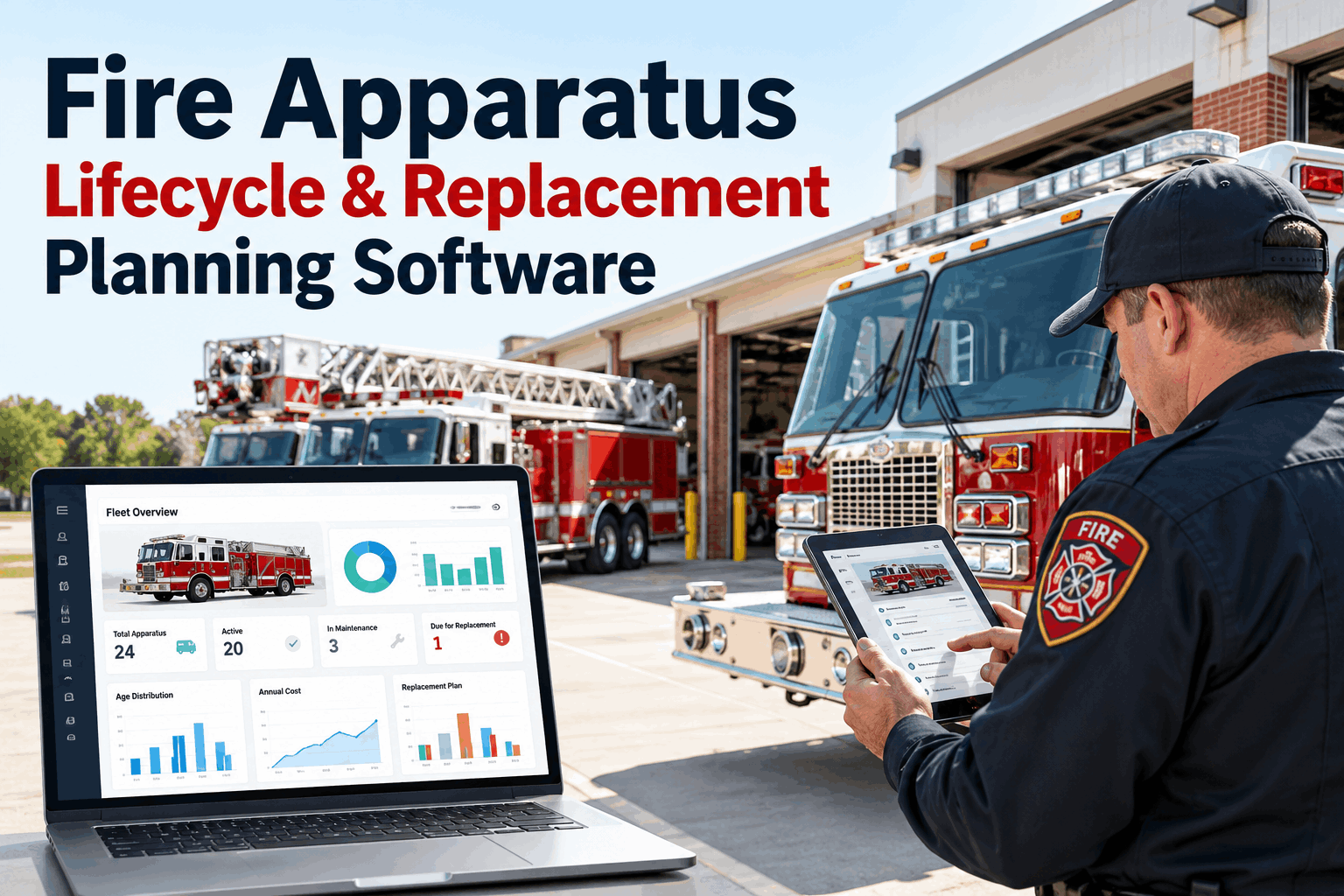
A fire engine that is ordered today may not arrive for years, and the engine it replaces has to keep answering calls the whole time. That gap is why lifecycle planning has become one of the most important jobs in a fire department. Knowing which apparatus to replace, and when to place the order, depends on clean records for age, engine hours, repairs and testing. See how FleetRabbit puts every apparatus record in one place and turns replacement guesswork into a plan.
Fire Apparatus Lifecycle Planning Software: Order the Replacement Before the Old Engine Runs Out of Time
Track age, engine hours, repair history and NFPA testing for every apparatus, so replacement decisions are backed by data and placed years ahead of the need.
The Replacement Clock Started Earlier Than Most Budgets Assume
Departments across the country report that both price and waiting time for new apparatus have climbed sharply since 2020. One Arizona city told its council that rear-mount ladder trucks now take about four years to arrive, up from roughly twelve months five years earlier. Many departments also report pumpers moving from around $740,000 to $1.1 to $1.2 million. If you wait until an engine is failing, the order has already been placed too late. Start free and log your fleet today.
Figures are as reported by individual municipal departments in 2025 and 2026 and vary by manufacturer, spec and region.
Four Stages Every Apparatus Moves Through
Most departments set their own rules by apparatus type. Common examples are engines around 15 years and aerials around 20, with engines often moving to reserve status before retirement. NFPA 1910, which absorbed the older NFPA 1911, covers inspection, maintenance, testing and retirement of in-service emergency vehicles, so check the edition your department follows.
What a Replacement Watchlist Looks Like
Age alone never tells the full story. A 12-year engine with heavy engine hours and rising downtime can be a bigger risk than a 16-year unit that rarely leaves the bay. A good watchlist ranks every apparatus using several signals at once.
Sample data for illustration only.
Put your whole fleet on one replacement timeline
Track age, engine hours, repairs and test history for every apparatus, then plan orders with real numbers. Free for your first three vehicles.
Repair Costs Rise Slowly, Then Suddenly
Older apparatus rarely fail all at once. Repair spend creeps up, then jumps as major components wear out and parts get harder to find. Seeing that curve in your own records is what turns a hard conversation with the budget office into a simple one.
Build a Replacement Plan in Four Steps
Book a short demo and we will show how these four steps look inside FleetRabbit.
What FleetRabbit Gives a Fire Department
Spreadsheet Planning vs FleetRabbit
Frequently Asked Questions
There is no single rule. Many departments plan around 15 years for engines and 20 for aerials, often followed by reserve duty. Your own repair, downtime and testing data should guide the final call.
Apparatus can log low mileage while still collecting heavy wear from idling, pump work and scene time. Engine hours show that usage clearly.
NFPA 1910 consolidated several in-service vehicle standards, including 1911, and covers inspection, maintenance, testing and retirement. Confirm which edition your department has adopted.
Departments report build times of several years for some apparatus, so many plan orders well before the current unit reaches its target age.
Yes. You can start free with three vehicles and add more as your fleet grows.
Know Which Apparatus Is Next, and Order in Time
Live tracking, engine-hour PM, repair history and NFPA testing reminders in one system. Free for your first three vehicles.