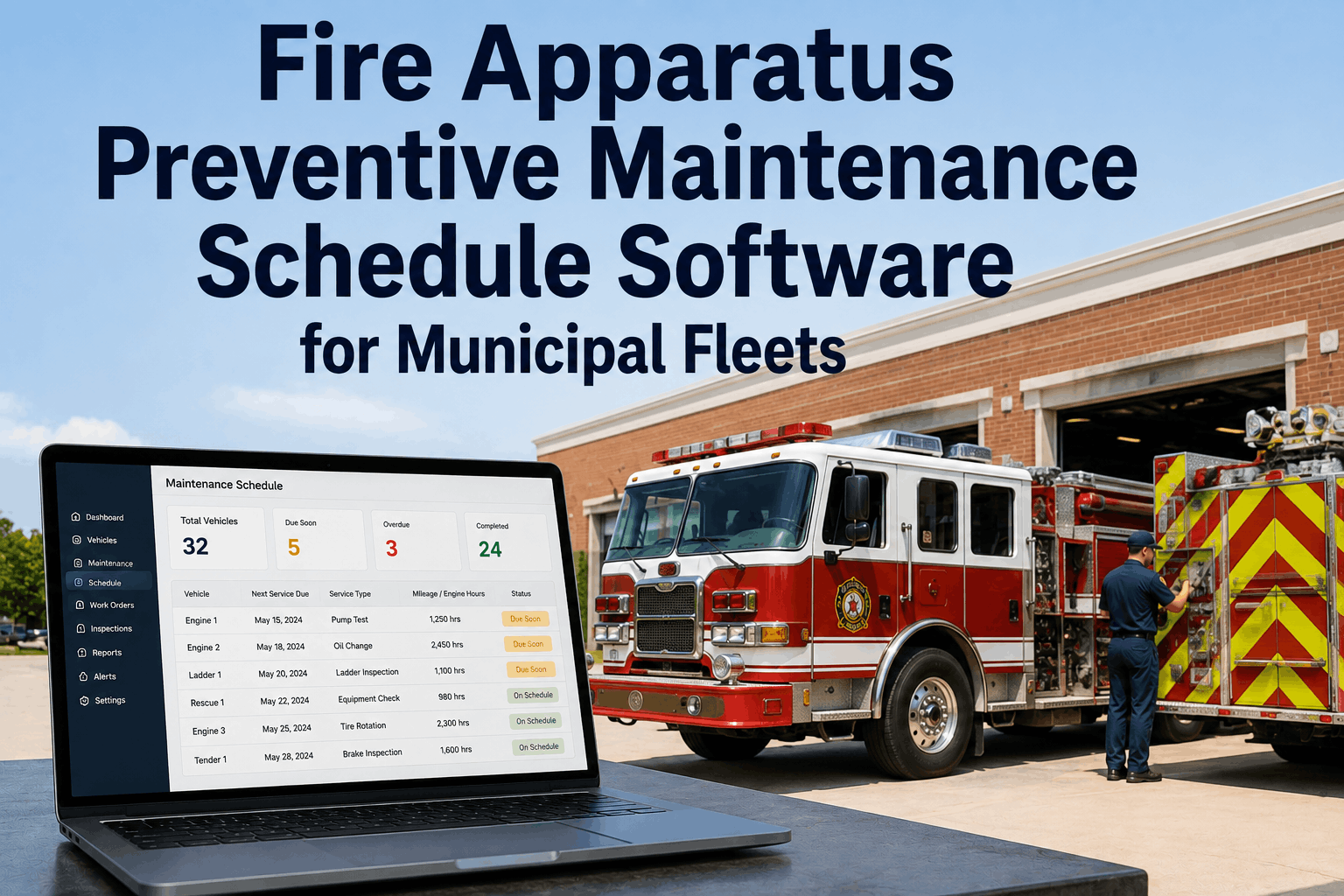
Most fire apparatus doesn't fail because of a bad part. It fails because a scheduledcheck got pushed back, then pushed back again, until a worn brake pad or a degraded pump seal turned into an out-of-service unit on the worst possible day. A fire apparatus preventive maintenance schedule is the single tool standing between that outcome and a fleet that shows up ready every time, and municipal fleets that build theirs around software instead of memory tend to never find out the hard way.
Reactive Maintenance Is an Expensive Habit
Fire departments running on informal or paper-based schedules almost always drift into reactive mode, fixing what breaks instead of preventing the break in the first place. That drift is quiet at first, a missed lubrication check here, a delayed fluid inspection there, and then a pump fails its annual test or a brake system shows wear that should have been caught months earlier. Apparatus weighing 30,000 to 60,000 pounds puts enormous stress on brakes and tires, which is exactly why daily and weekly checks exist as the first layer of defense, not an optional extra.
The Tier Structure Every PM Schedule Needs
NFPA guidance and manufacturer service manuals both point to the same layered structure: quick checks happen constantly, deeper service happens on a widening cycle. Building your schedule around these tiers, rather than one flat calendar, is what keeps inspections proportional to how hard a unit actually works. If your department is ready to move this structure out of a binder and into something that runs itself, you can sign up and load your fleet's tiers in a single afternoon.
Daily
Fluid levels, tire pressure, lights, hoses, and general walk-around condition before the shift starts
Weekly
Operational checks on pumps, aerials, and electrical systems even on units that haven't run a call
Monthly or Quarterly
Deeper lubrication, fluid analysis, and component inspection tied to engine hours or call volume
Annual
Full pump capacity testing, aerial certification, brake and electrical system verification
Turn your PM tiers into a schedule that runs itself
See your fleet's daily, weekly, and annual checks mapped into one live calendar.
Not Every Apparatus Needs the Same PM Trigger
A pumper running frequent calls and training evolutions wears differently than a reserve tanker parked most of the year, and a single fleet-wide interval ignores that difference completely. Engines, quints, towers, and heavy rescue units are generally best scheduled on engine-hour or quarterly cycles tied to call activity, while brush and wildland units, tenders, and reserve apparatus often only need annual service based on how little they actually run. Ambulances and administrative vehicles sit somewhere else entirely, following mileage, time, or fuel-consumption triggers closer to a standard fleet vehicle.
Engines, Quints, Heavy Rescue
Engine-hour or quarterly PM tied to call volume and training load
Brush, Wildland, Tenders
Annual service driven by seasonal activity and manufacturer intervals
Ambulances, Admin Vehicles
Mileage, time, or fuel-consumption based intervals like a standard fleet
Trying to manage three different trigger types across a spreadsheet is where most PM programs quietly fall apart. A department that wants to see how different trigger rules run side by side on the same dashboard can book a demo and bring their actual apparatus mix to the conversation.
What Belongs in a PM Template
A PM template is only useful if it's specific enough that any technician can follow it without guessing what "check the pump" actually means. Strong templates are organized by system rather than by frequency alone, with clear acceptance criteria for each item so a pass or fail decision doesn't depend on who happens to be doing the inspection that week.
System-by-system organization: engine, pump, aerial, electrical, brakes, tires
Specific acceptance criteria for each inspection point, not vague pass or fail notes
Manufacturer-recommended intervals layered on top of NFPA minimums
Signature or credential capture confirming who performed the work
Why Engine Hours Beat the Calendar for Fire Apparatus
A calendar-only PM schedule treats a truck that idled its pump for six hours at a structure fire the same as one that sat quietly in the bay all month, and that's exactly backward. Engine-hour tracking captures the wear that actually happened, letting the schedule trigger service based on real usage instead of an arbitrary date. Departments that want to see this run automatically instead of tracked by hand often decide to sign up and connect their apparatus data directly.
Calendar-Only Scheduling
- Same interval regardless of actual usage
- Heavy-use units serviced too late
- Low-use units serviced too often
- Manual tracking prone to missed dates
Engine-Hour Scheduling
- Service triggered by real wear, not a guess
- Pump and PTO hours counted even while idle
- Work orders generated automatically
- Full history stored against each unit
What a Live PM Dashboard Should Show You
A preventive maintenance schedule only earns its keep if someone can look at it and instantly know what's due, what's overdue, and what's coming up next week. That single view is what turns a schedule from a document into an actual operational tool, and it's the difference between finding an overdue pump test on your own terms versus an auditor finding it first.
Units approaching their next daily, weekly, or engine-hour threshold
Flagged immediately so a unit isn't dispatched without a current inspection
Full record of what was done, by whom, and when, stored against the unit
Pump, aerial, and electrical certifications scheduled well ahead of due dates
Give your fleet a schedule it actually follows
Start free and put your daily, quarterly, and annual PM cycles on autopilot.
Frequently Asked Questions
How often should a fire apparatus preventive maintenance schedule run
Most departments layer daily and weekly checks with monthly or quarterly service and a full annual inspection, adjusting the pace based on how heavily each unit is used.
Should every unit in the fleet follow the same PM interval
No. Engines and heavy-use apparatus typically run on engine-hour or quarterly cycles, while reserve and seasonal units like brush trucks or tenders are often serviced annually based on actual activity.
What makes a PM template effective instead of just paperwork
A strong template is organized by system, includes clear acceptance criteria for each check, and captures who performed the work, so results don't depend on guesswork or memory.
Can engine-hour tracking replace calendar-based scheduling entirely
For pumps, aerials, and PTO-driven systems, engine hours are usually the better trigger since they reflect real wear. Calendar-based intervals still matter for items like annual certifications tied to a fixed date.
How does software reduce unplanned downtime compared to spreadsheets
Software flags overdue items automatically and generates work orders before a unit slips out of readiness, instead of relying on someone remembering to check a spreadsheet tab.
Is this approach practical for smaller municipal fleets
Yes. The tier structure and engine-hour logic scale down easily, and smaller fleets often see the fastest return since a single missed check has an outsized impact on a small roster of apparatus.