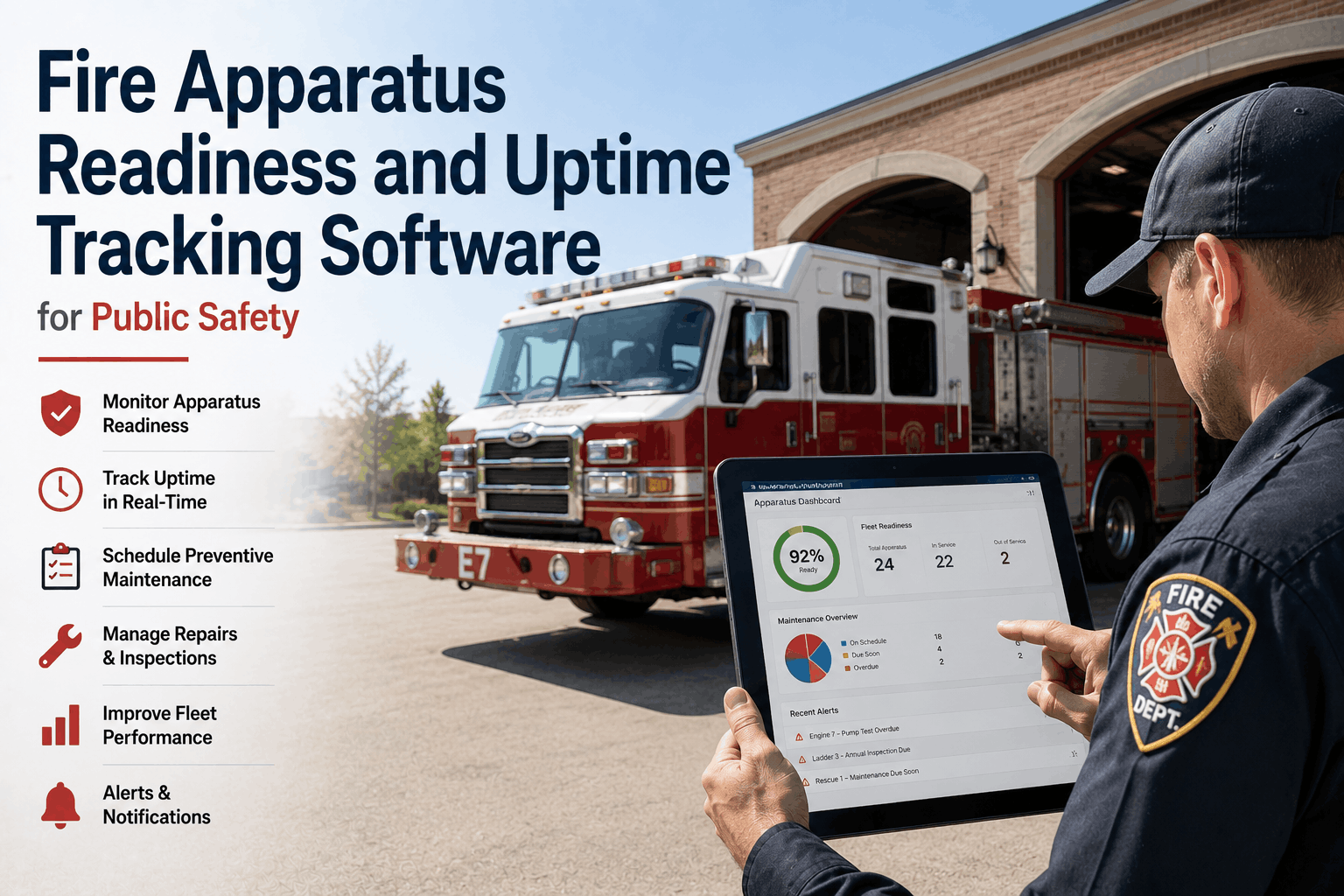
A fire apparatus is only as ready as its last inspection. Departments can own the newest pumper on the lot, but if a daily check gets skipped, an engine-hour threshold slips past unnoticed, or an annual pump test falls through the cracks on a paper log, that apparatus is not truly ready, whatever the odometer says. Fire apparatus readiness tracking software exists to close that gap, turning NFPA 1911 inspection, testing, and documentation requirements into a system that flags problems before a unit rolls out the door instead of after. Departments that want to see their current readiness picture in full can sign up free and connect their first apparatus today.
What happens when apparatus readiness is tracked instead of assumed
Most compliance gaps in a fire fleet don't come from a lack of effort. They come from a lack of a single system tying inspections, engine hours, and documentation together. Paper logs and spreadsheets can hold the same information a tracking platform does, but only a platform surfaces the next due item before it's overdue, across every apparatus in the fleet at once.
Apparatus availability reported by departments moving to automated readiness tracking
Average reduction in repair costs once maintenance shifts from reactive to scheduled
Of daily, weekly, and annual NFPA items tracked from one dashboard instead of scattered logs
Those gains come from visibility a paper system can't provide: knowing exactly which unit is due for what, today, without a chief or maintenance officer having to dig through binders. Departments evaluating a switch usually find it worth walking through with a specialist first — book a demo to see your fleet's readiness picture mapped out live.
Matching software to how NFPA 1911 actually structures inspections
NFPA 1911 does not treat every inspection the same, and neither should the software tracking it. The standard separates apparatus care into distinct cadences, each with its own scope, and fire apparatus readiness tracking software for agencies has to keep all three moving without letting any one of them get buried under the others.
Operational checks
Visual and operational checks confirming the apparatus is ready to respond, logged by crew before or after each shift.
Complete inspection
A full diagnostic and inspection pass covering chassis, electrical, and safety systems, performed by qualified personnel.
Pump and aerial testing
Performance testing of fire pumps and aerial devices, plus retesting whenever a relevant repair or modification occurs.
Missing any one of these cadences doesn't just create a paperwork problem, it can put an apparatus out of service at the exact moment a department needs it. Connecting your fleet's current inspection calendar is the fastest way to see where the gaps actually are — create a free account and import your existing schedule.
Stop chasing NFPA compliance across paper logs and spreadsheets
Digital inspections, engine-hour PM alerts, and documented pump and aerial testing, all from one dashboard built for public safety fleets.
Why engine hours matter more than mileage on a fire apparatus
A pumper can sit idling on scene for an hour and cover almost no mileage, while the engine, pump, and electrical systems absorb wear the whole time. Mileage-based maintenance schedules built for a passenger fleet miss that entirely, which is why fire apparatus readiness tracking software with engine-hour PM built in tracks the number that actually reflects wear on the vehicle.
Engine hours accumulate
Idle time on scene, pump operation, and road time all count toward the same running total.
Threshold approaches
The platform compares live hours against manufacturer and NFPA-aligned service intervals automatically.
Work order generates
Maintenance staff get an alert with time to schedule the visit before the unit is forced out of service.
Record closes the loop
Completed work, parts, and technician notes are logged automatically against that apparatus's history.
That last step matters as much as the alert itself, since an inspector or auditor doesn't just want to know a repair happened, they want to see it documented against the standard. See how the full cycle runs on your own units when you book a demo.
Documentation that holds up when it gets reviewed
NFPA 1911 puts real weight on documentation, and for good reason: a department has to be able to show, not just claim, that every apparatus was inspected, tested, and maintained on schedule. Fire apparatus readiness tracking software turns that requirement from an end-of-year scramble into something that's already true every day of the year.
Digital inspection forms
Daily, weekly, and annual checklists captured on a device, timestamped, and stored automatically.
Complete apparatus history
Every inspection, repair, and test tied to a single unit record, searchable by date or component.
DOT and NFPA-ready exports
Records formatted for review, ready to hand to an inspector without hours of manual compilation.
Out-of-service tracking
Units flagged and logged the moment they fall out of compliance, with the reason attached to the record.
Departments running a mixed fleet of engines, ladders, and rescue units benefit the most from a single source of truth, since every apparatus type follows its own combination of NFPA requirements. Start building that record on your fleet by choosing to sign up for a free workspace.
Keep every apparatus response-ready and audit-ready at once
NFPA-aligned inspections, engine-hour PM, and documentation your department can hand to an auditor without hesitation.
Fire apparatus readiness tracking software, answered plainly
Does this replace our department's NFPA 1911 inspection program
No. The standard still defines what has to be inspected, tested, and documented. The software gives your crews and maintenance staff a system to capture that work digitally, track due dates automatically, and keep the resulting records organized and audit-ready.
Can it track daily checks alongside annual pump and aerial tests
Yes. Daily and weekly operational checks, annual complete inspections, and pump or aerial performance testing are each tracked on their own cadence, so nothing gets buried under a different item's schedule.
Why track engine hours instead of just mileage
Fire apparatus accumulate significant wear from idling and pump operation on scene, which mileage alone doesn't capture. Engine-hour tracking reflects actual usage, which is why maintenance intervals built around it catch issues that a mileage-only schedule would miss.
What does out-of-service tracking actually do
When a unit falls out of compliance or fails an inspection item, it gets flagged in the system immediately, along with the reason, so dispatch and maintenance staff both know its status without a phone call.
Is this suitable for a mixed fleet of engines, ladders, and rescues
Yes. Each apparatus type can follow its own applicable NFPA requirements and service schedule, while still rolling up into one fleet-wide readiness view for the department.
How do we see this against our current apparatus records
Sign up and import your existing inspection and maintenance history directly, or book a walkthrough where our team maps your current NFPA compliance process against the platform.