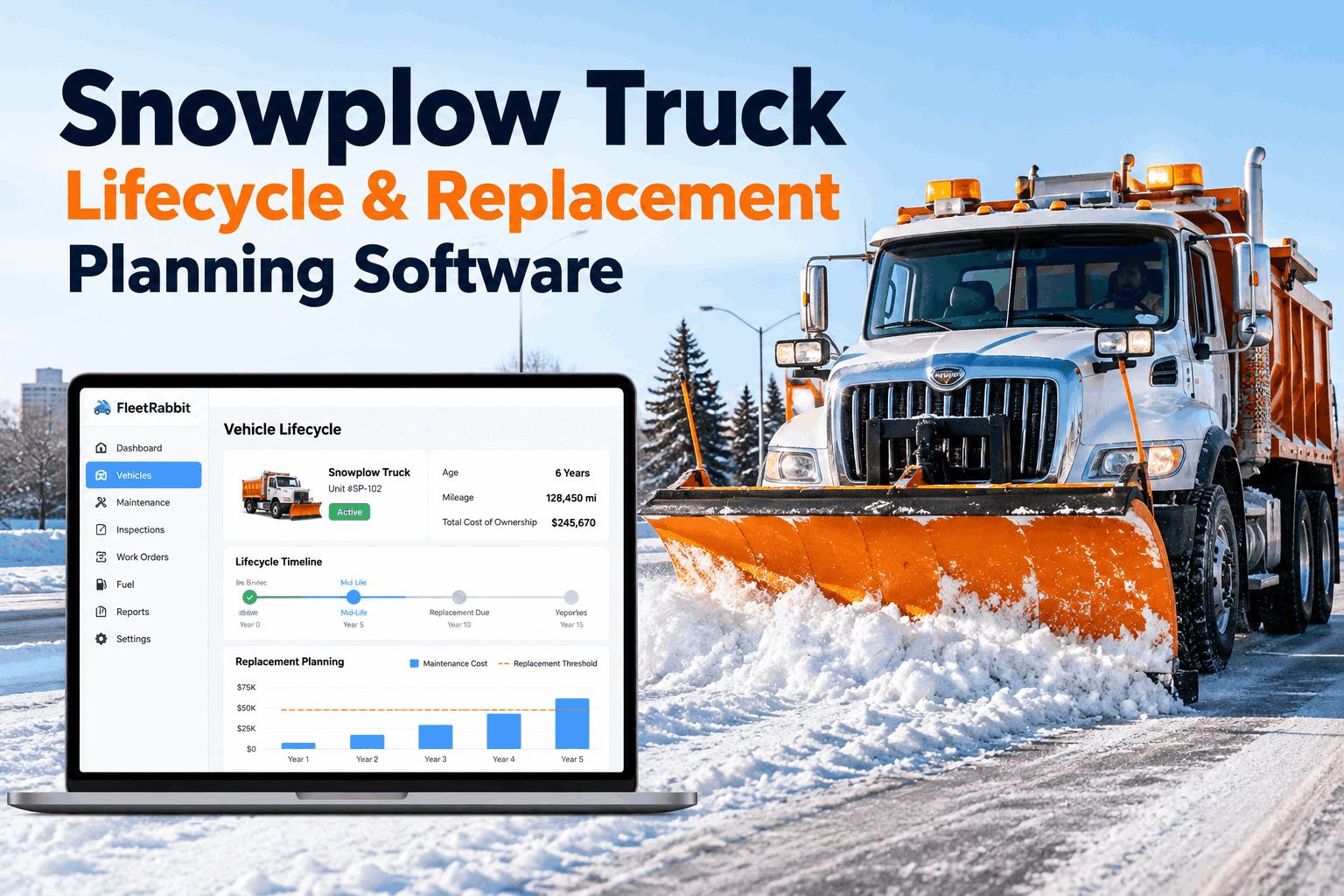
Public works departments, county maintenance depots, municipal water boards, and emergency services face persistent inventory challenges across their centralized parts rooms. Stocking critical replacement components—from heavy-duty snowplow cutting edges and hydraulic cylinders to police pursuit brake pads and sanitation packer seal kits—requires balancing instant parts availability against strict municipal spending caps. When public fleet stockrooms operate via disconnected bin cards, physical count sheets, or unintegrated spreadsheets, agencies experience rampant inventory shrinkage, duplicate stocking across departmental depots, and emergency supplier rush fees that inflate annual municipal budgets. Implementing dedicated government parts inventory and reorder software standardizes barcode tracking, automates minimum-maximum reorder triggers, and links every disbursed bolt, filter, and rotor directly to an authorized agency work order. To see how our platform safeguards public stockroom capital, book a live demo with our municipal parts specialists or launch your maintenance depot immediately with our free account sign up.
Modernize Your Government Fleet Stockroom and Parts Operations
Eliminate stockouts, manage vendor contracts, and link every disbursed part to agency work orders starting at $3/vehicle/month with no hardware lock-in.
The Multi-Agency Parts Dilemma: Hoarding, Stockouts, and Audit Friction
Municipal parts rooms face distinct administrative hurdles that commercial garages rarely encounter. Departments often operate independent supply closets: water utilities stash spare pumps, sanitation hides replacement packing seals, and police precincts hold dedicated brake kits. This siloing leads to hidden surplus inventory while other departments experience work bay delays waiting on back-ordered stock. Without real-time visibility, annual municipal audits uncover thousands of dollars in unaccounted-for parts, unlinked invoices, and obsolete components. Public sector fleet managers can streamline depot operations by arranging a tailored stockroom demo or configure custom bin locations through our quick platform sign up.
Cross-Depot Bin & Shelf Tracking
Locate critical replacement components across main central garages, satellite utility yards, and mobile service trucks. Barcode and QR-code mobile scanning allows technicians to check out items in seconds while logging location-specific counts.
Automated Min-Max Reorder Workflows
Set dynamic minimum and maximum stock thresholds based on seasonal usage patterns. When salt spreader parts or pursuit brake pads drop below critical safety levels, FleetRabbit generates automated draft purchase orders for procurement approval.
Work Order Parts Linkage & Allocation
Prevent unrecorded inventory shrinkage by requiring all parts disbursements to link directly to an open maintenance work order, vehicle VIN, and department accounting charge code, ensuring complete operational traceability.
Vendor Contract & Blanket PO Control
Track primary municipal suppliers, contracted state master pricing, and blanket PO balances in one interface. Prevent unauthorized supplier markups and alert buyers when contract allocations approach their renewal threshold.
Performance Matrix: Manual Bin Cards vs. FleetRabbit Parts Intelligence
Relying on manual stock counts and paper invoices exposes municipal fleet depots to cost overruns, stockouts during storms, and contentious council budget reviews. Review the operational impact of upgrading from legacy bin management to automated inventory software. Municipal fleet leaders can review specific vendor integration capabilities by requesting an online parts inventory demo or test multi-agency stock controls directly via our self-service sign up.
| Inventory Management Area | Paper Logs & Static Spreadsheets | FleetRabbit Government Parts Engine | Public Sector Impact |
|---|---|---|---|
| Physical Inventory Accuracy | 65% - 75% accuracy; massive audit write-offs | 99.8% precision with mobile cycle counts | Eliminates audit write-downs |
| Reorder Trigger Speed | Manual checks after stock runs out | Automated PO generation on min-threshold breach | Zero service bay downtime |
| Inter-Agency Parts Allocation | Untracked usage across department budgets | Direct billing to agency accounting codes | 100% auditable cost recovery |
| Dead Stock & Obsolescence | Parts held for retired vehicle models | Automated flagging of zero-movement items | Recovers up to 20% in stockroom space |
| Warranty Recovery Tracking | Failed parts scrapped without claim check | Automatic notification of active OEM warranties | Recovers thousands in supplier credits |
The 4-Stage Municipal Parts Procurement and Issue Loop
FleetRabbit standardizes municipal parts management from vendor delivery to vehicle repair, eliminating paper gaps and maintaining accountability throughout the asset lifecycle.
PO Ingestion & Barcode Receiving
Incoming shipments are scanned against issued municipal purchase orders. Quantities, item serial numbers, and unit costs are recorded immediately, automatically updating central bin quantities.
Bin Location & Cycle Auditing
Stock is assigned to specific aisle, shelf, and bin coordinates. Warehouse personnel conduct regular mobile cycle counts, verifying shelf quantities without shutting down the maintenance facility.
Work Order Checkout & Allocation
Mechanics scan parts barcodes directly to an open repair ticket. The system deducts the item from inventory, calculates markup rates, and attributes the expense to the vehicle's owning department.
Predictive Reorder & Ledger Export
Usage triggers update min-max levels based on seasonal schedules. Completed parts costs and vendor receipt records sync directly with city financial software and GASB asset valuation ledgers.
Inventory Capital Leaks: Where Municipal Stockrooms Drain Budgets
Unmonitored public sector stockrooms leak significant operational funds every year through unorganized parts bins and emergency procurement orders. Understanding these cost drivers allows fleet managers to defend capital allocations and present clear business cases for software adoption. Assess your municipality's potential parts savings by scheduling an educational product demo or access the platform immediately with our free portal sign up.
Primary Sources of Public Fleet Stockroom Capital Loss
Municipal Inventory Features
Configure custom internal labor markups and parts handling fees for separate agency billing accounts.
Enforce contracted state and cooperative purchasing rates across local aftermarket and OEM parts vendors.
Scan 1D and 2D barcodes using standard iOS and Android smartphone cameras without proprietary scanners.
Deployment Packages for Government Fleet Stockrooms
FleetRabbit provides inventory tracking configurations structured to support small local township garages up to extensive regional county supply chains. Compare operational tiers below, register your parts supervisors via our system sign up, or request a complete inventory workflow evaluation by scheduling an executive fleet demo.
Depot Starter
Core barcode scanning, manual parts issue to work orders, minimum quantity email alerts, and digital receiving logs.
Agency Supply Pro
Automated min-max purchase orders, cross-department billing chargebacks, core deposit tracking, and supplier warranty management.
Enterprise Government
Multi-depot warehouse transfers, municipal ERP financial data sync, blanket PO management, and dedicated procurement support.
Frequently Asked Questions on Government Parts Inventory
How does the software handle core deposits and vendor returns?
When high-value components like alternators, starters, or brake calipers are checked out, FleetRabbit automatically logs a core tracking ticket. Mechanics are prompted to return the damaged core to the parts room, ensuring your agency claims eligible core credits on monthly supplier statements.
Can our parts room manage blanket purchase orders for local auto parts suppliers?
Yes. You can establish blanket purchase orders with authorized local vendors. As mechanics pull fluids, belts, or filters against open repair tickets, expenses deduct from the active blanket balance, alerting purchasing staff before contract caps are exceeded.
How does cycle counting prevent annual inventory audit shutdowns?
Rather than closing maintenance bays for a multi-day annual physical audit, FleetRabbit schedules continuous cycle counting. Warehouse staff count specific bins or parts categories weekly via mobile app, keeping inventory accuracy above 99% year-round with zero bay disruption.
Does this software integrate with municipal enterprise accounting systems?
Yes. The platform provides automated data export and API connectors that sync parts disbursements, receiving invoices, and inter-agency chargeback records directly with major municipal ERP platforms, including Tyler Technologies (Munis), Workday, and SAP.
Achieve 100% Control Over Your Municipal Fleet Parts Inventory
Stop inventory shrinkage, automate supplier reorders, and ensure every public tax dollar spent on vehicle maintenance is accounted for. Get started today with no contracts or proprietary scanner requirements.