NFPA 1915 fire apparatus preventive maintenance software, built for audit day
NFPA 1915 was the standard that first defined minimum preventive maintenance requirements for fire apparatus — which systems get inspected, how often, and what has to be documented. It was folded into NFPA 1911 in 2006, but departments still build their PM programs around that same framework, and auditors still ask the same questions it laid out.
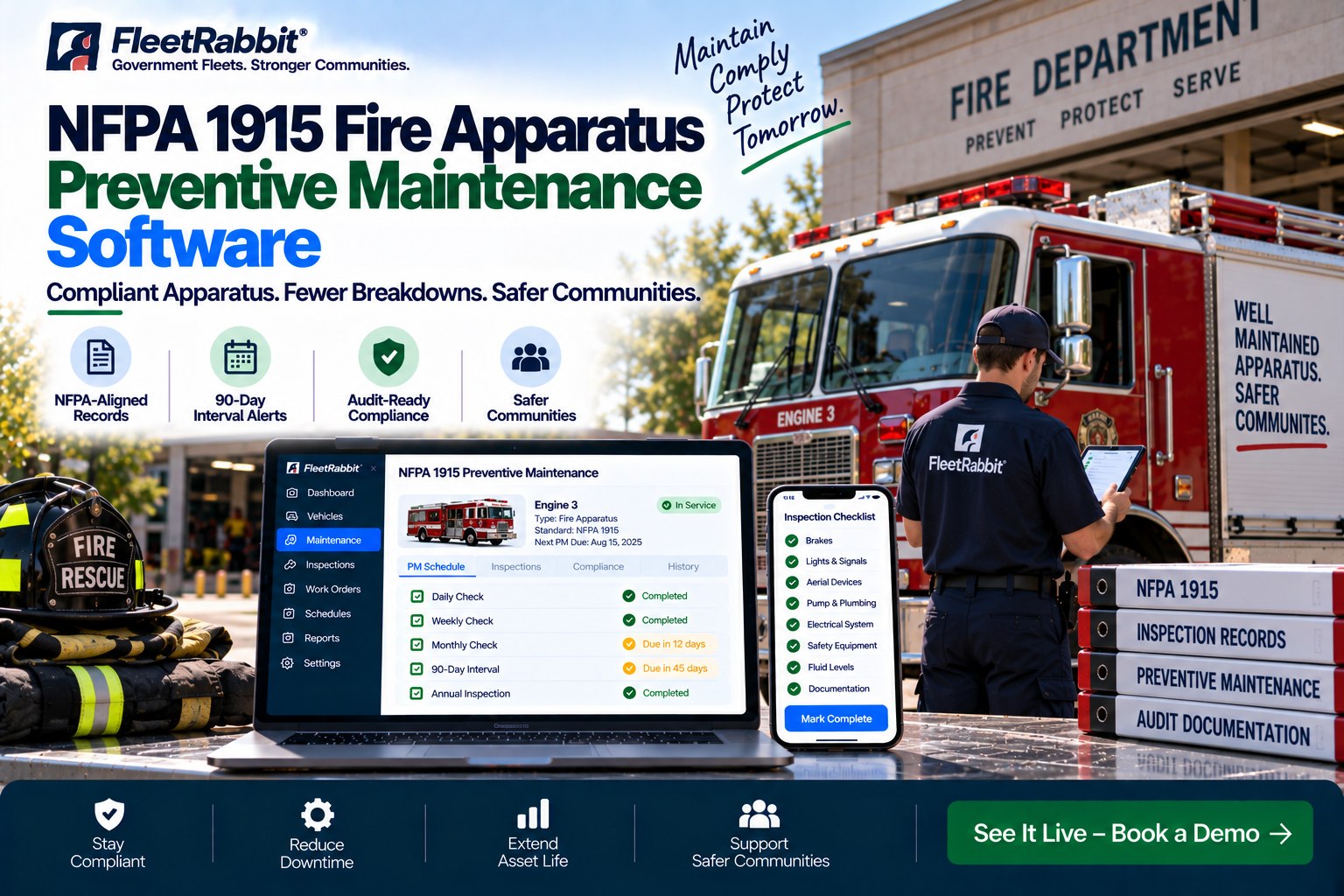
FleetRabbit keeps every apparatus record aligned to that framework automatically, so you can sign up and see your fleet's current compliance status instead of assembling it the week before inspection.
What a preventive maintenance program under NFPA 1915 actually requires
NFPA 1915 didn't set out to be a testing standard — it set out to define a maintenance program. That means it cares less about a single pass/fail moment and more about whether your department has a consistent, documented process running year-round, the kind you can sign up and see mapped against your own apparatus roster. Three things sit at the center of it.
Systems and items to inspect
Chassis, pump, aerial devices, low-voltage electrical, and other apparatus systems each get their own inspection points and pass/fail criteria.
Frequency of servicing
Daily and weekly checks, periodic inspections, and annual performance tests each run on their own cycle, and none of them can quietly lapse.
Documentation of maintenance
Records aren't optional paperwork — they're what protects the department when an apparatus failure gets reviewed after the fact.
Stop rebuilding your compliance file every audit season
NFPA-aligned records, generated automatically as each inspection happens — not reconstructed from memory beforehand.
Keeping every apparatus current between inspections
Annual performance tests get the attention, but most compliance gaps open up in between them — a quarterly check that slips two weeks, or a system that gets inspected but never logged. FleetRabbit's 90-day interval alerts are built to close that gap before it becomes a finding.
Inspection logged
Interval alert sent
Interval alert sent
Annual test due
If your department is still tracking this on a spreadsheet or a wall calendar, it's worth a look at how much of it can run itself — book a demo and we'll walk through your current apparatus roster together.
What an auditor actually asks for
Most compliance reviews come down to the same handful of questions, asked apparatus by apparatus. Being able to answer them instantly — rather than digging through a filing cabinet — is the difference between an audit that takes an hour and one that takes a week. It's also worth a book a demo conversation if you want to see these questions answered live against your own records.
Readiness is the point, not just compliance
A department that can produce clean NFPA-aligned records under audit is usually also the department whose apparatus doesn't fail at the worst possible moment. Preventive maintenance software built around this framework isn't about satisfying a reviewer — it's about knowing, every day, that the rig responding to the next call has been through everything it was supposed to.
See what audit-ready looks like for your own fleet — sign up to connect your apparatus roster, or book a demo and bring your current PM records to compare.
Get audit-ready by default, not by scramble
Start free and see your compliance status today, or walk through it live with our team.
Common questions
Is NFPA 1915 still an active standard on its own
Not as a standalone document — it was withdrawn in 2006 and its preventive maintenance requirements were incorporated into NFPA 1911, Standard for the Inspection, Maintenance, Testing, and Retirement of In-Service Automotive Fire Apparatus. Departments still commonly refer to their PM program as "NFPA 1915 aligned" because that's the framework it originally established.
What does NFPA-aligned preventive maintenance software actually track
It tracks which apparatus systems need inspection, how often each one is due, and a timestamped record of who completed the work — the same three elements the original standard called out.
How often do fire apparatus systems need to be inspected
It varies by system: some checks happen daily or weekly, others on a periodic or quarterly basis, with a full performance test on the pump and other major systems annually.
Why does documentation matter as much as the inspection itself
An inspection that isn't recorded is difficult to prove happened at all. Documentation is what protects a department during an audit, an insurance review, or after an apparatus failure gets examined.
Does this apply to EMS and rescue apparatus too
Yes — the preventive maintenance framework covers emergency vehicles broadly, not just structural fire engines, which is why emergency vehicle readiness and EMS readiness both depend on the same kind of consistent PM tracking.
Can a small department manage this without dedicated software
It's possible with strict manual processes, but most departments find that overdue items and missing records start slipping through once the roster grows past a handful of apparatus — which is usually when software pays for itself.