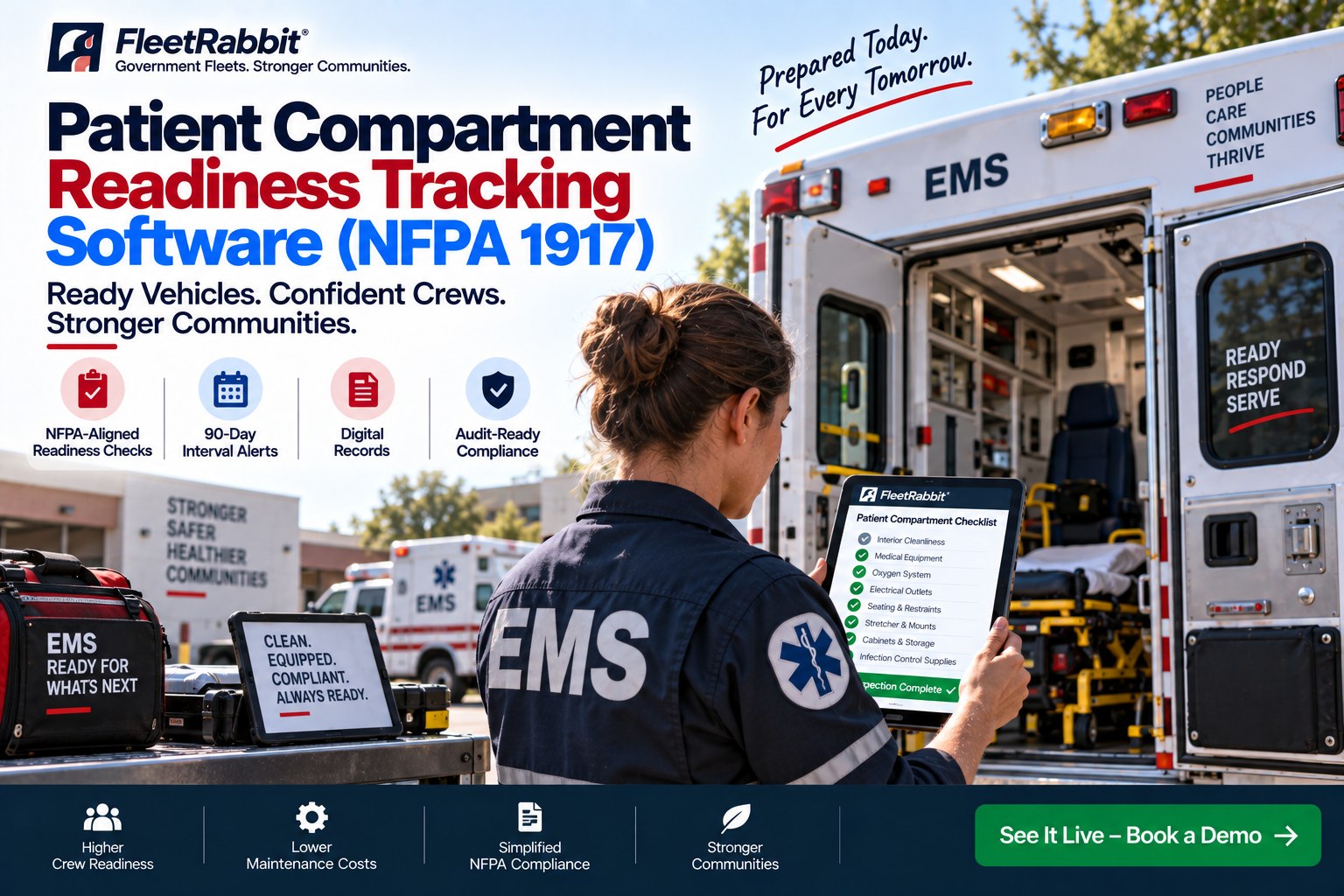
An ambulance can pass every daily rig check and still roll up to a call with a dead CO detector, an oxygen system nobody pressure-tested since spring, or a stretcher mount that's one bad bolt away from a problem. NFPA 1917 defines what has to be built into a patient compartment — from carbon monoxide detection to low-voltage electrical warning systems to medical gas testing — but keeping those systems verified as functional over years of service is a documentation problem most agencies still run on paper. FleetRabbit's patient compartment readiness tracking software turns that verification into a scheduled, photo-backed digital record, with automatic interval alerts and an export that's audit-ready the moment someone asks for it. Book a demo to see it running on your own fleet.
Every Patient Compartment System, Verified — Not Assumed
Track the equipment NFPA 1917 requires inside the patient compartment, run checks on a schedule you control, and stop finding out about a failed system in the middle of a call.
Two Different Checks, Two Different Purposes
A quick shift check tells you the rig left the bay ready. It doesn't tell you the oxygen regulator still holds pressure, or that the low-voltage warning system still fires before the battery actually fails. Those need a deeper look on a longer interval — and someone has to remember to run it.
Quick Compartment Check
Crew confirms lighting, restraints, litter mount security, and that the CO detector and warning indicators are powered and unobstructed before the rig leaves the bay.
Full System Verification
Medical gas system pressure and leak checks, low-voltage electrical warning system function test, stretcher mount torque check, and interior surface and sound-level condition review — run on the interval your agency sets, with an alert before it's due.
Built Around What NFPA 1917 Puts In That Compartment
NFPA 1917 sets minimum design and equipment requirements for the patient compartment. FleetRabbit's checklist templates map directly to the systems it requires, so verification checks confirm the real equipment on your rig — not a generic vehicle form.
Carbon Monoxide Detector
Confirm the listed CO detector is powered, unobstructed, and alarming correctly.
Low-Voltage Warning System
Verify the audible and visual alert for impending electrical system failure still triggers correctly.
Medical Gas System
Log pressure and leak checks on the oxygen delivery system on the interval your protocol requires.
Litter & Restraint Mounts
Check mounting hardware security and restraint condition for the cot and any secondary litter positions.
Stepping & Standing Surfaces
Flag worn or degraded slip-resistant surfaces on entry steps and interior standing areas before they become a fall risk.
Interior Condition
Note cabinetry, wall panel, and equipment mounting condition that affects both safety and cabin noise over time.
From Scheduled Check to Audit-Ready Record
Interval alert fires automatically as a vehicle approaches its 90-day (or custom) verification window — no wall calendar, no sticky note.
Crew runs the checklist from a phone, attaching a photo at any flagged item, right at the rig.
A failed item locks the vehicle from assignment and opens a work order automatically.
Every completed check is stored and ready to export the moment an accreditation review or state inspection asks for it.
See Your Own Rigs on This Checklist
Bring your current patient compartment form to the call — we'll map it to FleetRabbit's readiness templates before you commit to anything.
FleetRabbit vs. Paper Compartment Logs vs. Generic CMMS
| Capability | FleetRabbit | Generic CMMS | Paper Compartment Logs |
|---|---|---|---|
| NFPA 1917-mapped checklist items | Built in | Manual setup | Depends on the form used |
| Automatic 90-day interval alerts | Yes, configurable | Rare | None |
| Photo-verified checks | Yes | Sometimes | No |
| Auto work order on failed item | Yes | Manual entry | None |
| One-click audit export | Yes | Limited | Manual compiling |
Our compartment checks used to live in three different binders across three stations. Now every unit's 90-day check shows up on its own, the crew runs it from their phone, and if a state reviewer asks for records, it's a five-minute export instead of a scavenger hunt.
EMS Fleet Compliance Manager, County Emergency Medical Services
Frequently Asked Questions
Does NFPA 1917 require a 90-day compartment check?
NFPA 1917 sets minimum design and equipment requirements for a new ambulance's patient compartment — things like the CO detector, low-voltage electrical warning system, and medical gas system. It doesn't itself dictate a 90-day inspection cycle; that interval is a common operational practice agencies set to verify those systems keep working over time. FleetRabbit lets you configure whatever interval your agency's protocol requires.
How is this different from our NFPA 1911 apparatus inspection program?
NFPA 1911 covers inspection, maintenance, and testing of the vehicle itself over its service life. FleetRabbit's patient compartment readiness tracking sits alongside that — focused specifically on the patient care systems inside the box — and can run on the same platform as your broader apparatus maintenance program.
What happens when a crew flags a failed item?
The vehicle is automatically marked out of service for patient transport, dispatch is notified, and a work order is generated for the shop — so a failed CO detector or gas system doesn't get carried forward to the next shift by accident.
Can we use our existing compartment check form?
Yes. Most agencies bring their current form to onboarding and FleetRabbit rebuilds it as a digital checklist template, so the transition doesn't mean relearning what to check — just how it's recorded.
Is there a free trial before we roll this out fleet-wide?
Yes — you can start a free trial on a small group of units, or book a walkthrough with your own checklist first.
Stop Finding Out Mid-Call That a System Failed
NFPA 1917-aligned checklists, automatic interval alerts, and an audit-ready export — built for how EMS and fire-based ambulance fleets actually run readiness checks.