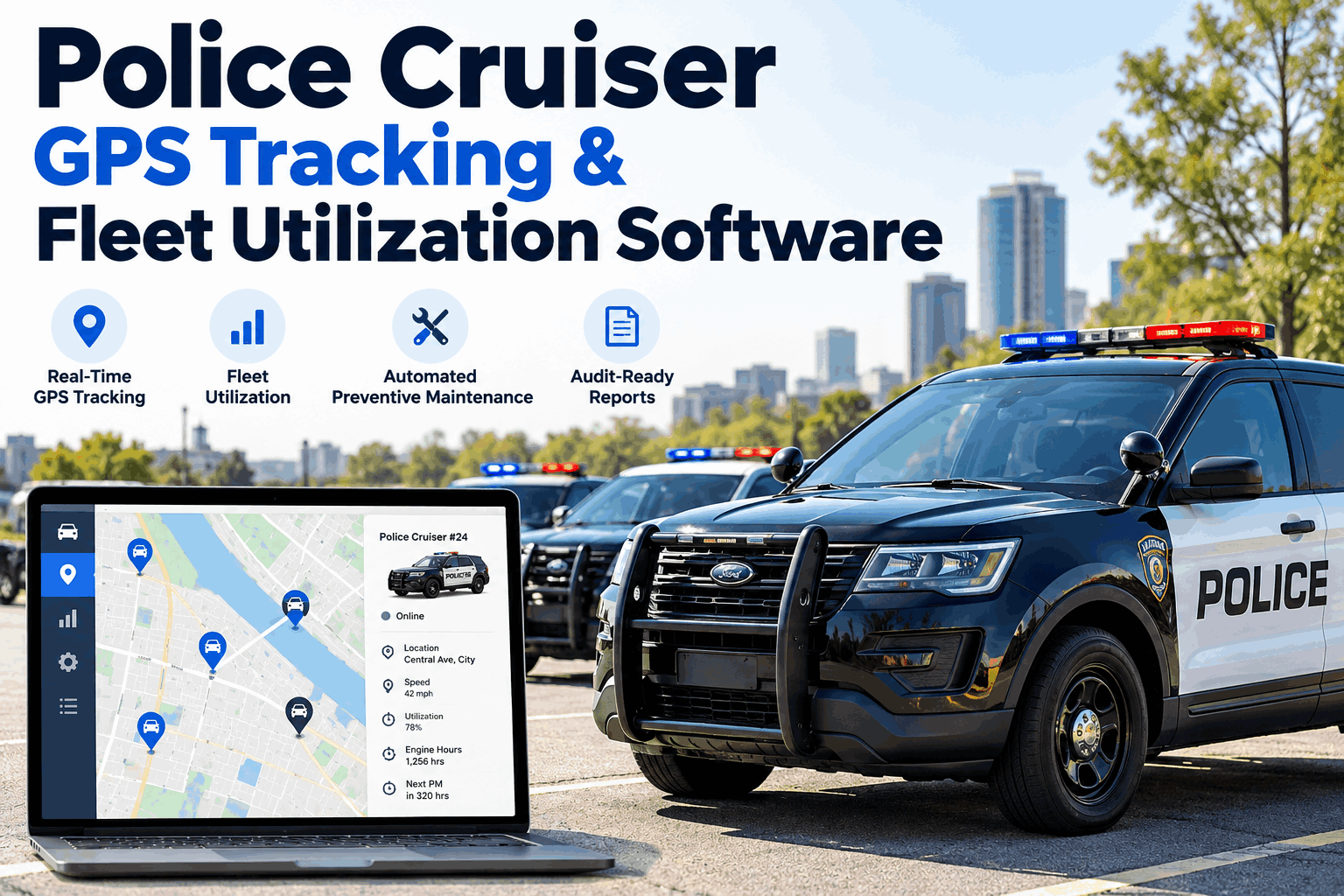
A patrol car spends more of its life idling than moving. Lights, computer, radio and radar all draw power while the engine runs and the cruiser sits parked on a corner or outside a call, and that time adds up to real engine hours that never show up on the odometer. For a department answering to a city budget and, eventually, a records request, knowing where every cruiser is and how it's actually being used isn't optional visibility. It's the paper trail the department will need to produce. See how FleetRabbit gives public safety fleets that visibility.
Police Cruiser GPS Tracking and Utilization Software Built for Accountability
Track every cruiser in real time, see how the fleet is actually being used across shifts, and keep maintenance and utilization records ready for any audit.
Idle Time Is the Hidden Half of a Cruiser's Workload
A cruiser assigned to traffic patrol or stationed at a scene can idle for long stretches with the engine running the whole time, since shutting it off means losing the lights, the mobile data terminal and the AC or heat. That idle time wears the engine and burns fuel exactly like driving does, but it never adds a single mile to the odometer. A department scheduling oil changes and inspections by mileage alone is working from a number that only tells half the story.
Illustrative comparison. Actual idle-to-drive ratios vary by assignment and department.
One Cruiser, Three Shifts
Many departments run a single cruiser across multiple shifts rather than assigning one vehicle per officer. That keeps the fleet smaller, but it also means the vehicle almost never stops running, and its true engine hours accumulate far faster than a mileage-based schedule expects.
Schedule PM around real engine hours, not just miles
Catch the wear that idle time creates before it becomes a breakdown on shift. Free for your first three vehicles.
Utilization Isn't Just Operational, It's a Budget Conversation
When a city council or a finance office asks whether the fleet is sized correctly, "we think so" isn't an answer that holds up. Real utilization data, how often each cruiser is actually on the road versus parked, is what turns a budget request for more vehicles, or a decision to retire underused ones, into something defensible.
Ready for the Records Request
Vehicle location and maintenance data for a public fleet can become the subject of a records request or an internal audit with little warning. A department that keeps this information in one searchable system answers that request in minutes. A department relying on paper logs and separate spreadsheets spends days reconstructing it, and risks gaps that raise more questions than they answer.
What FleetRabbit Gives a Public Safety Fleet
Frequently Asked Questions
Lights, computers and climate control often run while the vehicle is parked, so the engine keeps accumulating hours and wear that never shows up as miles driven.
GPS tracking shows where a vehicle is right now. Utilization data shows the pattern over time, how much a vehicle is actually used, which is what budget and fleet-sizing decisions depend on.
Yes. Engine hours reflect idle-heavy use far more accurately than mileage alone, especially for cruisers running multiple shifts.
Location history, maintenance records and inspection logs are stored in one searchable system, so a response doesn't depend on reconstructing paper records.
Yes. Start free with three vehicles and scale up as the fleet grows.
See Every Cruiser. Prove Every Hour.
Live GPS tracking, engine-hour PM and utilization reporting your department can stand behind. Free for your first three vehicles.