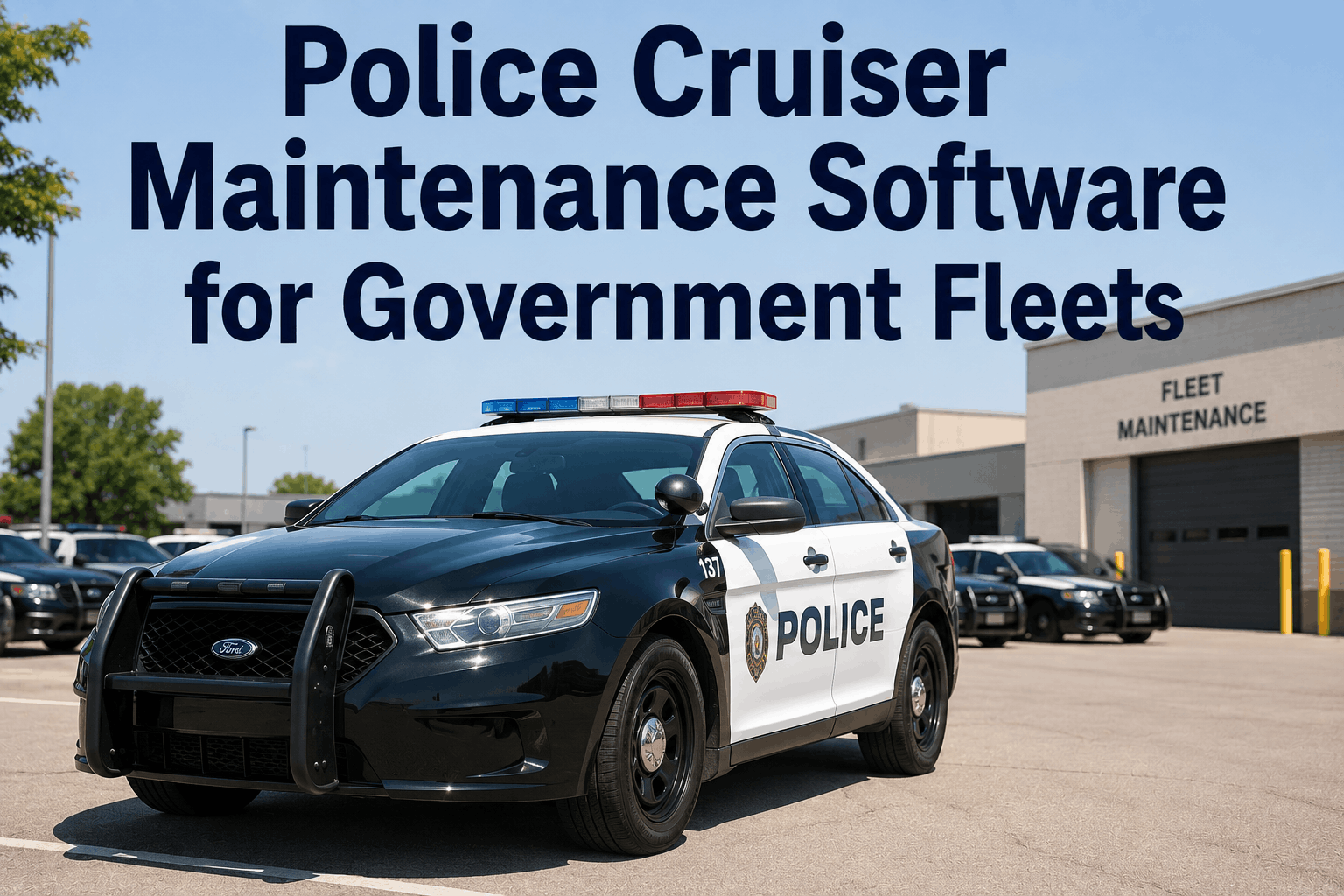
A patrol car rarely drives like a normal vehicle. It idles at scene calls, runs radios, light bars, and mobile data terminals for hours at a stationary post, and covers the same three-mile radius a dozen times on a single shift. Mileage-based service intervals were built for commuter cars, not for units running eight, ten, or twelve engine hours a day. Departments that plan maintenance purely by odometer reading are almost always scheduling service too late. FleetRabbit was built specifically for this duty cycle, and agencies that sign up can see their own fleet's engine-hour exposure inside minutes of connecting a unit.
0.4–0.6 gal
burned per idle hour, per cruiser
Police SUVs run nearly double that rate while parked with lights, radios, and computers still powered on.
33 miles
of wear for every engine hour logged
A cruiser showing 60,000 miles can carry wear closer to 150,000 once idle hours are counted in.
24 hours
standard window for a post-run check
The typical benchmark public-safety fleets use to log an operational check after any active run.
The Odometer Is Only Telling Half The Story
Police SUVs and cruisers spend a disproportionate amount of shift time under 25 mph, in stop-and-go traffic, or parked with the engine running to keep onboard electronics powered. Ford's own guidance on idling counts any stretch over ten minutes stationary per hour of normal driving as idle time, and idle-heavy activity like traffic posts, prisoner transport waits, and report writing on scene adds up fast. That gap is exactly why agencies that sign up for engine-hour tracking catch failing alternators, worn belts, and starter strain long before a mileage-only schedule would have flagged the unit.
Auxiliary power draw compounds the problem. Light bars, in-car computers, radios, and prisoner-compartment cameras all pull current while the vehicle sits still, which forces the alternator and battery to work harder than a stock passenger vehicle ever would. Departments that keep logging preventive maintenance by mileage alone are, in effect, scheduling for a different vehicle than the one actually on patrol.
See how a duty-cycle-aware maintenance plan looks for your own patrol fleet before the next budget cycle locks in.
Compliance That Holds Up Under Review, Not Just On Paper
Public fleets answer to more than a shop foreman. City councils, state auditors, and in some cases a courtroom can all ask to see when a unit was last inspected and what was found. NFPA 1911 was written for emergency apparatus, but the discipline it describes — operational checks within twenty-four hours of a run, or at minimum weekly, with results documented and retained — is a framework many police fleets borrow for their own patrol inspection routines, layered on top of standard DOT roadworthiness checks for brakes, lighting, tires, and steering.
The problem is rarely a lack of policy. It is a lack of proof. Paper logs get lost, spreadsheets get overwritten, and a technician's memory is not admissible evidence in an audit. Agencies that book a demo usually want to see the same thing first: a record that cannot be quietly edited after the fact.
An Engine-Hour PM Plan Follows The Way A Cruiser Actually Works
Instead of a flat "every 5,000 miles" rule that treats a highway cruiser and an idling traffic post the same, an engine-hour plan tracks the two variables that actually predict wear: hours run and miles covered, together.
Step 1
Hour meter connects
Each unit's engine-hour and mileage feed reports into one profile instead of a shop whiteboard.
Step 2
Thresholds set per class
Patrol sedans, traffic units, and support vehicles each get PM intervals matched to their real duty cycle.
Step 3
Alerts fire before failure
A unit approaching its hour threshold gets flagged for the shop before it gets flagged on the road.
Step 4
Every action time-stamped
Work orders, parts, and technician notes attach to the same record automatically, ready for review.
This is the exact model behind FleetRabbit's dispatch dashboard, and it's the first thing most fleet managers ask to sign up and test on their own oldest, highest-idle unit.
Records That Survive A Council Meeting, A Grant Review, Or A Deposition
A patrol vehicle involved in a pursuit or a civil claim can have its maintenance history pulled apart line by line. A grant-funded replacement request can be denied for lack of documented usage data. A state fleet report can be rejected for missing inspection dates. In every one of those situations, the fleet manager who wins the conversation is the one holding a complete, timestamped record instead of a best guess.
Inspection history
Every check, pass, and flagged defect tied to the unit's permanent file with a date and technician name.
Work order trail
Parts used, labor hours, and repair notes attached automatically so nothing gets re-typed or lost.
Exportable reports
A single pull for a council meeting, a grant renewal, or a state fleet report, ready in minutes.
An audit-ready system keeps every inspection, work order, part replacement, and technician sign-off attached to the vehicle's permanent file, exportable on demand. That single habit turns a defensive scramble into a five-minute pull. It's worth walking through with your own records before the next review cycle — book a demo and bring last year's toughest audit question with you.
Fleet Lifecycle Planning: Knowing When To Retire, Not Just When To Repair
Replacement budgets are usually built around vehicle age or mileage brackets set years ago, long before duty cycles shifted toward more idle-heavy patrol work. A cruiser that hits a mileage bracket while it's actually carrying far more engine-hour wear underneath gets replaced too late, after repair costs have already climbed. A support vehicle that logs low mileage but sits idling on generator duty gets replaced too early, wasting budget that could go toward a unit that actually needs it.
Tracking cumulative engine hours alongside mileage gives fleet managers a real basis for a multi-year replacement schedule instead of a guess made every budget cycle. It also gives finance and procurement teams a defensible number to point to when requesting capital funds, rather than an argument based on a vehicle's age alone. Departments that sign up often start by pulling their full fleet's engine-hour distribution for the first time and finding at least a few units that were headed toward the wrong side of that curve unnoticed.
A Cruiser Sitting In The Shop Is A Patrol Zone Sitting Empty
For a commercial fleet, downtime is a cost line. For a police fleet, downtime is a coverage gap — a beat that goes unpatrolled, a response time that stretches, a shift that runs short-staffed on vehicles before it runs short-staffed on people. Tracking uptime by unit, by shift, and by precinct turns fleet readiness into something a watch commander can plan around instead of discover the hard way.
Agencies running duty-cycle PM schedules and same-day alerting routinely hold availability well above departments still working from paper logs and mileage guesswork. If your last fleet report couldn't answer "how many units were out of service last month," it's worth finding out why — sign up and pull that number for yourself.
FleetRabbit gives your department engine-hour scheduling, audit-ready inspection records, and a live view of every unit's readiness in one place.
Frequently Asked Questions
Why does mileage-based maintenance fall short for police cruisers.
Because patrol duty involves long idle periods, low-speed driving, and heavy auxiliary power draw that mileage never captures. Two cruisers with identical odometer readings can carry very different amounts of real engine wear depending on how much time each spent idling on post versus moving on patrol.
Is NFPA 1911 a legal requirement for police fleets.
NFPA 1911 was written for emergency apparatus, and applying it to vehicles under 5,001 lb GVWR is generally at the discretion of the authority having jurisdiction. Many public-safety fleets still adopt its inspection cadence and documentation discipline as a working standard for patrol vehicles, alongside DOT roadworthiness requirements.
What data does FleetRabbit need to start engine-hour tracking.
A connected hour meter or telematics feed and the vehicle's basic service history are enough to get started. From there, thresholds can be tuned per vehicle class as real duty-cycle data comes in.
Can the software handle a mixed fleet of sedans, SUVs, and support vehicles.
Yes. Each vehicle class can carry its own PM thresholds, inspection templates, and reporting rules, so a traffic unit and an administrative sedan are never scheduled on the same clock.
How long does it take to get a department's fleet onboarded.
Most agencies have their first units logging inspections and PM alerts within a single shop shift. The best way to see the real timeline for your fleet size is to book a demo and walk through it with your own vehicle list.