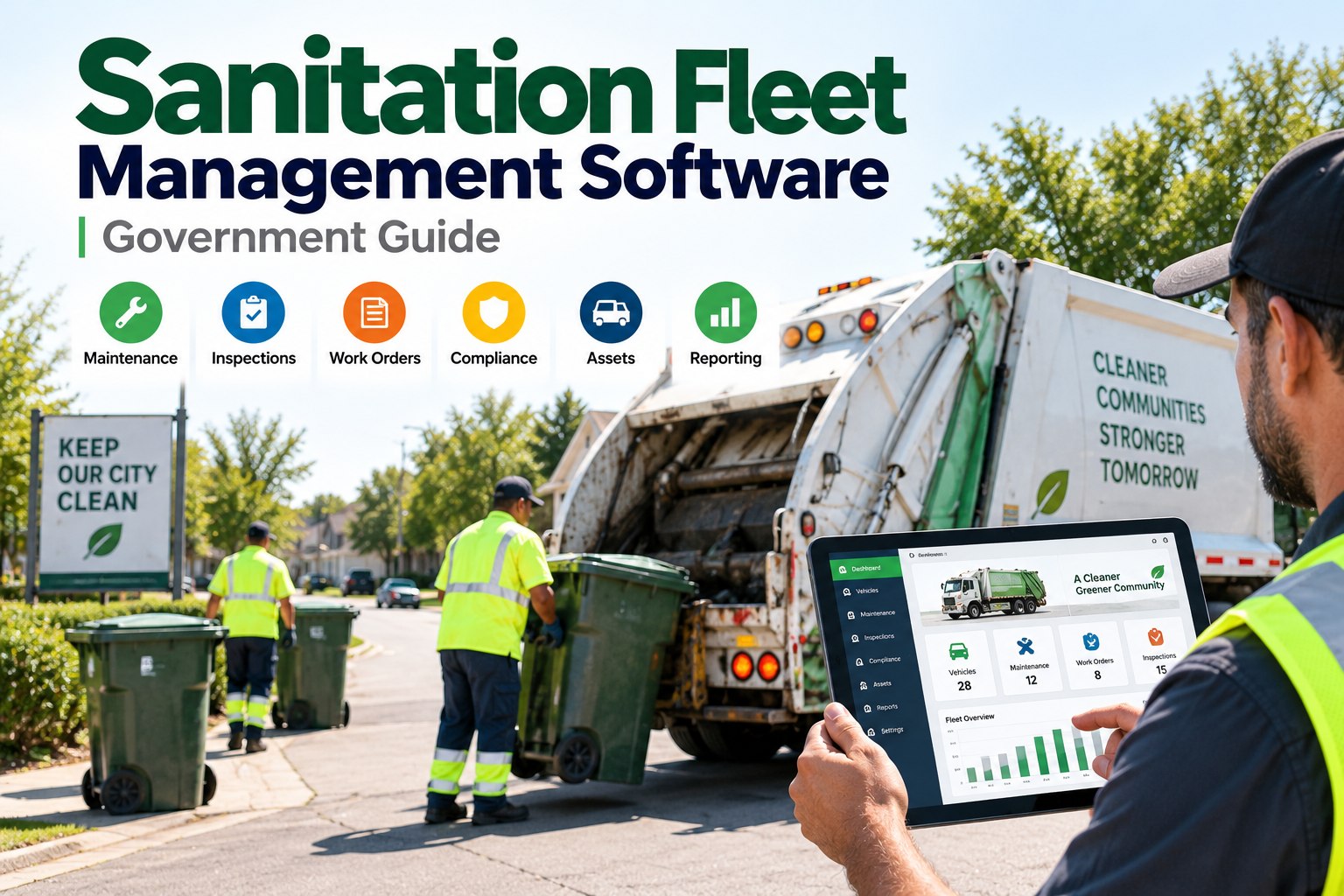
Municipal sanitation divisions, public works waste authorities, and contracted solid waste operations manage one of the most mechanically demanding and rigorously regulated asset classes in local government. Operating hundreds of automated side-loaders (ASLs), rear-loader packers, commercial front-loaders, roll-off container haulers, and street sweepers requires relentless synchronization across neighborhood route balancing, hydraulic packer duty-cycle tracking, mobile electronic driver inspection reporting (eDVIR), and centralized garage work order triage. When city sanitation operations rely on greaseboard route sheets, paper pre-trip slips, and disconnected legacy shop software, municipal waste divisions bleed taxpayer capital through severe hopper hydraulic failures, unscheduled roadside packer breakdowns, unmonitored curbside PTO idling, and contentious city council budget hearings. Implementing dedicated sanitation fleet management software links mobile driver defect reporting, auxiliary hydraulic pressure sensors, automated preventative maintenance scheduling, and municipal enterprise resource planning (ERP) chargebacks into a single unified public sector console. To explore how our platform eliminates missed trash pickup corridors and protects heavy refuse assets, book an executive evaluation demo with our municipal public works team or launch your sanitation garage pilot right away through our free platform sign up.
Safeguard Your Municipal Waste Fleet and Protect Departmental Budgets
Eliminate catastrophic hydraulic failures, automate driver pre-trip walkarounds, verify curbside bin collection, and streamline municipal garage work orders starting from $3/vehicle/month with no hardware lock-in.
High-Risk Operating Pressures in Public Sanitation Operations
Operating a municipal sanitation fleet involves punishing physical mechanics, continuous vibration, and complex environmental exposures that standard public works utility trucks never experience. Automated side-loaders and heavy residential rear-packers execute between 800 and 1,500 hydraulic compaction cycles per shift in grueling stop-and-go driving conditions. Heavy hydraulic lift-arms repeatedly hoist 64-gallon and 96-gallon residential roll carts, placing continuous stress on auxiliary power take-off (PTO) pumps, high-pressure hydraulic hoses, valve manifolds, and packer cylinders. When city maintenance shops manage repairs reactively based solely on odometer mileage, hydraulic hoses rupture on residential streets, spraying toxic fluid over public asphalt and requiring expensive hazmat cleanups. Furthermore, sanitation superintendents face continuous resident complaints regarding alleged missed collections or damaged curbside containers. FleetRabbit replaces paper route sheets with an automated operational platform that protects equipment health and provides indisputable collection evidence. Fleet directors can evaluate our refuse telematics engine by booking an interactive municipal software demo or configure test refuse vehicle profiles directly through our quick platform sign up.
Hydraulic Packer & Arm Duty-Cycle Telematics
Odometers fail to capture the real operational wear on refuse chassis. FleetRabbit connects directly to body control modules, auxiliary PTO switches, and hydraulic pressure sensors, logging exact packing cycle counts, arm grab-lift strokes, and hydraulic operating hours independently from road travel miles.
Geofenced Curbside Collection Verification
When residents call city council offices claiming their neighborhood was skipped, dispatchers waste hours investigating. The platform links lift-arm deployment sensors with geofenced parcel coordinates, recording cryptographic timestamps and coordinates every time a roll cart is dumped.
Driver Mobile eDVIR and Hopper Safety Auditing
OSHA and state DOT safety standards require strict daily checks covering backup alarms, fire extinguishers, hopper clean-out doors, and tail-gate safety props. FleetRabbit enforces mobile smartphone walkarounds with required photo evidence before drivers can clear terminal gates.
Direct Technical Matrix: Paper Route Sheets vs. FleetRabbit Sanitation Engine
Relying on physical carbon-copy driver logs, greaseboard route maps, and isolated garage spreadsheets creates expensive administrative blind spots across municipal waste divisions. Review how traditional refuse management compares directly against FleetRabbit's connected sanitation fleet platform across essential public works operational benchmarks. Municipal superintendents and garage foremen can evaluate custom shop dispatch features by scheduling an online executive demo or test multi-district refuse routes via our self-service sign up.
| Sanitation Operational Dimension | Paper Clipboards & Generic GPS Trackers | FleetRabbit Sanitation Fleet Platform | Municipal Taxpayer Advantage |
|---|---|---|---|
| Preventative Maintenance Scheduling | Tractor odometer miles; misses hydraulic wear | Direct PTO run-hours & lift-arm cycle counts | Cuts catastrophic packer breakdowns by 44% |
| Curbside Collection Verification | Assumes truck passing street equals collected bin | Sensor-verified arm lift within street geofence | 100% verifiable defense against citizen complaints |
| CNG & Diesel Fuel Optimization | Unmonitored engine idling while hopper cycles | Automated separation of productive PTO vs. idle | Saves $1,850+ in fuel per refuse truck annually |
| Emergency Storm Debris Accounting | Manual tally sheets at landfill scales; high error | 1-click export of FEMA equipment & cubic-yard logs | Rapid federal grant reimbursement with zero write-offs |
| Cross-Department Accounting Sync | Weeks of manual paper billing reconciliation | Automated chargebacks to municipal ERP ledgers | Eliminates cross-agency municipal billing disputes |
4-Stage Daily Municipal Waste Collection Workflow
FleetRabbit standardizes public sanitation operations across every operational phase of the working shift, ensuring mechanical readiness, route efficiency, and fiscal accountability from morning roll-out to evening washdown.
eDVIR & Hydraulic Pre-Trip Inspection
Drivers complete mobile walkarounds, photographing hydraulic fluid sight glasses, lift-arm pins, hopper sweep blades, and backup cameras before departing the yard for residential wards.
Dynamic Route Balance & Alley Navigation
In-cab tablets guide drivers along optimized collection corridors. The system sequences narrow alleys, handles dead-end cul-de-sacs safely, and tracks route progression in real time.
Curbside Telematics & Exception Capture
Auxiliary sensors record each bin tip. Blocked cans, contaminated recycling bins, or overloaded containers are photographed by drivers, logging instant customer notices in the portal.
Landfill Scale Sync & Maintenance Debrief
Payload scale weights log to the vehicle profile automatically. Hydraulic cycle tallies update garage maintenance schedules, and reported defects turn directly into overnight shop work orders.
Public Sector Capital Stewardship: Stopping Waste Fleet Budget Drains
Operating a fleet of heavy automated refuse packers without connected maintenance software creates compounding financial leaks across ruptured hydraulic lines, excessive curbside idling, and unbudgeted emergency truck rentals. Identifying these systemic cost drivers helps sanitation superintendents and town managers defend technology appropriations before city councils and county commissioner boards. Measure your department's exact cost recovery by booking an executive consultation demo or initiate platform onboarding directly via our rapid platform sign up.
Top Causes of Municipal Sanitation Fleet Operating Losses
Municipal Sanitation Capabilities
Interfaces with refuse body controllers to track packing pressures, arm cycle counts, and auxiliary hydraulic oil temperatures.
Compiles verified machine operating hours and cubic-yard debris logs formatted directly for federal disaster grant reconciliation.
Exports parts costs, mechanic labor, and capital asset depreciation directly to platforms like Tyler Technologies (Munis) and SAP.
FEMA Storm Debris Recovery & Regulatory Compliance Architecture
Municipal sanitation divisions serve as frontline responders during natural disasters, clearing fallen trees, structural wreckage, and flood-damaged debris. FleetRabbit replaces chaotic paper tally sheets with an automated compliance framework that guarantees federal grant reimbursement and protects public asset valuations.
Disaster Debris Documentation
During federally declared emergencies, the system automatically logs every truck's operating hours, idle time, and GPS haul routes within designated disaster zones, exporting FEMA Schedule of Equipment rates in minutes.
Hour-Based Asset Depreciation
Calculate heavy refuse truck depreciation based on verified hydraulic operating run hours rather than simple odometer miles. The platform provides city finance officers with audit-ready asset valuations matching statutory requirements.
Spill Prevention & Fluid Logging
Track hydraulic fluid consumption, oil sampling results, and hose replacement histories per vehicle. The platform produces certified maintenance logs that prove environmental due diligence during state EPA stormwater inspections.
Frequently Asked Questions for Municipal Sanitation Superintendents
How does FleetRabbit monitor hydraulic packer cycles and lift-arm health?
FleetRabbit connects directly to refuse body controllers, auxiliary PTO engagement switches, and hydraulic circuit pressure sensors. The system records every automated arm lift-and-dump cycle and packer blade stroke, monitoring continuous duty cycles independently from road miles to trigger preventative maintenance before hydraulic pump burnout occurs.
How does the software verify whether a residential roll cart was actually collected?
When an automated side-loader dumps a container, the lift-arm sensor trigger correlates with the truck's real-time GPS coordinates. The system logs a timestamped collection token within the property's parcel geofence, providing clear proof that eliminates disputed citizen complaints when cans are placed at the curb late.
How does the software assist with FEMA disaster debris reimbursement claims?
During a federally declared emergency, FleetRabbit automatically tracks every refuse and roll-off vehicle's operating hours, idle time, and operator session logs within the disaster perimeter. The platform exports pre-formatted records matching FEMA Schedule of Equipment rates, cutting claim preparation time from weeks to minutes.
Does this software integrate with our city or county enterprise accounting system?
Yes. FleetRabbit features standard REST APIs and automated data export connectors that synchronize fuel usage, maintenance parts pulls, and internal labor chargebacks directly with municipal enterprise resource planning (ERP) platforms including Tyler Technologies (Munis), Workday, and SAP.
Upgrade Your Municipal Sanitation Fleet Operations Today
Eliminate catastrophic hydraulic failures, automate curbside collection verification, and protect public asset investments with real-time data. Deploy FleetRabbit today with zero proprietary hardware lock-in.