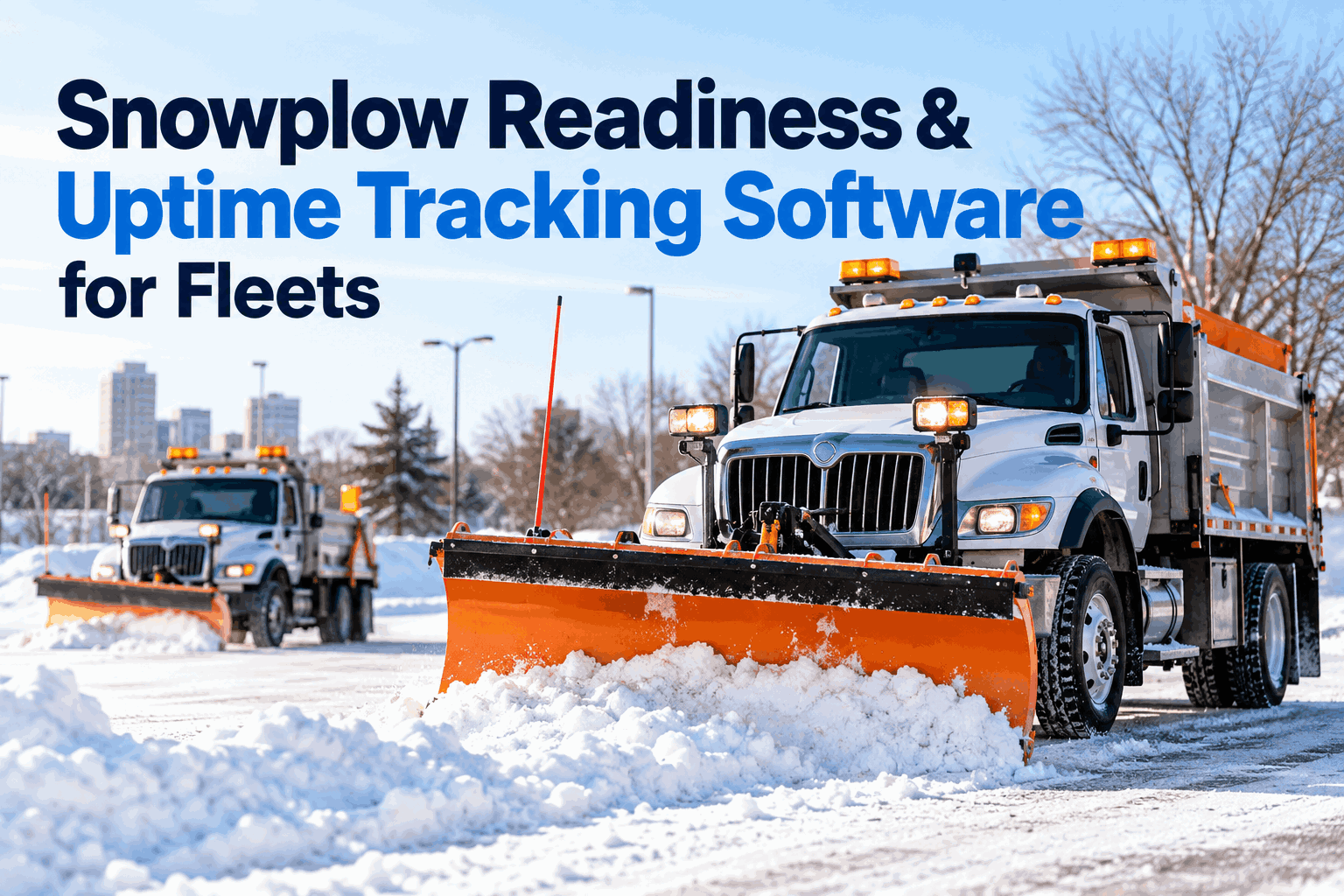
Municipal public works divisions, county highway authorities, and inter-agency winter emergency management teams face extreme operational stakes when severe winter storms strike. Coordinating dozens or hundreds of tandem salt spreaders, front-line plow trucks, motor graders, auxiliary skid steers, and supervisor utility vehicles across priority emergency corridors demands real-time synchronization between public works yards, parks departments, water utilities, and central emergency dispatch. When winter weather operations rely on whiteboard route assignments, disconnected radio chatter, and manual salt-dome tally sheets, municipal leaders face unplowed hospital access routes, excessive road salt runoff, hydraulic system freeze-ups, and intense public backlash during city council budget hearings. Modern snow and ice operations fleet software tracks plow-blade position, material application rates, and operator hours in real time, turning complex storm responses into defensible public records. To see this winter coordination live, book a live demonstration with our public sector team or launch your municipal storm operations hub with our free platform sign up.
Snow and Ice Operations Fleet Coordination Software Across Every City Department
Coordinate multi-agency storm response, track real-time plow-blade down status, optimize granular salt application rates, and automate post-storm FEMA reimbursement reporting in a unified municipal console.
Inter-Agency Winter Fleet Coordination Pressures
Winter storms place extreme stress on municipal infrastructure and cross-departmental operations. When heavy snow and ice hit, public works road crews cannot handle priority clearing alone: cities regularly mobilize dump trucks from parks and recreation, service vans from water utilities, and administrative light trucks for auxiliary plowing and route supervision. Without centralized snow operations software, agency dispatchers struggle with duplicate coverage on secondary roads while arterial routes remain blocked. Concurrently, spreaders without telematics dispense excessive road salt, driving up material costs and damaging local waterways. Fleet superintendents can explore our real-time spreader and blade telemetry by booking an interactive winter fleet operations demo or evaluate agency tracking tools through our quick platform sign up.
Plow-Blade Down & Hydraulic Position Telemetry
Standard vehicle GPS only indicates a truck's location, not whether it is actively plowing. FleetRabbit connects to auxiliary proximity switches and hydraulic circuit sensors to confirm whether front plows, wing blades, or underbody scrapers are down and engaged on the pavement.
Material Spreader Telemetry & Environmental Salt Audits
Over-applying granular rock salt or liquid brine wastes taxpayer dollars and contaminates watersheds. The system integrates directly with electronic spreader controllers (including Certified Cirus, Force America, and Rexroth) to track application rates per lane-mile against road surface temperatures.
Multi-Department Resource Reallocation
During Level 3 winter emergencies, vehicles from parks, water, and facilities divisions are reassigned to snow clearing. FleetRabbit provides role-based access that brings borrowed assets into the winter dispatch grid without disrupting their home department's regular maintenance history.
Automated FEMA Disaster Reimbursement Tracking
When federal or state storm disaster emergencies are declared, municipalities can reclaim emergency overtime labor, fuel burn, and machine operating hours. The platform matches GPS route tracks with machine run hours, generating FEMA Schedule of Equipment rate exports in minutes.
Operational Comparison: Conventional Winter Logs vs. FleetRabbit Snow Coordination
Managing snow events with paper route sheets, greaseboard maps, and unmonitored spreaders leads to uneven street clearing, high salt bills, and contentious city council budget reviews. Compare how migrating to purpose-built snow and ice operations software transforms municipal emergency response across critical performance areas. Garage directors can evaluate automated salt telemetry by scheduling a tailored winter software demo or configure test plow assets directly through our self-service sign up.
| Winter Operation Parameter | Whiteboard Maps & Paper Salt Sheets | FleetRabbit Snow & Ice Coordination Platform | Municipal Advantage |
|---|---|---|---|
| Plow Activity Verification | Assumes moving truck equals plowed street | Sensor-verified blade down/up telemetry | Airtight defense against road clearing disputes |
| Spreader Material Accounting | Estimated by truckloads loaded at the salt dome | Direct spreader controller serial telemetry | Reduces bulk salt waste by 22% |
| Cross-Agency Storm Dispatch | Frantic phone calls; uncoordinated crews | Unified multi-department dispatch board | Zero overlapping or skipped priority corridors |
| Pre-Storm Equipment Triage | Addressed after hydraulic hose bursts on route | Automated PM-A work orders for pumps & valves | Cuts emergency breakdowns during storms by 44% |
| FEMA Reimbursement Assembly | Weeks of manual driver timesheet gathering | 1-click compilation of certified equipment logs | Rapid municipal claim payment with zero penalties |
4-Stage Winter Storm Fleet Coordination Sequence
FleetRabbit standardizes municipal snow and ice operations from initial pre-storm brine anti-icing to post-event equipment washdowns, ensuring complete mechanical and financial transparency across every storm.
Pre-Storm Inspection & Anti-Icing Staging
Mechanics clear pre-storm electronic inspection work orders on salt spreaders, brine sprayers, and plow linkages. Anti-icing tankers treat bridge decks and highway overpasses before freezing begins.
Multi-Agency Priority Plowing Waves
As accumulation starts, primary arterial routes, hospital zones, and emergency corridors are cleared first. Auxiliary utility and parks trucks handle parking decks, cul-de-sacs, and secondary loops.
Live Spreader & Surface Temp Tracking
Infrarred road surface sensors feed live pavement temperatures to cab controllers, automatically adjusting salt discharge rates to prevent slush refreezing without wasting material.
Post-Storm Washdown, Debrief & FEMA Sync
Upon storm completion, trucks undergo post-event washdowns. Total equipment hours, spreader material counts, and operator labor log directly into municipal accounting ledgers and FEMA dockets.
Winter Capital Preservation: Stopping Snow Fleet Budget Drain
Operating a municipal snow fleet without connected software leads to compounding financial leaks, including excessive salt application, unbudgeted operator overtime, and premature spreader corrosion. Identifying these hidden cost drivers allows public works superintendents and town managers to defend winter maintenance budgets before elected officials. Calculate your department's exact savings potential by booking an online executive demo or get started directly via our rapid system sign up.
Top Causes of Municipal Snow Operations Budget Overruns
Public Works Winter Capabilities
Serial data connections support Cirus, Force America, Dickey-john, and Bosch Rexroth controllers with zero proprietary hardware lock-in.
Installs directly onto plow lift cylinders and wing blade pins, accurately logging blade-down operational hours.
Exports verified machine hours and fuel usage formatted directly for federal disaster grant reconciliation.
Winter Emergency Resilience & Multi-Agency Command Architecture
Municipalities must coordinate across distinct departmental silos when winter emergencies occur. FleetRabbit provides a unified command framework that maintains operational agility while preserving inter-departmental cost-center accounting.
Cross-Department Equipment Pools
Consolidate available plow-equipped assets from public works, parks, water utilities, and airport operations onto a single operational map. Borrowed machines retain their home department ID while receiving winter dispatch orders.
Priority 1-2-3 Route Balancing
Assign streets by clearance priority: emergency hospital access (Priority 1), primary transit routes (Priority 2), and residential cul-de-sacs (Priority 3). The dispatch engine alerts supervisors if critical corridors are missed.
Watershed Salt Runoff Compliance
Track cumulative granular salt and liquid de-icer tonnage applied per district. The platform compiles certified chemical dispersal reports, proving compliance with state environmental agency clean water guidelines.
Frequently Asked Questions for Public Works and Snow Fleet Directors
How does FleetRabbit track whether a snowplow blade is actively plowing or just driving?
FleetRabbit connects to auxiliary proximity sensors, hydraulic pressure switches, or plow cylinder limit switches. When the plow is dropped to the pavement surface, the circuit closes and logs the event as active blade-down plowing. When raised for road transit, the mileage logs as non-plowing repositioning travel.
Can our agency track granular salt application rates from different spreader controllers?
Yes. FleetRabbit integrates with leading electronic spreader controller brands (including Force America, Certified Cirus, and Rexroth) via standard serial output connections. The system tracks pounds of salt per lane-mile, liquid pre-wetting gallons, and total material tonnage used per storm route.
How does the software assist with FEMA disaster reimbursement claims?
During a federally declared winter emergency, FleetRabbit automatically tracks every machine's operating hours, idle time, and operator session logs within the disaster perimeter. The platform exports pre-formatted records matching FEMA Schedule of Equipment rates, cutting claim preparation time from weeks to minutes.
How does cross-department coordination work when borrowing trucks from other divisions?
Parks and utilities vehicles can be assigned temporary winter operations profiles during a storm event. They appear on the central winter dispatch map with designated snow routes, while their operational hours and maintenance items automatically charge back to the winter operations budget code.