Engine hours, hydraulic wear, and plow attachment condition are logged even while trucks sit idle, so nothing is a surprise come fall.
Every truck completes a documented inspection pass before the first forecasted event, with results timestamped and stored automatically.
Engine-hour PM triggers replace calendar guesswork, so a truck gets serviced based on real use during the season it matters most.
Why engine hours matter more than mileage for a snowplow fleet
A snowplow truck might log only a few thousand miles a year, yet run its engine and hydraulics under sustained heavy load for hours at a time during a single storm. Mileage-based service schedules were never built for that kind of use, which is why so many public works departments are moving toward engine-hour PM tracking instead. It captures the wear that actually happens, plowing, idling with the blade down, running de-icing equipment, rather than the distance a truck happened to travel between the depot and a route. Departments making this shift often sign up before the season starts, so every truck already has a working engine-hour baseline once the plows go down.
Be audit-ready before the first storm
Give every truck a documented, engine-hour-based service history that stands up to a DOT reviewer or a council inquiry without a scramble.
What audit-ready actually looks like for a public fleet
Government fleets answer to a different set of pressures than private carriers. Budgets are public record, safety incidents draw scrutiny fast, and a missing inspection log can turn a routine review into a liability question. Software built for this environment needs to make that documentation automatic rather than something a supervisor has to remember to file.
Predictive maintenance
Wear on hydraulics, brakes, and drivetrain components is tracked against real engine hours, flagging service needs before a truck fails mid-storm.
DOT and NFPA-ready inspections
Pre-trip and post-trip checklists are structured around the standards agencies are actually reviewed against, with results stored automatically.
Route-optimized scheduling
Service windows are planned around storm forecasts and route assignments, so a truck is never pulled from an active zone during an event.
Fleet-wide visibility
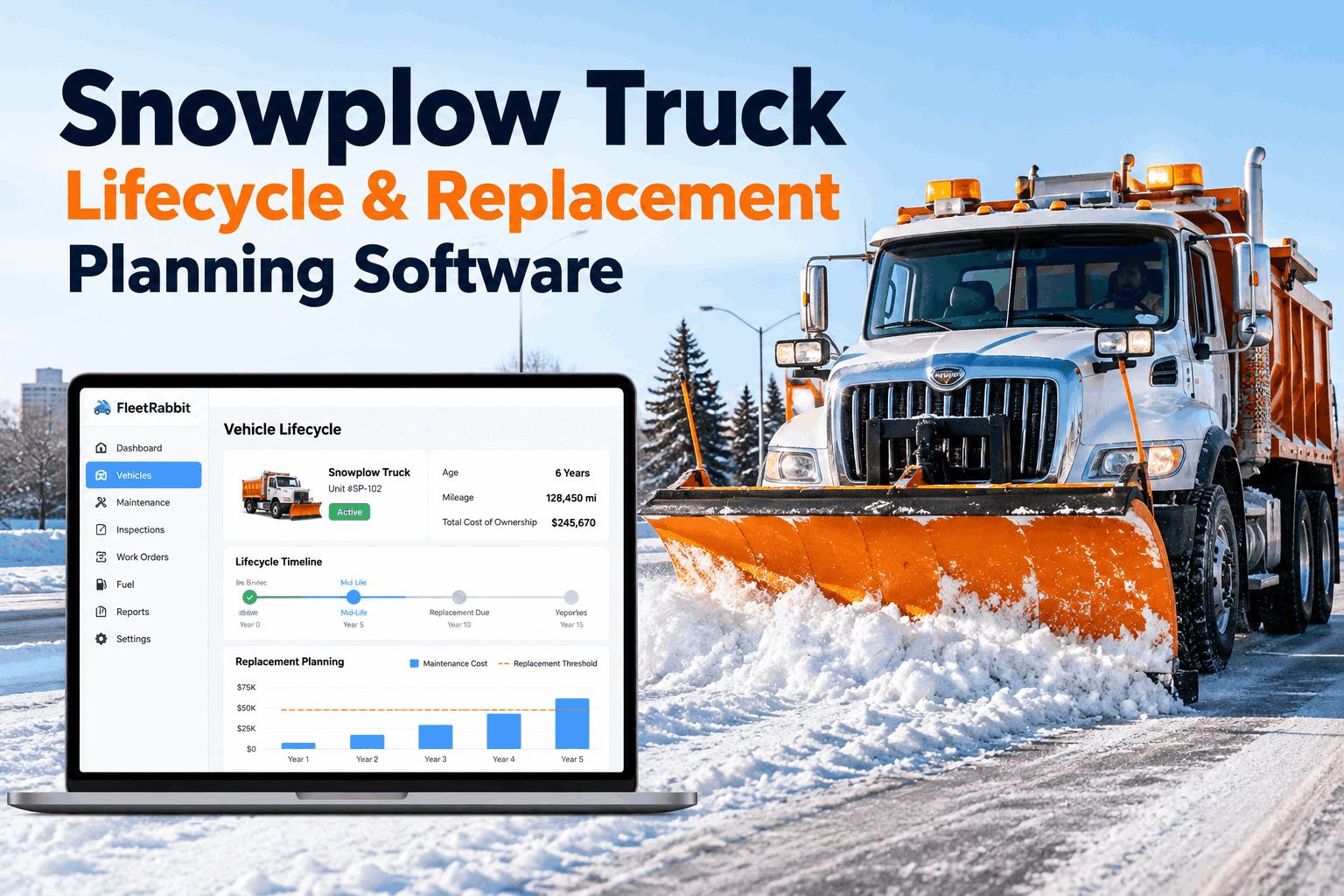
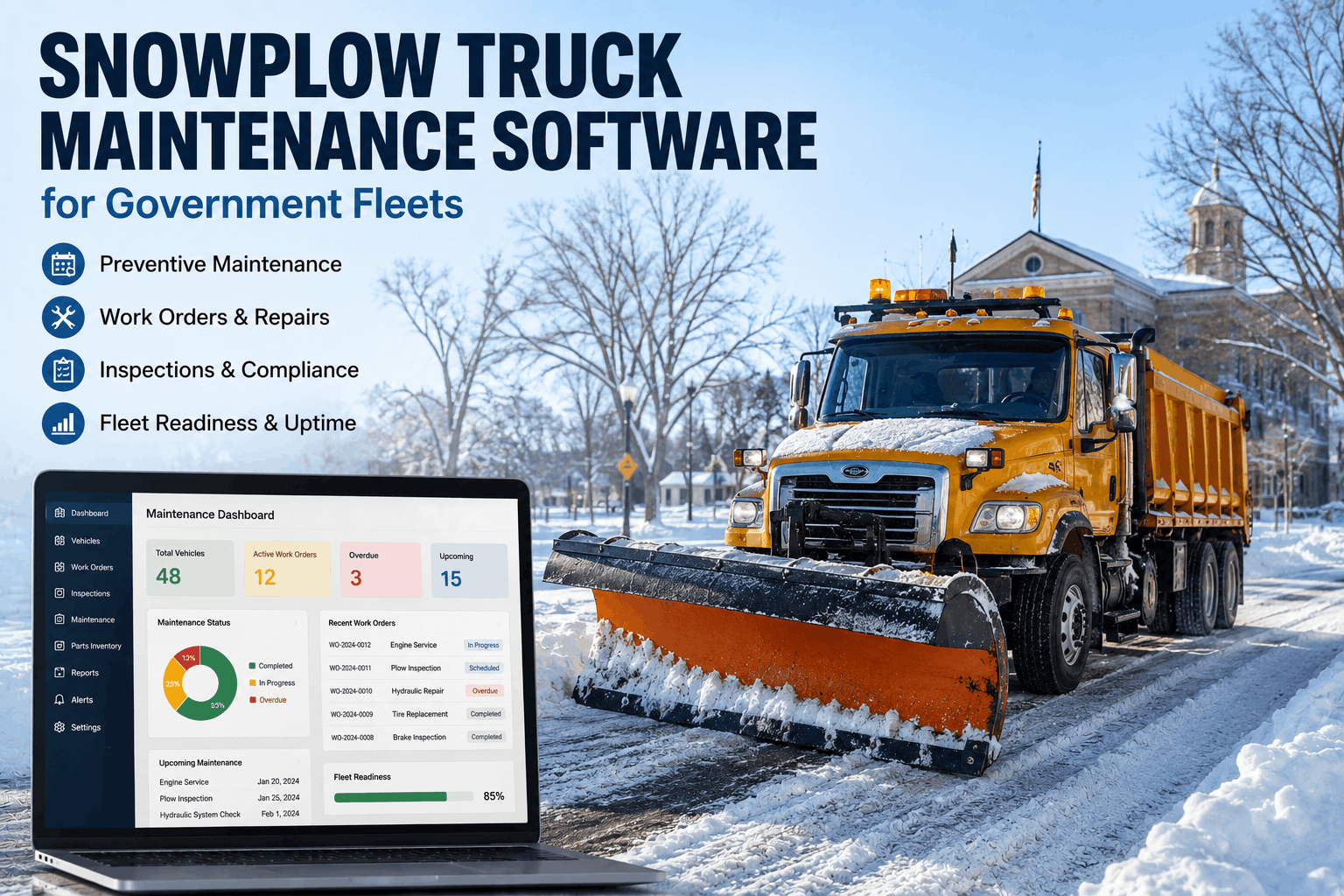
Every truck's engine hours, inspection status, and open work orders are visible from one dashboard across the whole department.
Departments that centralize this data usually notice the same result: an audit or public records request that once took days to prepare for can be answered in minutes. That alone is often enough reason for a fleet manager to book a demo ahead of the next budget cycle review.
A storm-season service cycle, start to finish
Every truck completes a full inspection and any deferred summer maintenance closes out before the first forecasted snowfall.
A quick pre-trip check confirms plow, spreader, and hydraulic status, logged automatically as part of the truck's permanent record.
Engine hours and hydraulic cycles accumulate in real time, feeding directly into the next PM trigger without manual entry.
A full service history for the winter is already compiled and ready for budget review, grant reporting, or a council presentation.
Spreadsheets versus a connected maintenance platform
Spreadsheet-based tracking
Connected maintenance platform
Most departments do not need to convert an entire fleet overnight. A common approach is connecting one plow route's trucks first, watching how the platform performs through a real storm cycle, and expanding department-wide once the record proves itself. Fleet managers who want to see this against their own inspection requirements usually find it faster to just sign up and run a live comparison before the season starts.
Questions to ask before choosing a platform for a public fleet
- Does it track engine and hydraulic hours, not just mileage and calendar dates
- Are inspection checklists structured to match DOT and NFPA standards your agency is reviewed against
- Can audit-ready reports be generated on demand instead of compiled by hand
- Does it separate plow and spreader attachment wear from base chassis service
- Can service scheduling account for storm forecasts and active plow routes
Departments that already answer yes to most of these are ahead of budget season. If your current process still depends on paper logs and a shared spreadsheet, the fastest way to see the gap is to book a demo and walk through your own fleet records live.
Start free with FleetRabbit
Engine-hour PM, NFPA and DOT-ready inspections, and a fleet record that stays audit-ready by default, live in days, not months.
Frequently asked questions
Why does engine-hour tracking matter more than mileage for snowplow trucks
A snowplow truck can run its engine and hydraulics under heavy load for hours during a single storm while covering relatively few miles. Engine-hour tracking captures that real wear, while mileage-based schedules miss it almost entirely.
Are the inspection checklists actually aligned with DOT and NFPA standards
Yes. Pre-trip and post-trip checklists are structured around the categories agencies are commonly reviewed against, so inspection results map directly to what an auditor or DOT reviewer expects to see.
How does this help with a public records request or audit
Every inspection, service record, and engine-hour log is stored automatically and searchable, so a report that once took days to compile by hand can be generated on demand instead.
Can it handle plow and spreader attachments separately from the truck chassis
Yes. Attachment wear, plow blades, spreaders, and hydraulic systems, is tracked as its own service category alongside the base chassis record, not folded into a single generic maintenance line.
How quickly can a department get set up before winter
Most departments are live within days. Trucks connect through existing telematics where available, historical records import in bulk, and checklists are ready to use from day one.
Does this work for a small municipal fleet or only large state departments
The platform scales to fit. A small town running a handful of plow trucks and a state department running hundreds both work from the same core dashboard, sized to the fleet.