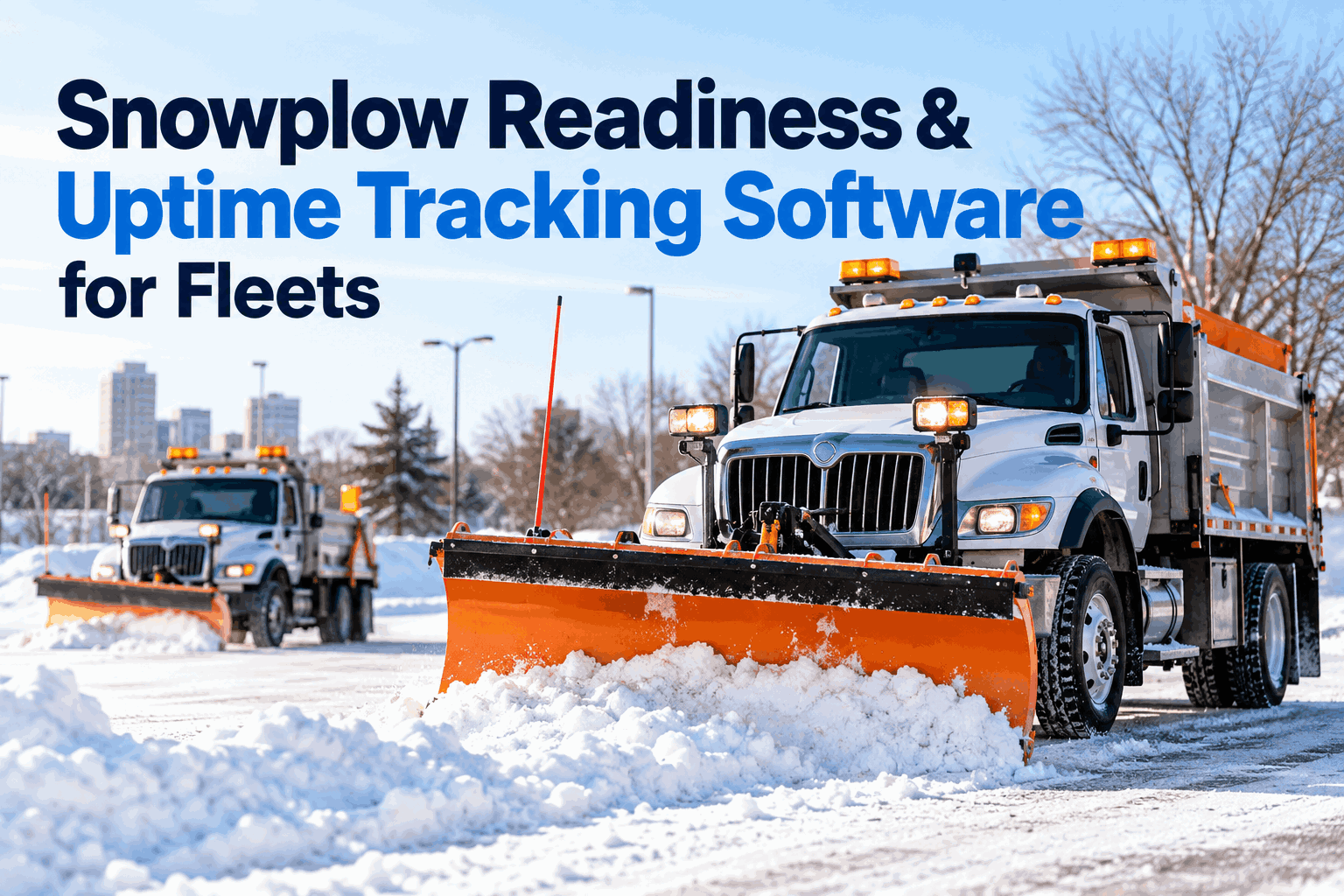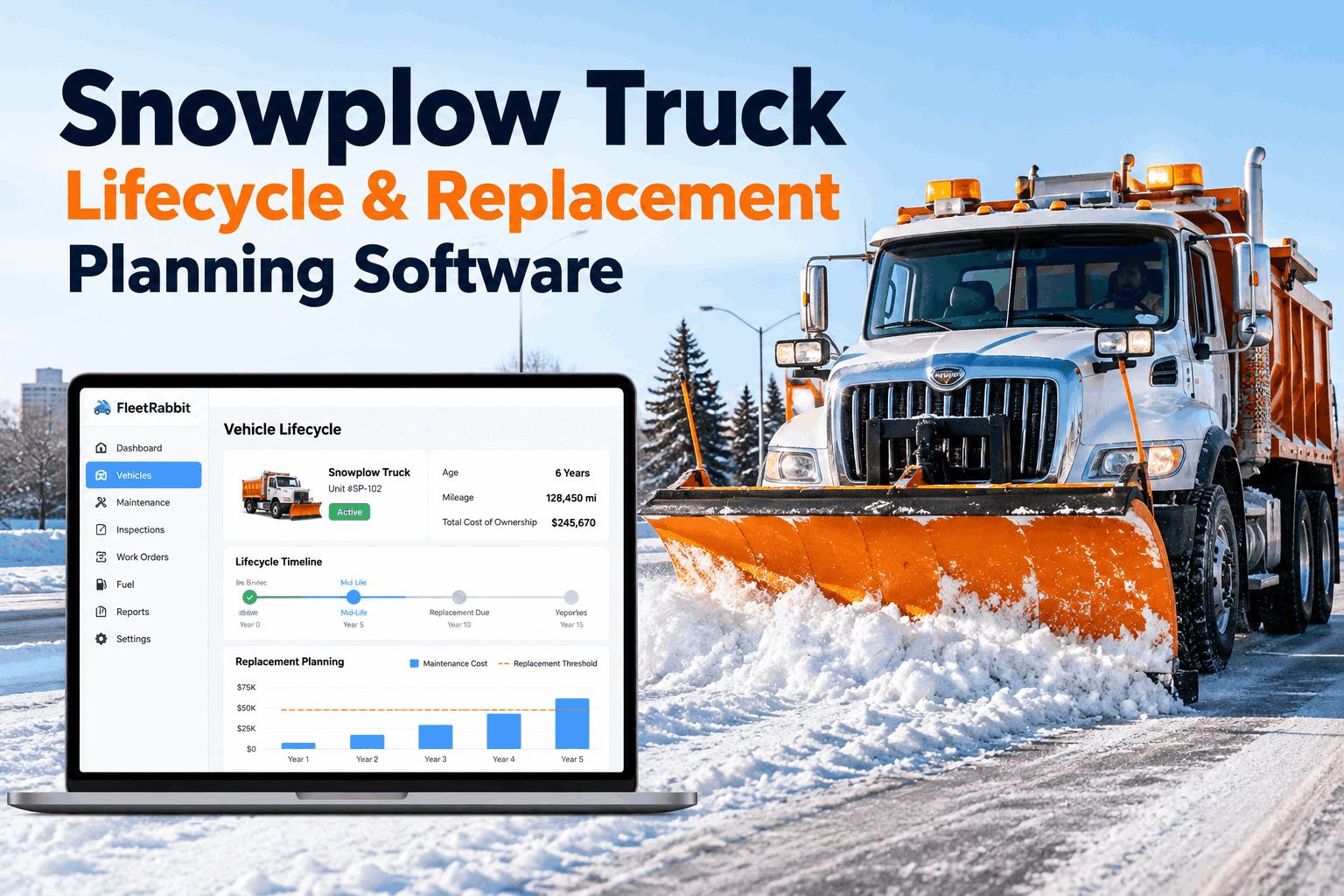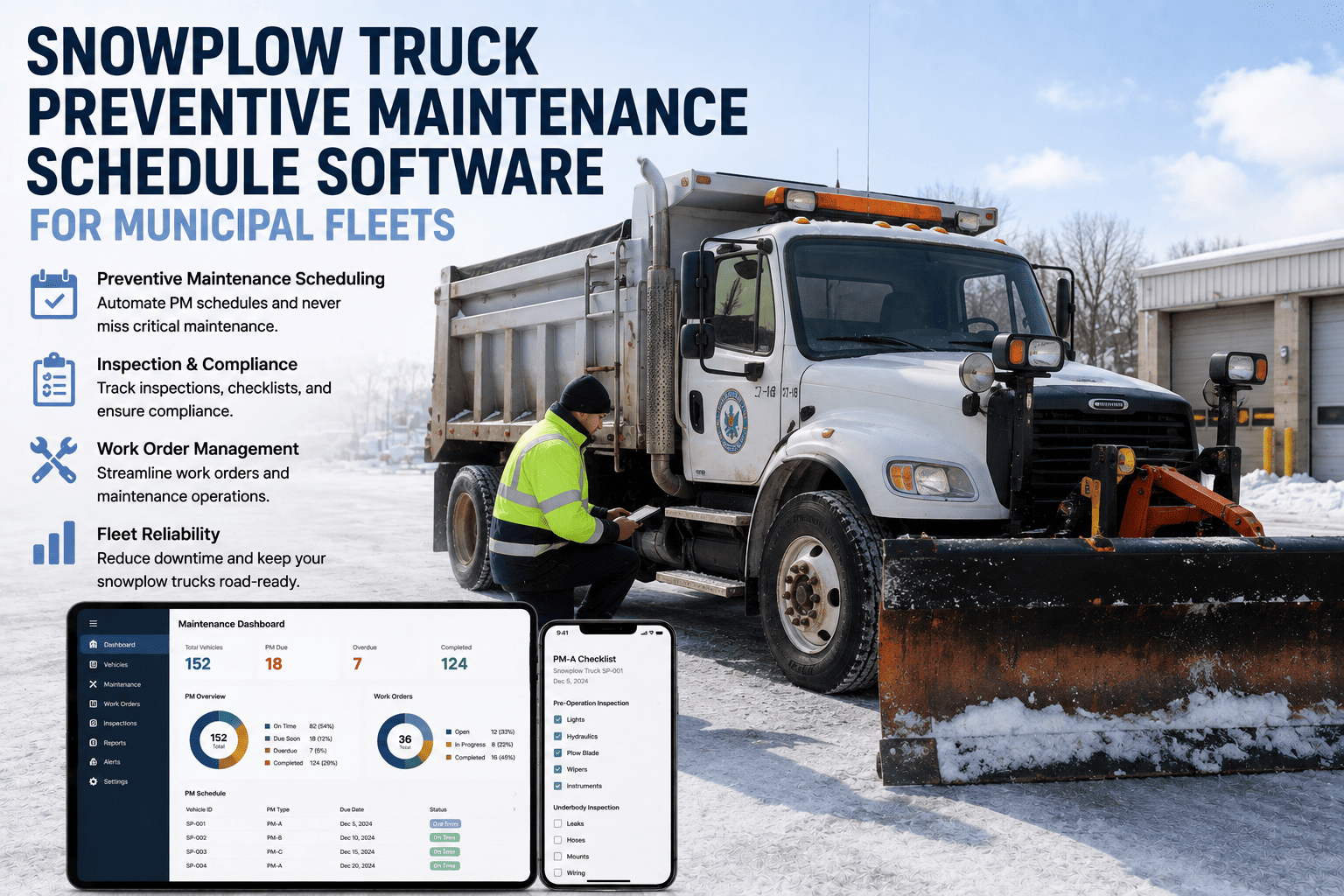
A snowplow truck can sit idle in a yard for eight months and then get asked to run flat out for seventy two hours straight the moment the first real storm hits. That kind of duty cycle breaks the assumptions built into a normal mileage-based maintenance schedule, and it is exactly why public works fleets that rely on odometer intervals alone tend to get caught off guard mid-storm. FleetRabbit builds preventive maintenance scheduling around engine hours, storm-duty logging, and the specific wear points a plow truck actually develops, so the fleet is ready before the first flake falls. Agencies preparing for the next season can sign up and get ahead of it now.
Snow and ice operations do not run on a flat calendar, they run in three distinct phases, and each one asks something different from the maintenance schedule.
Readiness prep
Hydraulic system pressure test, plow mount alignment, spreader calibration, and full lighting check before the first storm.
Storm-duty tracking
Engine-hour logging through every storm run, cutting edge wear checks, and rapid turnaround inspections between deployments.
Teardown and corrosion control
Full salt and brine corrosion inspection, undercarriage wash-down verification, and hydraulic seal review before summer storage.
A schedule that treats all twelve months the same misses the point entirely, the real risk windows are the transition into storm season and the transition out of it. Fleets ready to build a schedule around these three phases can book a demo and see how the seasonal logic works.
A plow truck can rack up dozens of idle hours running its hydraulics and spreader during a single storm while barely moving the odometer, which is why engine hours are usually the more honest measure of wear.
Engine hours
Captures idle time, hydraulic load, and PTO run time that mileage never sees during a storm shift.
Mileage alone
Looks light on paper even after a truck has run its engine and hydraulics hard for three full days.
Relying on mileage alone during storm season is how a truck slips past its actual service point without tripping any alert. FleetRabbit tracks both and lets whichever threshold hits first trigger the next PM interval, so nothing rides past its real wear point.
Build a plow truck schedule around real wear, not just miles
Engine-hour PM triggers, storm-duty logging, and seasonal readiness checks in one system.
A few components carry almost all of the wear risk on a snowplow truck, and each one needs its own dedicated check rather than sitting inside a generic inspection form.
Cutting edge and blade
Direct contact wear that changes fast during heavy storm cycles and needs frequent measurement, not annual review.
Hydraulic lift and angle cylinders
Constant plow raising, lowering, and angling puts repeated cyclic stress on seals and hoses through a storm run.
Spreader and auger system
Salt and brine exposure combined with mechanical cycling accelerates wear on augers, chains, and spinner motors.
Undercarriage and frame corrosion
Road salt is one of the fastest ways to shorten a chassis lifespan if wash-down and inspection are skipped after storms.
Lighting and visibility systems
Beacon lights, plow markers, and headlights matter more on a snowplow than almost any other municipal vehicle, since most runs happen in low visibility.
Tracking these five points separately from a general PM checklist is what keeps a fleet from discovering a worn cutting edge mid-storm. Public works teams ready to build this into their schedule can sign up and start tracking it today.
Municipal plow fleets still answer to the same DOT annual inspection requirements as any other government vehicle, and many agencies pair that with the same disciplined safety-inspection rigor NFPA frameworks bring to emergency and public works equipment.
| Requirement | What it covers for a plow truck |
|---|---|
| DOT annual inspection | Brakes, steering, lighting, and structural condition on a fixed yearly cycle |
| Storm-duty hour logs | Engine and hydraulic run time captured for every deployment |
| Pre-season readiness sign-off | Documented confirmation the truck passed its full readiness check before season |
| Post-season corrosion review | Recorded inspection of frame and undercarriage condition after storm season ends |
Compiling this manually across a whole fleet at the end of each season eats up weeks that public works crews rarely have to spare. Teams that want to see this compiled automatically can book a demo and walk through it with our team.
| Task | Manual process | FleetRabbit |
|---|---|---|
| PM scheduling trigger | Mileage only, often missing storm wear | Engine hours and mileage, whichever hits first |
| Seasonal readiness tracking | Handled informally each fall and spring | Built-in pre-season, in-season, post-season phases |
| Cutting edge and blade wear | Checked when someone remembers | Tracked as its own recurring interval |
| DOT and inspection records | Compiled manually at season end | Continuously structured and export-ready |
Get the fleet storm-ready before the first snowfall
Seasonal phases, engine-hour triggers, and full inspection records in one place.
Frequently asked questions
Why do engine hours matter more than mileage for a snowplow truck
A plow truck spends much of a storm idling, running hydraulics, and cycling the spreader without covering many miles, so engine hours capture the actual wear far more accurately than the odometer alone.
What is the biggest risk during the post-season teardown
Skipping the corrosion inspection is the most common miss, since road salt continues attacking the frame and undercarriage even after storm season ends if the truck is not properly washed down and checked.
How often should the cutting edge be checked during storm season
It should be measured on a recurring interval tied to storm activity rather than a fixed calendar date, since heavy back-to-back storms wear the blade far faster than a light season.
Do snowplow trucks still need a standard DOT annual inspection
Yes, municipal plow trucks are subject to the same DOT annual inspection requirements covering brakes, steering, lighting, and structural condition as other government fleet vehicles.
Can a mixed fleet of plow trucks and other public works vehicles use the same system
Yes, engine-hour and mileage triggers, seasonal phases, and DOT inspection tracking can all run side by side for different vehicle types within the same fleet.