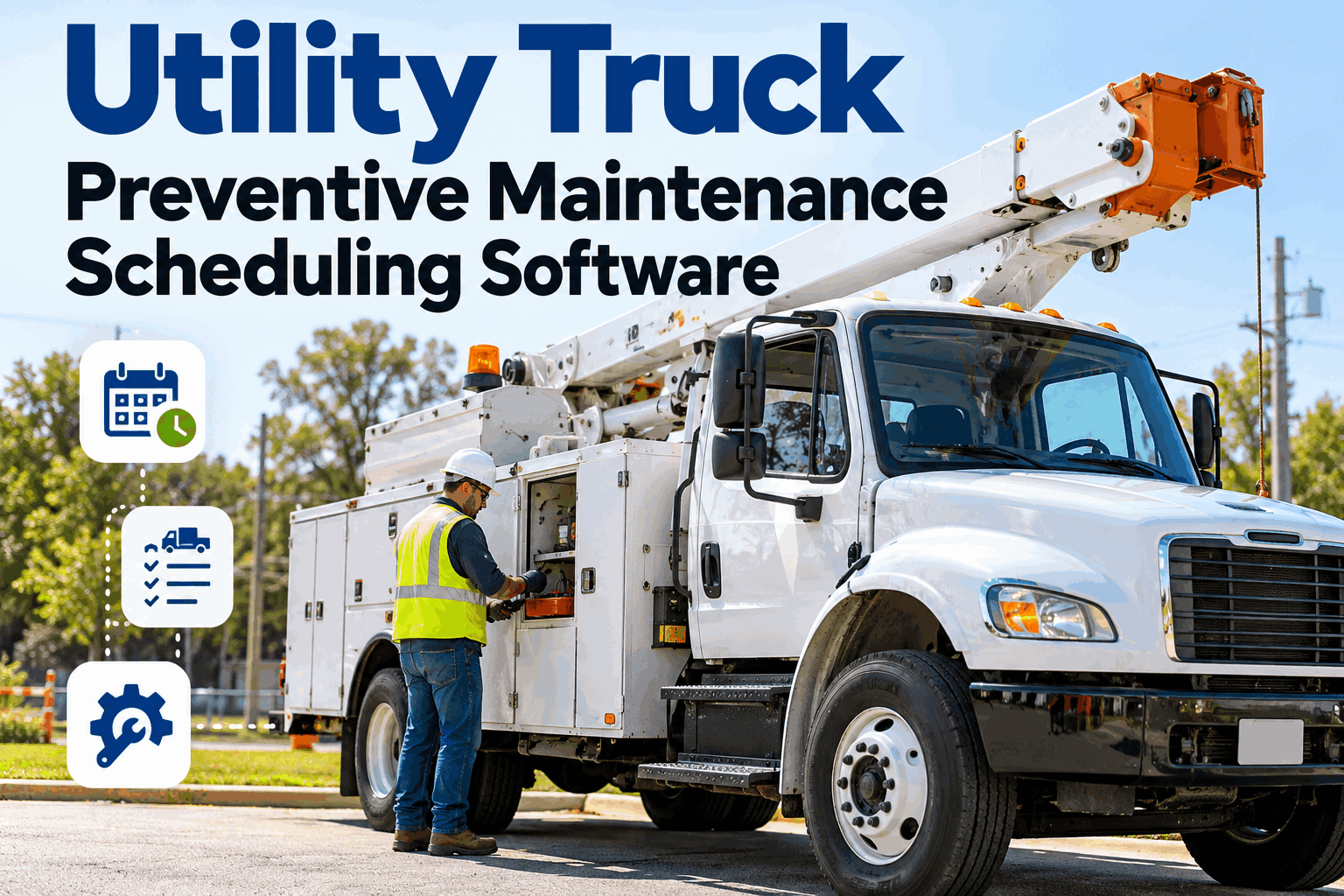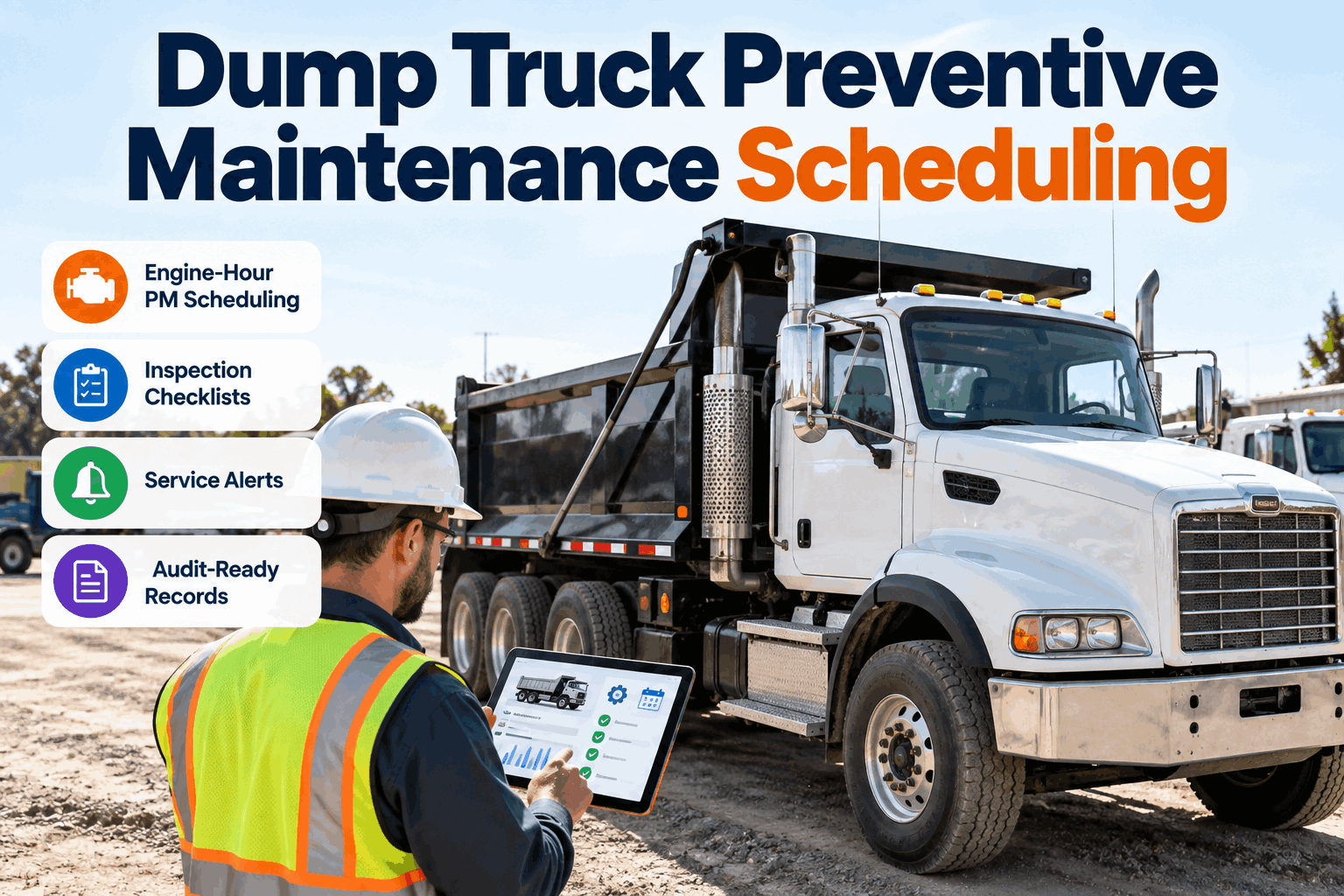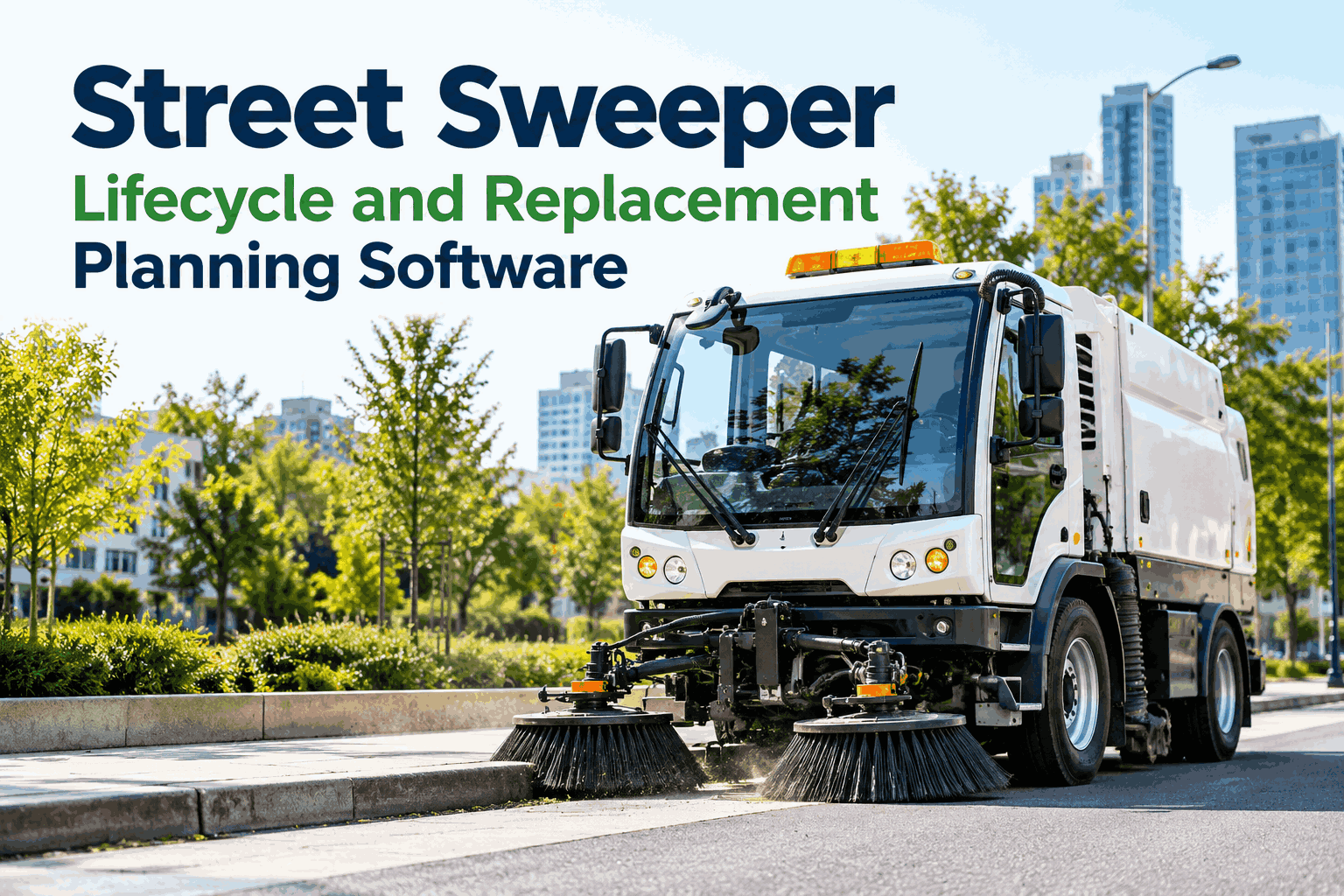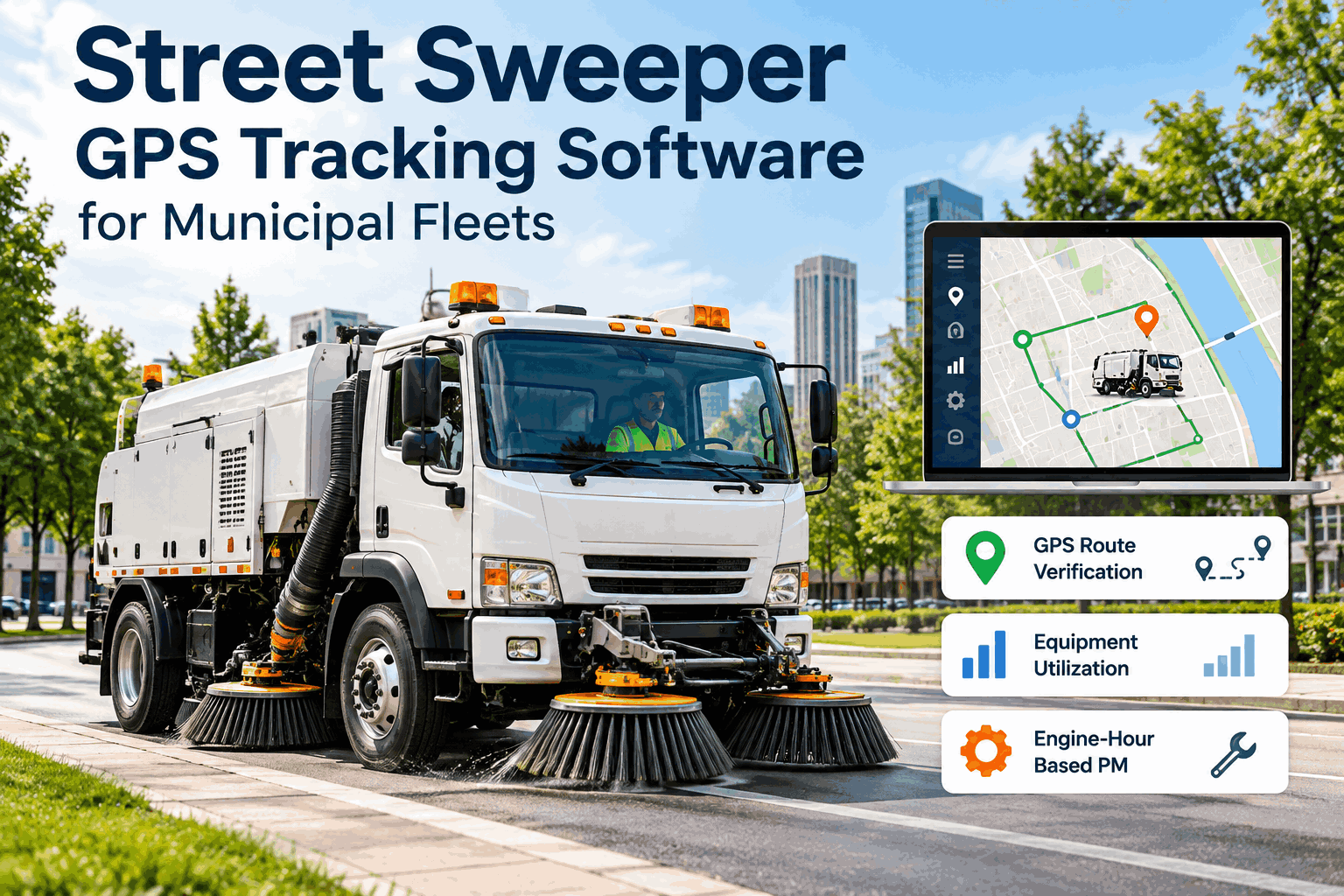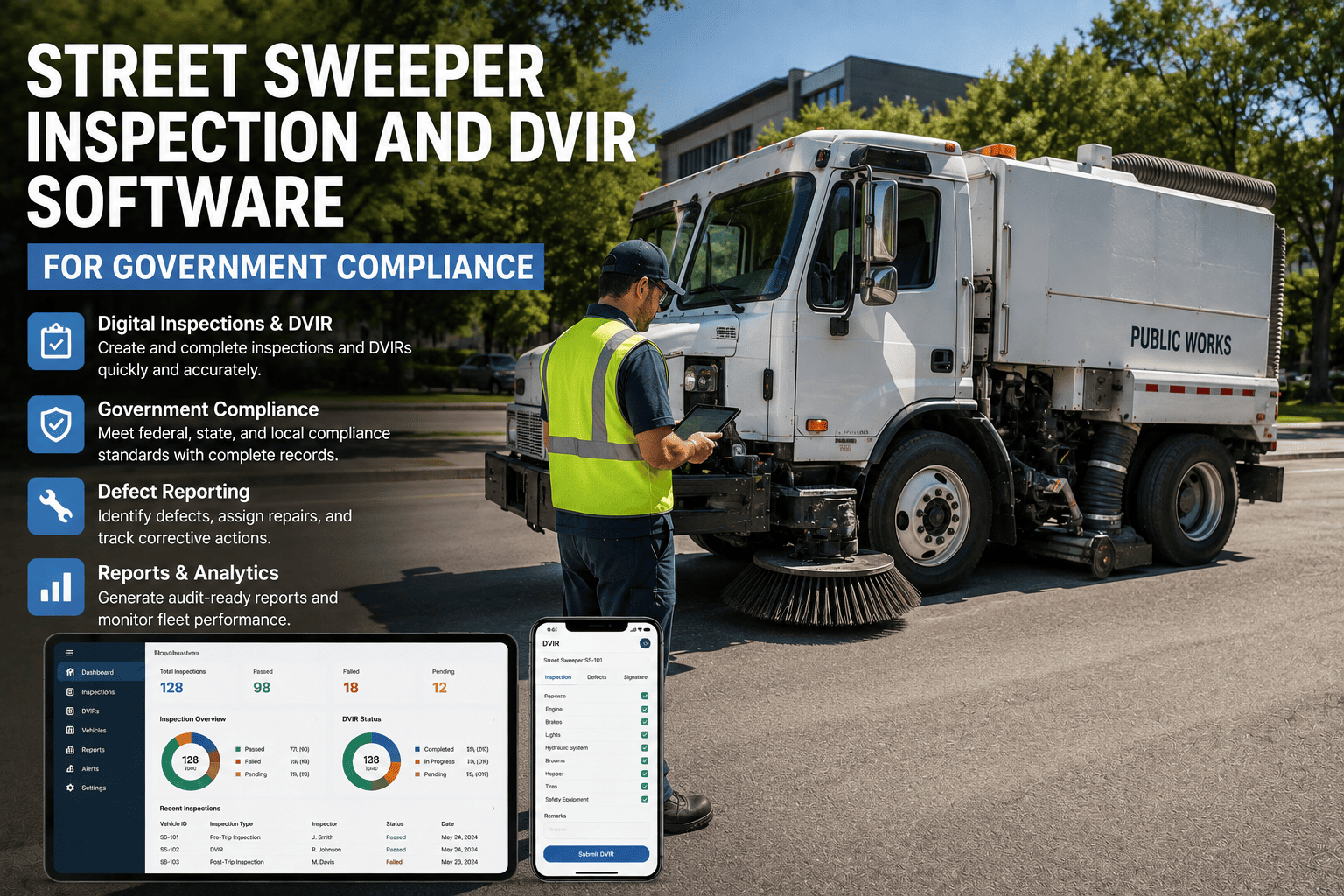
A street sweeper looks simple from the curb, just a truck brushing debris into a hopper, but underneath that routine pass sits a machine with rotating brooms, a pressurized water system, a hydraulic lift, and a debris tank that all need to be confirmed safe before it ever leaves the yard. For a government fleet, that daily confirmation is not optional paperwork, it is the Driver Vehicle Inspection Report that proves the equipment was checked and safe to operate. FleetRabbit turns that daily DVIR process into a structured digital record built specifically around street sweeper components, so public works departments stay audit-ready without a scramble every time a records request comes in. Departments ready to see it can sign up and load their sweeper fleet today.
A proper pre-operation check on a street sweeper moves through five distinct systems, each with its own failure pattern and none of them optional to skip.
Broom and gutter system
Bristle wear, rotation speed, and mounting bracket condition on the main broom and side gutter brooms.
Hopper and debris tank
Door seal condition, dump cylinder function, and confirmation the tank is free of buildup that limits capacity.
Water spray and dust control
Nozzle clogging, tank fill level, and pump pressure needed to keep dust suppressed during operation.
Hydraulic system
Hose condition, fluid level, and leak checks around the broom lift and hopper dump cylinders.
Chassis and DOT items
Brakes, lighting, tires, and mirrors, the same baseline items required on any government fleet vehicle.
Skipping straight to the chassis check and treating the broom, hopper, and water systems as an afterthought is how a clogged nozzle or a worn broom bracket makes it out onto a route. FleetRabbit walks the operator through all five systems in order every time, so nothing gets shortcut on a busy morning.
A DVIR is only useful if what happens after the inspection is just as consistent as the inspection itself. That means a clear path from the check to a record that can survive an audit.
Operator completes the five-system inspection before pull-out
Any defect found is flagged and routed to a supervisor immediately
Repair is certified before the sweeper returns to active duty
Full record is archived and instantly retrievable for review
This is the exact chain a records request or state audit is looking for, and it is also the chain that falls apart fastest when it depends on paper forms filed in a drawer. Departments that want that chain built automatically can book a demo and see the full trail in action.
Make every sweeper inspection audit-ready by default
Five-system checklist, automatic defect routing, and a searchable DVIR record for the whole fleet.
Government compliance reviews tend to ask the same handful of questions about inspection records, and each one is much easier to answer when the data is structured from the start.
| What auditors ask for | What it requires from the fleet |
|---|---|
| Proof of daily inspection | A timestamped DVIR for every sweeper, every shift |
| Defect resolution history | A record connecting each flagged issue to its repair sign-off |
| Retention of past records | Historical DVIRs kept and searchable, not archived in a drawer |
| Consistent inspection scope | The same checklist items covered by every operator, every time |
Meeting all four of these with paper logs generally means someone spending days pulling files before an audit response is due. Departments preparing for their next review can sign up and have that record ready before it is even requested.
| Task | Manual process | FleetRabbit |
|---|---|---|
| Pre-operation checklist | Paper form, scope varies by operator | Guided five-system digital checklist |
| Defect flagging | Reported verbally or written after the fact | Logged and routed the moment it is found |
| DVIR record retention | Filed by date, slow to search | Searchable by vehicle, operator, or date |
| Audit response time | Days spent gathering paperwork | Records exportable in minutes |
Departments that want to see this comparison run against their own sweeper roster can book a demo and bring their records team along.
Stop rebuilding inspection records under audit pressure
Keep every street sweeper DVIR structured, searchable, and ready before anyone asks.
Frequently asked questions
What systems should a street sweeper DVIR cover
A thorough inspection covers the broom and gutter system, the hopper and debris tank, the water spray and dust control system, the hydraulic system, and standard chassis and DOT items like brakes and lighting.
What happens after a defect is flagged during inspection
It should route immediately to a supervisor, get addressed before the sweeper returns to active duty, and have the repair certified and recorded before the vehicle goes back into service.
How long should DVIR records be retained
Retention periods vary by jurisdiction and department policy, but records generally need to be kept and searchable for a defined period so they are available whenever a compliance review requests them.
Why does DVIR record retrieval matter so much for government fleets
Public sector fleets are frequently subject to records requests and compliance audits, and a slow or incomplete response can create far more scrutiny than the original inspection question ever would.
Can this work alongside a separate PM scheduling system
Yes, daily DVIR checks and longer-interval preventive maintenance scheduling are meant to work together, with defect patterns from daily inspections able to inform when a deeper PM service gets pulled forward.