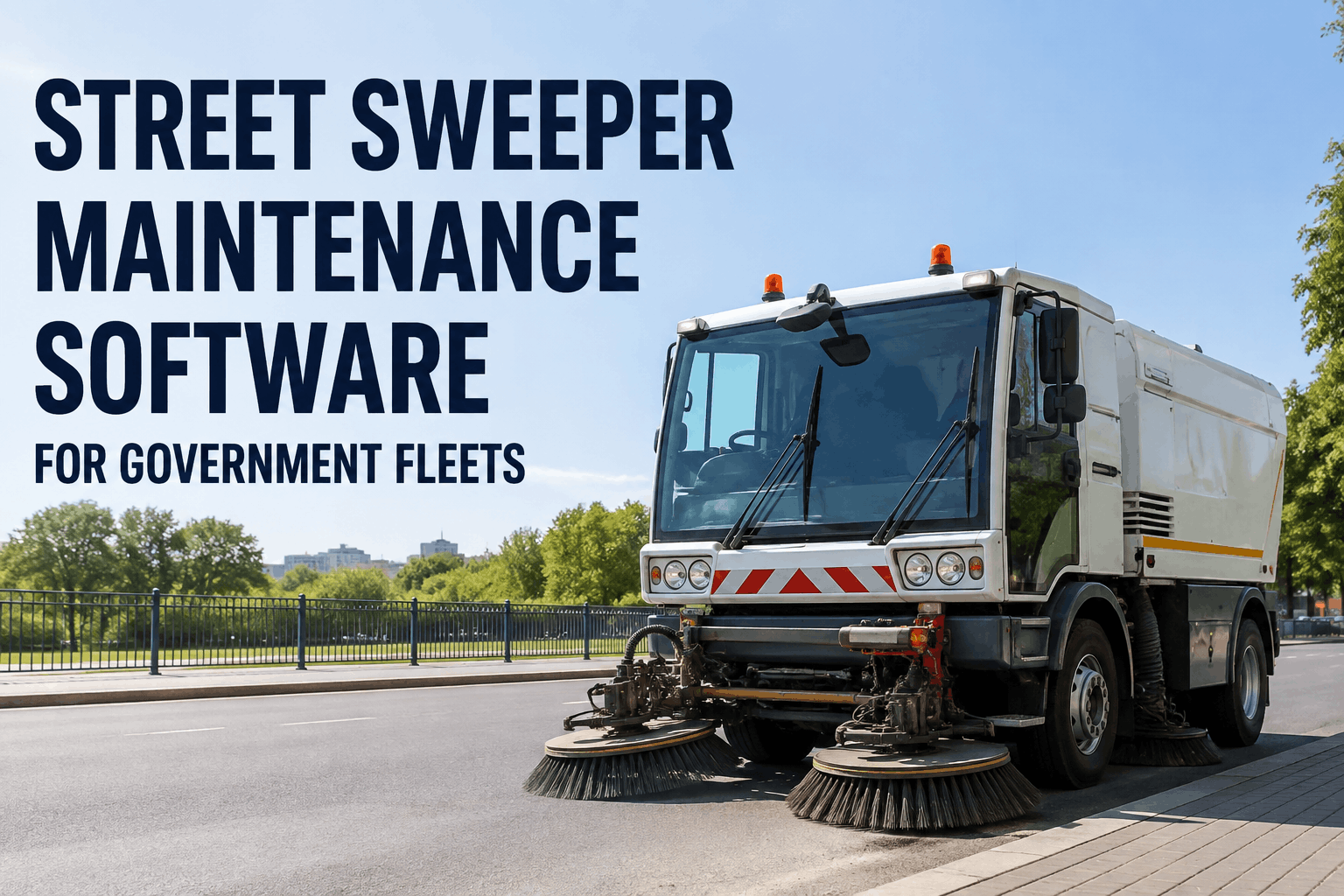
Bristle length and alignment wear daily against curbs, gravel, and wet debris.
A street sweeper does four jobs at once: it grinds a broom against pavement, sprays water to knock down dust, pulls debris into a hopper, and runs the whole thing off a hydraulic system that never gets a break. Any one of those can fail on a Tuesday and take a sweeping route offline with it. Street sweeper maintenance software exists to keep those four systems visible in one place, keep the maintenance record council-ready, and keep engine-hour PM ahead of wear that mileage alone will never show.
Fills faster as brushes wear, and cakes if it isn't emptied and rinsed on schedule.
Powers brush rotation, hopper lift, and dump cycle. Pressure loss shows up everywhere at once.
Spray tips and filters keep fine particulate down. A clogged line turns a route into a dust cloud.
Daily
Recommended hopper and tank emptying cycle to prevent caking and corrosion
4
Interlocking systems a single sweeper depends on to stay in service
Annual
Reporting cycle most MS4 stormwater permits require for sweeping records
One sweeping pass, four ways to lose the route
1
Brush drops and makes contact with the road surface
2
Water system wets the path ahead to hold dust down
3
Debris conveys into the hopper under hydraulic power
4
Hopper dumps, and the whole cycle repeats within minutes
A dump truck wears down over months of miles. A sweeper runs this exact cycle dozens of times a shift, which is why fleet software built for over-the-road trucks tends to miss what's actually breaking. Agencies that sign up for sweeper-specific tracking catch brush and hydraulic wear before it becomes a route going dark.
The paperwork nobody expects
Your stormwater permit runs on sweeping logs
Most municipalities operate under an MS4 permit issued under the Clean Water Act, and street sweeping is one of the accepted practices for keeping pollutants out of storm drains. That means your sweeping schedule isn't just a public works task, it's part of the evidence an annual stormwater report has to show a regulator.
When sweeping records live in a spreadsheet separate from vehicle maintenance logs, agencies end up defending two systems instead of one. A platform where every completed route and every inspection sits in the same record makes that annual filing a export instead of a reconstruction project. It's worth a book a demo if your last stormwater audit took longer than it should have.
What an MS4 report typically asks for
- Route coverage and sweeping frequency by street segment
- Debris volume or weight collected per cycle
- Equipment downtime that affected scheduled coverage
- Maintenance records proving the fleet was fit to run
Turn your sweeping fleet into one audit-ready record
See how DOT-ready inspections, engine-hour PM, and MS4-ready sweeping logs run from the same dashboard.
Engine hours tell a different story than the odometer
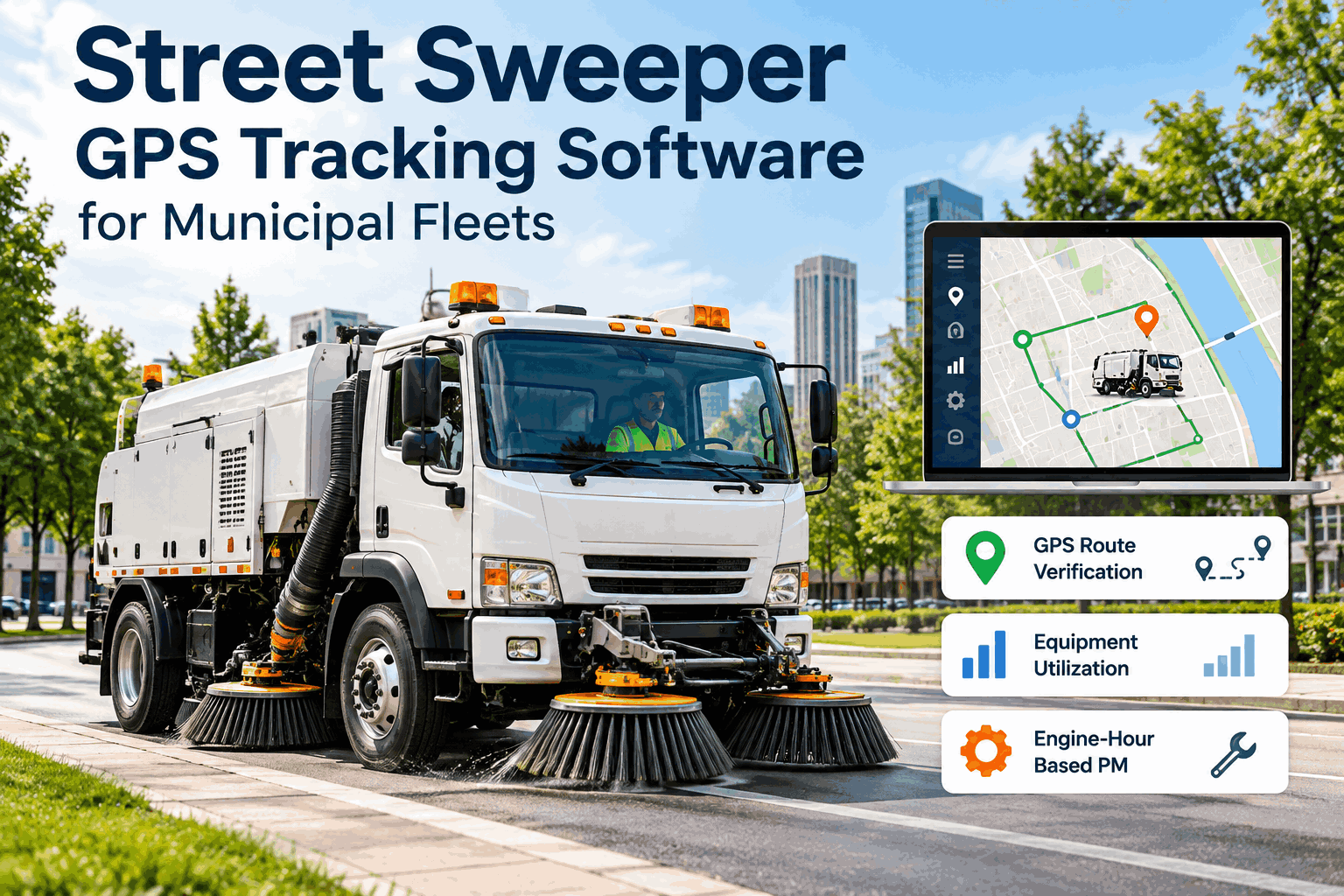
A sweeper can run its engine, hydraulics, and water pump for hours while covering only a handful of miles on a slow residential route. Software that schedules PM off mileage alone will let that engine run well past its real service point. Engine-hour tracking closes that gap by triggering maintenance off actual runtime.
| Signal | What it actually measures |
|---|---|
| Odometer miles | Distance traveled, regardless of how long the brush and pump ran |
| Engine hours | Real runtime on the engine, hydraulics, and water system combined |
Agencies that sign up and switch scheduling logic over to engine hours typically catch hydraulic wear a full service interval earlier than a mileage-only schedule would.
Know a part is wearing before it fails on route
Main brush bristles
Gutter broom wire
Water spray filter
Hydraulic filter
Illustrative wear tracking, not live fleet data
Sweeping routes don't wait for a signal
Sweeper routes run early mornings through depots, industrial corridors, and underpasses where cell coverage is inconsistent at best. Inspection software that depends on a live connection loses the exact data an auditor will ask for later. FleetRabbit's inspection and maintenance forms complete on the device and sync once a signal is back, so a dead zone never means a missing DVIR.
One system for every system on the truck
Component-level inspections
Checklists broken out by broom, hopper, hydraulics, and water system, not one generic vehicle form.
Engine-hour PM scheduling
Preventive maintenance triggers off runtime, catching wear a mileage-based schedule would miss.
MS4-ready sweeping logs
Route coverage and debris records exportable in the format your stormwater annual report needs.
Offline-first inspections
Forms complete without signal and sync automatically once the unit is back in range.
Defect and downtime alerts
Fleet managers see a flagged sweeper the moment it's reported, not at end of shift.
Council-ready reporting
One export covers fleet condition, coverage, and compliance for budget and council review.
The sweeper that loses suction halfway through a route
A gutter broom wears unevenly for two weeks before anyone notices, and by the time it's flagged, half a district's curb lines are behind schedule. With component-level tracking, that same wear shows up as a declining trend well before the broom fails outright, and the work order is already open by the time a technician looks at the truck. Agencies running this way describe fewer emergency pulls from route and fewer gaps in the coverage map they eventually have to explain. If your crews are still catching wear by ear, a short book a demo session will show what that trend line looks like on your own fleet.
Council-ready by default, not by scramble
Set up your first sweeper in FleetRabbit and see engine-hour PM, component wear, and compliance records generate themselves from day one.
Street sweeper maintenance software, answered plainly
Why do sweepers need different tracking than a standard fleet truck
A sweeper's wear comes from the broom, hopper, hydraulics, and water system cycling constantly, not from mileage. Software built for over-the-road trucks tracks the wrong signal for this kind of equipment.
How does sweeping data connect to stormwater compliance
Most MS4 permits accept street sweeping as a pollutant-reduction practice, so route coverage and debris records become part of the annual stormwater report a regulator reviews.
What happens if an inspection is completed with no signal
The form saves on the device and syncs automatically once connectivity returns, so a dead zone on a route never results in a missing inspection record.
Does engine-hour tracking replace mileage-based service intervals
It supplements them. Mileage still matters for tires and chassis wear, but engine, hydraulic, and pump service intervals are set more accurately by runtime.
Can this fleet software cover other municipal vehicles too
Yes. The same inspection and PM framework applies across public works, sanitation, and other specialty municipal vehicles, not just sweepers.
How fast can a sweeper fleet get set up
Most agencies start with one or two units to compare the digital record against their current process before rolling out fleet-wide. A demo is the fastest way to see a timeline for your fleet size.
August 24, 2026
By Edward
All Posts