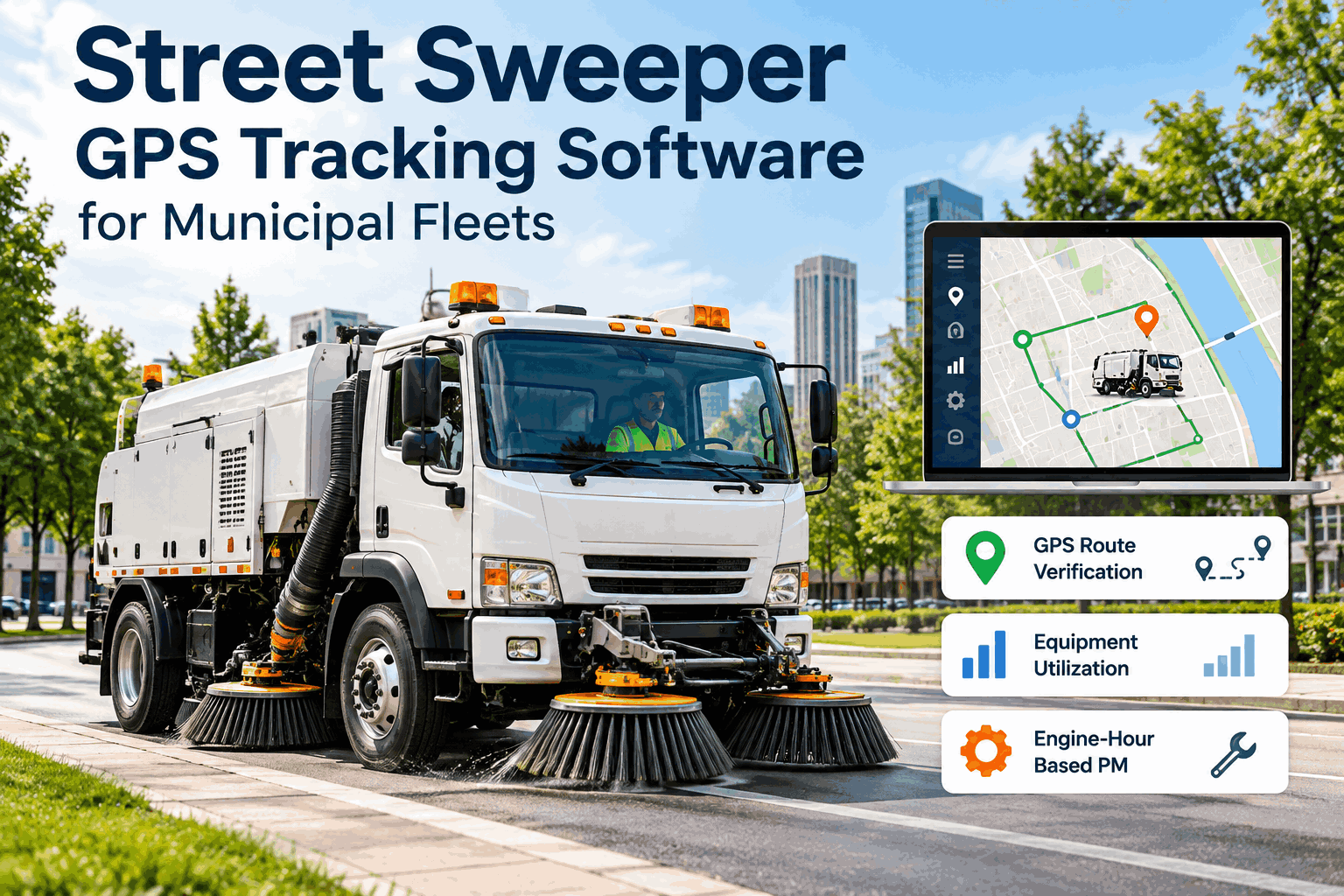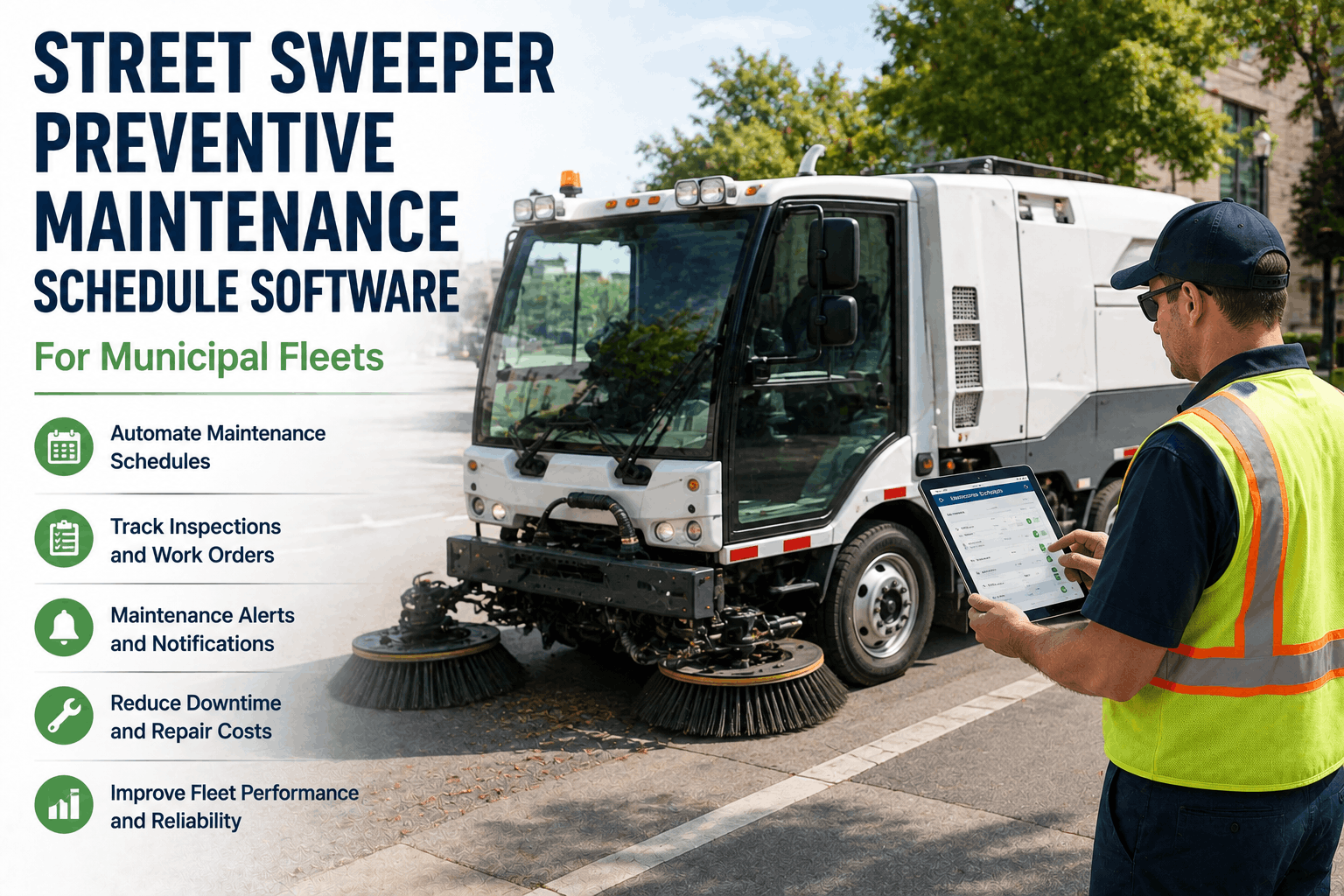
Street sweepers do not fail the way ordinary trucks fail. A sweeper can rack up three hundred hours of engine load while barely covering forty miles, because the broom motor, the vacuum fan, and the water spray system are all drawing power the entire time the unit is on a route. Public works departments that schedule preventive maintenance off odometer mileage alone are almost always scheduling it wrong, and the result shows up as mid-shift breakdowns, failed DOT inspections, and council budget meetings nobody wants to sit through. This guide walks through what an engine-hour-based PM schedule actually looks like for a municipal sweeper fleet, why dual-engine units need two separate maintenance clocks, and how FleetRabbit keeps every inspection, hour reading, and compliance record council-ready without a spreadsheet in sight.
Two engines, two maintenance clocks
Most gutter broom and regenerative air sweepers run on a dual-engine layout: a chassis engine that moves the truck down the street, and an auxiliary engine that powers the broom head, blower, dust suppression fan, and water pump. Departments that log a single PM date for the whole unit are guessing about at least one of those two engines, and it is almost always the auxiliary engine that gets neglected because it never shows up on a mileage report. Getting a department's fleet onto separate engine-hour tracking is one of the fastest wins a supervisor can bring to a book a demo conversation, because it is the single change that stops mid-route breakdowns before they start.
Drive and transport engine
Runs at variable load depending on route speed and idle time between stops. PM intervals typically follow the OEM's on-road schedule, but idle time during sweeping still needs to count toward the hour total, not just road miles.
- Oil and filter change on standard on-road hour or mileage bands
- DOT annual inspection plus daily driver vehicle inspection reports
- Brake, tire, and steering checks tied to on-road duty
Broom, blower, and fan engine
Runs at near-constant high load for the entire route, which is why its oil, filter, and belt intervals need to be roughly half the chassis engine's cycle. This is the engine most likely to be running when the unit is technically parked.
- Shorter oil change interval driven by continuous high-load hours
- Hydraulic fluid and filter checks for broom and hopper actuation
- Air filter checks doubled up due to dust and debris exposure
Stop guessing which engine is due
FleetRabbit logs chassis and auxiliary engine hours as two separate clocks on the same unit, so PM tasks fire on the schedule that actually matches the wear each engine is taking on.
Sweeping duty changes with the season
A sweeper that logs a light 60 hours in a calm summer month can log 200 or more during peak leaf drop, and a schedule built for one season will be wrong for the next. Departments that sign up for hour-based tracking see the seasonal spikes coming instead of finding out about them when a unit stalls on route.
Post-winter debris, gravel, and pothole material push broom bristle wear up fast. Inspect gutter broom pattern and hopper seals early in the season.
Construction dust and dry debris increase filter loading and water spray demand. Check nozzle clogging and dust suppression fan output weekly.
Leaf season is the heaviest engine-hour period of the year for most departments. Auxiliary engine oil intervals should be checked against hours, not the calendar.
Sand and salt residue accelerate corrosion on hoppers, frames, and electrical connectors. Add undercarriage rinse and electrical inspection to every PM stop.
Where street sweepers actually wear out
Sweeper failures rarely start at the engine. They start at the components taking direct contact with debris, water, and vibration on every single route, which is why a PM checklist needs to look past the engine bay.
Built for the inspections that actually get checked
Municipal sweeper fleets answer to more than one standard at once, and a PM record that only covers half of them will not hold up when a unit is pulled for review.
DOT-ready records
Daily driver vehicle inspection reports, annual DOT inspections, and defect resolution history logged against the specific unit and date, ready to hand over on request.
NFPA 70B alignment
Electrical system maintenance intervals for lighting, control panels, and wiring harnesses tracked alongside mechanical PM so electrical failure risk does not fall through the cracks.
Council-ready reporting
Exportable PM and cost history by unit, department, or budget period, built for the kind of review a public works director gets asked for without warning.
Spreadsheet tracking vs FleetRabbit
| Task | Manual tracking | FleetRabbit |
|---|---|---|
| Chassis vs auxiliary engine hours | Tracked separately by hand, if at all | Two automatic hour clocks per unit |
| Seasonal PM adjustment | Reset manually each quarter | Interval alerts scale with logged hours automatically |
| DOT inspection records | Paper files or scattered folders | Centralized, searchable, unit-linked history |
| Council reporting | Built the night before the meeting | One export, always current |
| Offline field use | Not available on sweeping routes | Works offline, syncs back at the yard |
Give your sweeper fleet a schedule it can actually keep
Whether your department runs two units or twenty, FleetRabbit builds the PM schedule around real engine hours and real seasonal load, not a generic mileage chart.
Common questions
How often should the auxiliary engine be serviced compared to the chassis engine.
The auxiliary engine typically needs oil and filter changes at roughly half the hour interval of the chassis engine because it runs at continuous high load during every sweeping route, while the chassis engine load varies with driving conditions.
Why does mileage-based scheduling fail for street sweepers.
A sweeper can run both engines for hours while covering very few miles at low route speed, so a schedule built around odometer readings will consistently underestimate wear on the auxiliary engine, the broom system, and the hydraulic components.
What does NFPA 70B alignment mean for a sweeper fleet.
It means electrical components such as wiring harnesses, control panels, and lighting are inspected on a defined maintenance interval rather than only when something fails, which reduces electrical downtime and supports a stronger compliance record.
Can FleetRabbit handle seasonal changes in sweeping hours automatically.
Yes. Because PM triggers are tied to logged engine hours rather than fixed calendar dates, heavier seasons such as fall leaf pickup naturally pull maintenance forward without a supervisor needing to manually adjust the schedule.
Is FleetRabbit usable by crews working out on sweeping routes with no signal.
Yes. Inspections and hour logs can be recorded offline in the field and will sync automatically once the unit is back in range or returns to the yard.