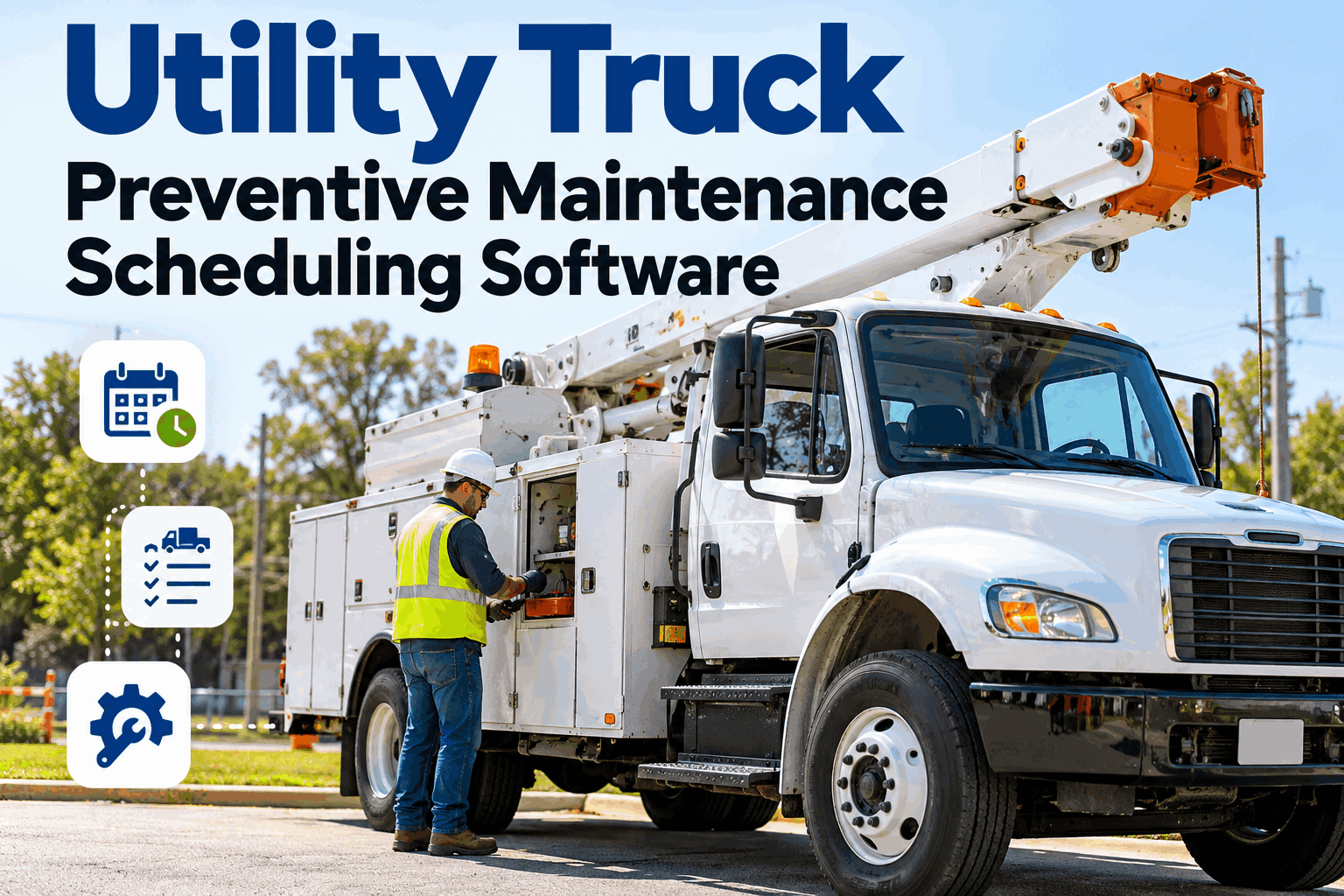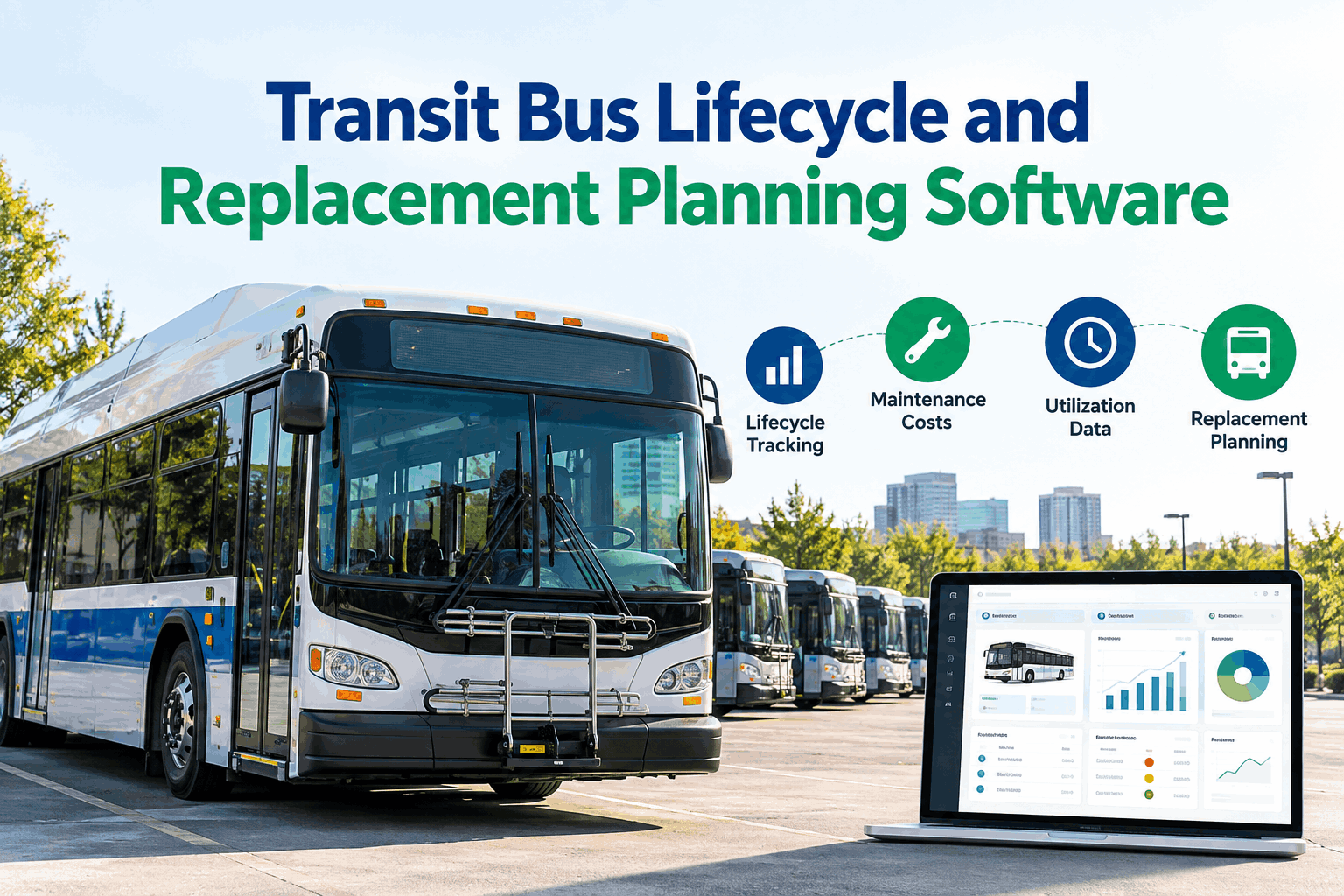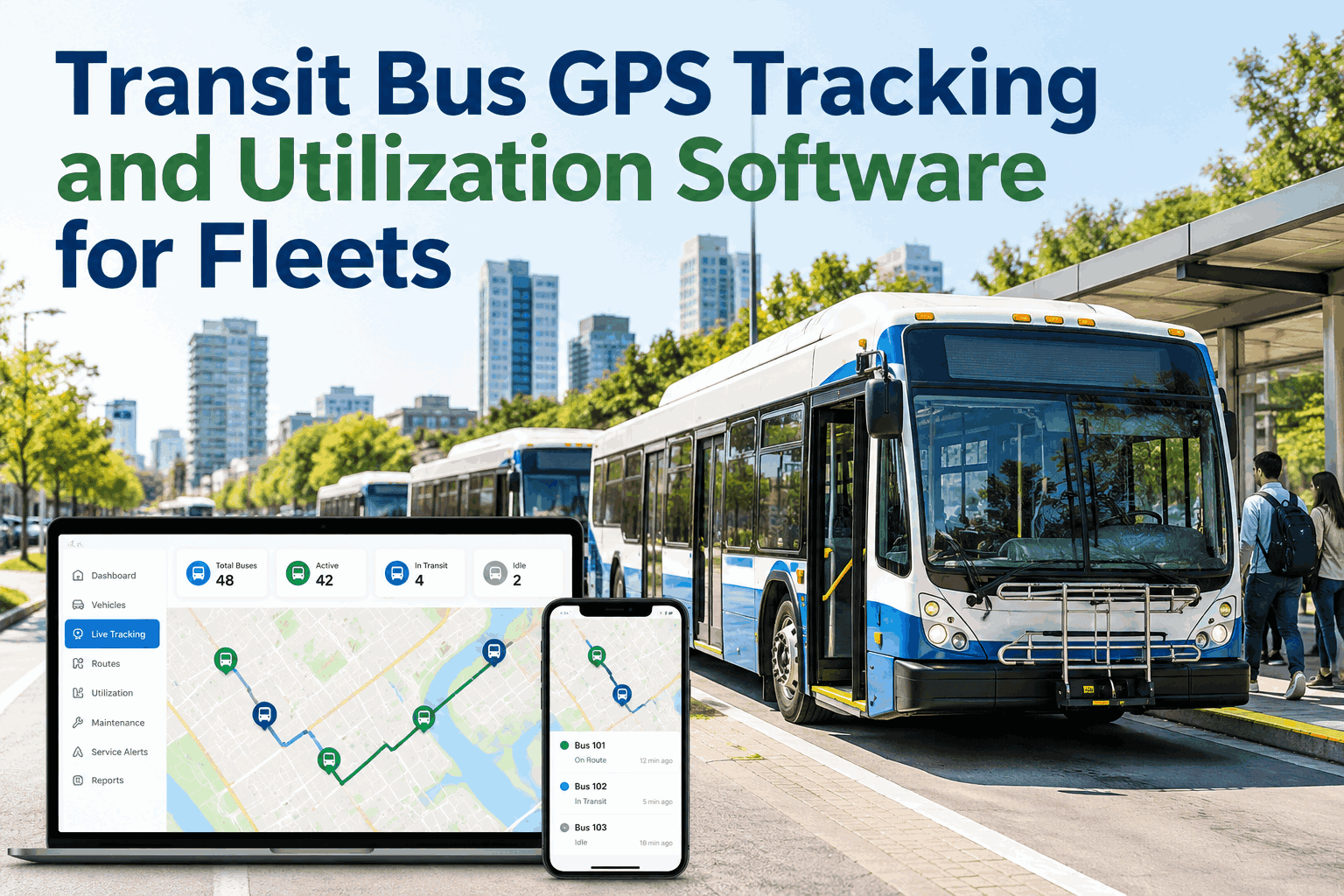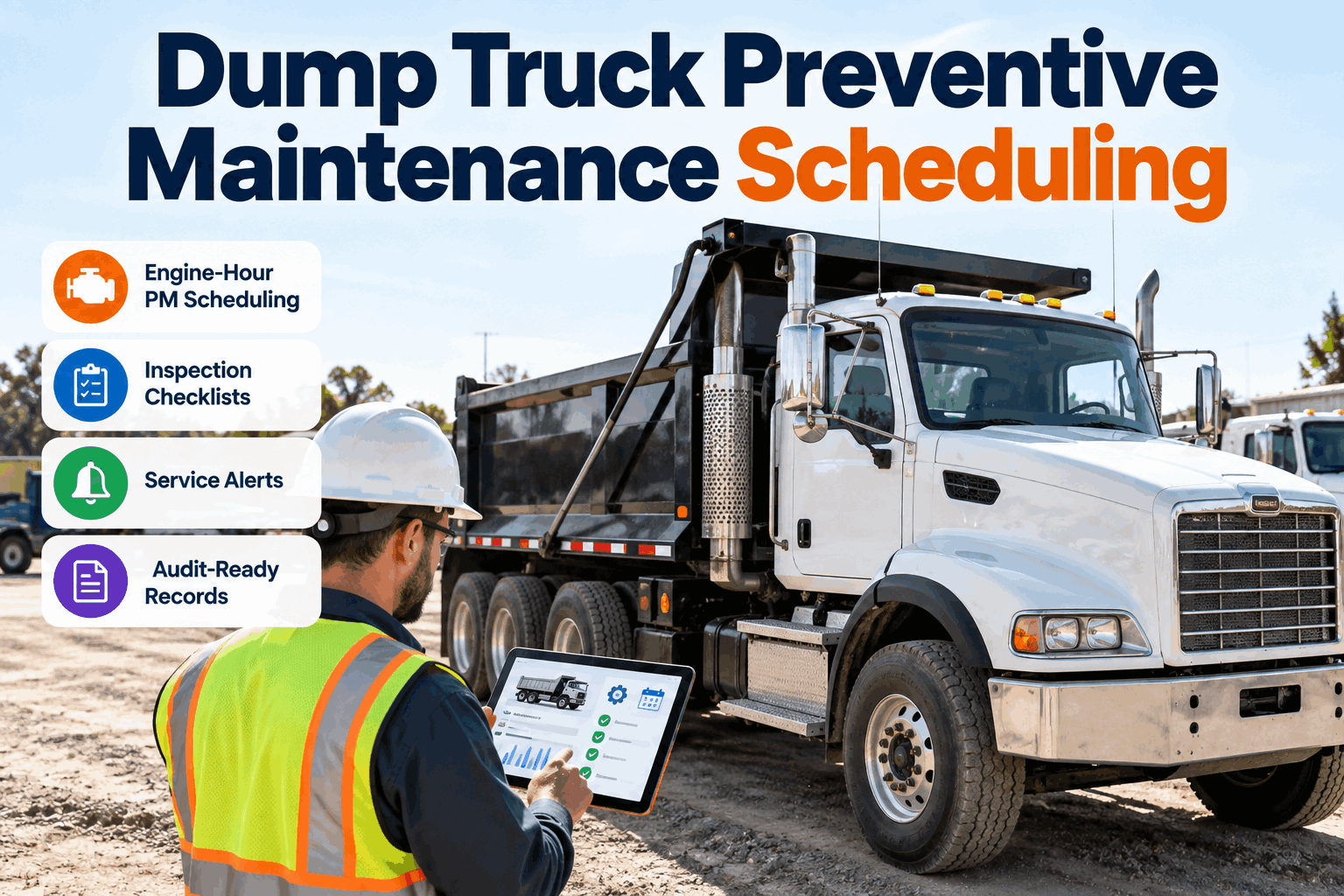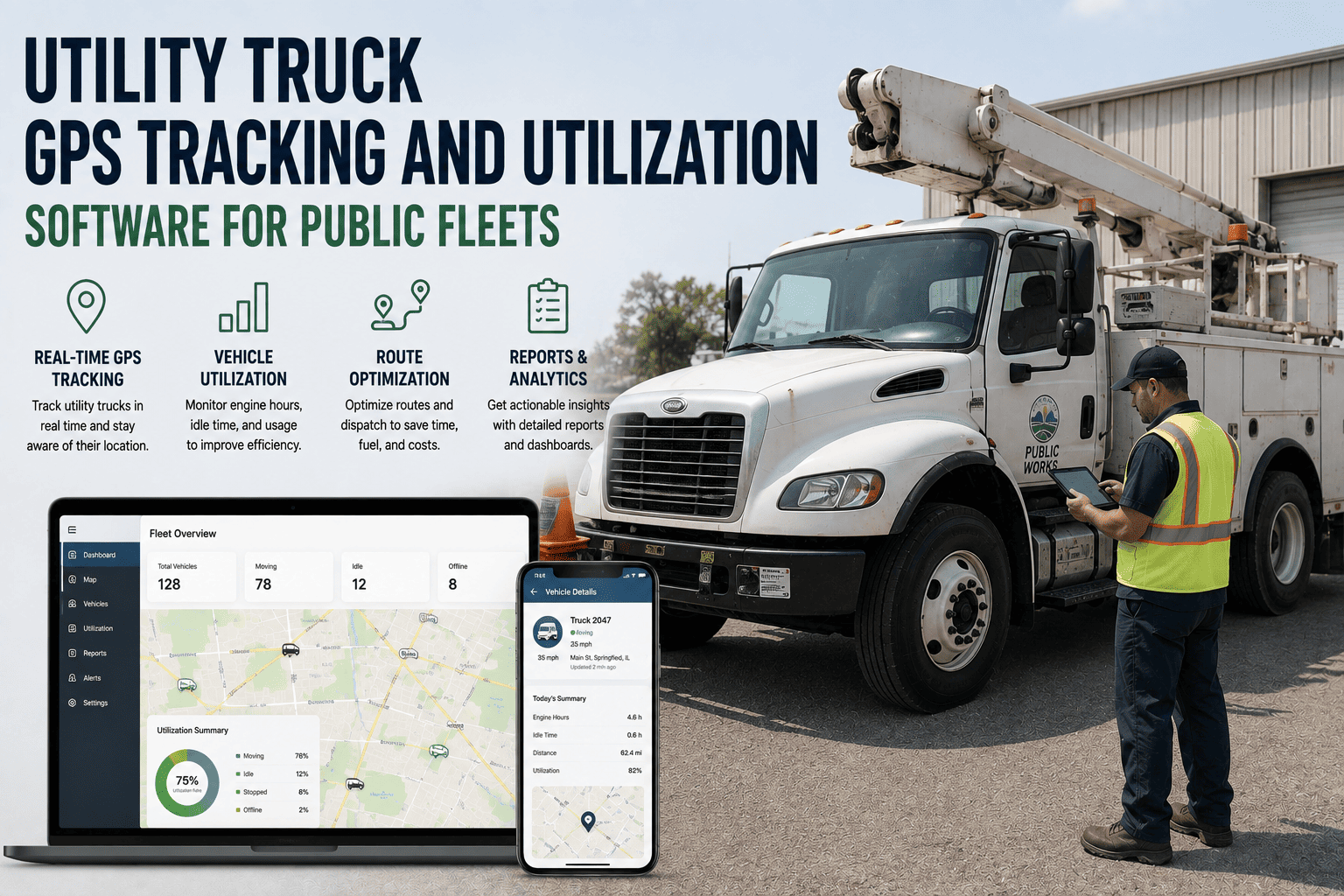
A utility truck that sits idle for half its shift costs a public fleet just as much as one that's constantly on the road — the fuel, the insurance, the depreciation, all of it keeps ticking whether the vehicle moves or not. Yet most agencies still can't answer a simple question with confidence: which trucks in the fleet are actually earning their keep. Utility truck GPS tracking and utilization software exists to close that gap, turning location pings into real operational answers about routing, idle time, equipment use, and accountability. Here's what it actually does for a public fleet, and why departments running bucket trucks, line crews, and service vehicles are moving toward it.
What Real-Time Tracking Actually Reveals
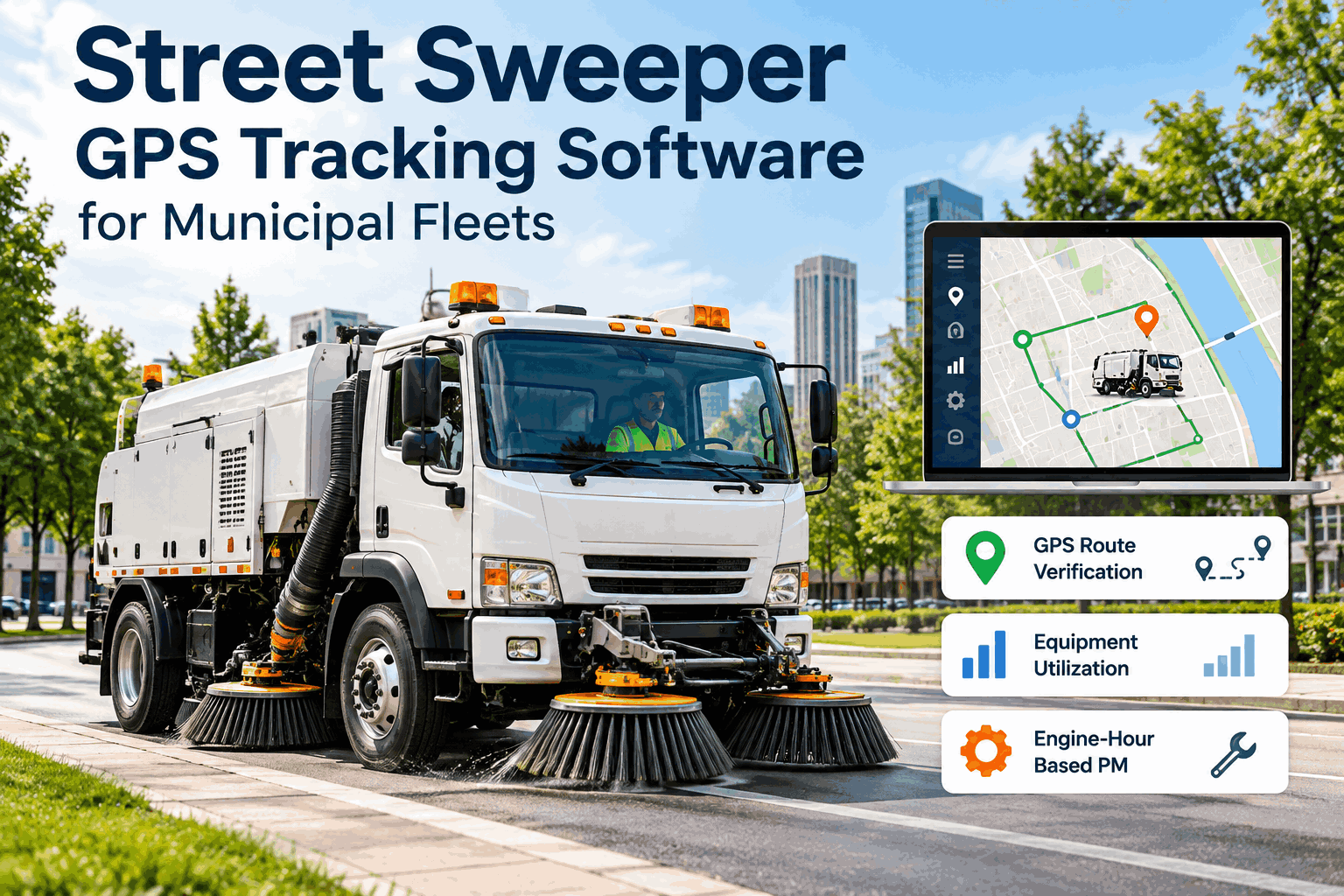
GPS tracking for utility trucks goes well beyond a blue dot on a map. Modern platforms pull data directly from the vehicle's engine and pair it with sensors on the equipment itself, so a fleet manager isn't just seeing where a truck is — they're seeing what it's doing there. That distinction is what turns a tracking tool into a utilization tool, and it's usually the first thing agencies notice once they sign up and connect their first vehicles.
Live Position & Route History
Every truck's current position, speed, and stop status is visible on one map, with a full historical trail for any date range a supervisor needs to review.
PTO & Attachment Monitoring
Sensors on booms, lifts, and power take-off systems confirm when equipment is actually engaged, not just when the truck's engine is running.
Idle Time & Usage Reporting
Daily and weekly reports show which vehicles in a shared pool are underused, so departments stop requesting new trucks when existing ones are sitting empty.
Verified Job Completion
Time-stamped, GPS-verified records of where and when work happened protect crews from disputed claims and give leadership documented proof of service delivery.
Put Every Truck in Your Fleet on One Live Map
See location, utilization, and equipment status across your entire utility fleet without switching screens.
Before Tracking vs. After Tracking
Without GPS & Utilization Data
- Dispatchers guess which truck is closest to a job
- Idle trucks quietly sit in the yard while new vehicles get requested
- Storm and service response relies on radio check-ins
- Proving where a crew was on a given day means digging through paper logs
With Connected Fleet Software
- The nearest available, properly equipped truck is dispatched automatically
- Utilization reports flag underused vehicles before budget season
- Weather-aware routing speeds up storm and emergency response
- Every stop, route, and job is time-stamped and searchable instantly
Agencies that make this switch usually describe it the same way: it's not that the trucks changed, it's that the fleet finally became visible. If your team is still coordinating utility trucks by radio and memory, it's worth taking a few minutes to book a demo and see the live map in action.
Where Utility Fleets Get the Most Value
Storm & Emergency Response
Live, weather-aware routing helps crews reach outages and hazards faster, with route coverage visible to supervisors in real time.
Fuel & Idle Cost Control
Idle-time reporting turns a vague fuel budget concern into a specific, truck-by-truck number departments can act on.
Cross-Department Scheduling
Shared vehicle pools stay conflict-free when every department can see real-time availability instead of double-booking the same truck.
Public Accountability
When a resident or council member questions a service call, GPS-verified records settle the question in minutes, not weeks.
None of this requires replacing your existing trucks or equipment — sensors and tracking hardware install on the vehicles you already run. Most departments pilot the platform on one division, usually public works or utilities, before expanding fleet-wide. When you're ready to see how it fits your routes, you can sign up and start mapping your own fleet the same day.
Stop Guessing Which Trucks Are Actually Working
Get real utilization numbers, live routing, and audit-ready records for every utility truck in your fleet.
Frequently Asked Questions
What does utility truck GPS tracking software actually track.
It tracks live location, route history, speed, idle time, and engine data, and when paired with equipment sensors, it also confirms when booms, lifts, or PTO-driven tools are actually in use.
How is utilization different from basic GPS tracking.
Basic tracking shows where a truck is. Utilization reporting goes further, analyzing how much of a truck's available time it's actually being used for work, which helps agencies right-size their fleet instead of over-purchasing vehicles.
Can it help during storms or emergency response.
Yes. Weather-aware routing and live location data help dispatchers send the closest available, properly equipped truck to an outage or hazard, and route coverage stays visible to supervisors as it happens.
Does this work for a mixed fleet with different vehicle types.
Public utility fleets typically run bucket trucks, service vans, and specialty equipment side by side, and the software is built to track all of it under one account rather than requiring separate systems.
Is the data reliable enough to settle disputes or public records requests.
Time-stamped, GPS-verified records of where and when a truck was on site give departments documented proof of service, which is far more reliable than relying on memory or paper logs when a question comes up.
How quickly can a department get started.
Most agencies start with a single division as a pilot, connect the trucks within days, and use early utilization reports to build the case for a fleet-wide rollout.