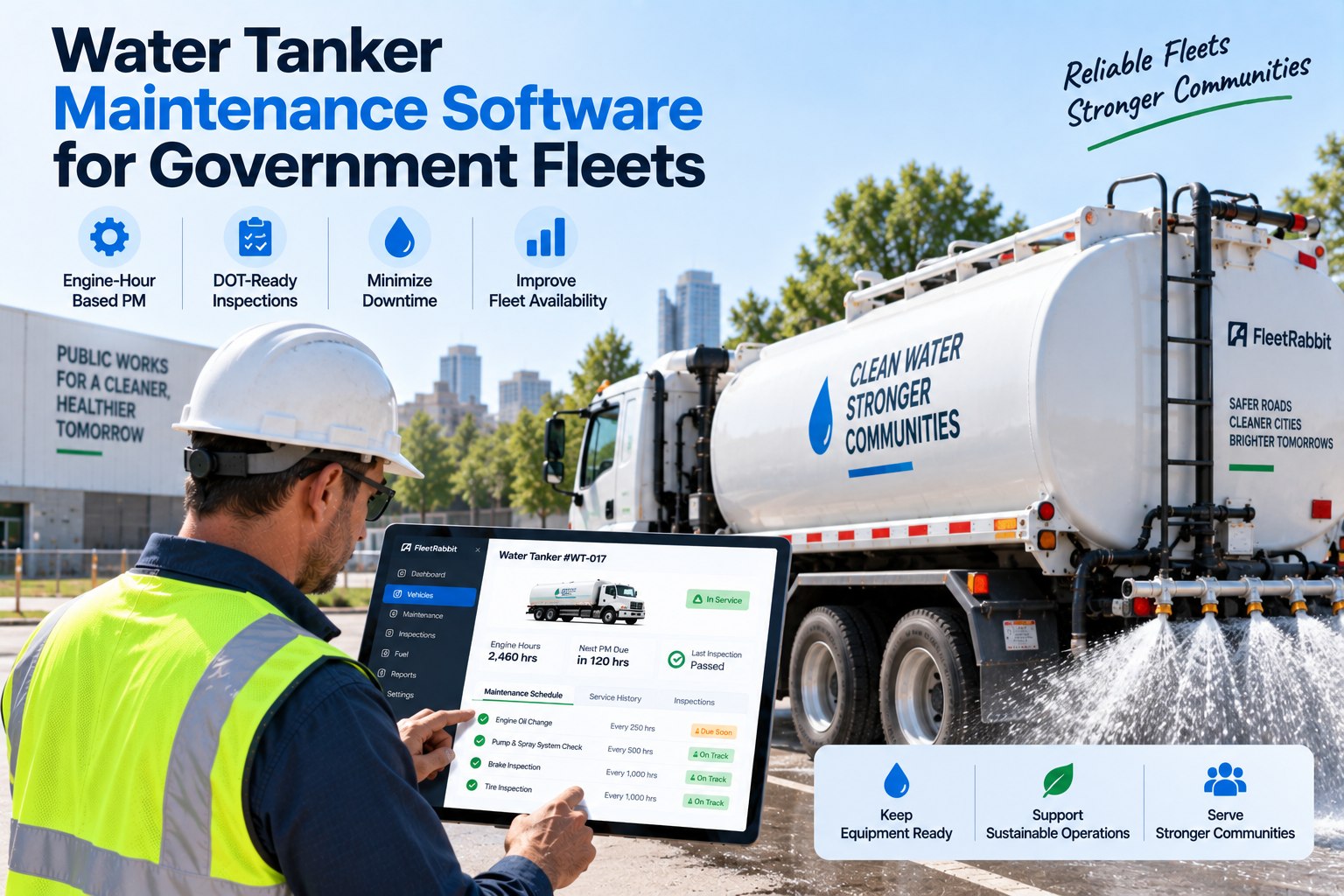
A fire department water tanker can sit parked at a station for eight months between calls, and that idle time is exactly what damages it. Baffle seals dry-rot from disuse, dump valves stiffen, and a pump that never gets tested loses flow capacity without anyone noticing until the day it actually has to deliver a thousand gallons a minute at a working fire. Government fleets running tankers, tenders, and mobile water supply units carry a maintenance burden that looks nothing like a sedan or a plow truck, governed by NFPA testing requirements, DOT inspection rules, and a public that expects the rig to work every single time it rolls out of the bay. This page covers what actually keeps a government water tanker fleet compliant and ready, and where paper logs quietly let departments down.
None of those four risks look dramatic on a normal Tuesday, which is exactly the problem. A tanker can look fully ready sitting in the bay while its pump test is six weeks overdue, its baffle seals are quietly drying out, and its last DVIR was filled in from memory rather than an actual walk-around. Departments that want that gap closed before the next callout can sign up and start tracking pump hours, seal checks, and DVIRs in one place instead of three.
Connect your tanker and tender fleet and track pump tests, DVIRs, and seal checks against the schedule NFPA actually requires.
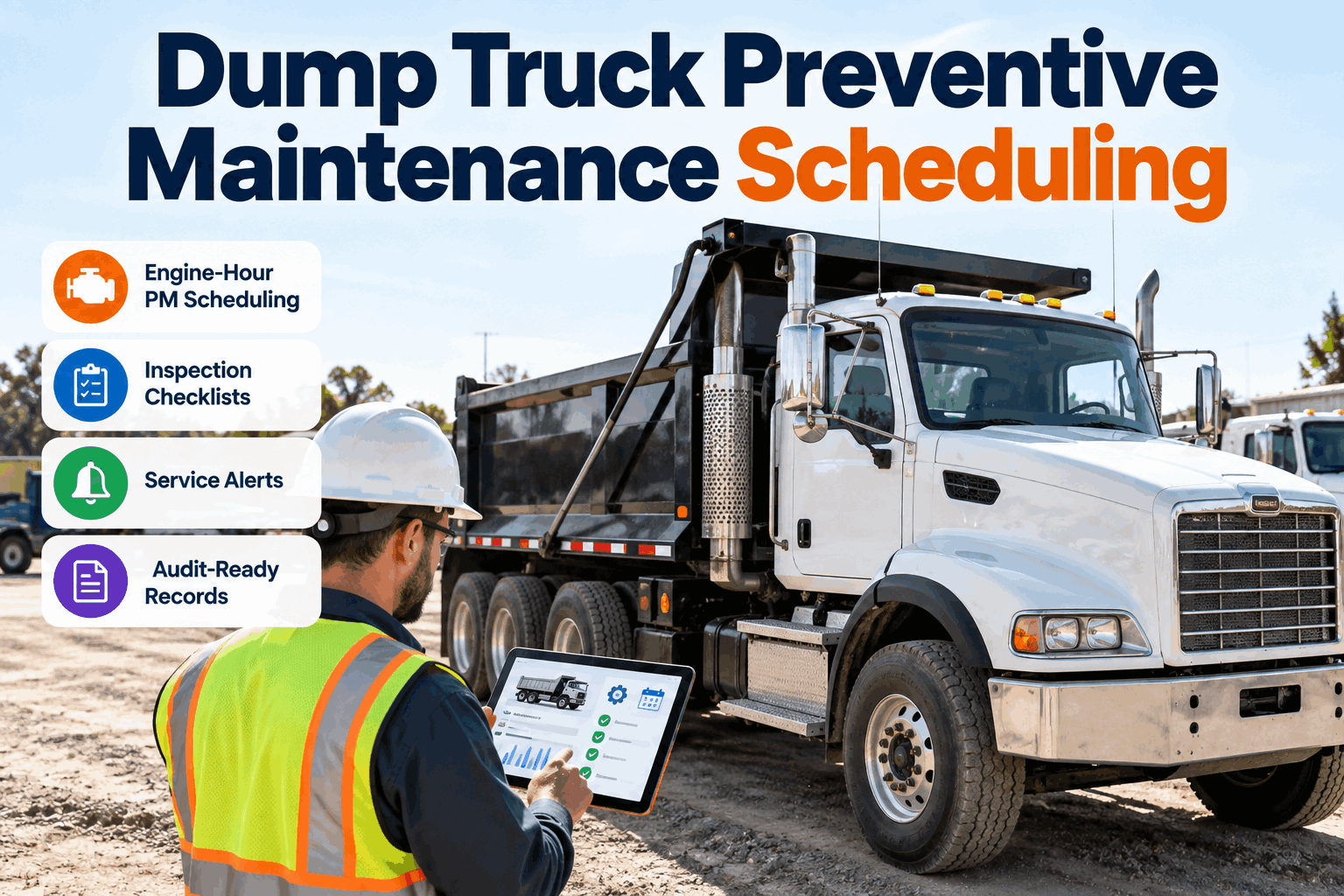
Pump test scheduling by date and pump hours
Annual NFPA 1911 pump tests get scheduled against both the calendar and accumulated pump hours from fill-site idling, so a tender that pumps hard without moving far still gets flagged on time.
Digital DVIRs for pre-tour and weekly checks
Drivers complete pre-tour and weekly readiness checks from a phone or tablet, with timestamps and photos attached, replacing a paper form that is easy to skip on a rig that rarely rolls.
Baffle, seal, and dump-valve inspection checklists
Monthly checks for baffle condition, dump-valve seal integrity, and tank fittings are logged with photo proof, catching dry-rot damage from idle time before it becomes a mid-response leak.
One-click audit export
Every DVIR, PM record, pump test, and defect photo for the last twelve months exports as a single timestamped file for a state fire marshal, insurer, or ISO review.
Stacking a federal DOT rule on top of an NFPA testing standard and whatever the local AHJ adds on is a lot for a volunteer department or a small public works shop to track by hand, which is why so many are choosing to book a demo of a system that keeps all three requirements lined up automatically instead of split across a filing cabinet, a spreadsheet, and someone's memory.
- Pump hours tracked separately from the annual test date, if at all
- DVIRs filled in from memory on rigs that rarely leave the bay
- Baffle and seal wear found only after a leak appears
- Audit records assembled by hand under deadline pressure
- Pump tests scheduled against date and pump hours together
- Digital DVIRs with timestamps and photos on every check
- Seal and baffle drift caught in monthly inspection logs
- One export covers NFPA, DOT, and insurer requirements
Connect the fleet
Import tankers, tenders, and mobile water supply units along with their pump specs, tank capacity, and last known test dates.
Set the compliance calendar
Configure NFPA 1911 pump test intervals, DOT annual inspection dates, and any local AHJ requirements against each unit's history.
Roll out digital checks
Equip drivers and apparatus technicians with mobile DVIRs and inspection checklists that replace the paper forms in the cab.
Go live with audit-ready records
Every check, test, and defect starts building a timestamped history that exports in one click whenever an audit comes due.
A tanker sitting quietly in a station bay for months at a time is not a low-maintenance asset, it is a high-risk one, because the clock that damages it keeps running whether the rig moves or not. Departments that pair engine-hour and pump-hour tracking with digital DVIRs are the ones who catch a slipping pump test or a dry-rotting seal with time to fix it, not after a callout exposes it. If your tanker fleet is still running on paper and memory, this is a good time to sign up and connect the first unit.
Book a demo and see NFPA pump testing, DOT inspections, and DVIRs tracked together for your entire tanker fleet.