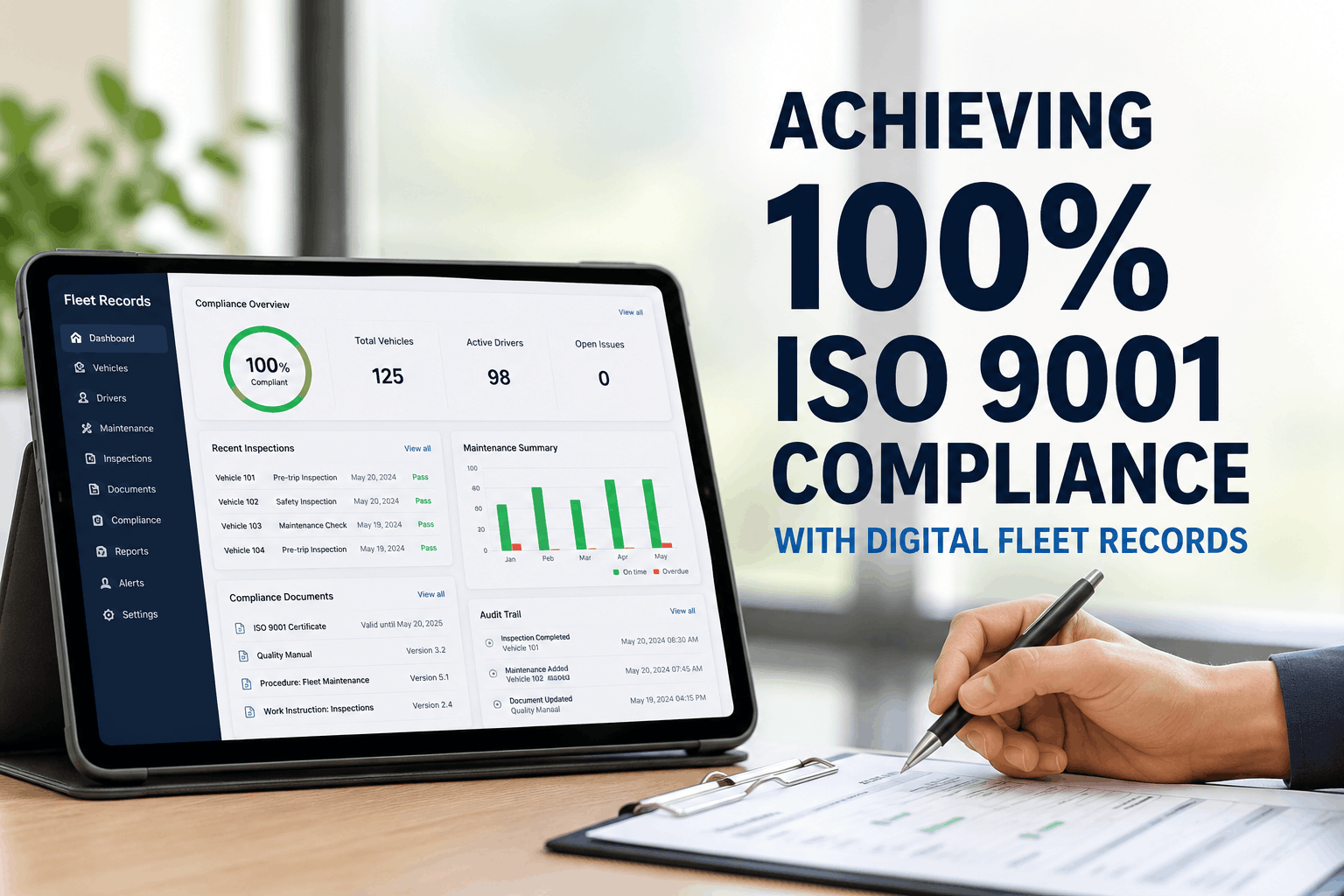
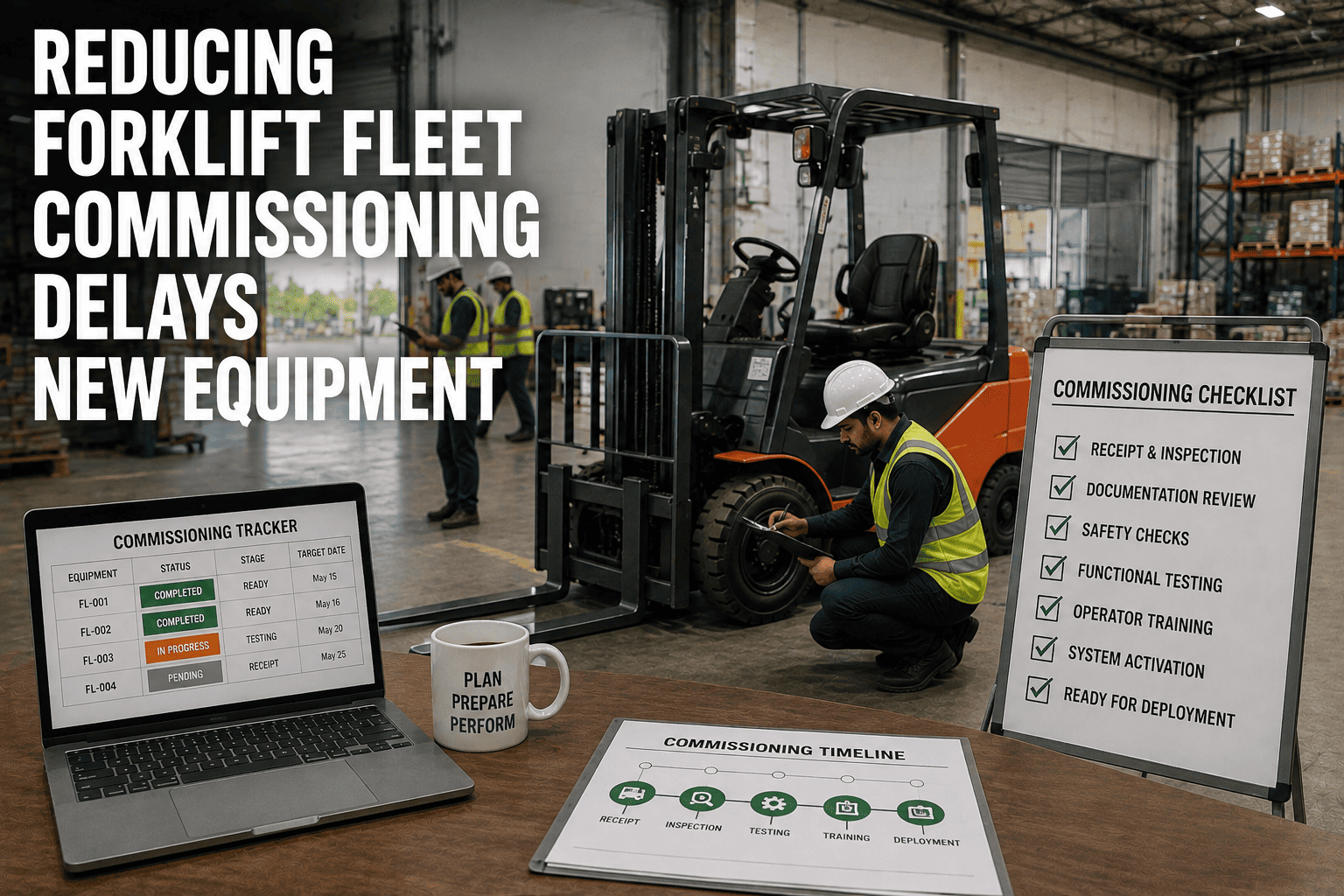
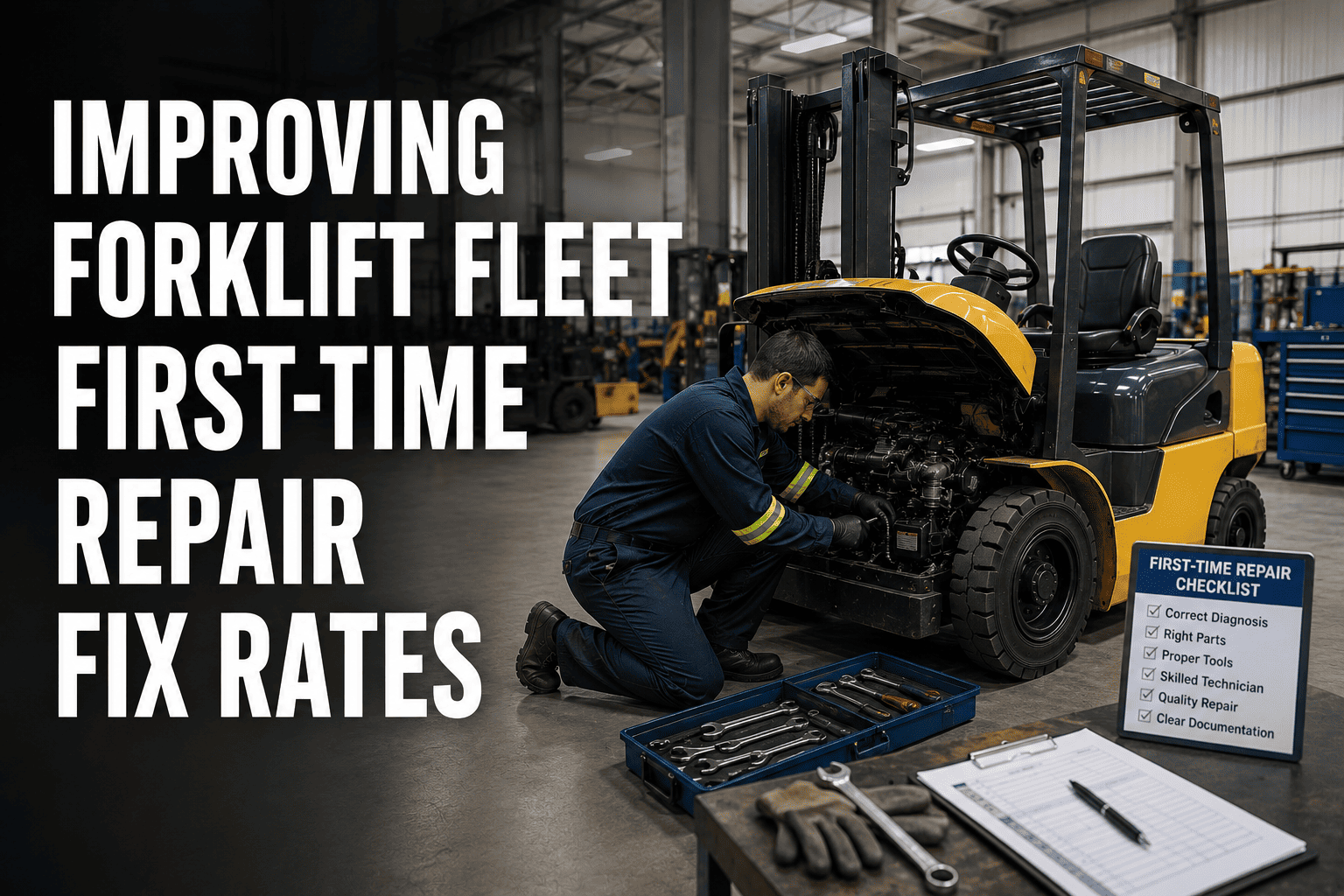
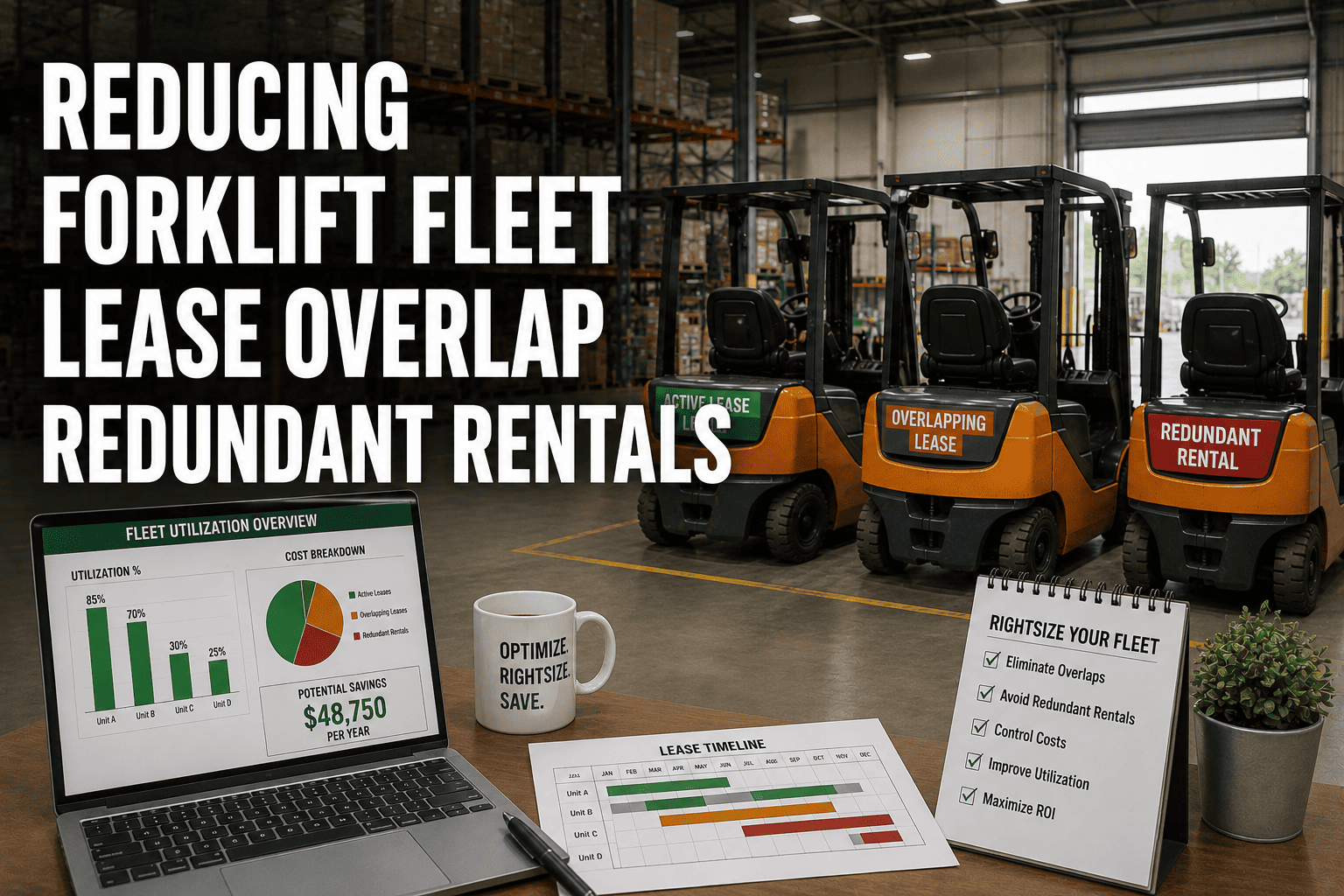
ISO 9001 compliance is the quality management foundation that separates manufacturing fleets operating at world-class standards from those perpetually exposed to audit findings, customer complaints, and certification loss. Yet most manufacturing operations still manage the quality records that ISO 9001 demands — vehicle inspection logs, maintenance histories, operator training documentation, corrective action trails — on paper files, shared drives, and spreadsheets that fragment evidence across folders nobody can locate when an auditor arrives. In manufacturing environments where ISO 9001 certification directly gates customer contracts, supplier approvals, and regulatory standing, the gap between holding a certificate and maintaining the continuous documented evidence that certificate requires is where compliance failures actually live. FleetRabbit's fleet quality management system gives manufacturing operations automated digital fleet records, real-time audit trails, and paperless maintenance documentation to achieve 100% ISO 9001 compliance coverage across every vehicle, every inspection, and every maintenance cycle. Book a demo to see FleetRabbit's digital fleet records applied to your ISO 9001 programme.
Quick Answer
Achieving 100% ISO 9001 compliance with digital fleet records covers six core operational areas: automated digital vehicle inspections replacing paper pre-trip forms, electronic maintenance logs with complete audit trails, fleet certification tracking with automated renewal alerts, digital corrective action workflows that satisfy Clause 10.2, real-time compliance reporting for internal and external audits, and a fleet quality management system that converts ISO 9001 from a periodic certification exercise into continuous operational practice. Manufacturing fleets using FleetRabbit reduce audit preparation time 60–70%, eliminate paper-based record gaps that cause audit findings, and achieve on-demand ISO 9001 evidence packages in under five minutes — with full QMS fleet ROI typically realised within 45–60 days of deployment.
What ISO 9001 Fleet Compliance Actually Requires — and Where Paper Systems Fail
ISO 9001:2015 doesn't simply require that maintenance happens — it requires documented evidence that maintenance happened, was reviewed, met specification, and fed into a corrective action loop when it didn't. For manufacturing fleet operations, this means every vehicle inspection, every service record, and every operator qualification must exist as retrievable, timestamped, verifiable evidence — not as a paper form in a filing cabinet that may or may not have been completed.
The 5 ISO 9001 Evidence Requirements for Fleet Operations
Clause 7.1.3 (Infrastructure): Documented evidence that fleet vehicles are maintained to support product/service conformity. Clause 7.2 (Competence): Operator qualification and training records. Clause 8.5.1 (Production control): Vehicle inspection and pre-use verification records. Clause 9.1 (Performance monitoring): Fleet maintenance KPI tracking and trend analysis. Clause 10.2 (Corrective action): Documented nonconformity identification, root cause analysis, and closure evidence. Paper systems fail all five under audit scrutiny.
The Real Cost of Paper-Based ISO 9001 Fleet Records
A single ISO 9001 major nonconformity finding — triggered by missing maintenance records or incomplete corrective action evidence — can suspend certification pending re-audit, costing manufacturing operations $15,000–$85,000 in emergency audit fees, production disruption, and customer notification. Fleets averaging three minor findings per audit cycle face $4,000–$12,000 in rework costs annually from records that existed on paper but couldn't be verified or retrieved on demand.
Why Digital Fleet Records Change the ISO 9001 Economics
Digital fleet records convert ISO 9001 compliance from a pre-audit scramble into a continuous operational state. Every inspection, every maintenance event, and every corrective action is captured, timestamped, and structured automatically — so the evidence auditors require already exists in the format they need it. FleetRabbit customers reduce audit preparation from an average of 3–5 days of manual record assembly to a single five-minute export — while eliminating the finding risk that paper records perpetuate.
ISO 9001 Fleet Compliance Benchmarks: Manufacturing Fleet Standards by Record Type
Benchmarking ISO 9001 fleet record compliance requires clarity on what evidence standard each clause actually demands. The table below reflects current certification body expectations for manufacturing fleet documentation across major auditing frameworks.
ISO 9001 Clause / Record Type
Evidence Required
Retention Period
Audit Risk (Paper)
Digital Status
Cl. 7.1.3 — Vehicle Maintenance Records
Timestamped logs per vehicle
3+ years
High
Auto-captured
Cl. 7.2 — Operator Competence Records
Training certs + evaluations
Duration of role
High
Centralised
Cl. 8.5.1 — Pre-Use Inspection Records
Completed checklist per shift
1–3 years
Very High
Auto-generated
Cl. 9.1 — Fleet Performance Monitoring
KPI trend data + analysis
Current + prior cycle
Medium
Live dashboard
Cl. 10.2 — Corrective Action Records
NC log + root cause + closure
3+ years
Very High
Workflow-driven
The 5 Root Causes of ISO 9001 Fleet Audit Findings
ISO 9001 fleet audit nonconformities in manufacturing operations concentrate around five systematic record-keeping failures that digital fleet management directly eliminates.
1
Incomplete or Missing Pre-Shift Inspection Records
Clause 8.5.1 requires documented verification that fleet vehicles are fit for use before deployment. In paper-based systems, pre-shift inspection forms are completed inconsistently, filed unreliably, and frequently lost before audit time — leaving operations unable to demonstrate the systematic vehicle verification that ISO 9001 requires. A single shift with no documented inspection record can trigger a major nonconformity finding.
FleetRabbit digital inspection deployment at a UK automotive components manufacturer, 44 fleet vehicles: pre-shift inspection completion rate increased from 71% (paper) to 99.6% (digital) within 30 days. Zero inspection-related findings at subsequent ISO 9001 surveillance audit — first clean audit in four years.
2
Fragmented Maintenance Histories Across Multiple Systems
ISO 9001 auditors expect a complete, unbroken maintenance history for each fleet vehicle — demonstrating systematic infrastructure management under Clause 7.1.3. When service records exist across paper work orders, spreadsheets, a workshop job card system, and verbal technician logs, assembling a coherent history for a single vehicle typically takes 4–8 hours and still leaves gaps that auditors flag as evidence of inadequate QMS control.
Record fragmentation: primary audit risk
Assembly time: 4–8 hrs per vehicle
Digital fix: single unified record
3
Corrective Action Loops That Open but Never Close
Clause 10.2 requires that nonconformities are identified, root-caused, corrected, and verified as closed — with documented evidence of every stage. In manual systems, corrective actions are initiated verbally or on whiteboards, assigned informally, and never formally closed — creating open NCR trails that auditors interpret as systemic QMS failure rather than isolated incidents.
FleetRabbit's digital corrective action workflow assigns, tracks, escalates, and closes every fleet nonconformity with a full timestamped audit trail — giving ISO 9001 auditors the complete Clause 10.2 evidence chain they require, without any manual assembly.
4
Operator Competence Records That Expire Undetected
Clause 7.2 requires documented evidence that personnel operating fleet vehicles hold the competencies required for their role — and that these competencies remain current. Paper-based training records and certification files stored in HR folders generate no alerts when operator qualifications approach expiry, leaving operations unable to demonstrate continuous competence assurance to auditors who sample operator files during certification audits.
5
No Real-Time Fleet Performance Data for Clause 9.1 Monitoring
ISO 9001 Clause 9.1 requires organisations to monitor, measure, analyse, and evaluate the performance of processes relevant to product and service conformity — including fleet infrastructure. Without real-time performance data and trend analysis, operations cannot demonstrate systematic monitoring of fleet KPIs to auditors, and cannot identify deteriorating compliance trends before they generate findings or incidents.
FleetRabbit's live fleet compliance dashboard delivers Clause 9.1 performance monitoring continuously — tracking inspection completion rates, corrective action closure times, maintenance adherence, and operator qualification status as live metrics that satisfy auditor evidence requirements and flag internal deterioration before it reaches audit.
Digital Fleet Records + ISO 9001 QMS Automation
Achieve 100% ISO 9001 Fleet Record Coverage — From Day One of Deployment
FleetRabbit automates digital vehicle inspections, electronic maintenance logs, corrective action workflows, and real-time compliance reporting — so ISO 9001 evidence exists continuously, not just before audit week.
6 Digital Capabilities That Deliver 100% ISO 9001 Fleet Compliance
Closing every ISO 9001 fleet compliance gap simultaneously requires digital capabilities that attack each evidence failure point — not point solutions that solve one clause while leaving others exposed.
Automated Digital Vehicle Inspections
Mobile-based digital inspection checklists replace paper pre-shift forms — capturing timestamped completion, defect photography, and driver sign-off for every vehicle before every shift. Incomplete inspections trigger automatic supervisor alerts before the vehicle departs, preventing the undocumented deployment events that generate Clause 8.5.1 findings. Inspection records are stored and searchable by vehicle, date, operator, and defect category for instant audit retrieval.
Electronic Maintenance Logs with Full Audit Trails
Every maintenance event — scheduled service, unplanned repair, parts replacement, technician sign-off — is captured electronically and appended to each vehicle's permanent maintenance history. The log is immutable and timestamped, providing the complete, unbroken infrastructure maintenance evidence that Clause 7.1.3 auditors require. Service history exports generate in under two minutes per vehicle, replacing the hours-long paper-record assembly process entirely.
Fleet Certification Tracking with Automated Renewal Alerts
Every operator certification, vehicle registration, insurance document, and equipment calibration certificate is stored digitally with expiry dates that trigger configurable multi-stage alerts — at 90, 60, and 30 days before expiry — to the relevant manager. ISO 9001 auditors sampling operator files under Clause 7.2 encounter current, complete competence records rather than lapsed certifications that trigger immediate nonconformity findings.
Digital Corrective Action Workflows — Clause 10.2 Ready
When a fleet inspection defect, maintenance nonconformity, or operator performance issue is identified, FleetRabbit automatically generates a corrective action record — assigned to the responsible person, with a root cause investigation requirement, a defined closure deadline, and an effectiveness verification step. Every stage is timestamped and stored, providing the complete Clause 10.2 evidence chain that auditors require and that manual systems routinely fail to produce.
Automated ISO 9001 Compliance Reporting
FleetRabbit generates structured ISO 9001 compliance reports automatically — inspection completion rates by vehicle and operator, corrective action status summaries, maintenance adherence percentages, and certification currency overviews — formatted for internal management review meetings (Clause 9.3) and external certification body submissions. What previously required 3–5 days of manual assembly is available on demand in under five minutes.
Real-Time Fleet QMS Dashboard — Continuous Monitoring
FleetRabbit's fleet quality management system dashboard delivers continuous Clause 9.1 performance monitoring — showing inspection compliance rates, open corrective action counts, maintenance schedule adherence, and operator qualification status as live metrics. Quality managers see deteriorating compliance trends weeks before they generate audit findings, converting ISO 9001 from a reactive audit exercise into a continuous improvement practice.
How to Build an ISO 9001-Ready Digital Fleet Records Framework
Digital fleet record compliance delivers audit-proof results only when implemented against the specific evidence requirements of each ISO 9001 clause. Fleets that digitise records without mapping them to clause obligations end up with better-organised paper gaps rather than genuine QMS compliance.
Map Current Fleet Records Against ISO 9001 Clause Requirements
Before deploying digital records, audit your current documentation against the five core fleet-relevant clauses — 7.1.3, 7.2, 8.5.1, 9.1, and 10.2. For each clause, identify whether documented evidence currently exists, whether it's retrievable within five minutes, and whether it covers every vehicle and every operator without gaps. FleetRabbit's implementation team provides a clause-gap assessment as part of onboarding — identifying exactly which record types are most exposed before the next certification audit.
Prioritise by Audit Finding Risk, Not Record Volume
Not all record gaps carry equal ISO 9001 audit risk. Missing pre-shift inspection records (Clause 8.5.1) and open corrective action trails (Clause 10.2) are the two most common sources of major nonconformity findings in manufacturing fleet audits — and both are entirely preventable with digital workflows. Prioritising these two areas in deployment sequencing closes the highest-risk finding exposure within the first 30 days, before broader digital records rollout is complete.
Set Internal Compliance Targets Against Certification Body Benchmarks
Internal record-keeping improvements are misleading progress signals if the baseline was already generating audit findings. Manufacturing fleet QMS targets should be set against certification body benchmarks: pre-shift inspection completion rate above 98%, corrective action closure within 30 days for minor issues and 14 days for safety-related nonconformities, and zero lapsed operator certifications at any audit sample point. FleetRabbit's compliance dashboard tracks all three in real time — flagging deviations before they become audit findings.
ISO 9001 Digital Fleet Records: The Combined Compliance Impact
100%
Fleet Record Coverage
60–70%
Audit Prep Time Saved
99%+
Inspection Completion Rate
Zero
Paper-Gap Audit Findings
<5 min
ISO Evidence Pack Export
45–60 days
Typical Full QMS ROI
Frequently Asked Questions: ISO 9001 Compliance with Digital Fleet Records
QWhich ISO 9001 clauses specifically apply to manufacturing fleet operations?
Five ISO 9001:2015 clauses directly generate evidence requirements for manufacturing fleet operations. Clause 7.1.3 (Infrastructure) requires documented evidence that vehicles and equipment are maintained to support product conformity. Clause 7.2 (Competence) requires operator qualification and training records demonstrating current competence. Clause 8.5.1 (Controlled conditions) requires pre-use verification records confirming vehicles are fit for deployment. Clause 9.1 (Performance evaluation) requires fleet KPI monitoring, measurement, and trend analysis. Clause 10.2 (Nonconformity and corrective action) requires documented nonconformity records, root cause analysis, and verified closure evidence for every fleet-related quality issue. FleetRabbit's QMS fleet operations module generates the documented evidence required for all five clauses automatically, without manual record assembly.
QHow does digital fleet record management actually reduce audit preparation time?
In paper-based systems, ISO 9001 audit preparation for manufacturing fleet records typically requires 3–5 days of physical record retrieval, photocopying, sorting, and gap identification across maintenance files, inspection forms, operator qualification folders, and corrective action logs. The time cost is compounded by the near-certainty of finding at least some records missing, incomplete, or illegible — triggering additional investigation before the auditor arrives. FleetRabbit stores every fleet record digitally in a structured, searchable format. When an audit is scheduled, a complete evidence pack — covering all vehicles, all operators, and all five relevant ISO 9001 clauses — is generated as a formatted export in under five minutes. Auditors receive a structured document set rather than a box of paper files, and gaps that would previously have been discovered during preparation simply do not exist because records were captured automatically at the point of activity.
QHow does the digital corrective action workflow satisfy ISO 9001 Clause 10.2 requirements?
ISO 9001 Clause 10.2 requires that when a nonconformity occurs, the organisation reacts to it, evaluates the need for action to eliminate the root cause, implements necessary action, reviews its effectiveness, and retains documented information as evidence of the nonconformity nature and actions taken. FleetRabbit's corrective action workflow captures every stage: the initial nonconformity record with description and severity classification, the root cause analysis entry completed by the assigned person, the corrective action description and implementation confirmation, the effectiveness verification step completed by the quality manager, and the formal closure timestamp with approving sign-off. Every stage is stored with the identity of the completing person, the completion timestamp, and any supporting attachments — creating the complete Clause 10.2 evidence chain that certification body auditors require and that manual whiteboard or verbal corrective action systems structurally cannot produce.
Achieve 100% ISO 9001 Fleet Record Coverage — See FleetRabbit's Digital QMS in Action
FleetRabbit's fleet quality management system automates the complete ISO 9001 evidence lifecycle — digital vehicle inspections, electronic maintenance logs, certification tracking, corrective action workflows, and real-time compliance reporting — across every vehicle and every operator in your manufacturing fleet. Most operations eliminate paper-based audit findings within 30 days and achieve full QMS ROI within 45–60 days of deployment.
100% ISO 9001 Coverage
Digital Audit Trails
Paperless Fleet Records
Clause 10.2 Corrective Actions
45–60 Day QMS ROI
May 27, 2026
By Taylor
All Posts