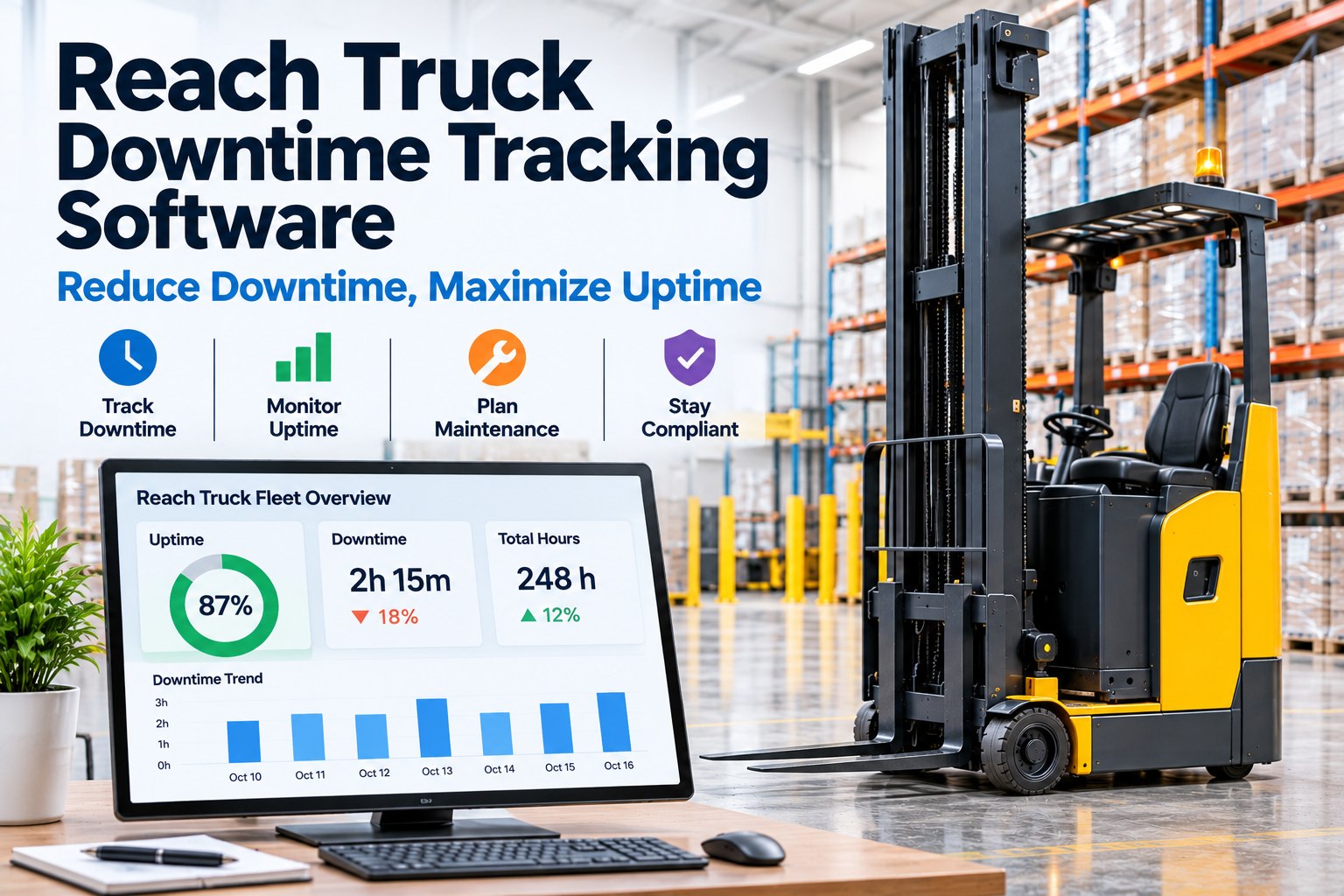
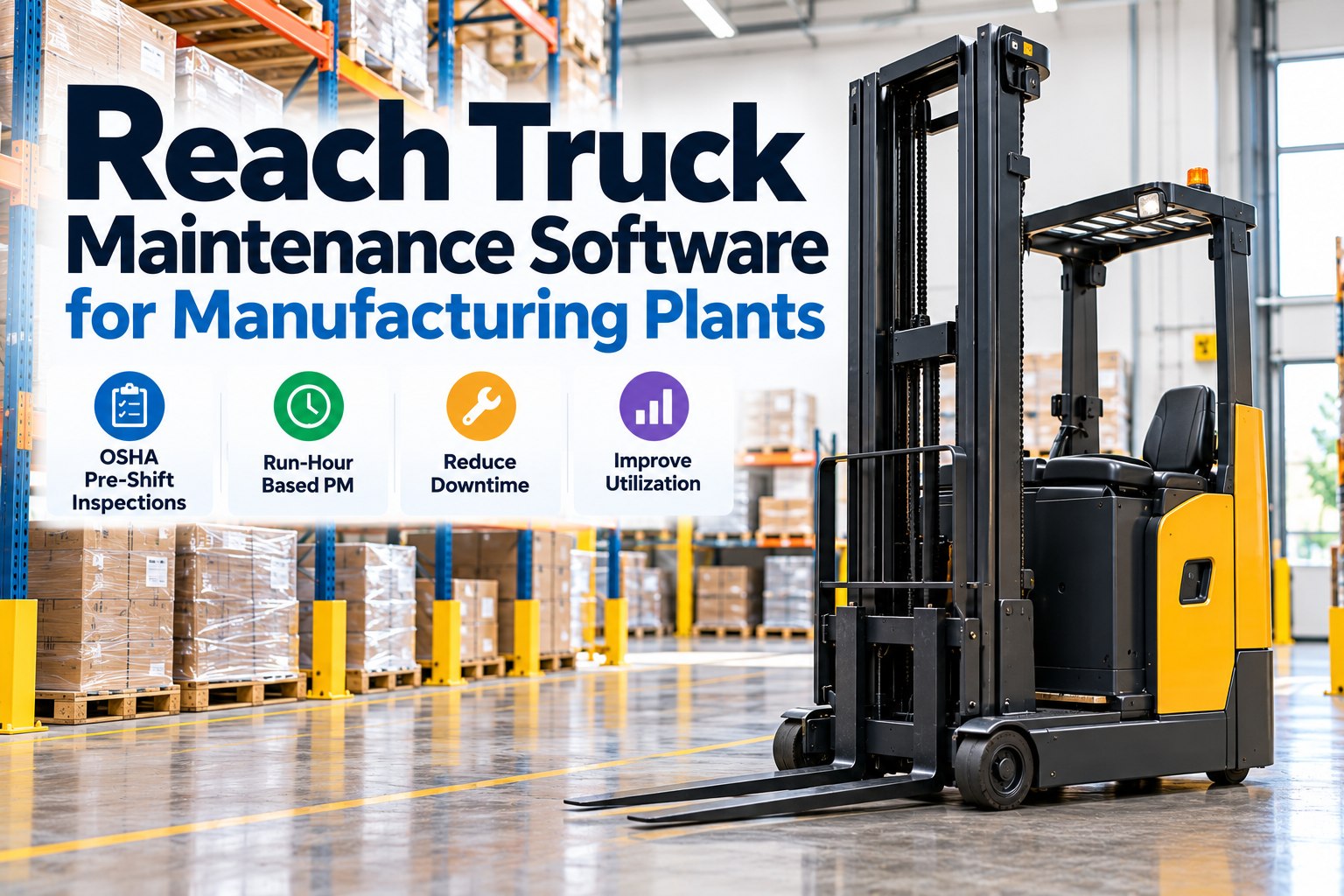
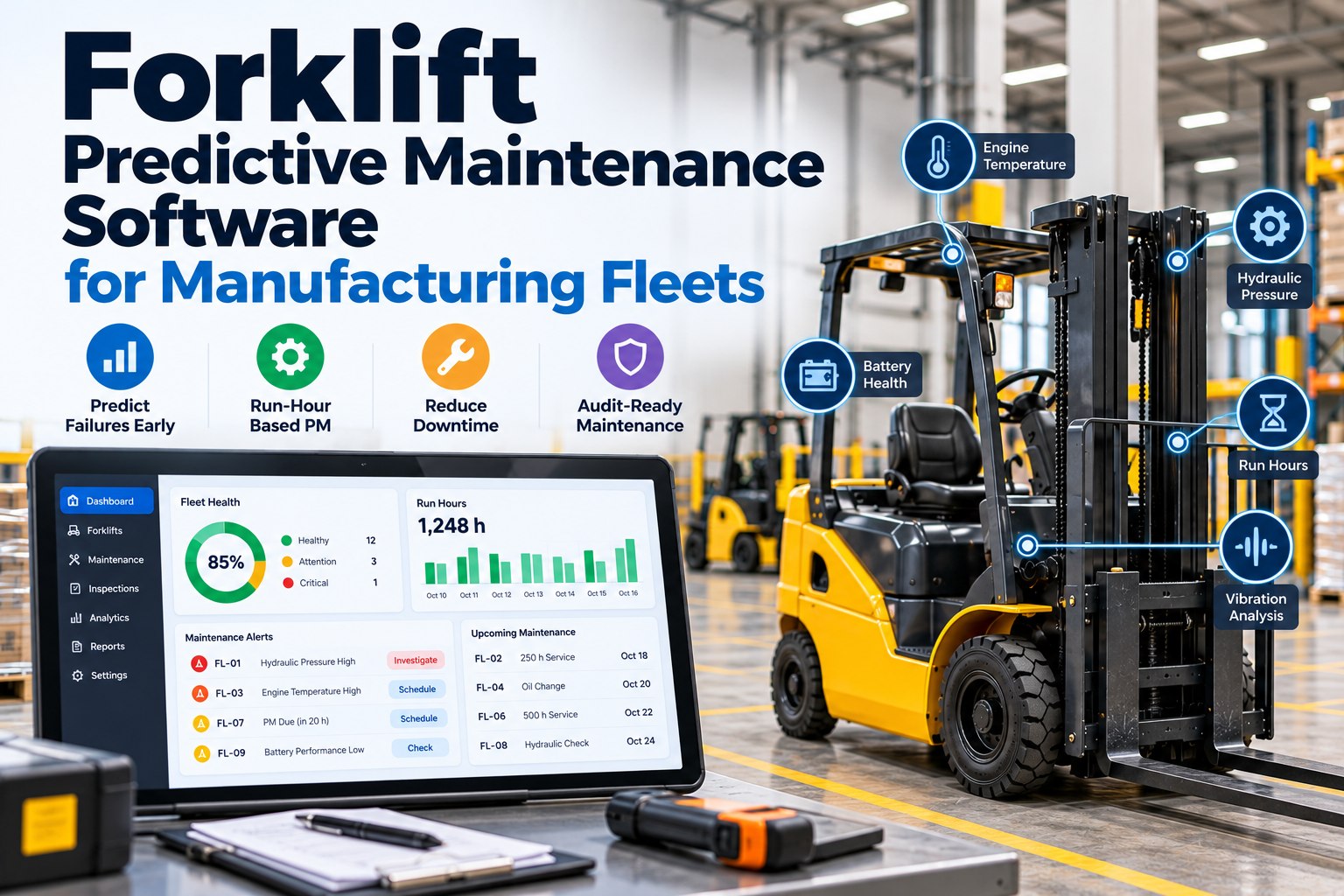
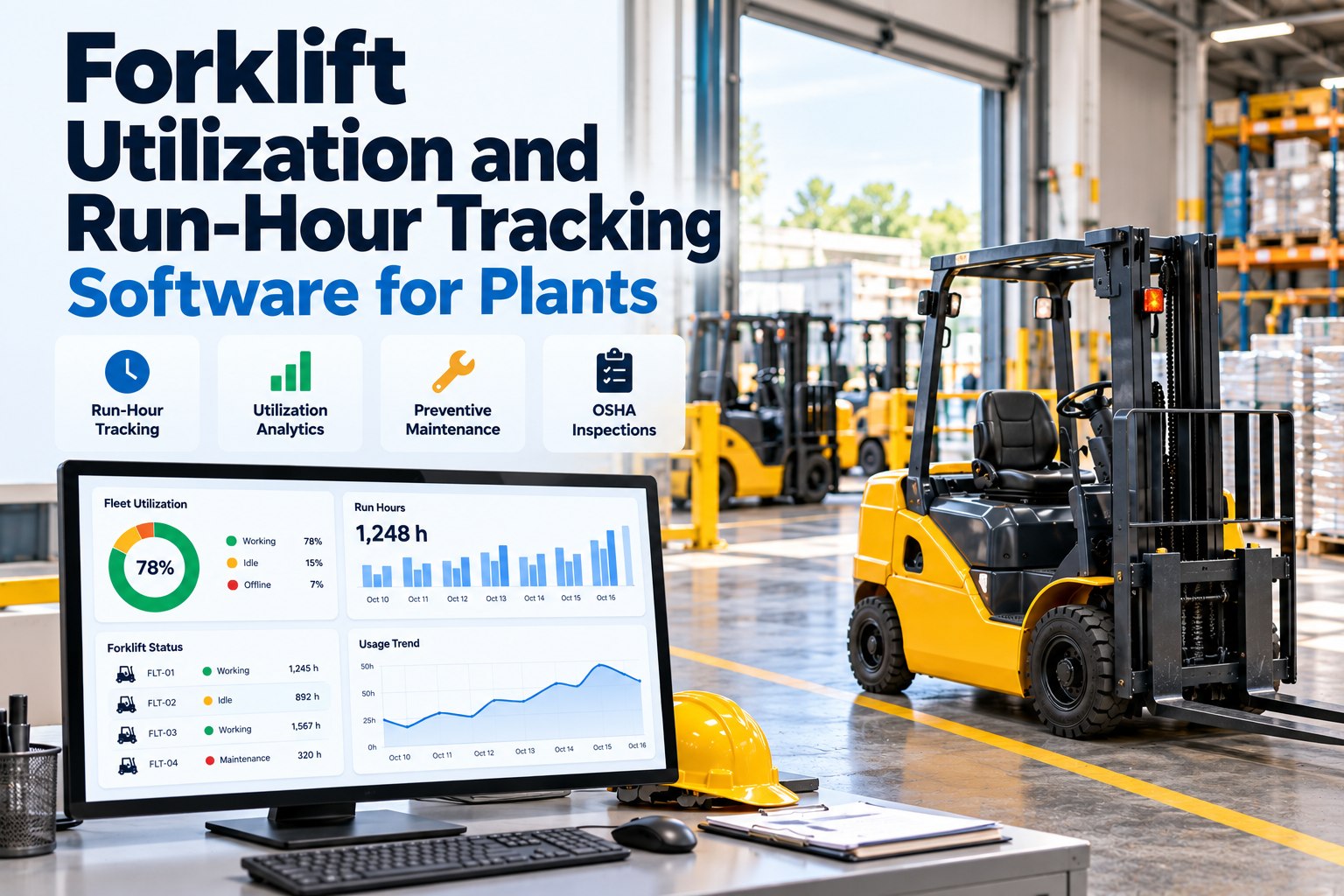
Reach truck downtime tracking software answers a question most plants can't: how many hours did each reach truck actually lose last month, and why? A reach truck that's down doesn't just stop one operator. It stops put-away, starves the line of material and pulls a counterbalance truck into aisles it was never meant for. This guide shows how to record every downtime event from the OSHA pre-shift check onward, which uptime numbers to calculate, and how to cut the hours lost. Book a 20-minute FleetRabbit demo to see reach truck uptime tracked shift by shift.
Manufacturing plants · Reach truck uptime
One week, three shifts, one reach truck. The red squares are the ones nobody planned for.
For maintenance managers and material-handling leads who need reach trucks ready at every shift change, not just most of them.
Planned vs Unplanned Reach Truck Downtime: Only One of Them Should Ever Surprise the Shift Supervisor
Every reach truck spends some time out of service. The difference between a well-run fleet and a struggling one is how much of that time was booked in advance. Tracking the two separately is the first step, because the fixes are completely different.
Run-hour PM and the annual service
Booked into a changeover, weekend or quiet shift
Parts and a technician ready before the truck arrives
Goal: make it routine and short
Failed pre-shift item or mid-shift breakdown
Truck tagged out of service under §1910.178(q)(1)
Wait for diagnosis, parts or a dealer visit
Goal: make it rare, then make it fast
Most plants only notice unplanned downtime. Recording both on each truck's preventive maintenance record shows whether PM is actually replacing breakdowns or just adding to time off the floor. You can start logging both free.
MTBF, MTTR and Availability for Reach Trucks: Three Formulas and One Worked Month
Three standard reliability measures turn a pile of downtime records into a clear picture. These are the formulas used in maintenance and reliability practice, applied to one illustrative reach truck.
MTBF · mean time between failures
Operating hours
Number of failures
600 h ÷ 4 failures
150 h between failures
MTTR · mean time to repair
Total repair hours
Number of repairs
24 h ÷ 4 repairs
6 h per repair
Availability
150 ÷ (150 + 6)
≈ 96% available
Formulas as given in Reliability Magazine's maintenance KPI reference, which points to SMRP Best Practices for targets. Example values are illustrative.
The levers are obvious once the numbers are split: fewer failures raise MTBF; faster diagnosis and parts on the shelf cut MTTR. A short walkthrough shows these calculated from real work orders.
Where Reach Truck Downtime Comes From: Grouping Every Event by System Shows Where the Hours Go
Forklift dealers' lists of common breakdown causes are remarkably consistent: poor battery care, hydraulic leaks, worn wheels, skipped servicing, operator damage and small problems left unreported. On a reach truck, add the reach mechanism and sensors. Code each event by system and a month of records shows which ones cost the most hours.
Downtime hours by system · one reach fleet, one quarter
Illustrative
Load and drive wheels
24 h
Reach mechanism pins and bushings
13 h
Controls, sensors and error codes
9 h
In this example, the top three systems account for about 70% of lost hours, so that's where PM and spare parts should focus first.
Cause categories drawn from Acclaim Handling, "10 common causes of forklift breakdown" (2026). Hours are illustrative.
Code it once · see it forever
Tag every reach truck downtime event by system, and see where your lost hours really go
Out of Service Until Repaired: How the OSHA Pre-Shift Check Starts and Stops the Reach Truck Downtime Clock
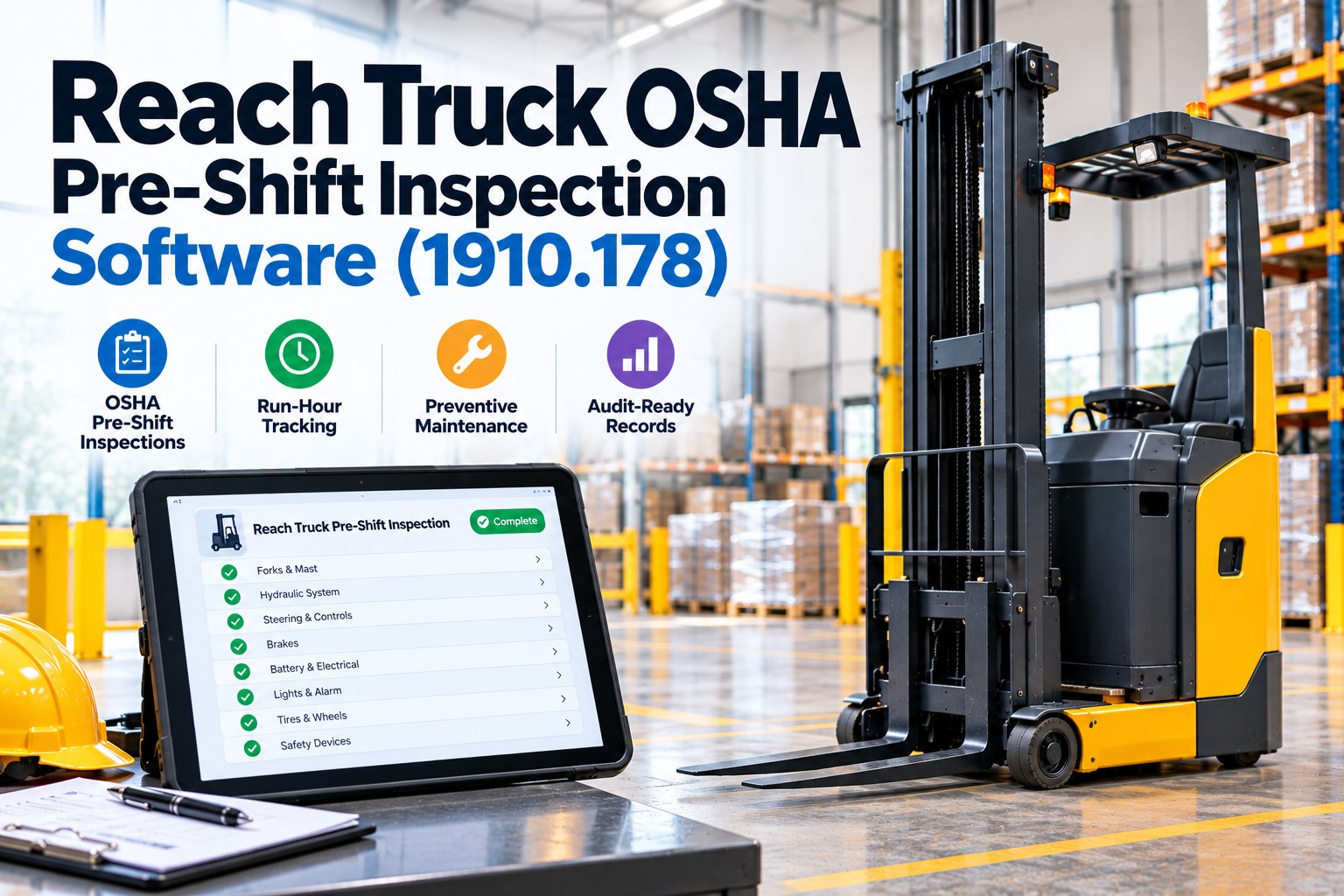
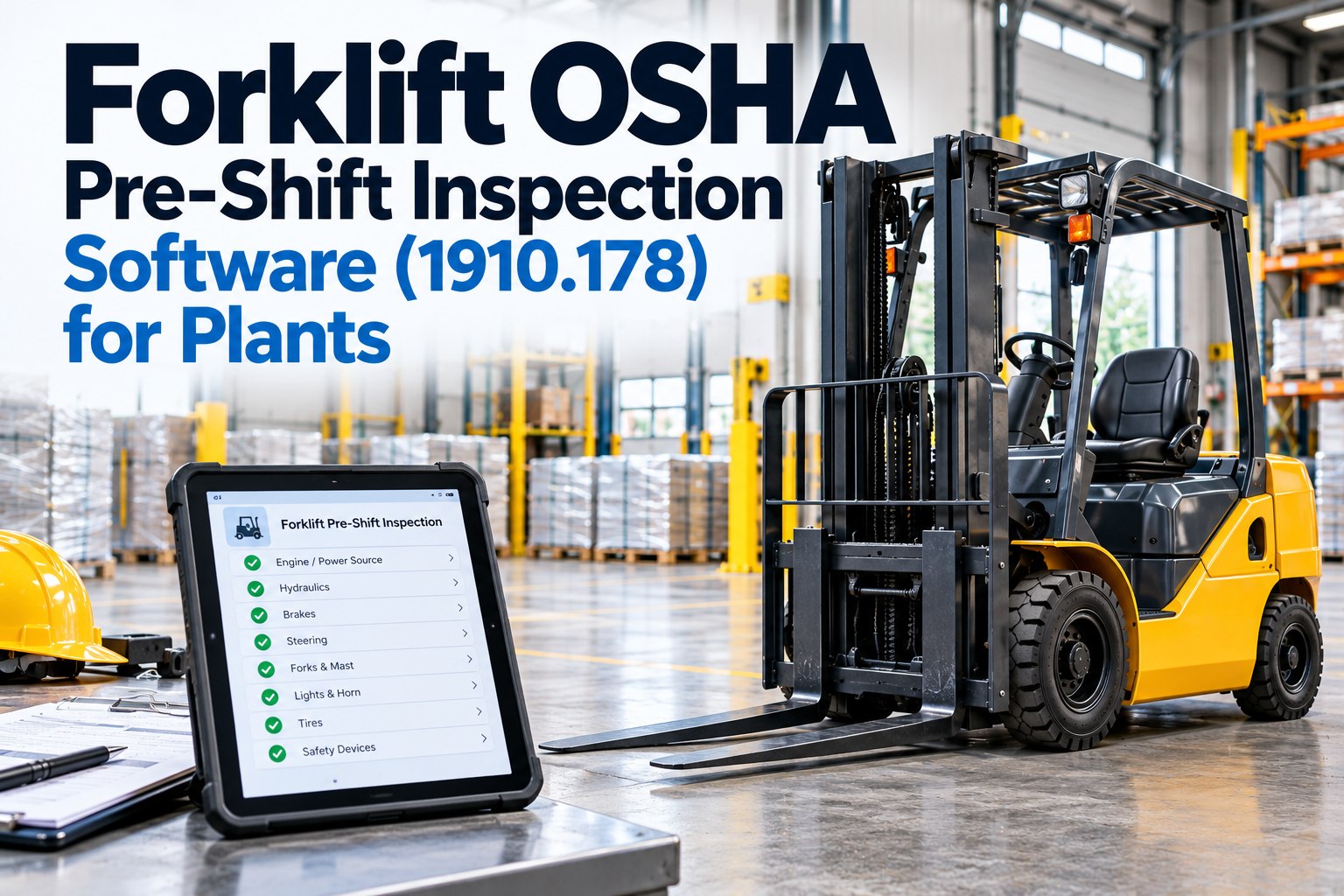
OSHA requires each truck to be examined before it's placed in service, at least daily (§1910.178(q)(7)). A truck in unsafe condition must be removed from service (§1910.178(q)(1)) and stay out until repaired (§1910.178(p)(1)). Those same moments are the natural start and stop of a downtime record.
05:58
Pre-shift check fails
Operator flags a leaking tilt cylinder, with a photo. Truck tagged out of service.
Clock starts
06:10
Work order opened
Maintenance sees the photo and the truck's history before walking over.
Diagnosis
06:40
Seal kit pulled from stock
No wait for the dealer because the kit was on the shelf.
Parts
08:15
Repaired and tested
Authorized technician signs off; next pre-shift check passes.
Clock stops · 2 h 17 m
Because the record starts at the pre-shift inspection itself, there's no gap between "the operator found it" and "maintenance heard about it." That gap is often the longest part of the downtime.
Five Ways Plants Cut Reach Truck Downtime Without Adding Another Truck to the Fleet
A spare reach truck hides downtime; it doesn't reduce it. These five habits go after the hours themselves.
!
Report the small things the same day
Noises, warning lights and slow lifts are early warnings. A photo on the pre-shift check beats a note on a whiteboard.
Raises MTBF
⚡
Run a battery routine, not battery rescues
Charging, watering and equalizing on schedule, logged per battery, so a truck doesn't die mid-shift.
Raises MTBF
◎
Stock the top downtime parts
Load wheels, seal kits, pin and bushing sets, and filters on the shelf turn a two-day wait into a two-hour repair.
Cuts MTTR
h
Schedule PM on hoist and drive hours
Busy put-away trucks get mast and hydraulic service before they fail, not on a calendar that ignores their hours.
Raises MTBF
↻
Flag repeat defects automatically
The third report of the same item on the same truck opens a work order — the simplest predictive maintenance there is.
Raises MTBF
Stocking the right parts is where parts and inventory tracking pays off fastest: the downtime log shows exactly which parts reach trucks waited for last quarter.
How FleetRabbit Tracks Reach Truck Downtime and Uptime From the First Pre-Shift Check
FleetRabbit builds downtime records from the checks and work orders your team already completes, then rolls them up into uptime by truck, system and month.
Reach truck uptime · October
Sample report
Truck
Unplanned
Availability
Top cause
RT-03
2 events · 4 h
Hydraulics
RT-05
1 event · 2 h
Load wheel
RT-07
5 events · 19 h
Battery
OSHA pre-shift inspections
A failed item tags the truck out of service and starts the downtime record
Downtime by system
Every event coded by cause, with MTBF, MTTR and availability per truck
Run-hour PM
Planned service on drive and hoist hours, tracked separately from breakdowns
Audit-ready by default
Tags, repairs, sign-offs and return-to-service checks on one record
What the 20-minute demo covers
A failed pre-shift item starting a downtime record
Cause codes set up for reach truck systems
MTBF, MTTR and availability by truck
The parts that caused the longest waits
Reach Truck Downtime Tracking Software: Questions Plant Teams Ask
What counts as reach truck downtime?
Any time a scheduled truck can't work: from a failed pre-shift check or breakdown until it's repaired and passes its next check. Track planned PM separately from unplanned breakdowns.
How do you calculate reach truck availability?
A common formula is MTBF ÷ (MTBF + MTTR), or uptime ÷ (uptime + downtime) over a period.
What causes the most reach truck downtime?
Common causes include battery and charging problems, worn wheels, hydraulic leaks, skipped servicing, operator damage and small problems left unreported. Your own cause log shows which matter most in your plant.
Does OSHA require taking a faulty reach truck out of service?
Yes. Under §1910.178(q)(1) and (p)(1), a truck that isn't safe must be removed from service and stay out until repaired.
How does downtime tracking support predictive maintenance?
Coded events show which systems fail repeatedly on which trucks, so service and parts can be planned before the next failure.
Can we start with a few reach trucks?
Turn Every Red Square on Your Reach Truck Calendar Into a Planned One
Downtime recorded from the first failed check, coded by cause, measured as MTBF, MTTR and availability, and cut with the right PM and parts.
Free for up to 3 units · No credit card required
October 23, 2026
By Emily Parker
All Posts