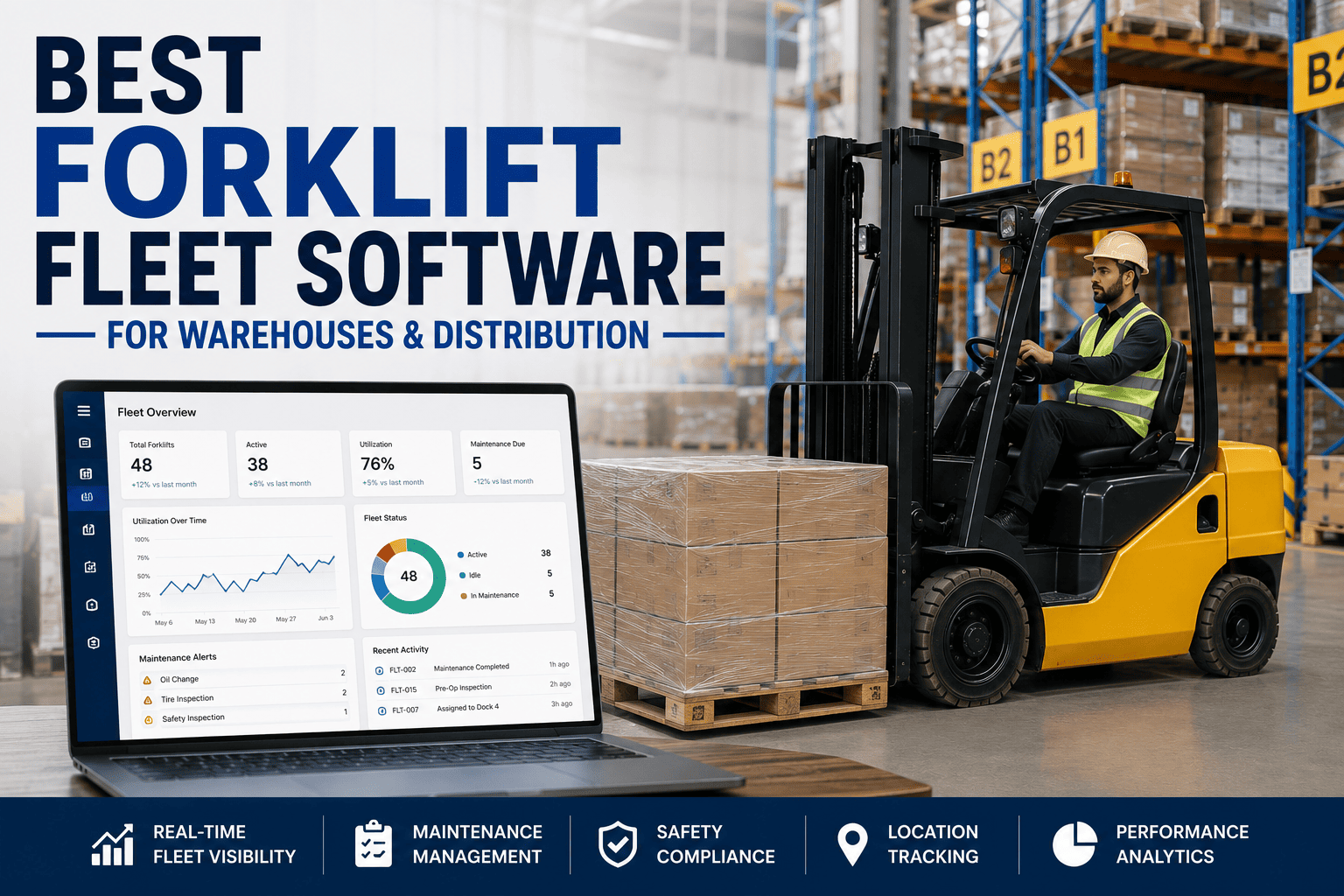
A distribution center running three shifts through peak season asks something different of forklift fleet software than a slow-moving manufacturing plant ever will. Order volume swings by the week, dozens of operators rotate through the same trucks, and every minute a reach truck spends traveling empty is a minute it isn't picking. The best forklift fleet software for warehouses and distribution centers is built around that throughput pressure, not retrofitted from a generic asset tracker. Here is what actually separates warehouse-grade fleet software from the rest, based on how high-volume DCs are running their fleets in 2026.
The best forklift fleet software for warehouses connects directly to your WMS or WES, tracks utilization across multiple shifts, and scales up or down for peak season without a manual reconfiguration. Warehouses without this visibility typically run fleets at only 35 to 55 percent utilization. FleetRabbit gives distribution centers the throughput-focused tracking, task-aware data, and ERP integration that high-volume operations need.
Why Warehouse Fleets Need Different Software Than Manufacturing Plants
Manufacturing forklift fleets move at a relatively steady pace tied to production schedules. Warehouse and distribution fleets do not have that luxury. Order volume can double during a promotional week and drop back the next, and the software managing the fleet needs to keep up without a rebuild every time demand shifts.
Core Capabilities Warehouses and DCs Should Look For
Vendors package these features differently, but the following four capabilities show up consistently across the platforms high-throughput operations actually stick with.
| Capability | What It Does | Why It Matters in a DC |
|---|---|---|
| WMS and WES Integration | Connects fleet location and utilization data directly to warehouse execution systems | Prevents fleet data from living in a silo disconnected from picking and dock operations |
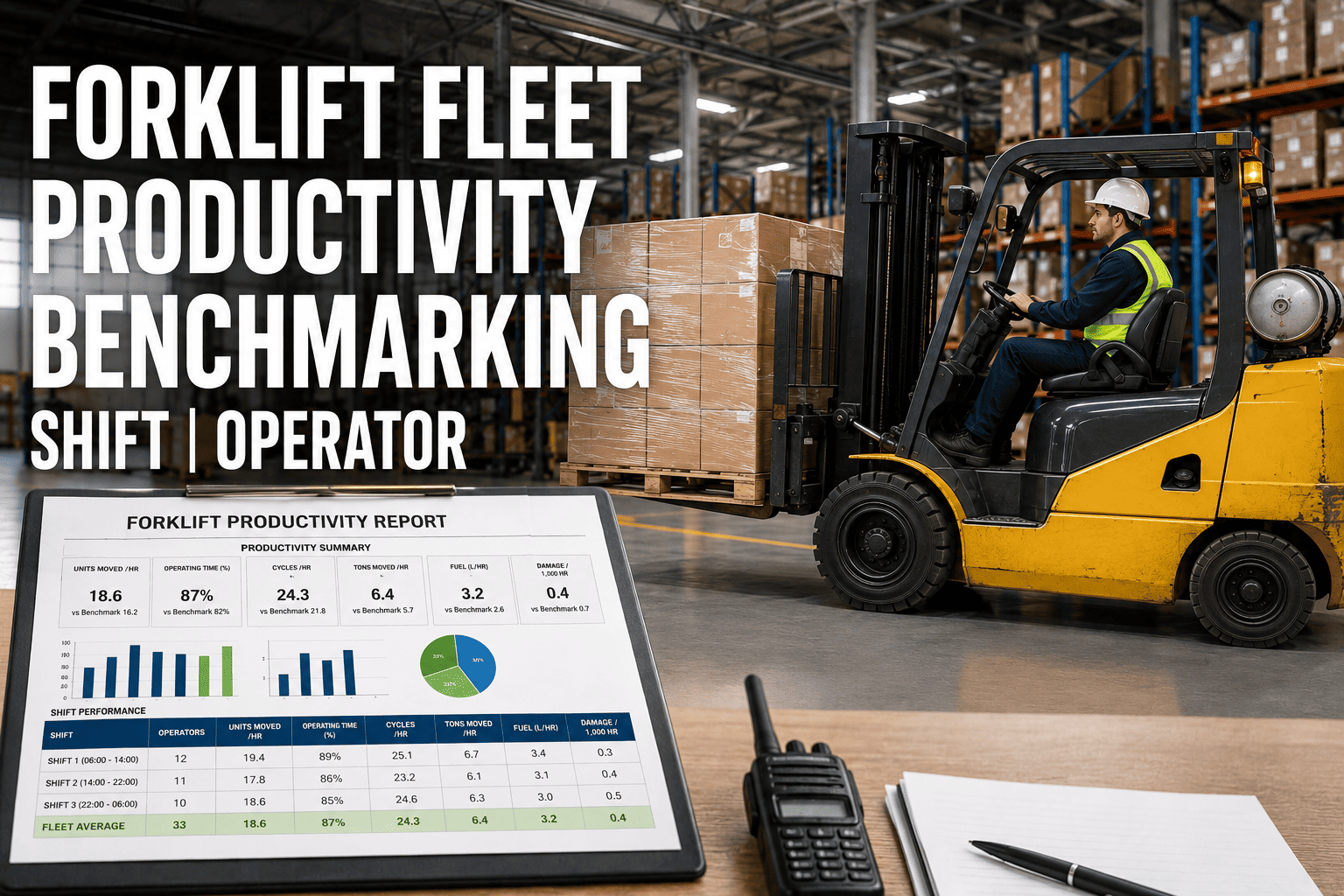
| Multi-Shift Utilization Tracking | Attributes run hours, idle time, and damage to the specific operator on shift | Reveals which shifts, zones, or operators are driving fleet wear the fastest |
| Elastic Fleet Onboarding | Adds rented or seasonal trucks to the platform quickly and retires them just as fast | Keeps peak-season equipment visible and inspected without a manual setup delay |
| Zone-Level Location Data | Shows which aisle, dock, or pick zone each truck is active in right now | Lets supervisors reroute trucks to congested zones instead of guessing where capacity is short |
FleetRabbit connects your forklift fleet directly to WMS and ERP data, tracks utilization across every shift, and scales with your fleet during peak season. Sign up for a free trial and see your current fleet utilization today, or book a demo to walk through your DC's shift structure with a specialist.
Managing Fleet Software Through Peak Season
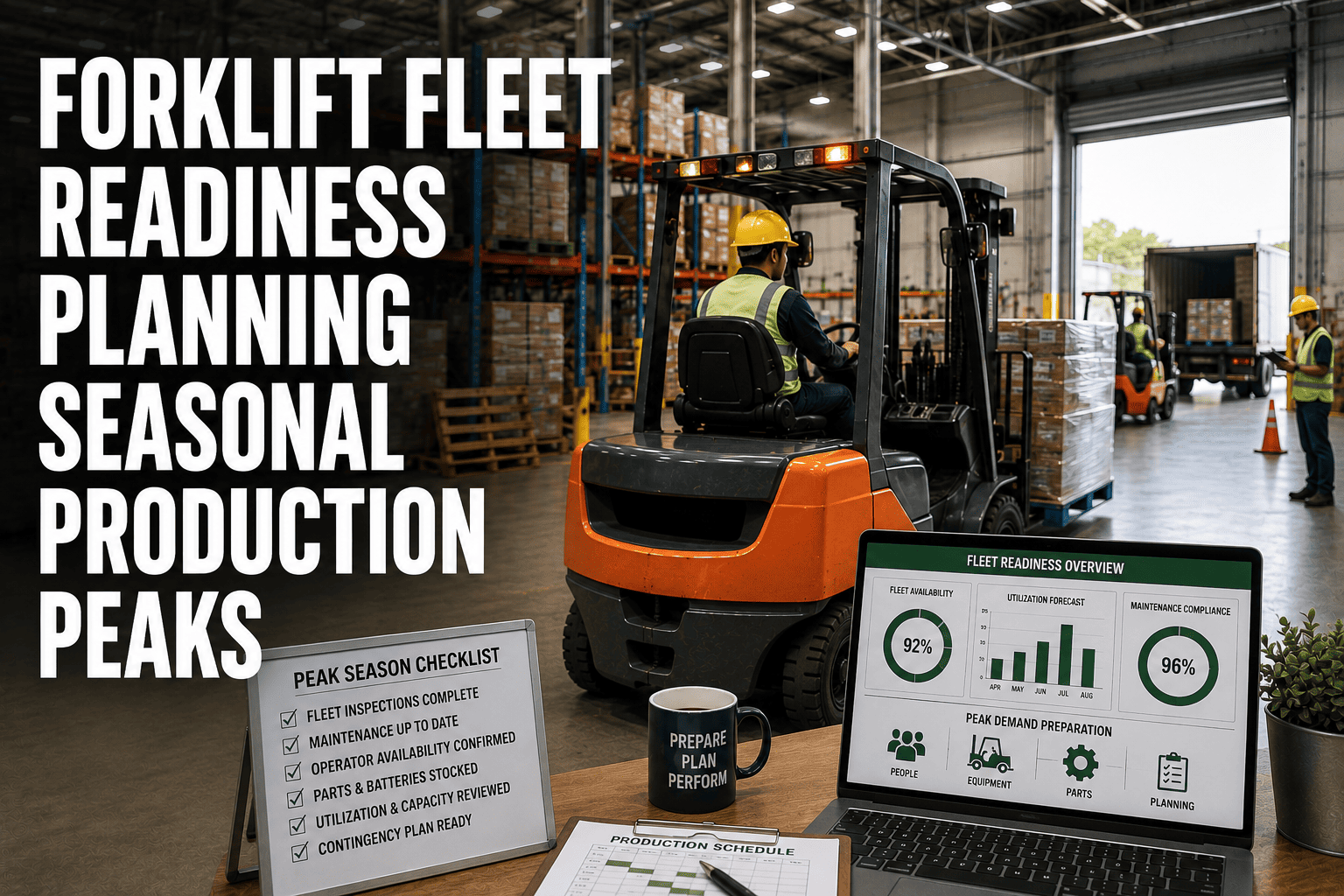
Peak season is where most warehouse fleet software either proves its worth or falls apart. The difference usually comes down to how the platform handles temporary capacity.
Elastic Capacity Planning
Rented forklifts and seasonal operators need to be visible in the same dashboard as permanent equipment the moment they arrive, not after a manual data entry backlog clears. Software that treats onboarding as a quick scan-and-go step keeps inspection and utilization tracking intact even when the fleet temporarily doubles.
Rebalancing Across Zones in Real Time
Order surges rarely hit every zone evenly. Location data that shows exactly where trucks are idle versus where pick rates are backing up lets supervisors reroute equipment mid-shift instead of discovering the imbalance in next week's report.
Post-Peak Right-Sizing
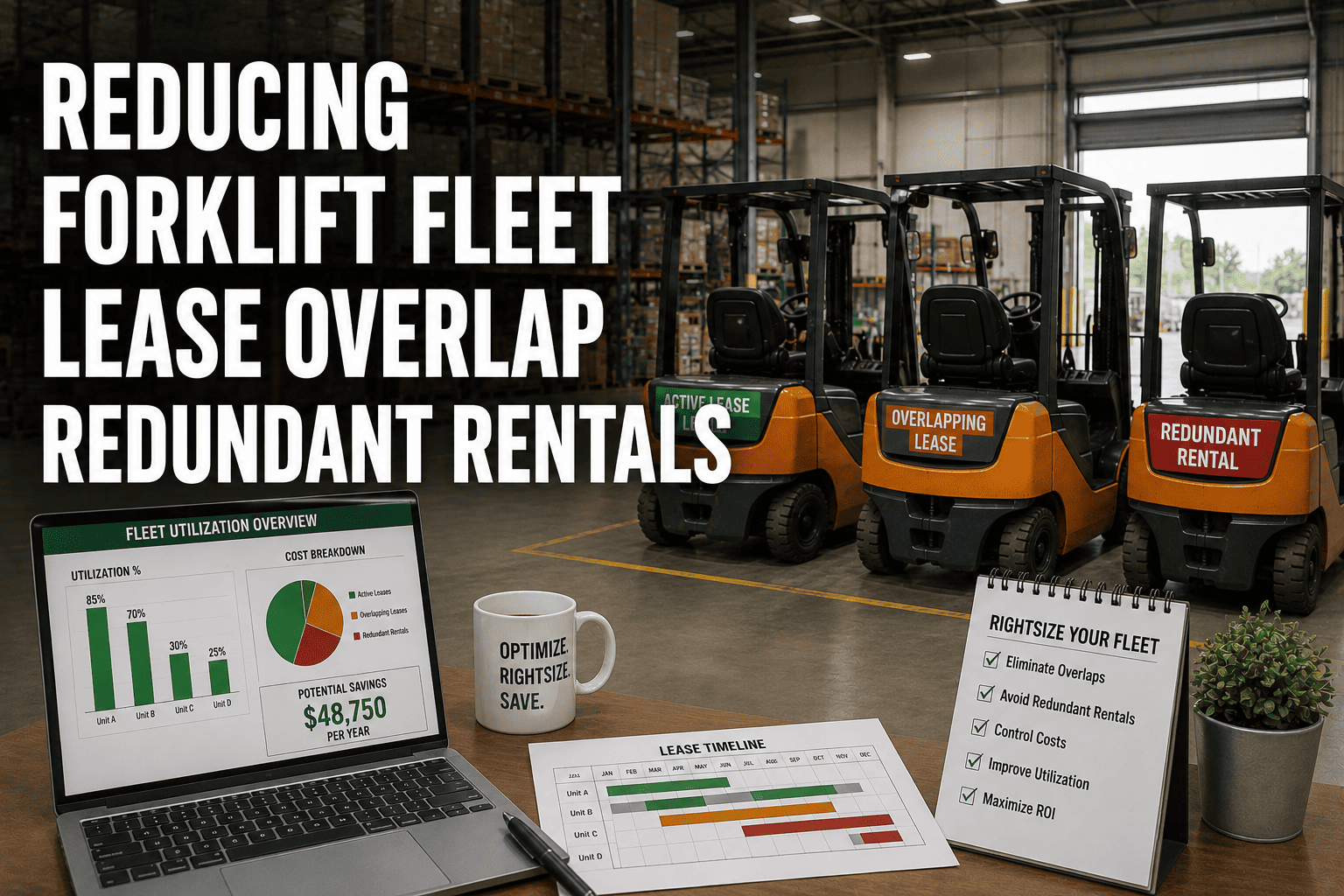
Once volume drops back down, utilization data makes it obvious which rented units to release first and which permanent trucks can absorb the leftover workload, avoiding the common trap of keeping extra rented equipment out of habit.
Connecting Fleet Data to Your WMS
Fleet software that never talks to your warehouse management system leaves half the picture missing. Order data lives in the WMS, but the equipment fulfilling those orders lives in the fleet platform, and the gap between them is where inefficiency hides.
Task-Aware Utilization
Instead of just showing run hours, WMS-connected fleet data can tie truck activity back to specific putaway, picking, or replenishment tasks, showing which workflows are consuming the most fleet capacity.
Fewer Empty Travel Miles
When fleet location data feeds back into dispatch logic, warehouses can combine tasks so a truck rarely travels empty between a put-away and a nearby pick, a principle already proven in advanced warehouse execution systems. Applying that same logic to forklift routing compounds the utilization gains fleet software already delivers. If you want to see how this connects to your current WMS, a quick demo call is the fastest way to check compatibility.
Frequently Asked Questions
Warehouses and distribution centers do not have the luxury of a predictable pace, and their fleet software shouldn't pretend otherwise. The platforms that hold up through peak season are the ones built around multi-shift visibility, fast equipment onboarding, and a direct line back to the WMS driving every pick and putaway on the floor.
FleetRabbit connects warehouse forklift fleets to WMS data, tracks utilization across every shift, and scales with you through seasonal surges. Start your free trial today with no credit card required, or book a short demo and see your fleet data in action.