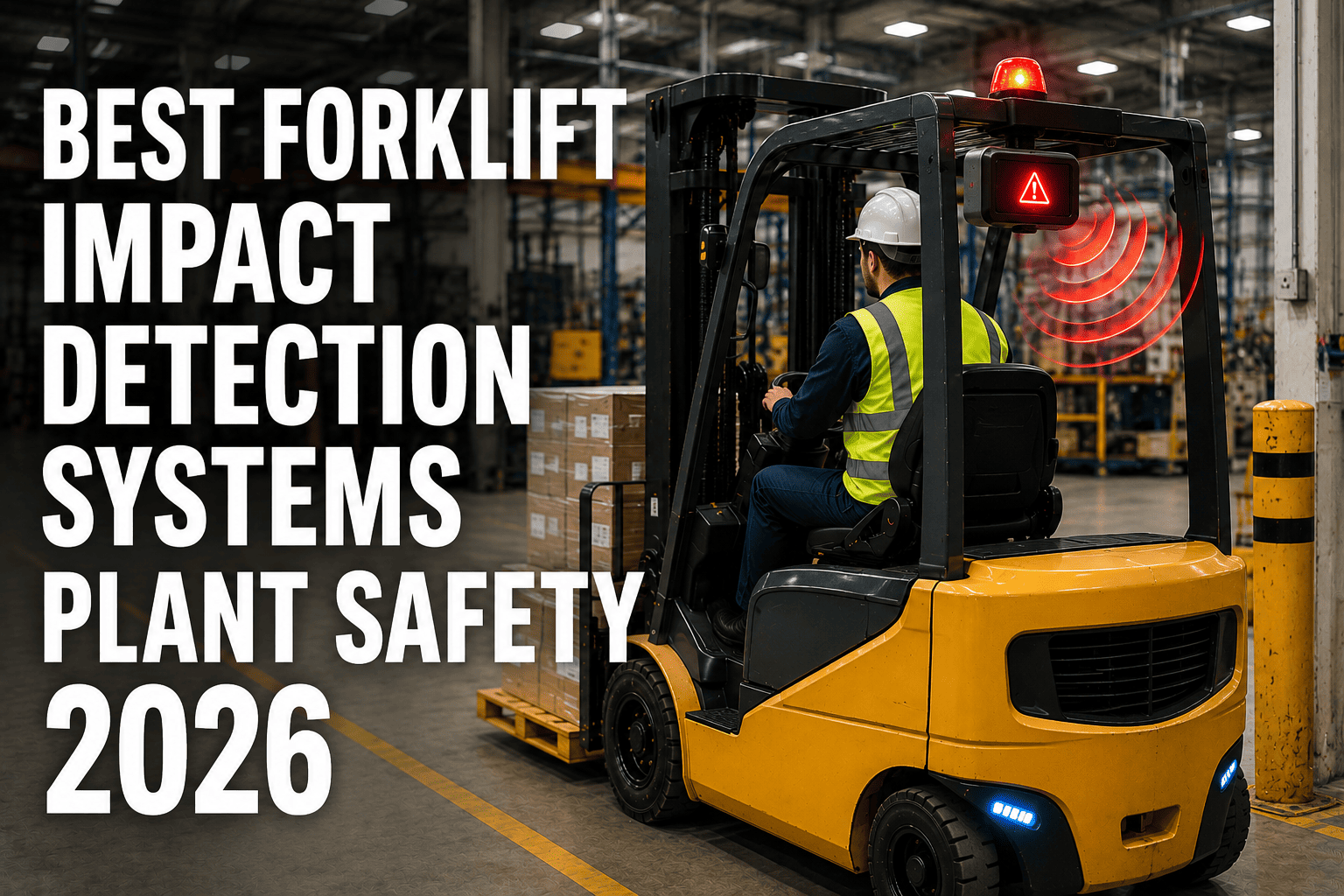
Every forklift collision that goes unreported is a liability bomb ticking on your plant floor. Operators hide minor crashes, damage compounds silently, and when a serious incident finally occurs, the plant has no data trail to defend itself. The best impact detection systems for 2026 log every collision with operator identity, location, and severity automatically. Comparing these systems before investing is critical for plant safety. FleetRabbit ties impact events directly to plant safety programs and maintenance workflows. You can sign up for FleetRabbit to protect your plant, or book a demo to see our platform.
Over 60 percent of forklift impacts go unreported by operators, leaving damage to compound and liability to build silently. Plants without detection systems pay 20,000 to 100,000 dollars annually in hidden damage and rack repairs. Modern impact detection with operator identification reduces collision rates by 40 to 60 percent and creates the documentation trail that protects plants during investigations.
What Impact Detection Systems Actually Do
Impact detection systems answer the question every plant manager dreads: what is hitting what, and who is driving. These systems use accelerometers and telematics sensors mounted on each forklift to detect collision-level g-forces in real time. The moment an impact occurs, the system logs the event, capturing the exact time, the truck involved, the operator logged in via PIN, and the location within the facility. This data flows instantly to supervisors, who can intercept the truck before the damage is hidden and inspect it before it returns to service. The best systems in 2026 go beyond detection, automatically generating inspection work orders and building the longitudinal safety record that protects plants during audits and lawsuits.
The Core Capabilities That Matter in 2026
When comparing impact detection systems, several capabilities separate genuine plant-grade platforms from basic sensor kits. Real-time alerting is essential, because an alert that arrives after the shift ends is worthless. Operator identification through PIN or RFID access is critical, because an impact without a driver attached cannot drive coaching or discipline. Location data tells you where risk concentrates, whether it is a blind corner in aisle 12 or a congested staging area. Finally, threshold tuning matters enormously, because a system that fires on every pothole trains supervisors to ignore it, while one tuned too loose misses the low-speed rack strikes that cause the most cumulative damage.
Why Detection Data Protects the Plant Legally
Detection data is the plant's strongest legal defense. When a forklift strikes a pedestrian and the family sues, their lawyer will argue the plant ignored a pattern of unsafe operation. With a detection system, the plant can produce a complete record: every impact logged, every operator coached, every truck inspected after each event. This documentation proves an active safety culture and transforms the plant from a negligent operator into a responsible one. To build this documentation trail, you can sign up for FleetRabbit to protect your plant, or book a demo to see our platform.
FleetRabbit logs every collision with operator identity, location, and severity, then generates inspection work orders automatically. Stop letting hidden damage compound and start building a defensible safety record. Start your free trial today.
Comparing the Best Systems for Plant Safety
Not every impact detection product is built for the realities of a manufacturing plant. Some are simple aftermarket sensors with no software ecosystem, others are modules of larger telematics suites with limited safety workflow. When comparing the leading options for 2026, plant managers should evaluate each system against the demands of a real facility: operator accountability, maintenance integration, safety program documentation, and the ability to tune thresholds to the specific plant floor. The comparison below breaks down the criteria that separate comprehensive platforms from basic alert devices.
| Comparison Criteria | Basic Sensor Kits | Generic Telematics | FleetRabbit 2026 |
|---|---|---|---|
| Impact Logging | Local device alert only | Event list without context | Full event with operator, location, severity |
| Operator Identity | No driver tracking | Optional, often skipped | Mandatory PIN login tied to every event |
| Real-Time Alerts | Audible beep on truck | Delayed dashboard updates | Instant push notifications to supervisors |
| Maintenance Link | None | Manual entry required | Auto-generated post-impact inspection orders |
| Safety Documentation | No records kept | Raw event data only | Coaching logs and audit-ready reports |
| Threshold Tuning | Fixed factory settings | Limited adjustment ranges | Calibrated to your floor and truck classes |
How to Evaluate Systems for Your Plant
Evaluating impact detection systems starts with understanding your plant's specific risk profile. Walk your facility and identify where damage concentrates: scored rack legs, dented dock plates, gouged door frames. These physical signatures tell you whether you need zone-level location tracking, aggressive threshold sensitivity for low-speed strikes, or a focus on operator accountability. Then run a structured pilot on your highest-risk shift, letting the system capture 30 days of real impacts before comparing vendors on how actionable their data actually is.
Running a 30-Day Detection Pilot
A 30-day pilot reveals what marketing demos cannot. Deploy detection on your highest-traffic trucks during your most demanding shift. At the end of the month, count the impacts logged versus the impacts your supervisors already knew about through traditional reporting. Most plants discover their true collision rate is 3 to 5 times higher than reported, a revelation that instantly reframes the safety conversation. The pilot also tests whether alerts arrive fast enough to matter and whether the system's operator identification survives real-world usage where drivers share trucks across breaks.
Turning Impact Data Into Behavior Change
Turning impact data into behavior change is where detection systems earn their keep. The data reveals which operators account for the majority of collisions, typically a small fraction of drivers. Armed with operator-specific impact histories, supervisors can deliver targeted coaching rather than blanket lectures that tuned-out veterans ignore. Plants that coach based on impact data typically see collision rates fall 40 to 60 percent within two quarters, because operators know every strike is logged and attributed. To start changing behavior, you can sign up for FleetRabbit to protect your plant, or book a demo to see our platform.
Why FleetRabbit Leads for Plant Safety
FleetRabbit stands apart in the 2026 impact detection landscape because detection is woven into a complete safety and maintenance workflow rather than standing alone. Every impact automatically generates a post-impact inspection work order, ensuring trucks are checked for hidden damage before returning to service. Operator PIN access means no collision is ever anonymous. Location data maps your plant's risk hotspots, guiding physical fixes like mirrors and barrier installation where they matter most. And the full event history builds the longitudinal safety documentation that satisfies OSHA auditors and defends the plant in litigation.
Connecting Impacts to Maintenance
Connecting impacts to maintenance closes the loop that most detection systems leave open. When FleetRabbit logs a collision, the truck is flagged for inspection before its next dispatch. The mechanic receives a work order detailing the impact severity and location on the truck, guiding their inspection toward likely damage. If a rack strike bent a fork, the inspection catches it before the fork fails under load. This mechanical follow-through prevents the compounding damage that turns a 500-dollar repair into a 15,000 dollar failure, and it documents that the plant took every impact seriously.
Building Your Defensible Safety Record
Building a defensible safety record is the cumulative payoff of impact detection. Each logged impact, completed inspection, and documented coaching session becomes a brick in the wall that protects the plant. When OSHA investigates an incident, you present a complete safety management system: detection that catches what humans hide, maintenance that responds to every event, and coaching that corrects behavior. When a plaintiff's attorney alleges negligence, this same record demonstrates diligence. Plants that operate this way do not just have fewer accidents, they have the proof to show for it.
Key Takeaways for Choosing a System
Choosing the best forklift impact detection system in 2026 comes down to accountability and integration. Basic sensor kits that beep without logging leave plants exactly where they started: blind and defenseless. Generic telematics with optional operator tracking produce data no one acts on. The systems that deliver real safety ROI tie every impact to a driver, alert supervisors in real time, trigger mechanical inspection, and build the coaching documentation that changes behavior over time.
FleetRabbit delivers all of these capabilities in a platform purpose-built for manufacturing safety. Plants using it typically cut collision rates in half within two quarters, eliminate the hidden damage that silently drains maintenance budgets, and walk into every audit with a complete, defensible safety record. The system pays for itself the first time it prevents a single compounding failure or shortens an incident investigation from weeks to hours.
The path forward is clear. Ask yourself how many impacts occurred on your floor last month, and whether you could name the operators involved. If the honest answer is that you cannot, your plant is absorbing damage and liability you cannot see. Plant managers who adopt impact detection systematically protect their people, their equipment, and their bottom line. You can sign up for FleetRabbit to protect your plant, or book a demo to see our platform.
Frequently Asked Questions About Impact Detection
Every unreported impact is compounding damage and building liability you cannot see. FleetRabbit logs every collision with operator, location, and severity data, then drives inspection and coaching automatically. See a 50 percent reduction in collision rates within quarters. Start your free trial today with no credit card required.