Somewhere in most manufacturing plants, an operator is driving a forklift on a certification that expired eight months ago, and nobody knows it yet. Not because anyone is careless, but because tracking a three-year re-evaluation clock for forty operators across three shifts on a spreadsheet is nearly impossible to do without a gap. Forklift operator certification software closes that gap by tracking every operator's status automatically and blocking the truck the moment someone falls out of compliance. Here is what OSHA actually requires under 29 CFR 1910.178(l), and what the best certification software does to keep your plant ahead of it.
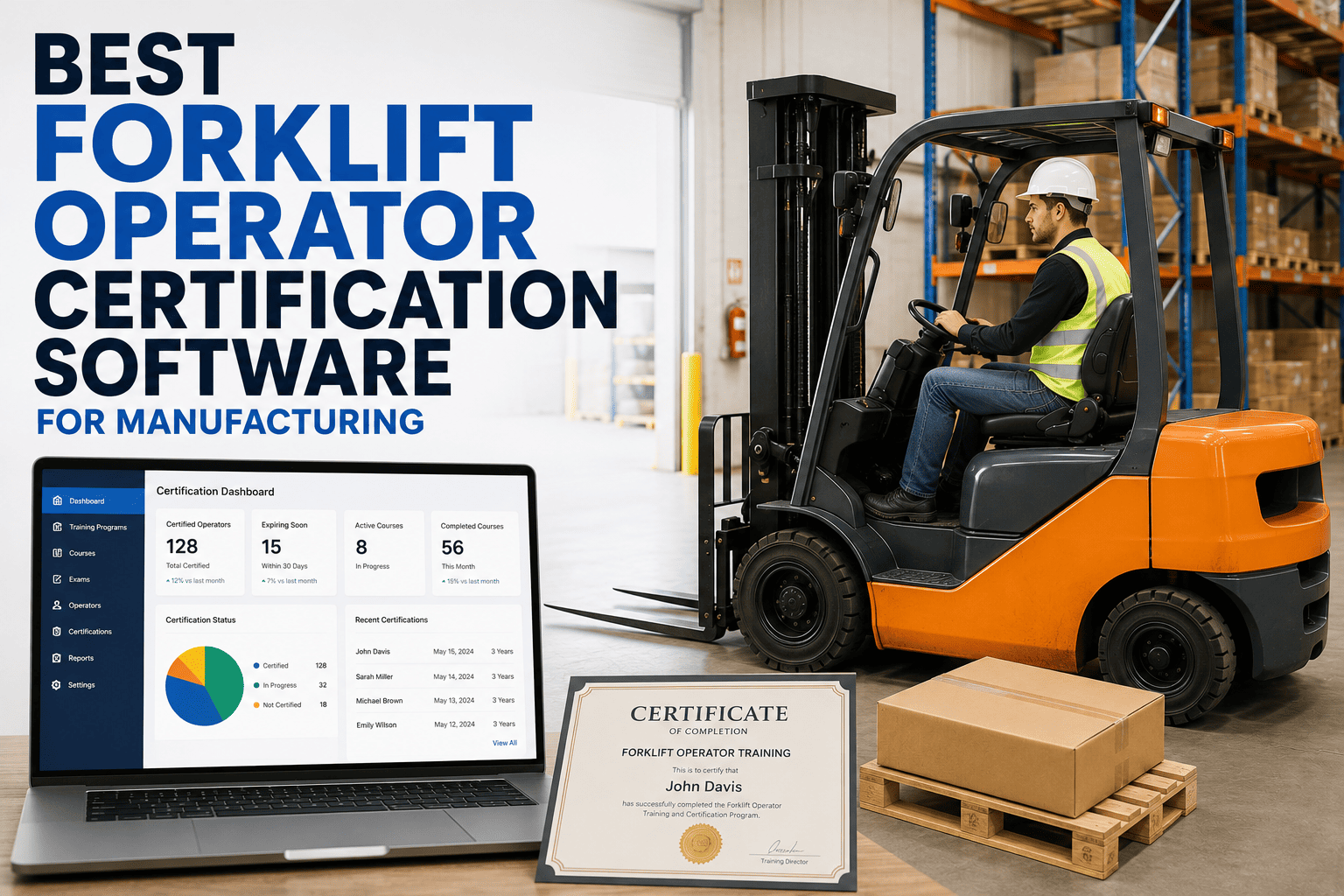
OSHA 29 CFR 1910.178(l) requires formal instruction, hands-on practical training, and a workplace performance evaluation for every forklift operator, re-evaluated at least once every three years. Five specific events also trigger earlier refresher training. The best certification software tracks every operator's status automatically, flags upcoming deadlines before they lapse, and blocks a truck from starting if the assigned operator's certification has expired.
What OSHA Actually Requires Under 1910.178(l)
Forklift certification is not a card that expires on a fixed date from a training vendor. It is an employer obligation built from three specific components, evaluated on a recurring cycle that the employer is responsible for tracking.
The Three-Year Clock Is a Floor, Not a Ceiling
1910.178(l)(4)(iii) requires this evaluation at least once every three years, regardless of an operator's safety record. That three-year mark is the maximum interval allowed, not a target. Plants that treat it as a target routinely get caught off guard by the five specific events that require refresher training much sooner.
The Five Events That Trigger Earlier Refresher Training
Waiting for the three-year deadline misses the point of the standard. OSHA requires refresher training the moment any of these five situations occurs, regardless of how much time is left on the operator's evaluation clock.
| Trigger Event | What It Means |
|---|---|
| Unsafe Operation Observed | A supervisor sees the operator driving in a way that violates safe procedures, regardless of intent or outcome |
| Accident or Near-Miss | The operator is involved in an incident, whether or not it results in damage or injury |
| Different Truck Assignment | The operator is moved to a different type of powered industrial truck than they were originally certified on |
| Workplace Conditions Change | New racking, different floor surfaces, or a layout change alters the conditions the original certification covered |
| Evaluation Reveals Gaps | A performance evaluation shows the operator is not following proper safety procedures, even before a formal deadline |
FleetRabbit tracks certification status for every operator and flags refresher triggers the moment they happen, instead of relying on a spreadsheet someone has to remember to update. Sign up for a free trial and see your current operator status today, or book a demo to walk through the certification lockout workflow with a specialist.
What the Best Certification Software Actually Tracks
A shared spreadsheet can technically hold certification dates, but it cannot stop an expired operator from starting a truck, and it rarely surfaces a trigger event before someone remembers to log it. The platforms worth adopting close both gaps.
Automatic Expiration Alerts
The software should flag an operator's upcoming three-year deadline weeks in advance, giving supervisors time to schedule the evaluation instead of discovering the lapse after it happens.
Equipment-Specific Certification Records
Certification is tied to a specific truck type and workplace, not a blanket forklift license. Software needs to track which equipment class each operator is certified on, so a reach truck certification doesn't get mistaken for coverage on a counterbalance unit.
Operator Lockout on Expired Status
The strongest systems block a truck from starting if the logged-in operator's certification has lapsed, turning a paperwork gap into an active safeguard instead of a record nobody checks until an audit.
Complete Trainer and Evaluator Records
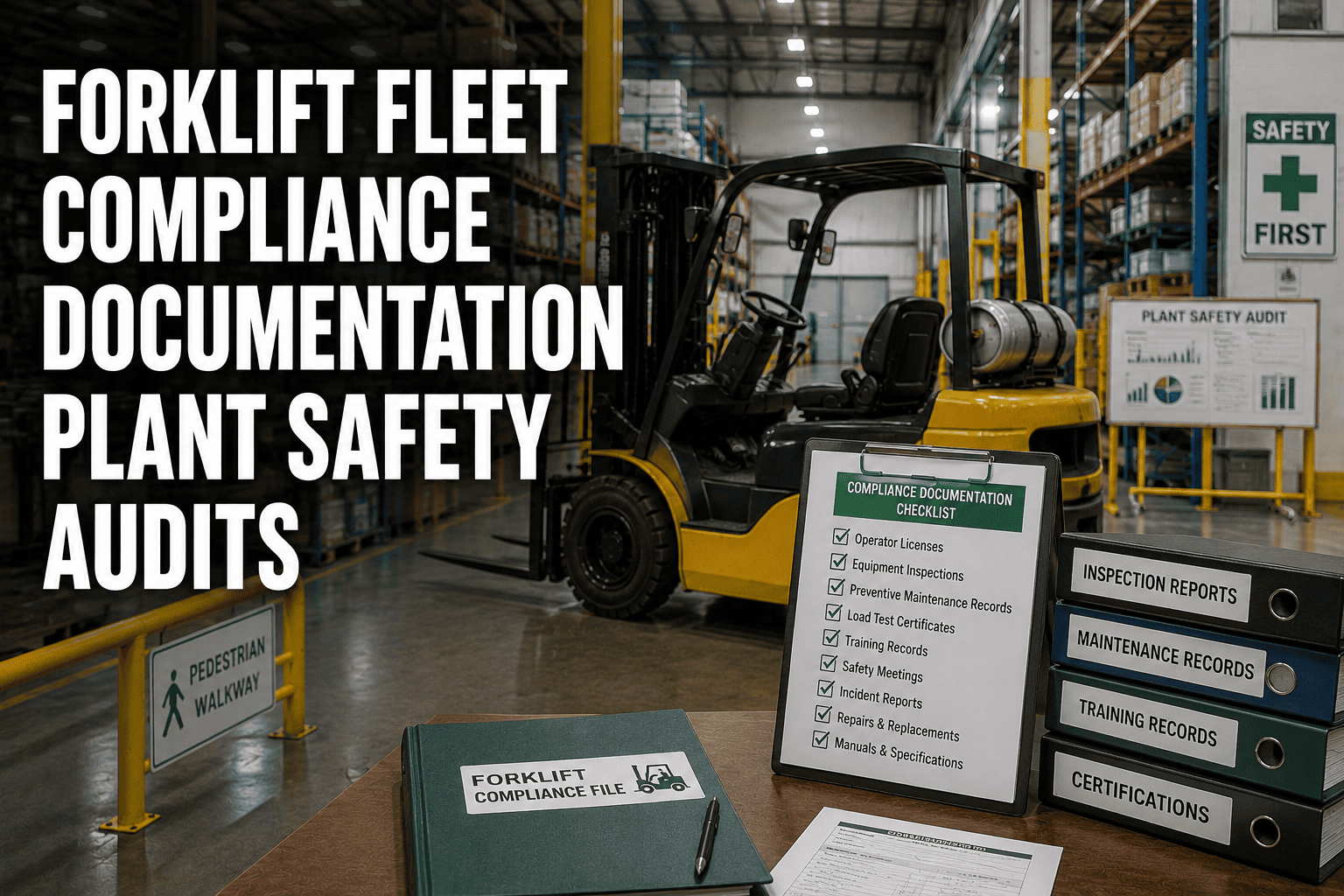
1910.178(l)(6) requires the certification record to include the operator's name, training date, evaluation date, and the identity of the person who performed the training or evaluation. Software should capture all four fields automatically, not rely on someone filling in a form correctly by hand.
What Gaps in Certification Tracking Actually Cost
Powered industrial trucks consistently rank among OSHA's most frequently cited standards, and training and refresher gaps are the two violations employers get flagged for most often.
Beyond the fine itself, a missing certification record removes the documentation a plant needs to show good faith compliance if an incident does happen. Certification tracking software closes that exposure before an auditor or an accident ever finds it. If you want to see exactly where your current operator records stand, a short demo call usually surfaces the gaps in minutes.
Frequently Asked Questions
Certification tracking is one of the easiest compliance requirements to fall behind on precisely because the deadlines are spread across years, not days. Manufacturing plants that treat 1910.178(l) as a scheduling problem, not a paperwork afterthought, are the ones that catch a lapsed certification before an operator ever starts the truck.
FleetRabbit tracks every operator's certification status, flags three-year deadlines and refresher triggers automatically, and blocks expired operators from starting a truck. Start your free trial today with no credit card required, or book a short demo and see your operator records in one place.