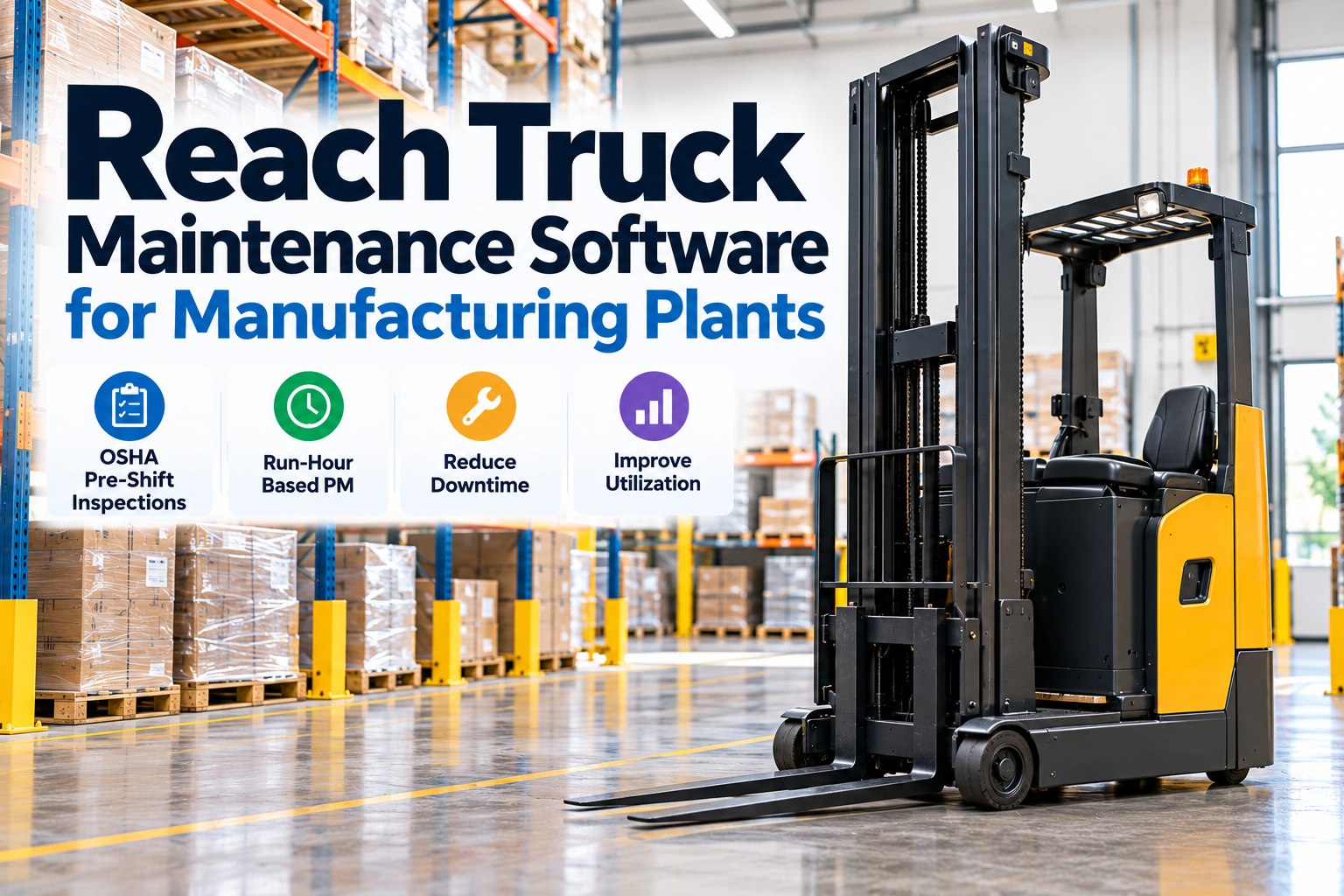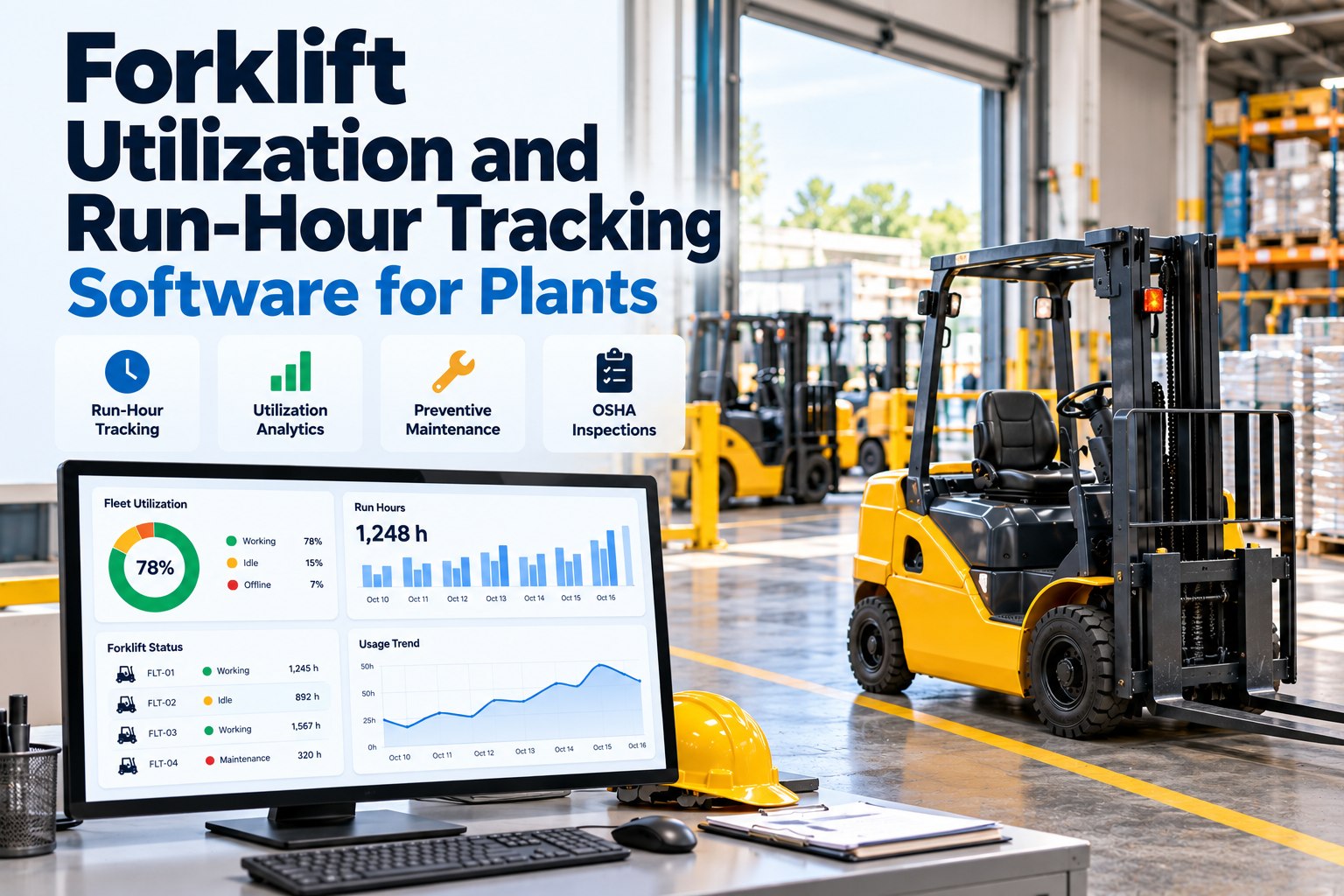
Search for forklift predictive maintenance software in 2026 and you will find no shortage of platforms claiming to stop breakdowns before they happen. Most of them are telling the truth about the technology and skipping the harder question: does the platform actually turn sensor data into a maintenance decision your team can act on, or does it just generate another dashboard nobody checks. With over half of manufacturing forklift fleets still running on a break-fix model, picking the right platform is less about chasing the newest AI buzzword and more about finding software built specifically for how material handling equipment actually fails.
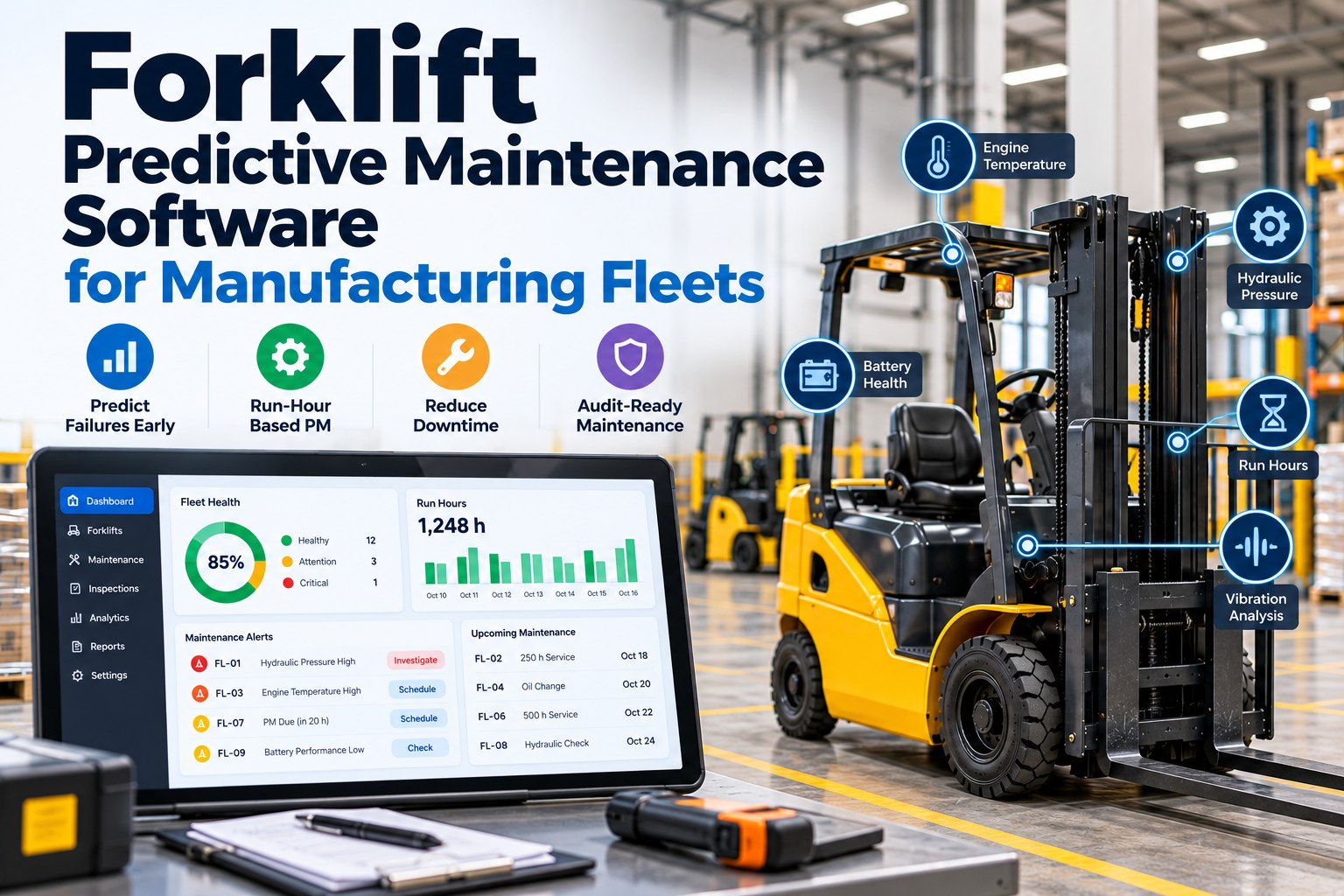
The best forklift predictive maintenance software combines telematics usage data, vibration and temperature sensors, and historical failure patterns to forecast component failures 72 to 96 hours in advance, giving maintenance teams time to schedule repairs during planned downtime instead of reacting to a breakdown on the floor. Look for a platform that is brand agnostic across your fleet, ties predictions to individual asset history, and connects directly to work order creation. FleetRabbit builds all of this into one system purpose-built for manufacturing material handling fleets.
What "Best" Actually Means for This Category
Predictive maintenance software gets marketed as a single category, but the platforms inside it vary enormously in how much genuine prediction they deliver versus how much is just a fixed maintenance calendar with a modern interface. Before comparing options, it helps to know what separates the two.
FleetRabbit forecasts component failures using telematics, sensor data, and repair history specific to your fleet, then schedules the fix before the breakdown happens. Sign up to explore it on your own trucks, or book a demo for a guided tour.
Feature Checklist: What the Top Platforms Include
Use this checklist to evaluate any predictive maintenance platform you are considering, forklift-specific or otherwise. A platform missing more than one or two of these is likely offering scheduled maintenance dressed up as prediction.
| Feature | Why It Matters | FleetRabbit Coverage |
|---|---|---|
| IoT and Telematics Integration | Continuous usage, vibration, and temperature data is the raw material every prediction depends on | Included across indoor and outdoor forklift tracking |
| Per-Asset Failure Probability | Fleet-wide averages miss the truck that is actually about to fail | Individual scoring by truck, not fleet-wide estimates |
| 72-96 Hour Advance Alerts | Enough lead time to schedule repair during planned downtime instead of a shift stoppage | Built into the predictive maintenance engine |
| Automatic Work Order Creation | A prediction that requires manual follow-up gets missed during a busy shift | Work orders generate automatically from flagged predictions |
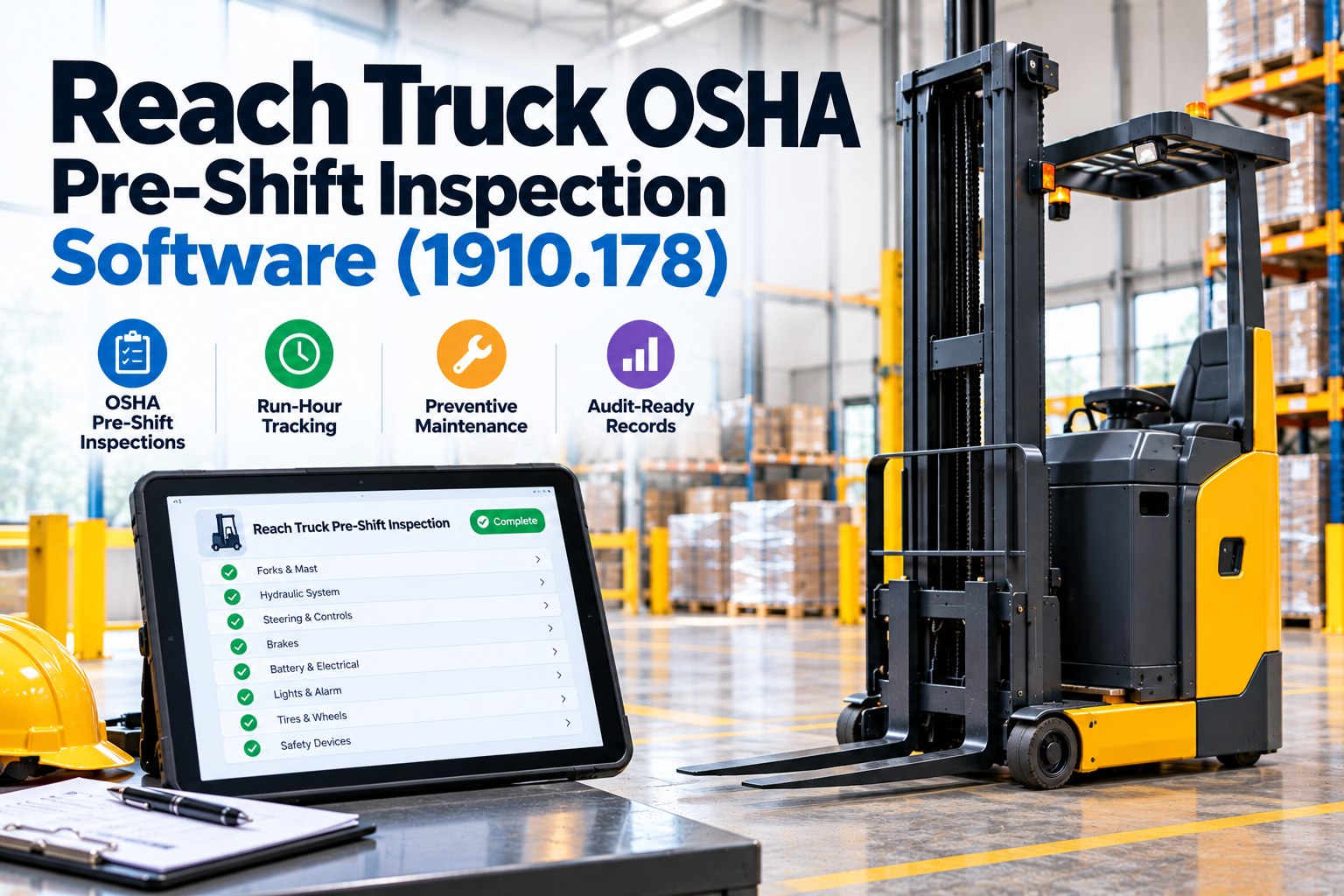
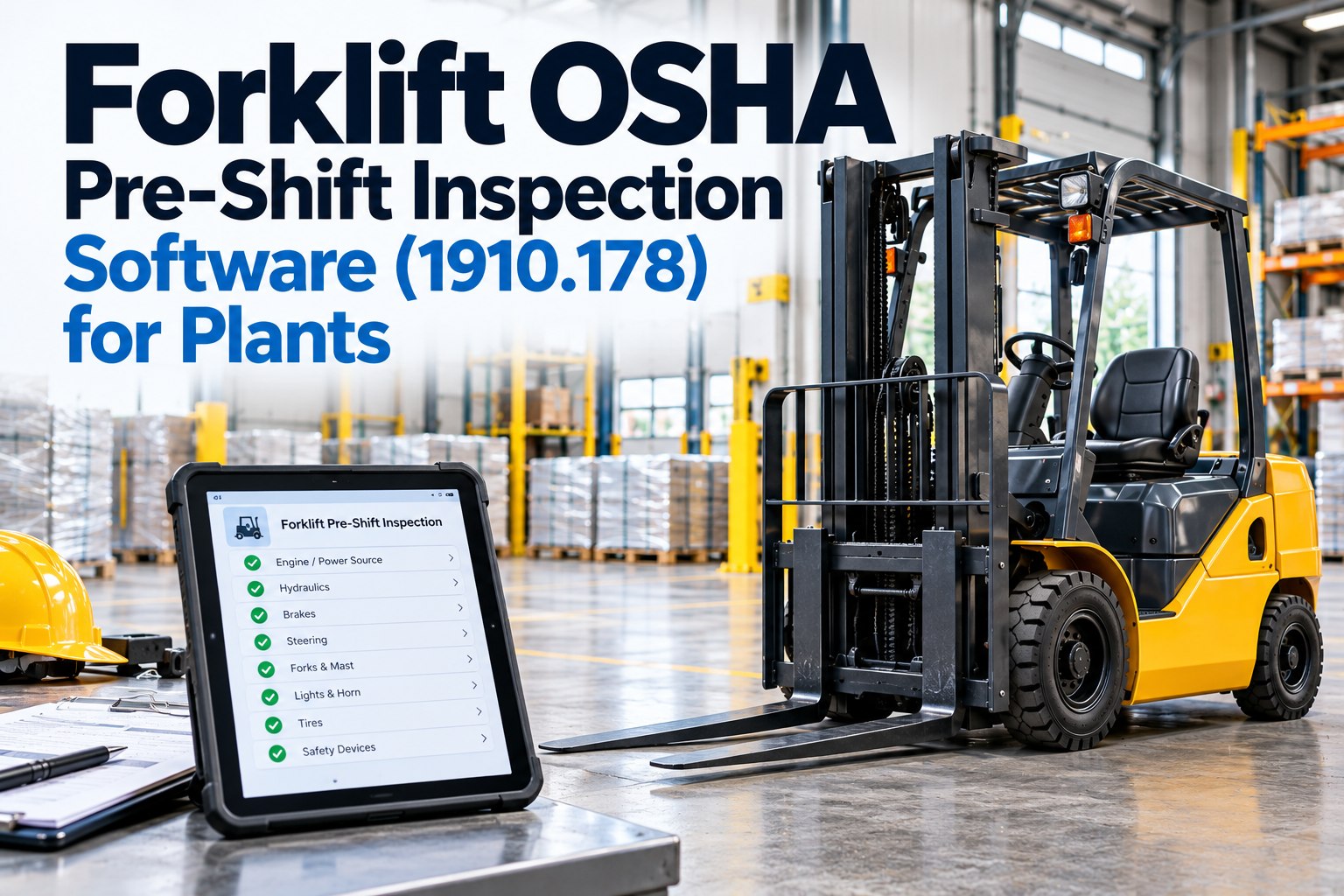
| Digital OSHA Pre-Shift Inspections | Inspection data feeds the prediction model and closes a separate compliance gap | Mobile inspections with photo capture, tied to each asset |
| Brand-Agnostic Data Ingestion | Mixed-brand fleets need one dashboard, not one login per manufacturer | Works across Toyota, Hyster, Crown, and other major brands |
How Predictive Maintenance Actually Forecasts a Failure
The best platforms do not treat every forklift the same way. They combine several layers of data specific to each individual truck to build a failure probability, rather than relying on a single input like elapsed calendar time.
Usage hours from telematics establish the baseline wear rate for each truck's transmission, hydraulics, and drivetrain. Vibration and temperature sensors catch developing mechanical issues, like a bearing running hotter than normal, well before they become audible or visible. Historical failure patterns by make and model let the system recognize that a specific component on a specific truck model tends to fail around a certain usage threshold. Operator behavior scoring adds another layer, since harsh braking and aggressive handling accelerate wear beyond what usage hours alone would predict.
Why Confidence Scores Matter
A platform that shows a confidence score alongside each failure prediction gives maintenance teams the context to prioritize. A high-confidence alert on a critical production-line forklift should jump the queue ahead of a lower-confidence flag on a rarely used truck, and only platforms that expose this scoring let teams make that call.
Break-Fix vs Predictive: The Real Cost Difference
The case for predictive maintenance software is ultimately a financial one. When a forklift fails mid-shift under a break-fix model, the repair bill is the smallest part of the cost. Production lines halt, operators stand idle, emergency parts ship at premium freight rates, and overtime labor gets dispatched to catch up, costs that rarely get accurately attributed back to the truck that failed.
Manufacturing plants that shift from break-fix to predictive maintenance commonly report 30 to 42 percent less unplanned downtime, and facilities that have fully implemented predictive scheduling have documented annual savings well into six figures once avoided emergency repairs, recovered production time, and reduced overtime are all counted.
FleetRabbit connects predictive maintenance directly to your production schedule, so repairs happen during planned windows instead of stopping the line. Sign up free today, or book a demo to see the math for your own fleet.
Choosing the Right Platform for Your Fleet
The right predictive maintenance software depends on the shape of your fleet as much as the feature list on a vendor's website.
Mixed-Brand Fleets
If your plant runs equipment from more than one manufacturer, an OEM telematics box will only ever see its own trucks. A brand-agnostic platform that pulls every truck into one dashboard is not a nice-to-have here, it is the entire point.
High-Volume Production Lines
Plants where a single forklift failure can halt an entire line need the longest possible advance warning window and automatic work order routing, since even a short delay between prediction and action erodes the benefit.
Smaller or Single-Brand Operations
Fleets running fewer trucks from one manufacturer may see less immediate value from brand-agnostic ingestion, but still benefit significantly from per-asset failure scoring and digital inspection compliance, both of which apply regardless of fleet size.
Frequently Asked Questions
The Right Choice Is the One Your Team Will Actually Use
The best forklift predictive maintenance software in 2026 is not necessarily the one with the most advanced algorithm buried in its marketing copy. It is the platform that ingests real sensor data across your entire fleet regardless of brand, turns that data into predictions your maintenance team trusts, and automatically routes those predictions into action instead of another dashboard to check. Evaluate any option against that standard, and the choice becomes far clearer than a feature-by-feature spec sheet ever could.
FleetRabbit combines telematics, sensor data, and repair history into one predictive maintenance platform built specifically for forklifts and material handling equipment. Get started with no credit card required.