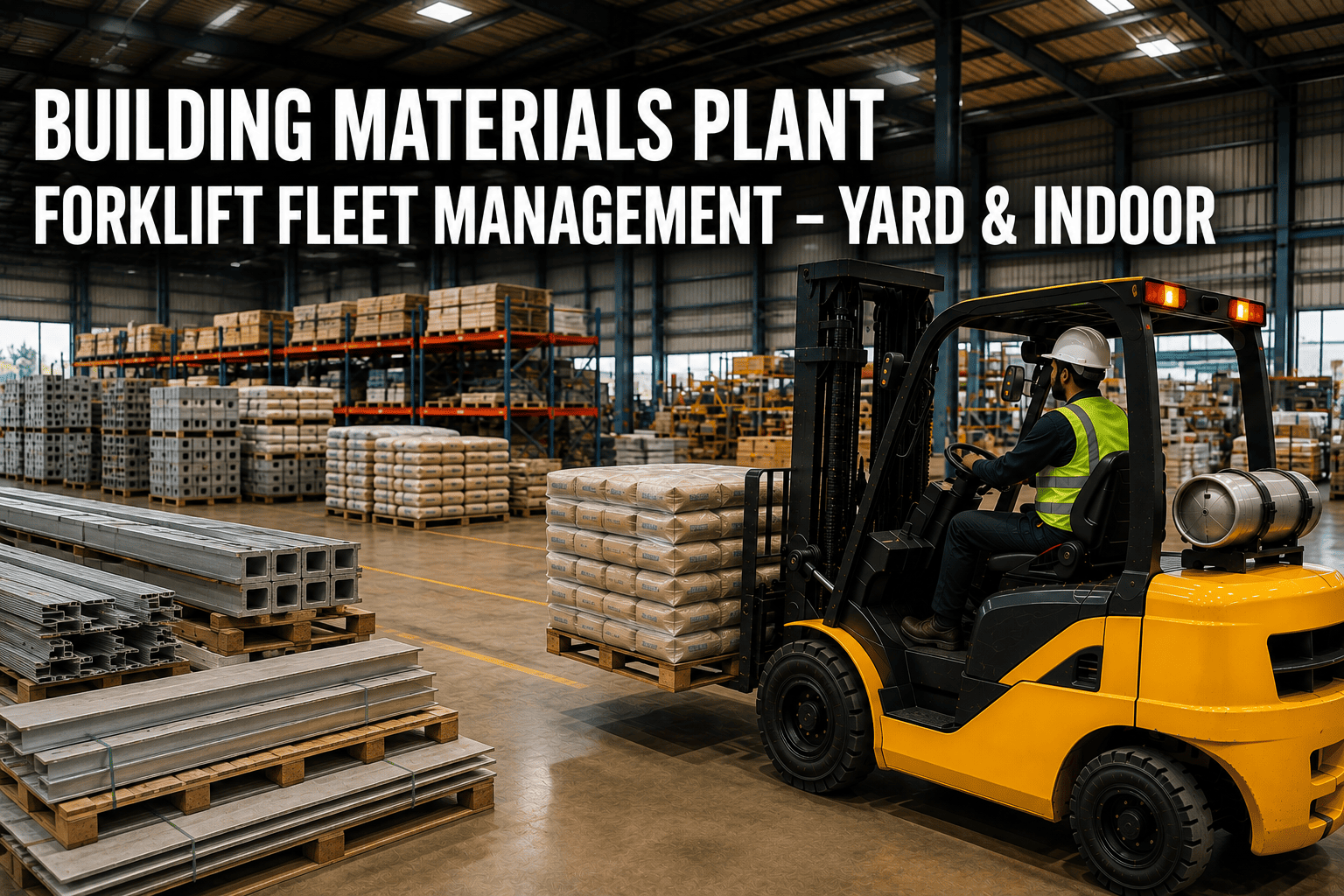
A building-materials operation rarely runs on one type of forklift. Inside the warehouse, cushion-tire trucks glide across smooth concrete between racking aisles. Outside, in the yard, a completely different machine is fighting gravel, mud, stacked lumber, and pallets of block or roofing material stacked three high in the open air. Managing both halves of that fleet under one maintenance plan is where most building-materials businesses lose money without realizing it, because a truck built for polished floors and a truck built for a gravel lot wear out in completely different ways, on completely different timelines.
Building-materials plants typically need two forklift categories working together: cushion or solid-tire trucks for indoor warehouse and showroom floors, and pneumatic or rough-terrain trucks for outdoor yards with gravel, mud, or uneven ground. A forklift used outdoors full time needs roughly 1.5 to 2 times the maintenance attention of the same model working indoors, even at equal operating hours, so tracking yard and indoor units separately matters more than in a single-environment fleet.
Two Environments, One Fleet Strategy
The most common mistake in building-materials operations is treating the whole forklift fleet as one uniform group. A cushion-tire electric truck built for a warehouse floor has almost no tread depth and very little ground clearance, which makes it excellent indoors and genuinely dangerous on wet gravel. A rough-terrain or pneumatic-tire machine built for the yard has the traction and clearance to handle loose surfaces, but its wider turning radius and coarser controls make it clumsy squeezed between racking. Keeping machines matched to their environment, rather than shuffling whichever truck is available, is the single biggest factor in controlling wear costs across a mixed fleet.
This does not mean every plant needs two completely separate maintenance systems. It means the data behind each truck needs to reflect where that truck actually works. A team that wants a clear, side-by-side view of indoor and yard equipment condition can sign up for FleetRabbit and start tracking both halves of the fleet without juggling separate spreadsheets.
FleetRabbit separates maintenance schedules for outdoor rough-terrain forklifts and indoor warehouse trucks, so building-materials fleets get service intervals that actually match how hard each machine works.
Matching Forklift Type to the Job
Building-materials operations generally draw from three forklift categories, each suited to a different part of the property. Choosing the right one for each task keeps wear predictable and avoids the kind of mismatched-equipment problems that quietly inflate repair budgets.
| Forklift Type | Best Environment | Tire and Ground Fit | Watch For |
|---|---|---|---|
| Cushion / Solid Tire Electric | Warehouse floors, showrooms, loading docks | Smooth, paved, dry surfaces only | Battery charging discipline, tight-radius steering wear |
| Pneumatic Tire Counterbalance | Paved yards, mixed indoor-outdoor loading areas | Paved or light gravel, occasional rough patches | Tire pressure checks, tread wear on transition zones |
| Rough Terrain / All-Terrain | Open yards, lumber stacks, unpaved storage lots | Gravel, mud, uneven or soft ground | Undercarriage debris, hydraulic seal exposure, steer axle wear |
Tire Type Is the First Decision
Cushion tires offer almost no grip once a surface is wet or loose, which makes them a poor fit anywhere near an outdoor stockpile. Pneumatic tires with proper tread handle light outdoor duty and paved yards well. Genuinely rough ground, whether it is loose gravel, mud, or seasonal ice, calls for a true rough-terrain machine with the ground clearance and tire design built for it.
Power Source and Duty Cycle
Electric trucks, particularly lithium-powered models, are increasingly common on paved yards and mixed indoor-outdoor routes because they cost less to run and produce no exhaust near loading bays. Diesel and propane machines remain the standard choice for heavy, rough-ground yard work where range and torque under load matter more than emissions.
What Actually Breaks Faster in the Yard
Outdoor duty does not just add wear evenly across a machine. It concentrates damage in specific places that indoor trucks rarely see trouble in at all.
Steer Axles and Undercarriage
Gravel and debris work their way into steering components and axle joints, accelerating wear well beyond what the same hours indoors would produce. Regular undercarriage cleaning and inspection catches this before it turns into a steering failure mid-yard.
Hydraulic Seals
Dust and moisture are harder on hydraulic seals than clean warehouse air. Seals that would last years indoors can degrade noticeably faster outdoors, making seal condition worth checking on a shorter interval for yard-duty trucks.
Tires and Wheel Bearings
Uneven loading, sharp debris, and constant directional changes on loose ground wear tires unevenly and stress wheel bearings. Pressure checks and tread inspections matter more here than almost anywhere else in the maintenance program.
Building a Maintenance Plan That Fits Both Sides of the Yard
A maintenance schedule copied straight from an indoor warehouse fleet will under-service yard equipment and eventually show up as an unplanned breakdown during a busy delivery day. A plan built for mixed operations should separate service intervals by environment rather than by truck age alone, track tire and undercarriage condition on a shorter cycle for outdoor units, and flag any truck that is regularly being used outside its intended environment so it can be swapped for the right equipment before damage adds up. Plants that put this kind of structure in place typically see fewer surprise repairs on yard equipment and longer service life across both fleets. If your team is ready to see this applied to your actual trucks, book a demo with FleetRabbit and bring your yard and warehouse fleet data into the conversation.
Frequently Asked Questions
Gravel, mud, and weather wear your yard fleet differently than your warehouse floor ever will. See how FleetRabbit tracks both environments separately, so nothing gets under-serviced or caught off guard mid-shift.