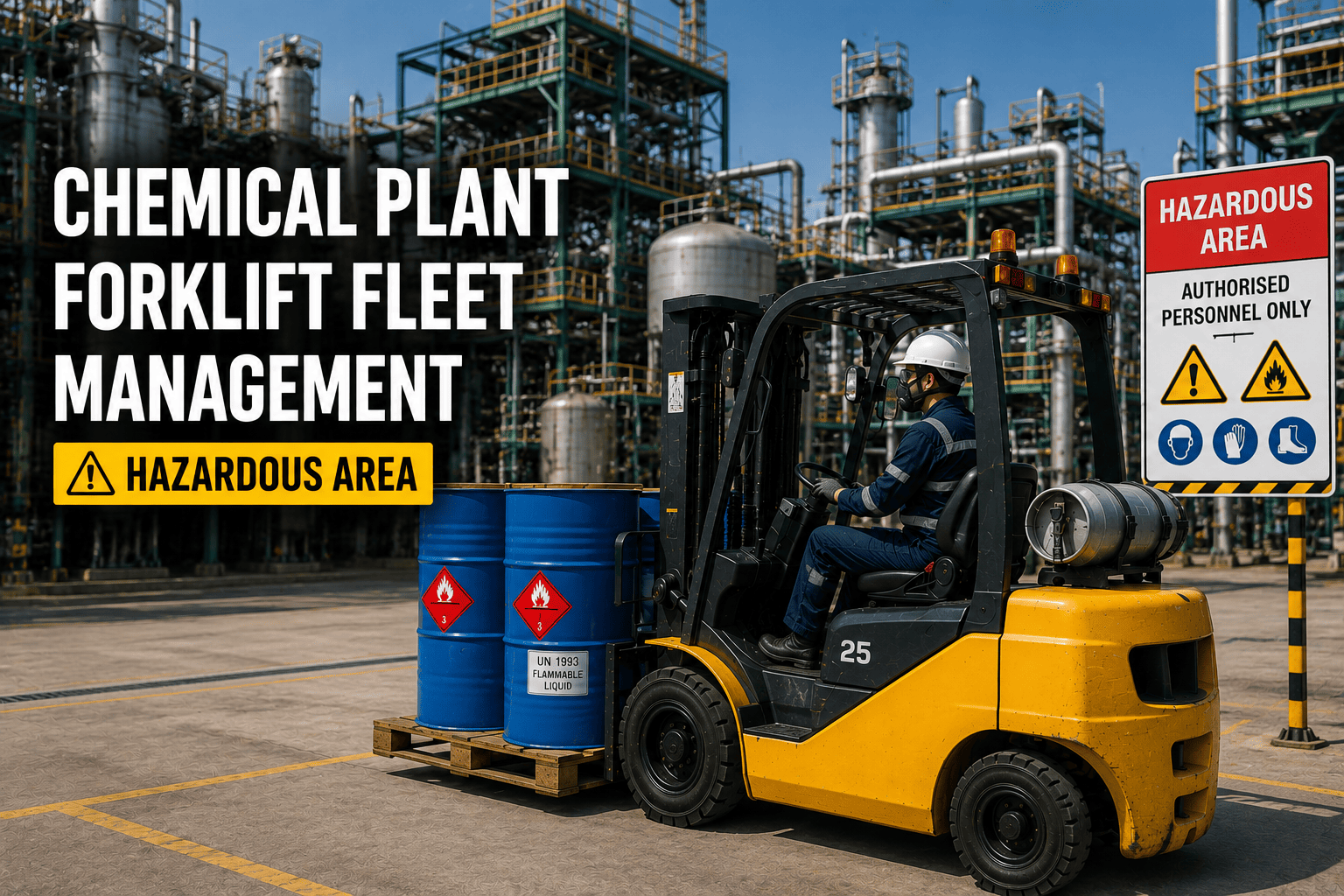
In most warehouses, a forklift with a worn seal or a loose wire is a maintenance ticket. In a chemical plant's classified area, it's a potential ignition source. Solvents, combustible dust, and flammable vapors turn ordinary equipment gaps into real explosion risk, which is exactly why hazardous-area forklift fleets operate under rules that have almost nothing in common with a standard warehouse fleet. Getting the equipment, the paperwork, and the maintenance schedule right isn't optional here, it's the difference between a routine shift and an incident report.
NFPA 505 governs which forklift types are permitted in each classified area, and NFPA data shows fire and explosion incidents in flammable-material industries account for a significant share of workplace fatalities. Only explosion-proof, EX-rated trucks are approved for continuous or intermittent hazardous atmospheres, and even a small maintenance gap, like a degraded seal or exposed wiring, can invalidate that rating. Plants tracking hazardous-area equipment digitally close inspection gaps far faster than those relying on paper logs.
Understanding Classified Areas Before You Assign a Forklift
Every hazardous-area forklift decision starts with knowing exactly what atmosphere the truck will operate in. Get the classification wrong and even a certified EX truck can be the wrong truck for the job.
Matching Truck Type to Hazard Classification
NFPA 505 sets out specific truck designations, and not every "explosion-proof" label means the same level of protection. Assigning the wrong type to a classified area is one of the most common compliance gaps plants run into.
| Truck Type | Protection Level | Typical Use Case |
|---|---|---|
| Type E | General purpose, no additional protection features | Non-classified areas outside the hazardous zone boundary |
| Type ES | Reduced electrical ignition risk, enclosed electrical components | Areas with minor combustible dust exposure |
| Type EE | Electrical components enclosed, temperature limited | Locations with occasional flammable vapor presence |
| Type EX | Full explosion-proof rating, sealed and spark-free design | Classified Class I and Class II areas, solvent and dust handling zones |
Why Maintenance Gaps Are More Dangerous Here
An explosion-proof rating isn't a permanent feature of the truck, it's a condition the truck has to keep earning. A degraded seal, a cracked casing, or a static grounding strap that's lost contact can quietly turn a certified EX truck back into an ignition risk.
Sealed Components Wear Over Time
Batteries and electrical housings on EX trucks are sealed to contain any internal spark. Gaskets and seals degrade with heat cycling and vibration, which means a truck that passed certification a year ago may no longer meet the standard today without regular inspection.
What Gets Missed
Seal wear is rarely visible from the outside, which is why plants that only inspect casings visually often miss the exact failure point an incident investigation would find.
Static Grounding Needs Constant Contact
Grounding straps dissipate static charge that could otherwise ignite vapors or dust. A strap that's worn, bent away from contact, or missing entirely removes a critical layer of protection without any visible warning sign.
What Gets Missed
Operators focused on load handling rarely check grounding contact during a routine shift, which makes it one of the most commonly overlooked items on generic checklists.
Temperature and Spark Limits Must Be Verified, Not Assumed
Every EX-rated component is tested to stay below the ignition temperature of the atmosphere it's certified for. Modifications, aftermarket parts, or skipped maintenance intervals can push surface temperatures past that limit without any obvious sign to the operator.
What Gets Missed
A truck that "still runs fine" can already be out of tolerance on temperature or spark protection, since those limits aren't something a driver can feel from the seat.
FleetRabbit tracks inspection schedules, seal and grounding checks, and full maintenance history for every truck working your classified areas. Start your free trial or book a demo to see hazardous-area compliance tracked automatically.
Building a Compliance Program for Hazardous-Area Fleets
Compliance in a classified area depends less on buying the right truck once and more on proving, every shift, that the truck still meets the standard it was certified against.
Document Every Zone Assignment
Each truck needs a clear record of which classified areas it's approved to operate in, matched against its certification type. Moving a truck into a stricter zone than it's rated for, even temporarily, breaks compliance immediately.
Practical Step
Flagging any attempt to dispatch a truck into a zone above its rating prevents the kind of manual mistake that's easy to make during a busy shift.
Inspect Seals and Grounding on a Fixed Schedule
Because wear on sealed components isn't visible day to day, these checks need a set interval rather than relying on someone noticing a problem. Weekly or monthly checks, depending on truck usage, catch degradation before it becomes a violation.
Practical Step
Recording each check with a timestamp and photo gives both internal safety teams and outside auditors a verifiable trail, not just a checkbox.
Track Every Modification and Part Replacement
Any part swapped on an EX-rated truck needs to be certified for that same rating. An uncertified replacement part, even a minor one, can void the truck's entire explosion-proof status.
Practical Step
Linking parts inventory to each truck's certification profile stops an uncertified part from being installed on a hazardous-area unit by mistake.
Fast Benchmarks for Hazardous-Area Fleets
Frequently Asked Questions
Hazardous-area compliance depends on proving your fleet stays within its rating, shift after shift. FleetRabbit gives chemical plants real-time tracking of zone assignments, seal and grounding inspections, and certified parts history across every EX-rated truck. Start your free trial with no credit card required, or book a demo to see it built around your classified areas.